
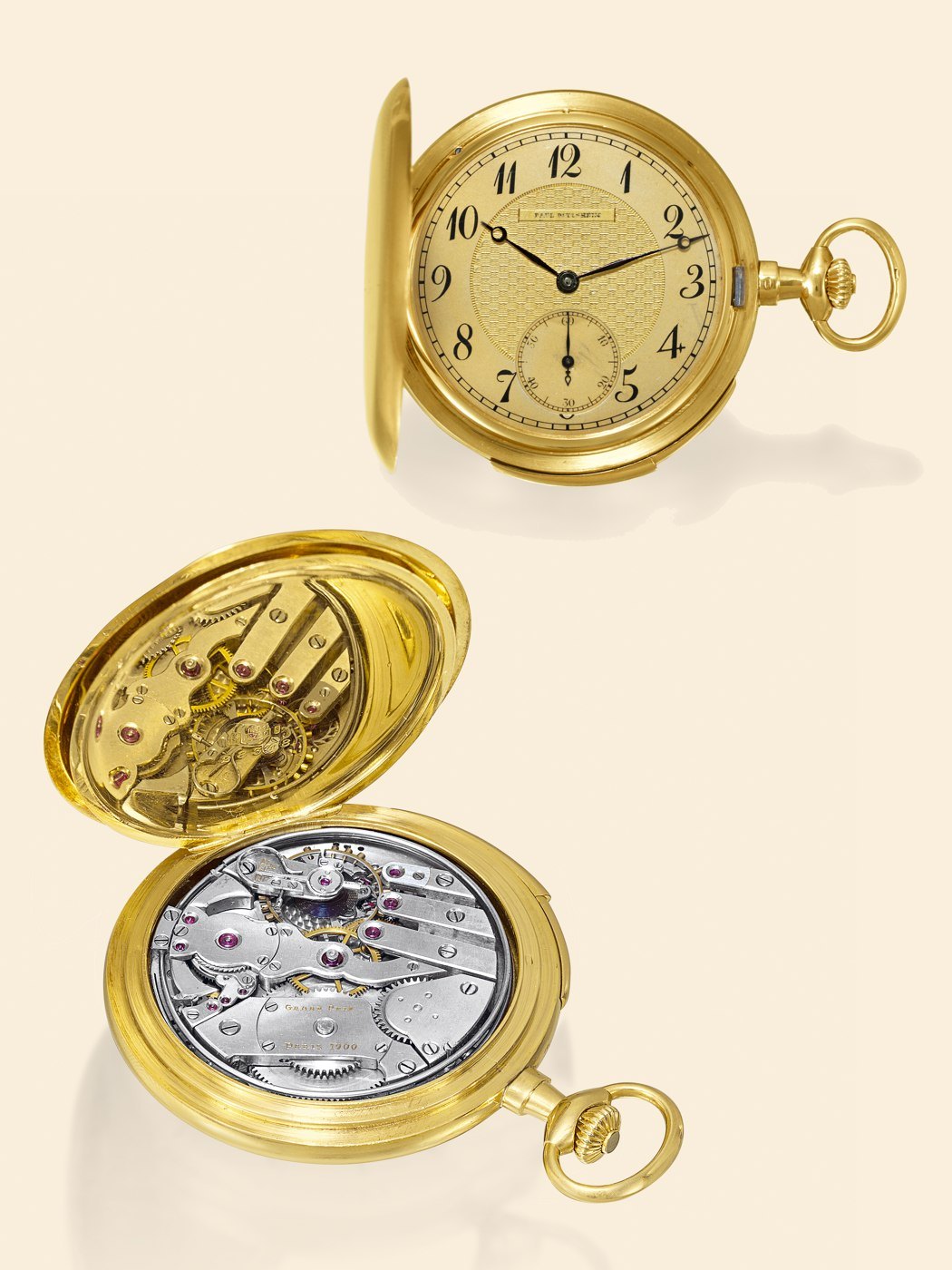
Pocket Watches · Minute repeating pocket watch
Paul Ditisheim Minute Repeater
- Maker / attribution
- Paul Ditisheim (source attribution)
- Date
- c. 1910
- Historical period
- Golden Age of Mechanical Watchmaking (1900 – 1945)
- Country of origin
- Switzerland
- Object type
- Minute repeating pocket watch
- Materials / technique
- 18K gold
- Holding institution
- Antiquorum
- Accession / object no.
- 177-73
- Credit line
- Antiquorum
- Catalogue title (original)
- 'Thin Minute Repeater'\nPaul Ditisheim, La Chaux de\nFonds, No. 28348. Made circa 1910.\nVery fine, thin and elegant, minute-repeating,\nhunting-cased, 18K gold keyless dress watch. (English)
View the source record ↗ (opens another website in a new tab)Suggest a correction
Record summary
Held and catalogued by Antiquorum (object number 177-73), this is a minute repeating pocket watch attributed to Paul Ditisheim, made in Switzerland, dated c. 1910. The Atlas places it in the Golden Age of Mechanical Watchmaking period (1900 – 1945) of its Pocket Watches collection. Materials and techniques recorded by the source: 18K gold. The record is illustrated with 1 photograph.
Assembled from the source record's structured fields. Dates and attributions are given as the source states them; where a field is missing the Atlas leaves it blank rather than estimating.
Catalogue description
Original object description
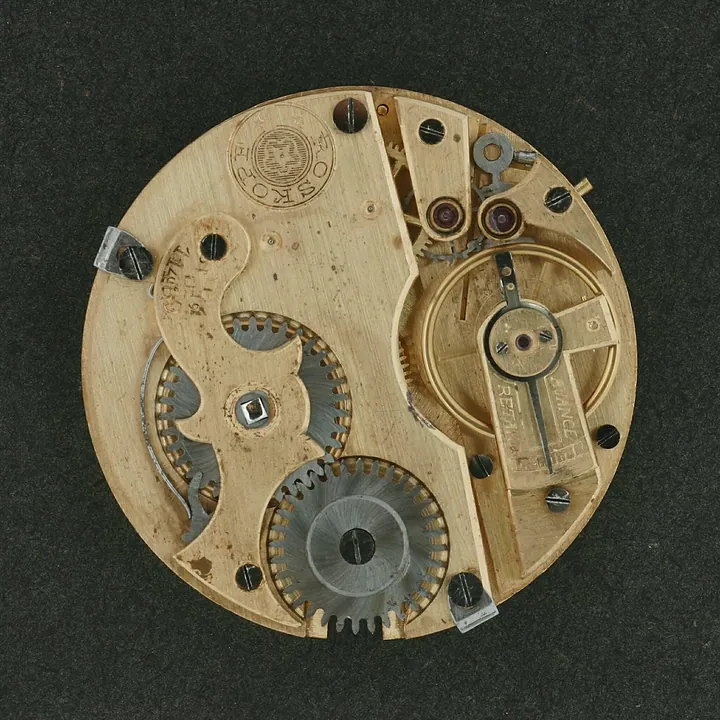
Originating circa 1910 from La Chaux-de-Fonds, Switzerland, this stem-wound hunting-cased pocket watch by Paul Ditisheim is recorded under serial number 28348. Its polished 18K gold four-body "bassine" case features an internal hinged gold cuvette and an invisible hinge at the rear. The matte gilt dial shows a central engine-turned section, an outer minute scale, champlevé Breguet numerals, a 6 o'clock subsidiary seconds dial, and original blued steel Breguet hands. Activated by a slide along the case band, the minute repeater operates via a 31-jewel, 17-ligne rhodium-plated movement that includes a straight-line lever escapement, cut bimetallic balance, blued steel Breguet balance spring, and a swan-neck micrometer regulator, with the mainplate engraved "Grand Prix, Paris 1900". Auction grading assigned an overall "AA" to the watch, citing 3* for the movement, 3 for the case, and 3-9-01 for the dial, which exhibits a surface scratch.
Inscriptions & marks
28348
Historical context
Golden Age of Mechanical Watchmaking (1900 – 1945)
The wristwatch displaces the pocket watch; waterproof cases, self-winding and grand complications.
The pocket watch reached technical maturity and then began to give way to the wristwatch after the First World War. Complicated watches for collectors such as Henry Graves Jr. and James Ward Packard, railroad watches, and slim Art Deco dress watches are characteristic.
Read the period in the timelineMore pocket watches from this periodEarlier: Industrial Revolution
Atlas type guide
Repeating watches
Before electric light, telling the time in the dark was a real problem. Repeating watches strike the time on demand when a slide or push-piece is operated: quarter repeaters sound hours and quarters, minute repeaters hours, quarters and minutes. Edward Barlow and Daniel Quare disputed the invention in London in the 1680s. Early repeaters struck on a bell inside the case; Abraham-Louis Breguet introduced the gong (a coiled steel wire) around 1780, allowing thinner watches.
Repeaters require a separate train with racks, snails and a governor to control the striking speed, and are among the most demanding complications to make and adjust. Swiss makers of the Vallée de Joux specialised in repeating ébauches in the nineteenth century.
What to look for
- A slide on the case band or a push-piece through the pendant.
- Gongs encircling the movement (after c. 1780) or a bell in the case (earlier); pierced case for sound.
- The racks, snails and governor visible under the dial or on the movement.
- Terms such as 'Minutes', 'Quarts' or 'Répétition' on the dial or cuvette.
Dating clues
- Bell-striking quarter repeaters: c. 1690–1800.
- Gong repeaters and dumb repeaters (striking on the case): after c. 1780.
- Minute repeaters became more common after c. 1830 with Vallée de Joux ébauches.
General guidance written by the Atlas editors about this kind of object. It is not a statement about this particular piece; for that, rely on the source record above and on physical examination.
Read next:Minute repeater
Related records
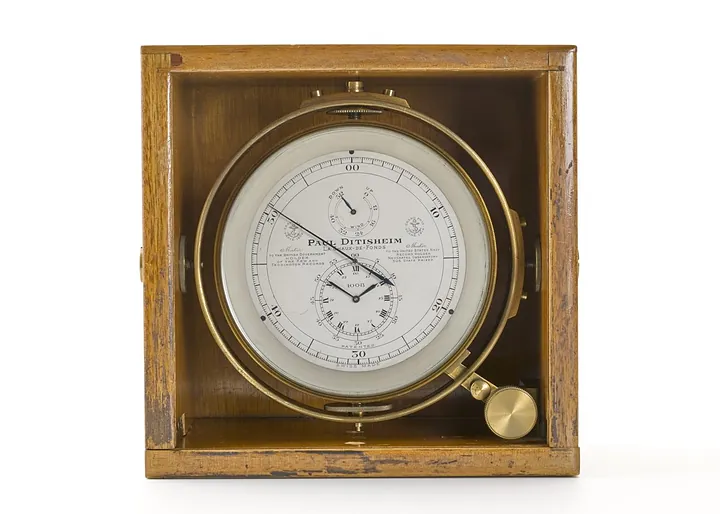
Instruments · 1925
Chronometer by Paul Ditisheim, 1925
Science Museum Group, London
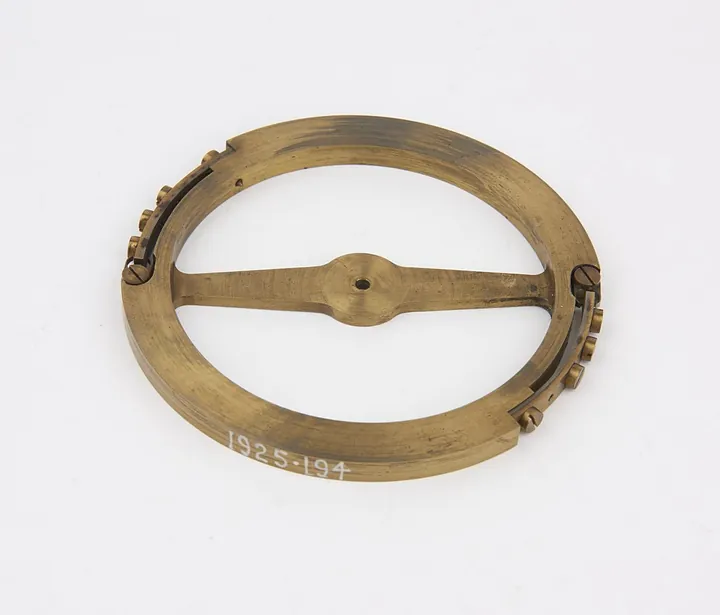
Movements & Components · 1920–1925
Balance / regulating part by Paul Ditisheim, Europe, 1920–1925
Science Museum Group, London
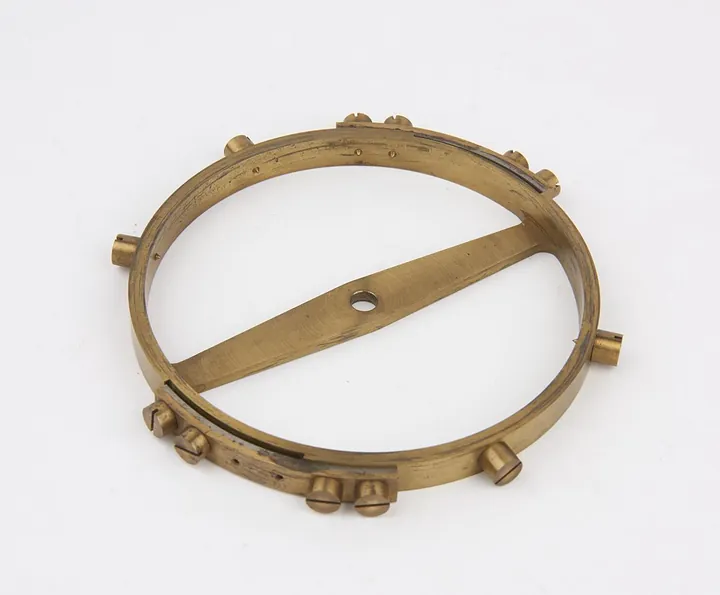
Movements & Components · 1920–1925
Model of Paul Ditisheim's monometallic compensation balance for use with Elinvar hairsprings, with radial poising screws, Europe, 1920–1925
Science Museum Group, London
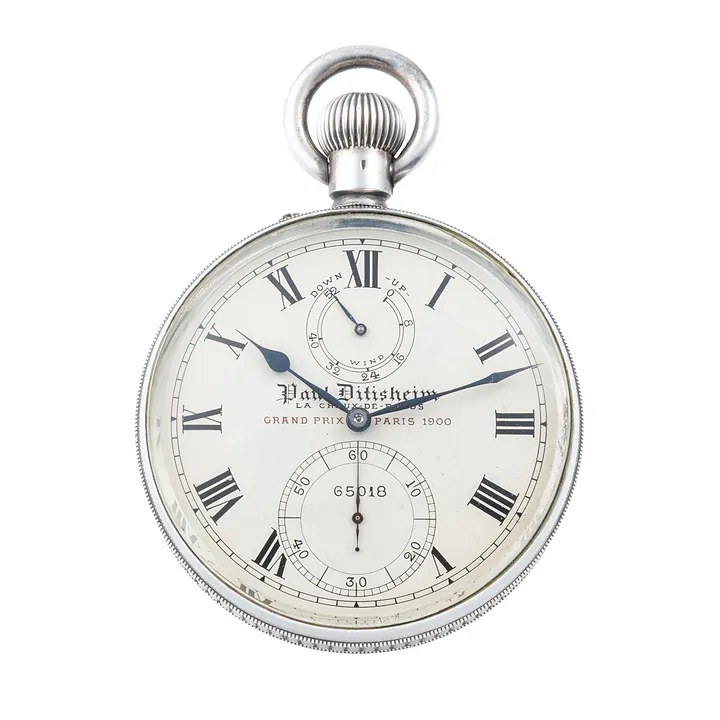
Pocket Watches · 1924
Paul Ditisheim "chronomètre de Bord", circa 1924/25
Antiquorum auction archive, Geneva
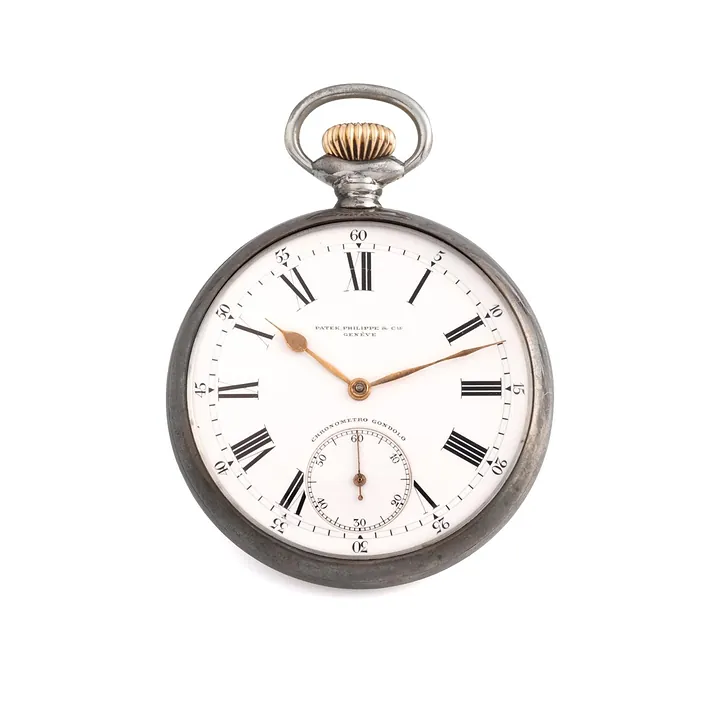
Pocket Watches · c. 1900
Patek Philippe Chronometro Gondolo, c. 1900
Antiquorum auction archive, Geneva
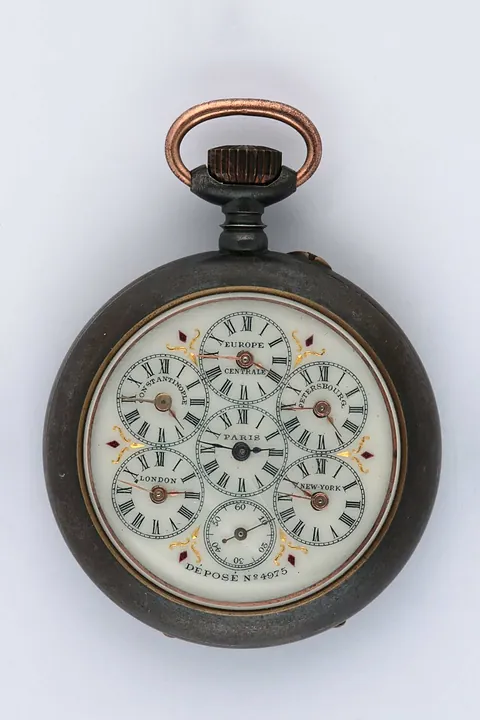
Pocket Watches · c. 1900
Pocket watch by A. Sandoz-Boucherin, Switzerland, c. 1900
German Clock Museum
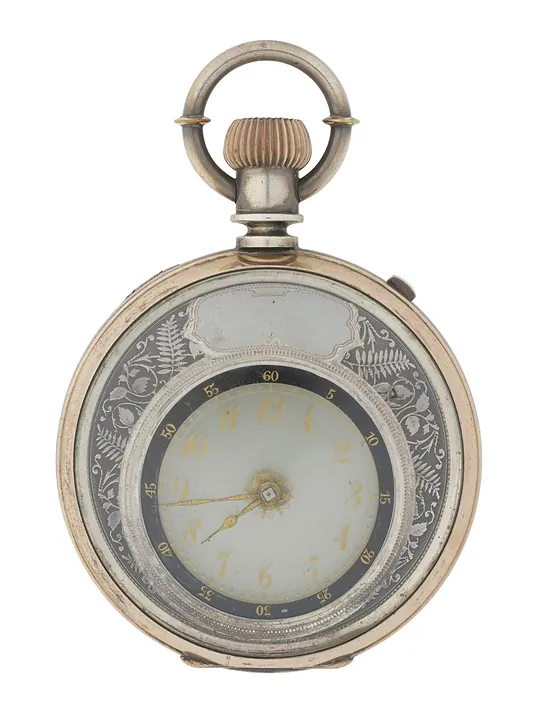
Pocket Watches · 1900
Pocket watch by Armand Schwob & Frère, Switzerland, 1900
Science Museum Group, London
Pocket Watches · c. 1900
Pocket watch by Vve. Chs. Léon Schmid und Cie, Switzerland, c. 1900
German Clock Museum