
Pocket Watches · Openface keyless lever watch
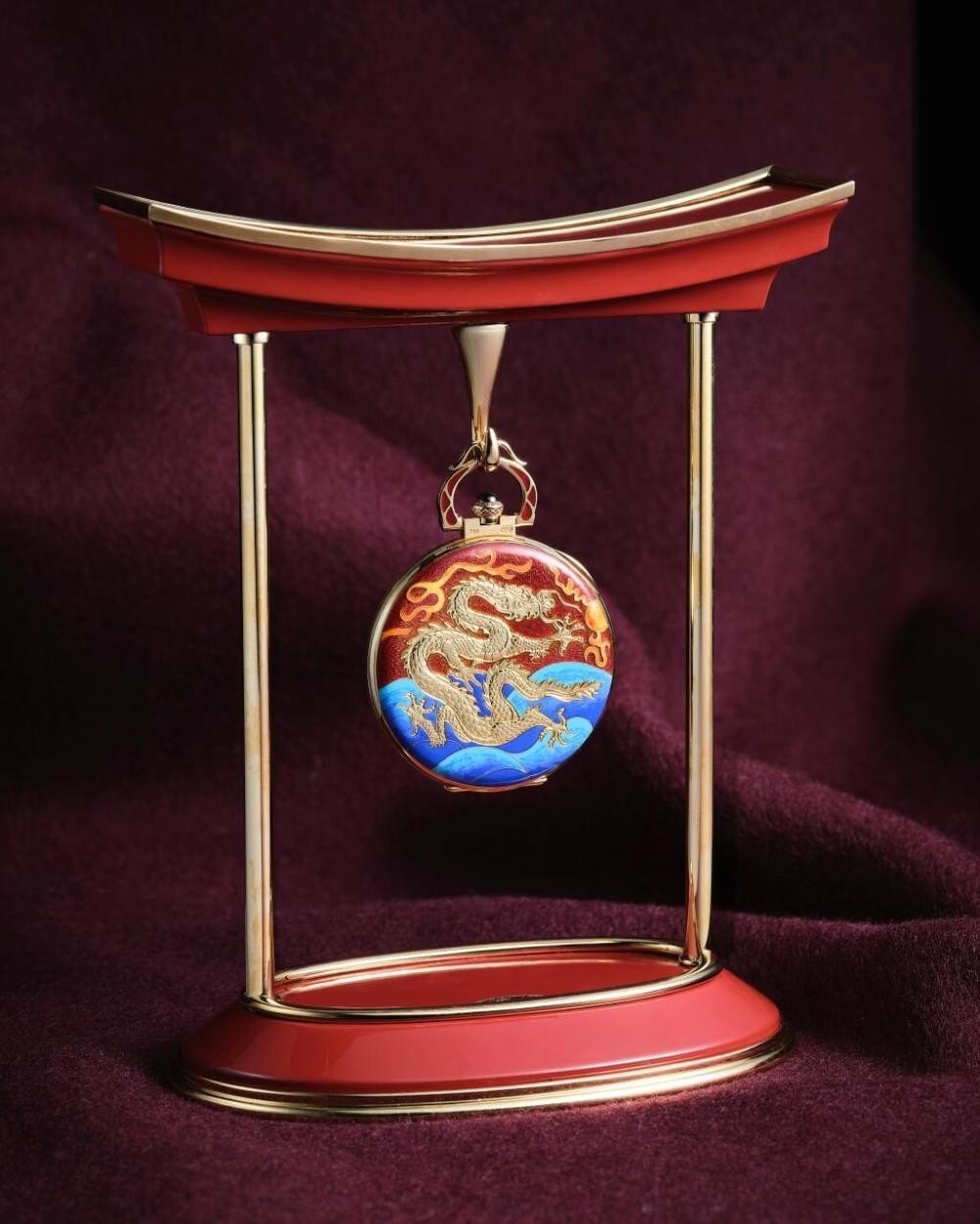
Patek Philippe Reference 982/155J-001 \"Fire Dragon\" Pocket Watch
- Maker / attribution
- Patek Philippe (source attribution)
- Date
- c. 2013
- Historical period
- Contemporary Horology (2010 – Present)
- Country of origin
- Switzerland
- Object type
- Openface keyless lever watch
- Materials / technique
- 18k yellow gold
- Holding institution
- Sotheby's / Invaluable
- Accession / object no.
- 200214777
- Credit line
- Sotheby's / Invaluable
- Catalogue title (original)
- Pocket-watch, Patek Philippe Reference 982/155J-001, Shanghai, 2013 (English)
View the source record ↗ (opens another website in a new tab)Suggest a correction
Record summary
Held and catalogued by Sotheby's / Invaluable (object number 200214777), this is an openface keyless lever watch attributed to Patek Philippe, made in Switzerland, dated c. 2013. The Atlas places it in the Contemporary Horology period (2010 – Present) of its Pocket Watches collection. Materials and techniques recorded by the source: 18k yellow gold. The record is illustrated with 1 photograph.
Assembled from the source record's structured fields. Dates and attributions are given as the source states them; where a field is missing the Atlas leaves it blank rather than estimating.
Catalogue description
Original object description
Manufactured circa 2013 to commemorate the launch of the Patek Philippe Maison in Shanghai, the "Fire Dragon" reference 982/155J-001 is a 44 mm openface keyless lever pocket watch in 18k yellow gold that may be a unique piece. Its hinged case back exhibits a hand-engraved dragon on a sunburst ground executed with cloisonné enamelling, requiring approximately 250 hours of hand craftsmanship (divided into 100 hours of engraving and 150 hours of enamel work). The yellow gold winding bow is accented with red enamel, framing an orange sapphire cabochon set atop the crown. A coating of translucent red enamel rests over the engine-turned, hand-engraved yellow gold dial, which features relief-incised Chinese numerals, yellow gold hands, and a power reserve display. Inside is the 20-jewel calibre 1-17, bearing movement number 5'632'890, with maker marks applied to the case, dial, and movement. Accompaniments include a bespoke 18k yellow gold stand mounted on a red-lacquered wood base, a Certificate of Origin, and a fitted presentation case.
Inscriptions & marks
4'712'710
Historical context
Contemporary Horology (2010 – Present)
Silicon components, connected watches, optical-lattice research clocks and a thriving independent scene.
Pocket watches are now produced mainly as limited editions, unique pieces and heritage reissues, often showcasing traditional crafts such as enamel and engraving.
Read the period in the timelineMore pocket watches from this periodEarlier: Mechanical Renaissance
Atlas type guide
Pocket watches
The pocket watch was the dominant personal timekeeper from the late seventeenth century until the First World War. Its development tracks the history of the escapement: verge watches with fusees until the late eighteenth century; Thomas Mudge's lever escapement (c. 1755) and the cylinder escapement popularised by George Graham and later by Swiss makers; and the Swiss and English lever watches of the nineteenth century. Lépine's bar-bridge calibre and keyless winding made watches thinner and easier to use.
Industrialisation transformed the trade: American factories such as Waltham (from 1850) and Elgin produced interchangeable parts by machine, and Swiss makers responded with their own mechanisation after the 1876 Philadelphia Exhibition. By 1900 a reliable watch was affordable to millions; the finest makers continued to produce complications and precision watches.
What to look for
- The escapement: verge (crown wheel), cylinder, duplex, English or Swiss lever.
- Key winding (a square arbor in dial or back) or keyless crown winding.
- Signatures and serial numbers on the movement, dial and inside case back.
- Hallmarks, case maker's marks and gold or silver standards stamped in the case.
- Dial material: enamel, silver, gold, later printed metal.
Dating clues
- Verge watches dominate before c. 1800; cylinder watches c. 1770–1900; lever watches after c. 1820.
- Keyless winding: increasingly common after c. 1860.
- Manufacturer serial number lists exist for Waltham, Elgin, Longines, Omega, Patek Philippe and others.
General guidance written by the Atlas editors about this kind of object. It is not a statement about this particular piece; for that, rely on the source record above and on physical examination.
Read next:Verge escapementDetached lever escapementFuseeIdentification Centre
Related records
Clocks · 1965–1975
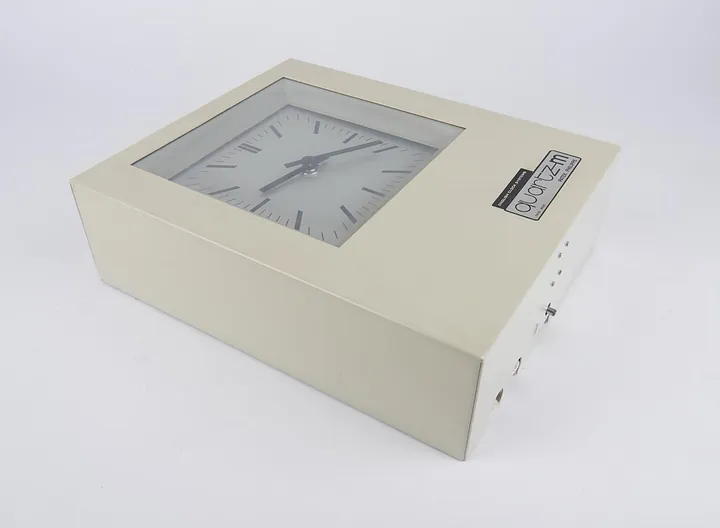
Quartz master clock QM 1, with movement by Patek Phillippe, Switzerland, 1965–1975. Supplied by English Clock Systems.
Science Museum Group, London
Instruments · 1965–1984
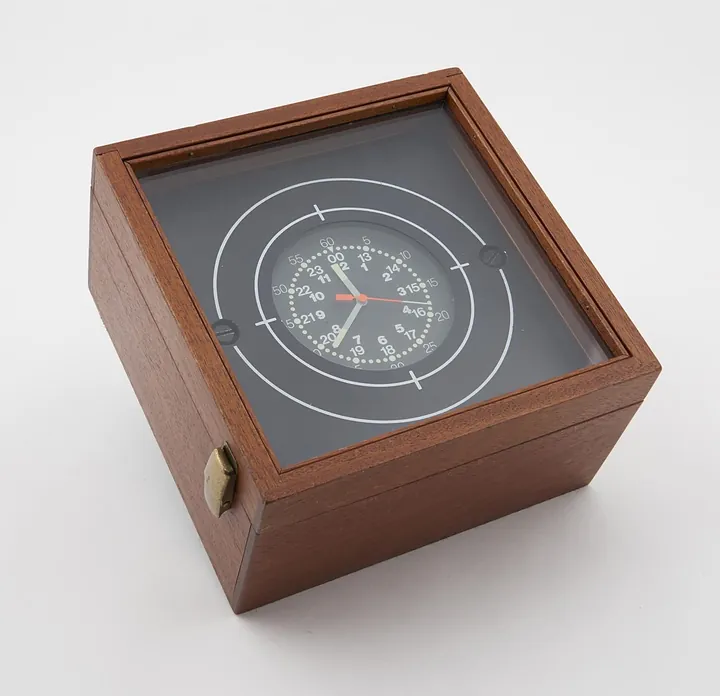
Chronometer by Patek Philippe and Kelvin Hughes, England, 1965–1984
Science Museum Group, London
Pocket Watches · c. 1895
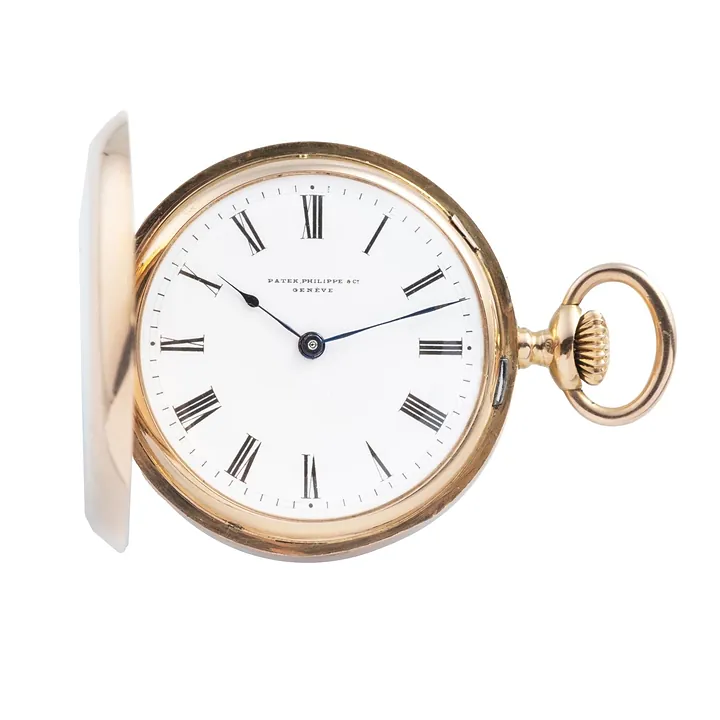
Patek Philippe pocket watch, c. 1895
Antiquorum auction archive, Geneva
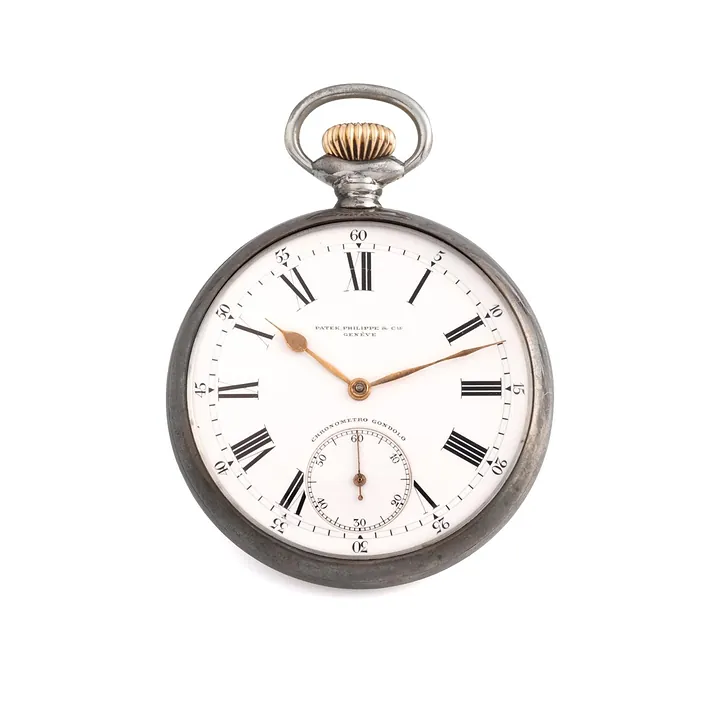
Pocket Watches · c. 1900
Patek Philippe Chronometro Gondolo, c. 1900
Antiquorum auction archive, Geneva
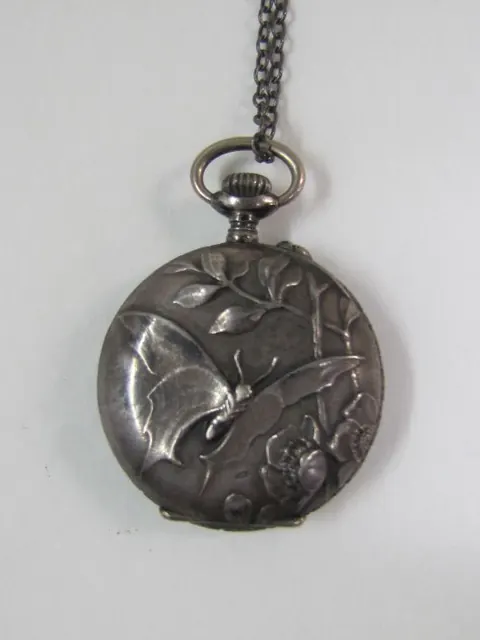
Pocket Watches · 13.11.2026
Pocket watch by Borel Fils & Cie, Switzerland, 13.11.2026
Museokeskus Vapriikki
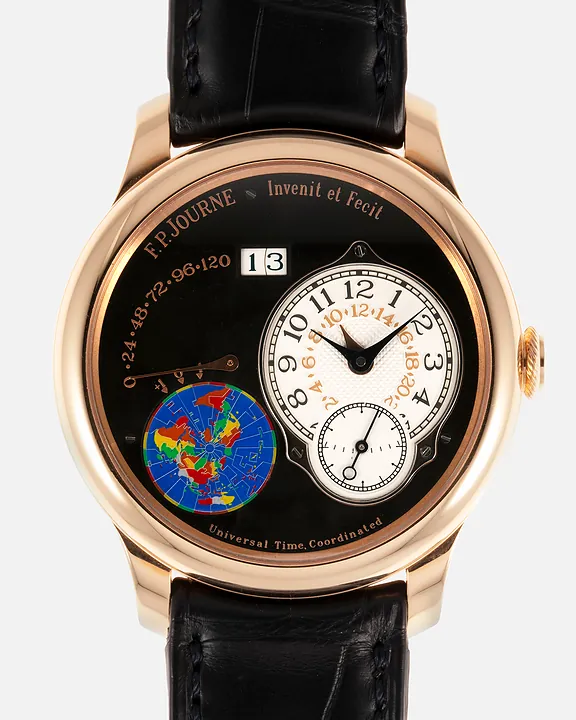
Pocket Watches · 2016
F.P. Journe Octa UTC Boutique Edition, 2016
S.Song Watches (dealer), Seattle
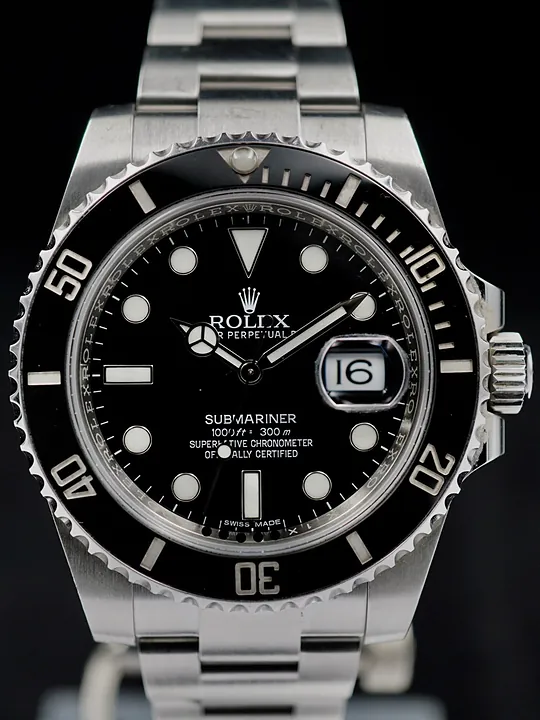
Pocket Watches · 2016
2016 Rolex Submariner Date Ref. 116610LN
Craft & Tailored
Pocket Watches · 2019
DOXA Sub 300 Sharkhunter 'Blacklung' Reissue
Analog/Shift