
Pocket Watches · Dive watch
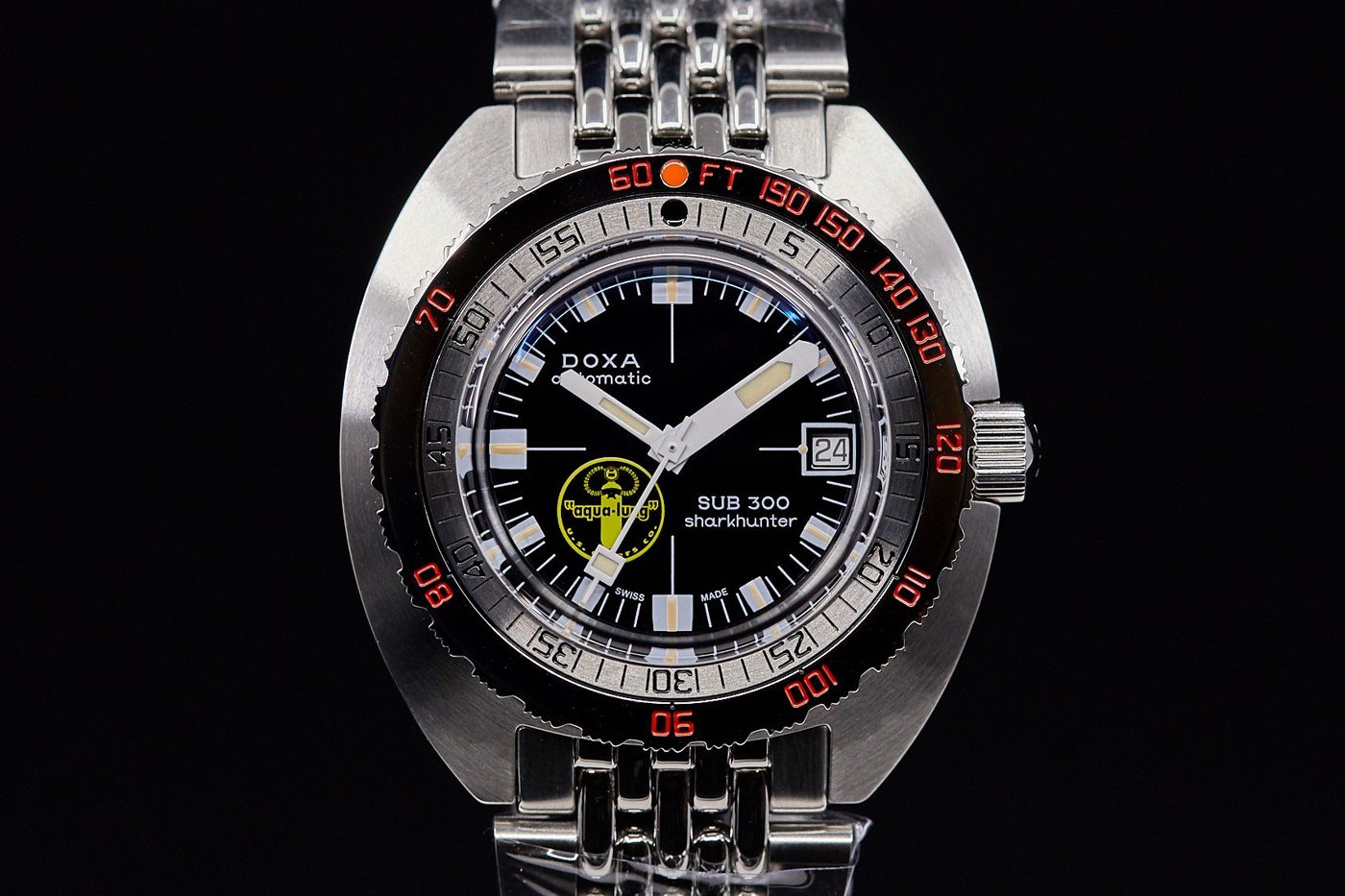
DOXA Sub 300 Sharkhunter 'Blacklung' Reissue
- Maker / attribution
- DOXA (source attribution)
- Date
- 2019
- Historical period
- Contemporary Horology (2010 – Present)
- Country of origin
- Switzerland
- Object type
- Dive watch
- Holding institution
- Analog/Shift
- Accession / object no.
- doxa-sub-300-sharkhunter-blacklung-reissue-e551e7b2b5
- Credit line
- Analog/Shift
- Catalogue title (original)
- ساعت مچی غواصی DOXA مدل Sub 300 Sharkhunter 'Blacklung' Reissue (English)
View the source record ↗ (opens another website in a new tab)Suggest a correction
Record summary
Held and catalogued by Analog/Shift (object number doxa-sub-300-sharkhunter-blacklung-reissue-e551e7b2b5), this is a dive watch attributed to DOXA, made in Switzerland, dated 2019. The Atlas places it in the Contemporary Horology period (2010 – Present) of its Pocket Watches collection. The record is illustrated with 1 photograph.
Assembled from the source record's structured fields. Dates and attributions are given as the source states them; where a field is missing the Atlas leaves it blank rather than estimating.
Catalogue description
Original object description
Manufactured in 2019 as part of a limited edition of 100 pieces, this Doxa Sub 300 Sharkhunter 'Blacklung' Reissue recalls the 1967 diver envisioned by Urs Eschle in collaboration with Jacques-Yves Cousteau and trialled in Lake Neuchâtel. The sturdy steel case features broad curved lugs, an aperture for the date at 3 o'clock, and a black dial fitted with luminous markers, luminescent hands, and the 'Blacklung' logo positioned at 8 o'clock. Its unidirectional turning bezel combines an orange depth indicator marked in feet with a black track for elapsed minutes, derived from the U.S. Navy No Decompression schedule. Driven by a self-winding caliber, the watch has never been worn and retains its original factory plastic on the stainless steel 'beads-of-rice' bracelet, which is secured by a wetsuit-extending ratchet clasp.
Historical context
Contemporary Horology (2010 – Present)
Silicon components, connected watches, optical-lattice research clocks and a thriving independent scene.
Pocket watches are now produced mainly as limited editions, unique pieces and heritage reissues, often showcasing traditional crafts such as enamel and engraving.
Read the period in the timelineMore pocket watches from this periodEarlier: Mechanical Renaissance
Atlas type guide
Hunter, half-hunter and open-face watches
In the nineteenth century the pocket watch case settled into a few standard forms. The hunter (French savonnette) has a hinged front lid protecting the crystal — reputedly for riders who could not risk broken glass — and is opened by pressing the crown or a push-piece. The half-hunter has a small window in the lid so the hands can be read when closed. The open-face (lépine) watch has no front cover, with the crown at 12; hunters normally carry the crown at 3.
Case types also changed with winding: key-wound watches gave way to keyless (stem-wound) mechanisms after Adrien Philippe's and others' designs of the 1840s, with pendant setting or lever setting.
What to look for
- Crown position relative to the seconds dial: at 3 for hunters, at 12 for open-face watches.
- Spring-loaded front cover with a push-piece in the pendant.
- Half-hunter chapter ring enamelled on the lid.
- Key holes in the inner dome (cuvette) versus keyless winding.
Dating clues
- Keyless winding spread after c. 1850 and became standard by c. 1890.
- English hallmarks inside gold and silver cases give the year of assay.
General guidance written by the Atlas editors about this kind of object. It is not a statement about this particular piece; for that, rely on the source record above and on physical examination.
Read next:Detached lever escapement
Related records
Wristwatches · 2002
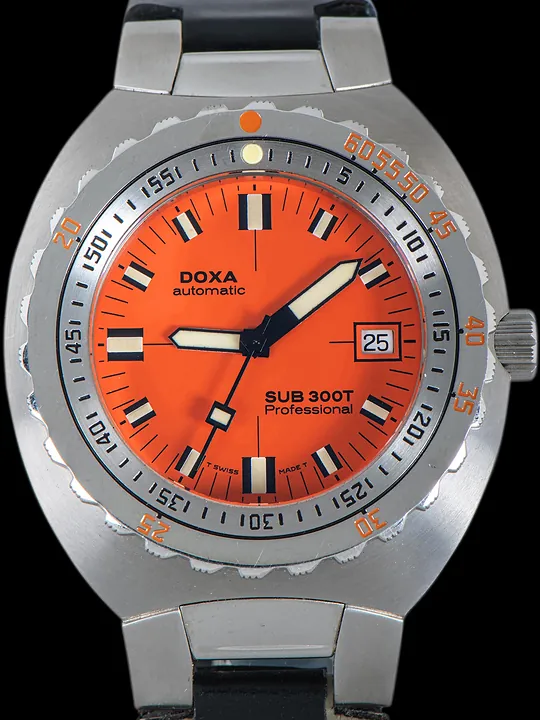
Doxa Sub 300T Professional (Ref. 30010), 2002
Craft & Tailored (dealer), Los Angeles
Wristwatches · 1970s
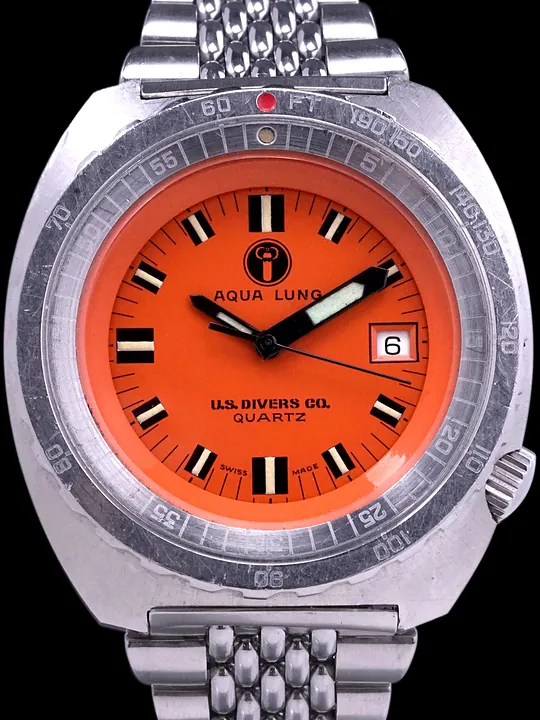
Aqua Lung Quartz Diver (Ref. 7336-000) "U.S Divers Co.", 1970s
Craft & Tailored (dealer), Los Angeles
Wristwatches · 1983
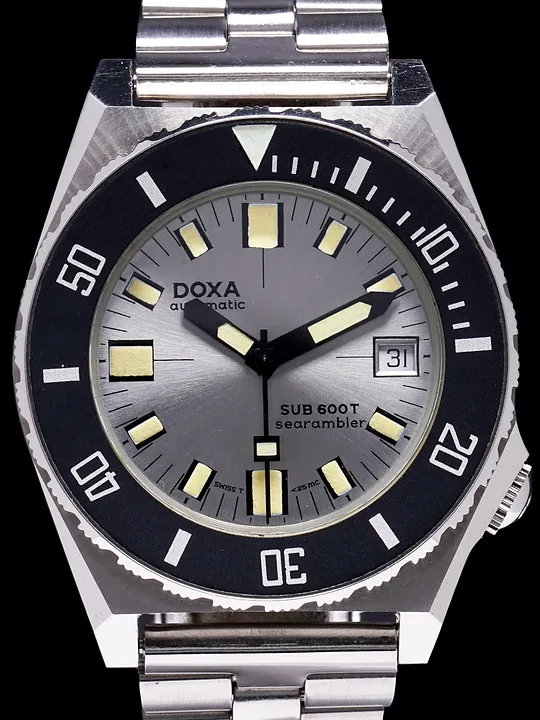
Doxa Sub 600T Searambler Silver Dial (Aubry Era), 1983
Craft & Tailored (dealer), Los Angeles
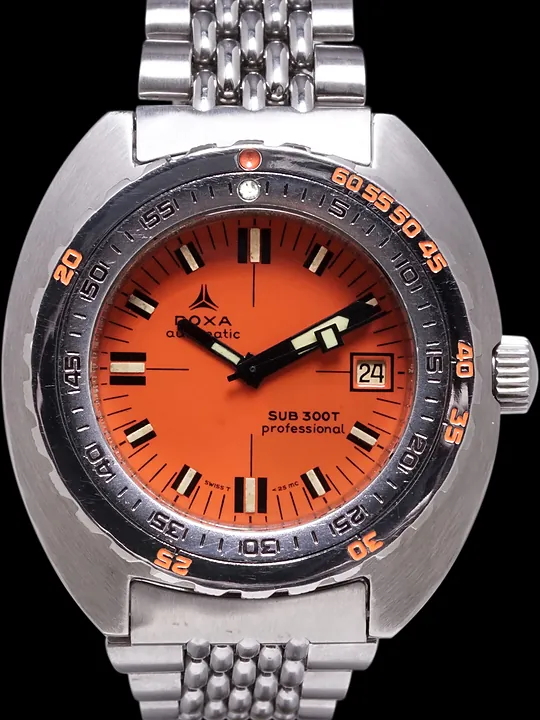
Wristwatches · 1970s
Doxa Sub 300T Professional (Synchron Era), 1970s
Craft & Tailored (dealer), Los Angeles
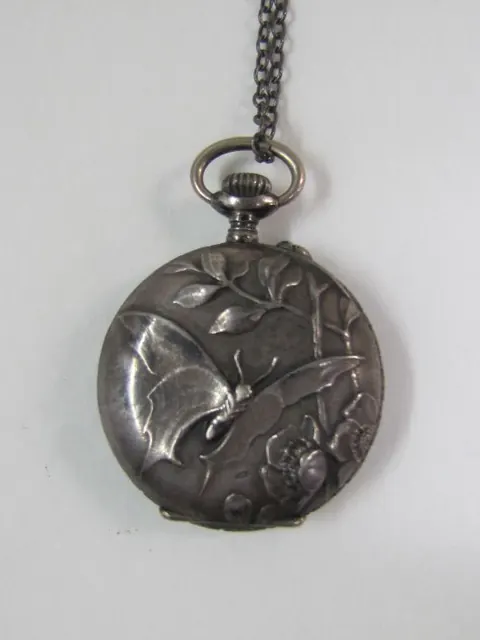
Pocket Watches · 13.11.2026
Pocket watch by Borel Fils & Cie, Switzerland, 13.11.2026
Museokeskus Vapriikki
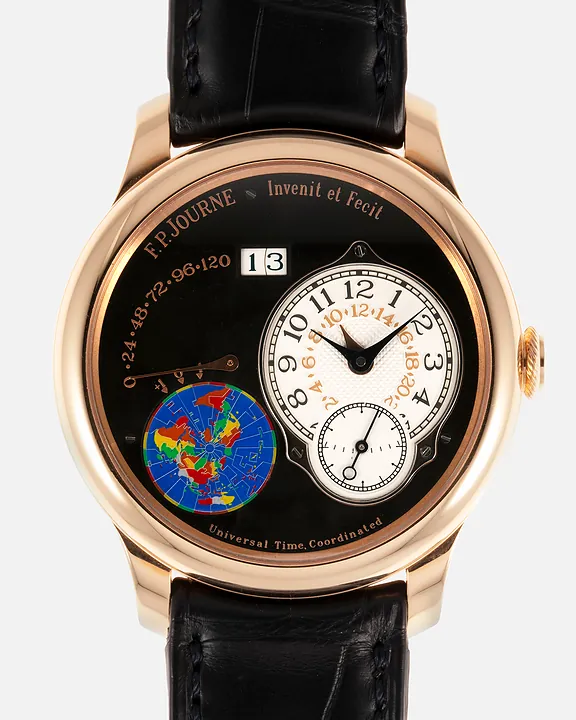
Pocket Watches · 2016
F.P. Journe Octa UTC Boutique Edition, 2016
S.Song Watches (dealer), Seattle
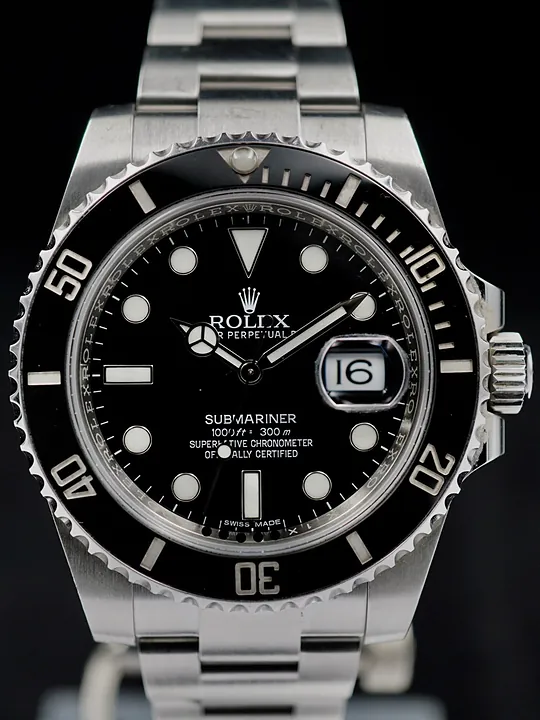
Pocket Watches · 2016
2016 Rolex Submariner Date Ref. 116610LN
Craft & Tailored
Pocket Watches · 2019
Omega Seamaster Planet Ocean 600M 'Big Blue' Ref. 215.92.46.22.03.001
Analog:Shift