
Wristwatches · Quartz wristwatch
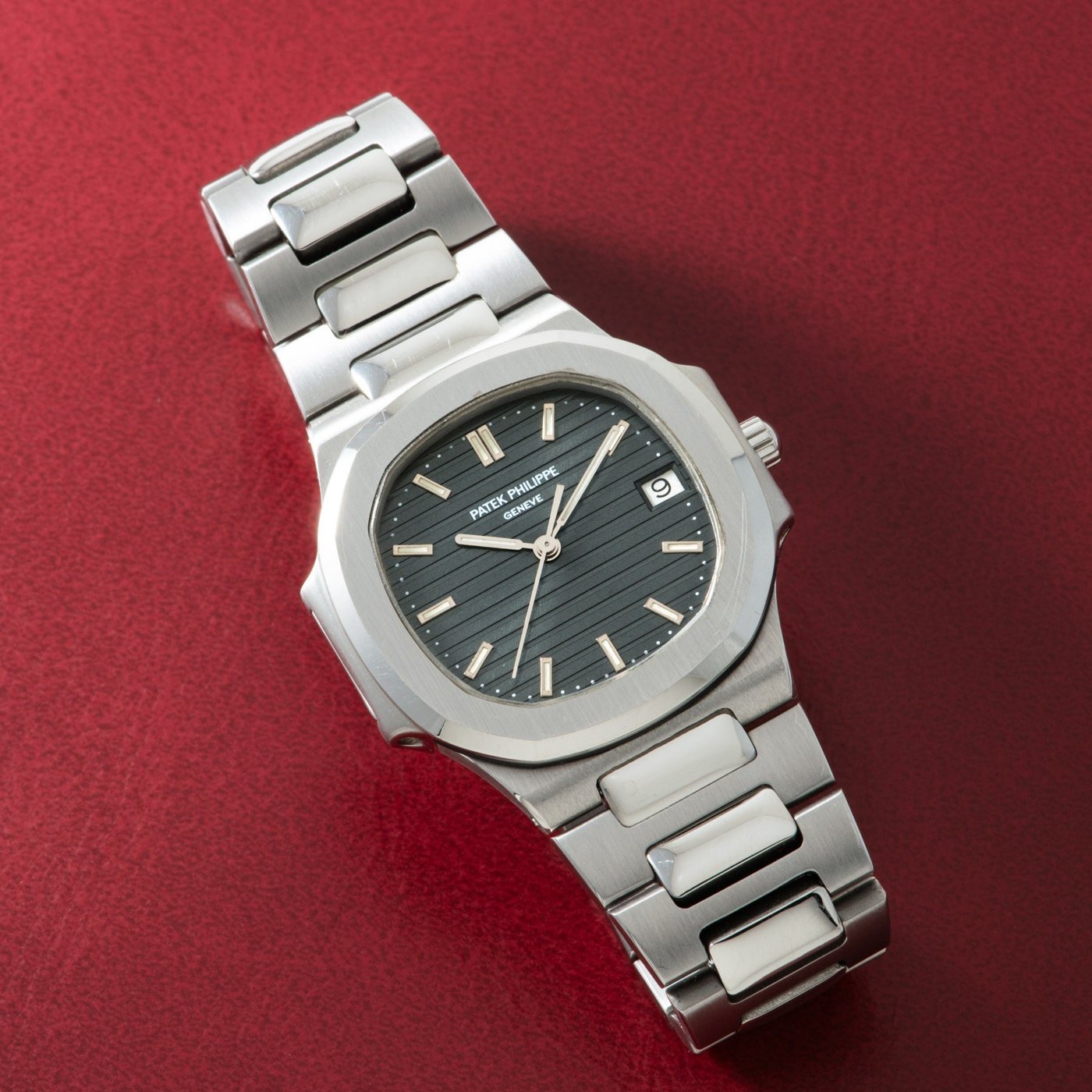
Patek Philippe Nautilus Midsize Reference 3900/1A
- Maker / attribution
- Patek Philippe (source attribution)
- Date
- 1980s
- Historical period
- Quartz Revolution (1969 – 1990)
- Country of origin
- Switzerland
- Object type
- Quartz wristwatch
- Materials / technique
- Stainless steel
- Holding institution
- Analog:Shift
- Accession / object no.
- patek-philippe-nautilus-midsize-reference-3900-1a-5193e0ef42
- Credit line
- Analog:Shift
- Catalogue title (original)
- ساعت مچی سایز متوسط Patek Philippe Nautilus رفرنس 3900/1A (English)
View the source record ↗ (opens another website in a new tab)Suggest a correction
Record summary
Held and catalogued by Analog:Shift (object number patek-philippe-nautilus-midsize-reference-3900-1a-5193e0ef42), this is a quartz wristwatch attributed to Patek Philippe, made in Switzerland, dated 1980s. The Atlas places it in the Quartz Revolution period (1969 – 1990) of its Wristwatches collection. Materials and techniques recorded by the source: Stainless steel. The record is illustrated with 1 photograph.
Assembled from the source record's structured fields. Dates and attributions are given as the source states them; where a field is missing the Atlas leaves it blank rather than estimating.
Catalogue description
Original object description
Dating to the 1980s, the Patek Philippe Nautilus reference 3900/1A is a midsize stainless steel model featuring a 32 mm porthole-inspired case seamlessly attached to a matching steel bracelet. Its blue gradient dial is adorned with horizontal teak-style grooves, a date window at the 3 o'clock mark, luminescent-coated hands and indexes, and a Sigma emblem indicating precious metal elements. The watch is powered by the quartz Calibre E23 S C, an engine developed specifically for this reference to deliver consistent timekeeping while maintaining a slim case profile. Auction records note that valuation depends on validating the operational and physical state of the quartz caliber, along with confirming the originality of the Sigma dial and bracelet integration.
Historical context
Quartz Revolution (1969 – 1990)
Seiko's Astron begins mass quartz timekeeping; traditional industries contract sharply.
Quartz and digital watches transformed the market after 1969. Swiss employment collapsed, Japanese and Hong Kong production soared, and the Swatch (1983) helped the Swiss industry recover; mechanical watches survived as luxury goods.
Read the period in the timelineMore wristwatches from this periodEarlier: Modern Mechanical Horology
Atlas type guide
Quartz, digital and electronic watches
Electronic watches arrived in three steps. The Hamilton Electric 500 (1957) was the first battery-powered wristwatch, still with a balance; Bulova's Accutron (1960) used a tuning fork. On 25 December 1969 Seiko released the Astron 35SQ, the first quartz wristwatch, closely followed by the Swiss Beta 21 group. In 1972 Hamilton's Pulsar introduced the LED digital watch, and LCD displays soon made digital watches cheap.
The 'Quartz Crisis' that followed devastated the Swiss mechanical industry, which lost two-thirds of its workforce between 1970 and 1984 before recovering with the Swatch (1983) and the luxury mechanical revival. Solar, radio-controlled, kinetic and connected smartwatches continue the electronic line.
What to look for
- Battery hatch in the case back and calibre markings with 'Quartz' or a crystal frequency.
- Display technology: LED (red, push-button) versus LCD (always-on).
- Tuning-fork hum and a smoothly sweeping seconds hand on Accutrons.
- Model and reference numbers, often printed on the back.
Dating clues
- Electric balance watches: from 1957.
- Tuning-fork watches: 1960–c. 1977.
- Quartz analogue: from December 1969; LED digital: 1972–c. 1978; LCD from 1973.
General guidance written by the Atlas editors about this kind of object. It is not a statement about this particular piece; for that, rely on the source record above and on physical examination.
Read next:Seiko calibre 35A (Astron)
Related records
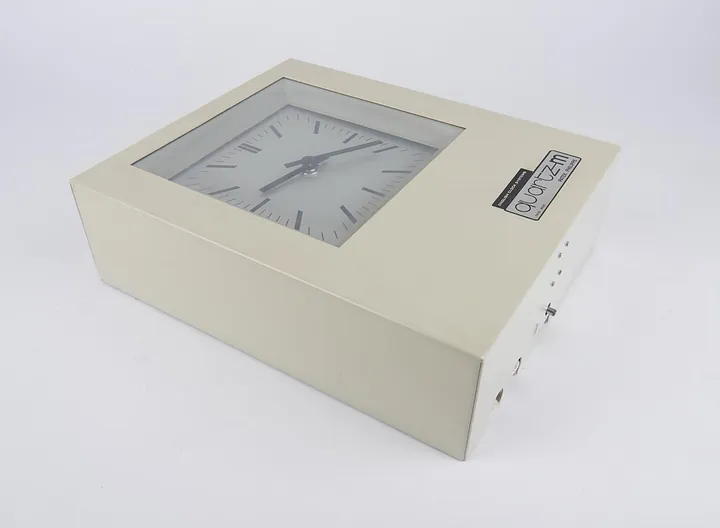
Clocks · 1965–1975
Quartz master clock QM 1, with movement by Patek Phillippe, Switzerland, 1965–1975. Supplied by English Clock Systems.
Science Museum Group, London
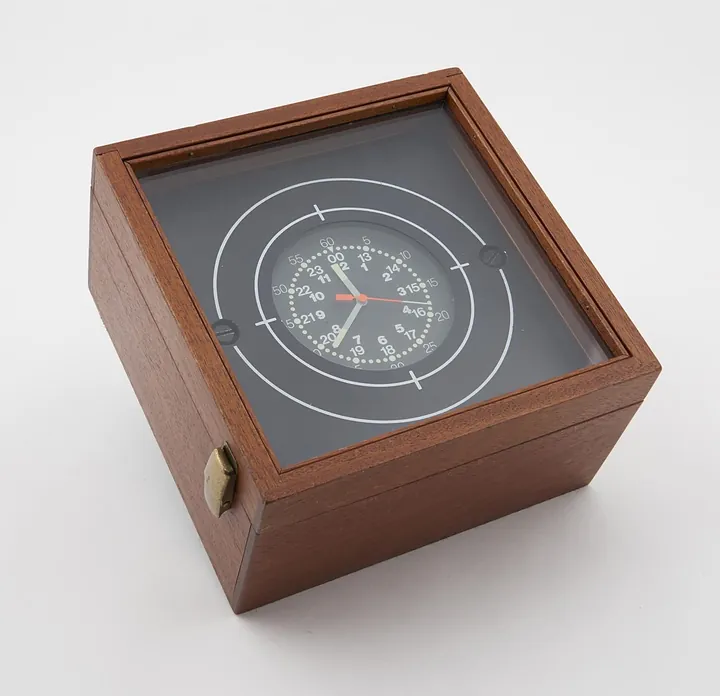
Instruments · 1965–1984
Chronometer by Patek Philippe and Kelvin Hughes, England, 1965–1984
Science Museum Group, London
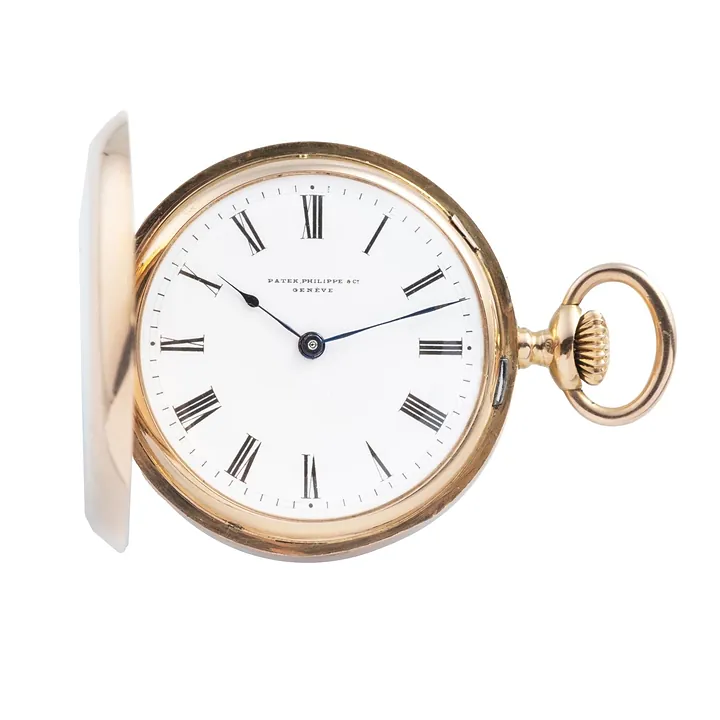
Pocket Watches · c. 1895
Patek Philippe pocket watch, c. 1895
Antiquorum auction archive, Geneva

Pocket Watches · c. 1900
Patek Philippe Chronometro Gondolo, c. 1900
Antiquorum auction archive, Geneva

Wristwatches · 1970
Wristwatch by Heno, Switzerland, 1970
Museum Rotterdam
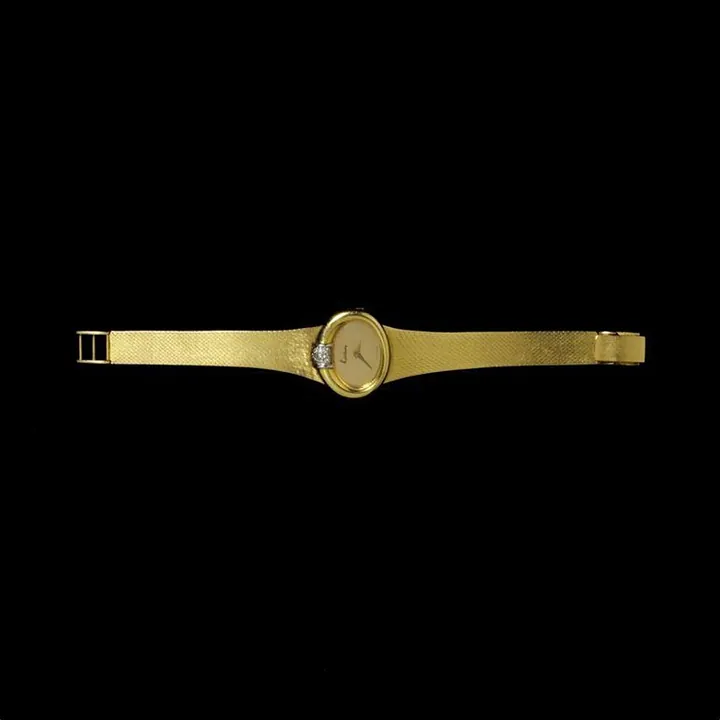
Wristwatches · 1973
Woman's watch, gold with diamonds set in platinum. Made for Kutchinsky, London by Chopard et Cie. Switzerland, 1973
Victoria and Albert Museum, London
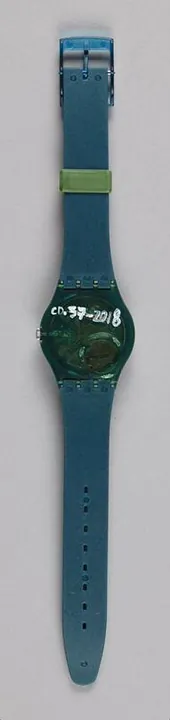
Wristwatches · 1985–1991
Swatch dummy watch: Blue Leaves GN104 design
Victoria and Albert Museum, London
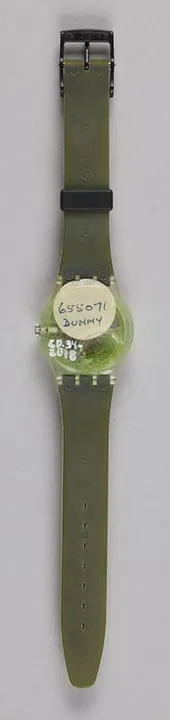
Wristwatches · 1985–1991
Swatch dummy watch: Technosphere GK101 design
Victoria and Albert Museum, London