
Wristwatches · Wristwatch
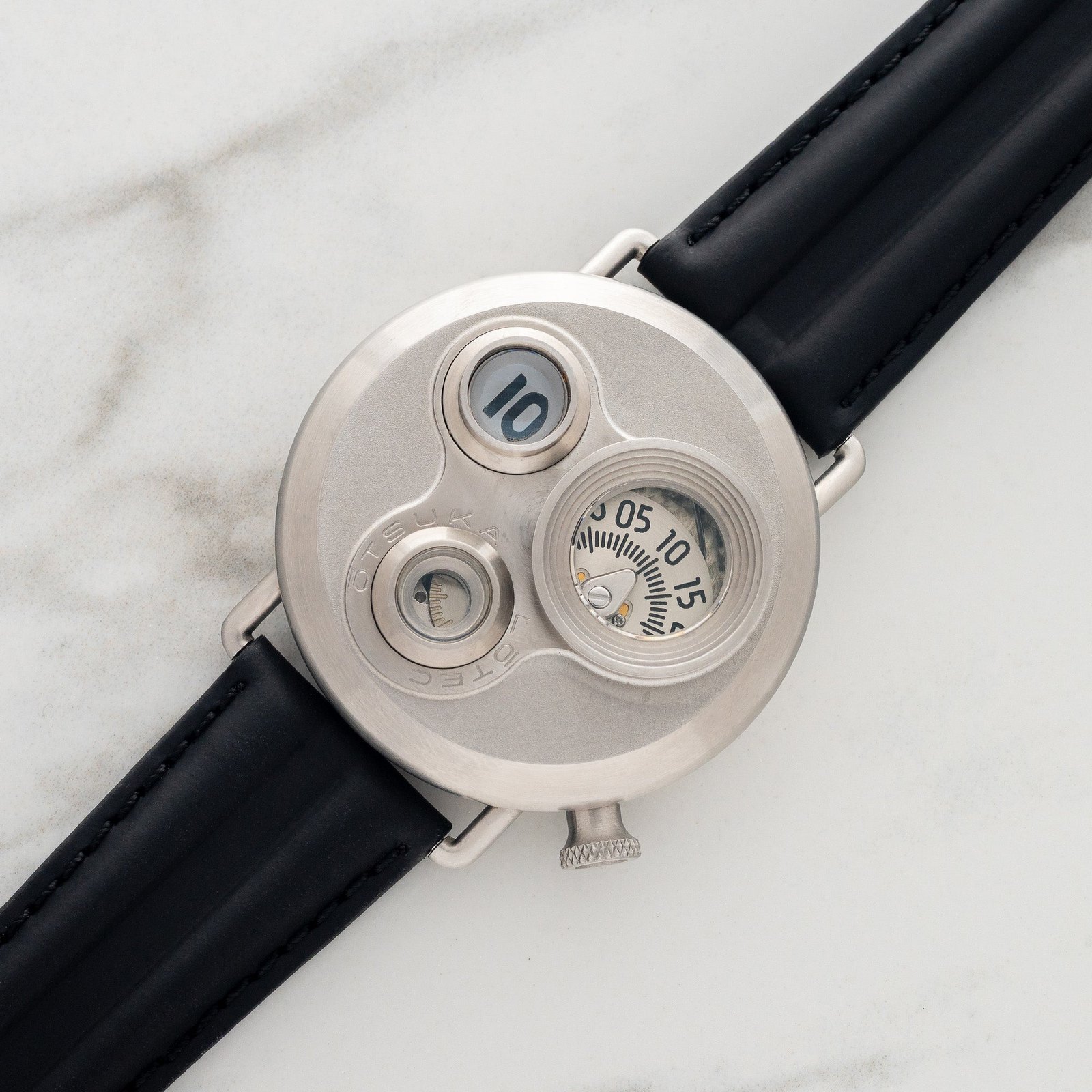
Ōtsuka Lōtec No. 7.5 Jump Hour
- Maker / attribution
- Jump (maker)
- Date
- 2024
- Historical period
- Contemporary Horology (2010 – Present)
- Country of origin
- Unrecorded in source
- Object type
- Wristwatch
- Stock no.
- Product 9889359134996
- Credit line
- Dealer listing, Collectors Corner NY (product 9889359134996)
- Catalogue title (original)
- Ōtsuka Lōtec No. 7.5 Jump Hour- Full Set (English)
View the source record (dealer listing) ↗ (opens another website in a new tab)Suggest a correction
Record summary
Catalogued by Collectors Corner NY (dealer), New York (stock number Product 9889359134996), this is a wristwatch by Jump, dated 2024. The Atlas places it in the Contemporary Horology period (2010 – Present) of its Wristwatches collection. The record is illustrated with 6 photographs.
Assembled from the source record's structured fields. Dates and attributions are given as the source states them; where a field is missing the Atlas leaves it blank rather than estimating.
Catalogue description
Dealer description — Collectors Corner NY
Ōtsuka Lōtec is a Japanese independent and GPHG Award-winning watchmaker founded by Jiro Katayama. His pieces are available from retail exclusively in Japan, further enhancing their appeal in other parts of the world. The No. 7.5 is a model blending design elements from steampunk to utilitarian futurism. It houses a Miyota movement that leverages a proprietary in-house module to power a jump hour mechanism with hours, minutes and seconds on separate discs. The exterior finish combines straight graining and sandblasting, highlighting the case’s interplay of clean lines and smooth curves, offering a fresh visual experience with each glance. This example comes as a complete set from 2024 and is undeniably the perfect conversation piece for any collector looking for something off the beaten path.
Historical context
Contemporary Horology (2010 – Present)
Silicon components, connected watches, optical-lattice research clocks and a thriving independent scene.
Smartwatches became the world's best-selling watches, while mechanical watchmaking focuses on craft, innovation (silicon components, new escapements) and independent makers.
Read the period in the timelineMore wristwatches from this periodEarlier: Mechanical Renaissance
Atlas type guide
Wristwatches
Bracelet watches were worn by women from the early nineteenth century — Breguet made one for Caroline Murat, Queen of Naples, in 1810–12 — but the wristwatch only became a man's instrument with military use and aviation in the early twentieth century. Between the World Wars it overtook the pocket watch; the 1920s and 1930s brought rectangular Art Deco cases, water-resistant cases and the first automatic winding systems.
After 1945 the wristwatch became a carrier of identity — dress watches, sports and dive watches, chronographs, calendars — produced by Swiss, American, Japanese, German, Soviet and Chinese industries. The quartz revolution after 1969 and the mechanical renaissance since the 1990s, including the rise of independent watchmakers, complete the story.
What to look for
- The reference number (between the lugs or inside the case back) and serial number, the starting point for dating.
- The calibre: its maker and number are often stamped under the dial or on the bridge.
- Originality of dial, hands and crown — refinished ('redial') dials are common.
- Case material marks: 18K/750, 14K/585, stainless steel, gold-filled, plated.
Dating clues
- Wire-lug cases: before c. 1925.
- Water-resistant screw-down cases: from 1926.
- Quartz movements: from 1969; sapphire crystals widespread after c. 1980.
General guidance written by the Atlas editors about this kind of object. It is not a statement about this particular piece; for that, rely on the source record above and on physical examination.
Related records
Clocks · c. 1890
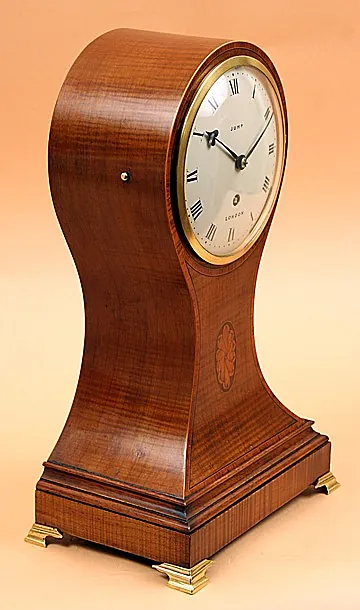
Small fusee mantel clock by Jump, London, c. 1890
P A Oxley (dealer), Wiltshire
Clocks · c. 1880
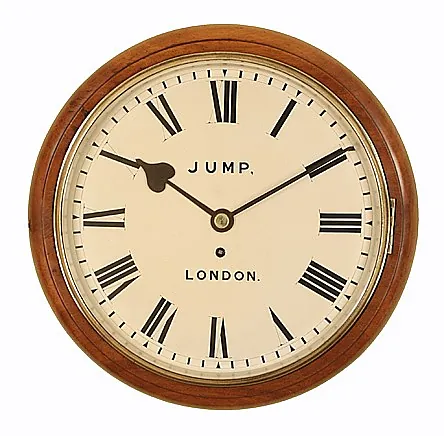
Wall clock by Jump, London, c. 1880
P A Oxley (dealer), Wiltshire
Wristwatches · c. 1930s
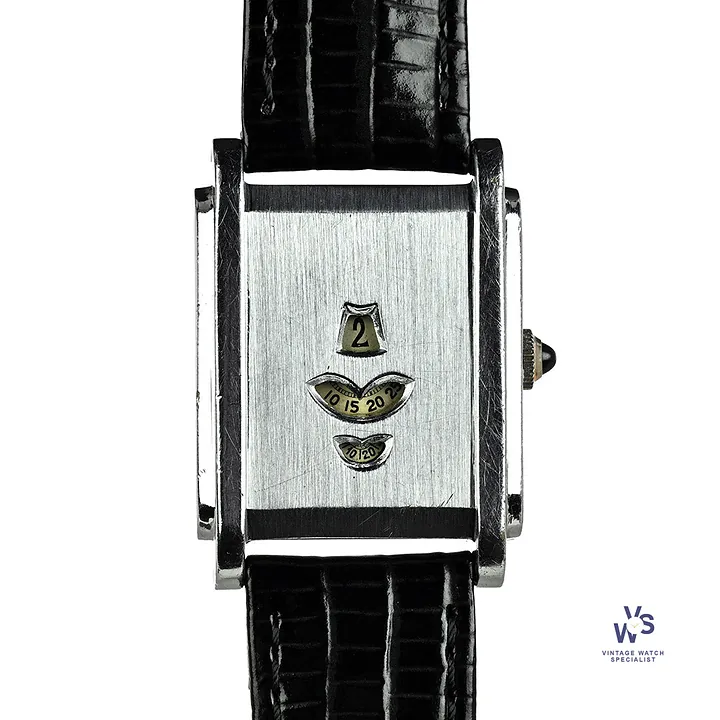
Jump Hours watch, circa 1930s
Vintage Watch Specialist (dealer), United Kingdom
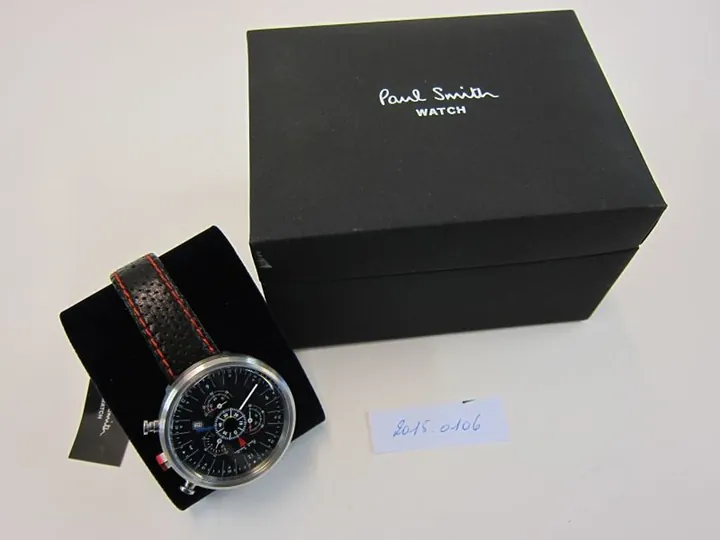
Wristwatches · 2010
Wristwatch, 2010
Modemuseum Hasselt
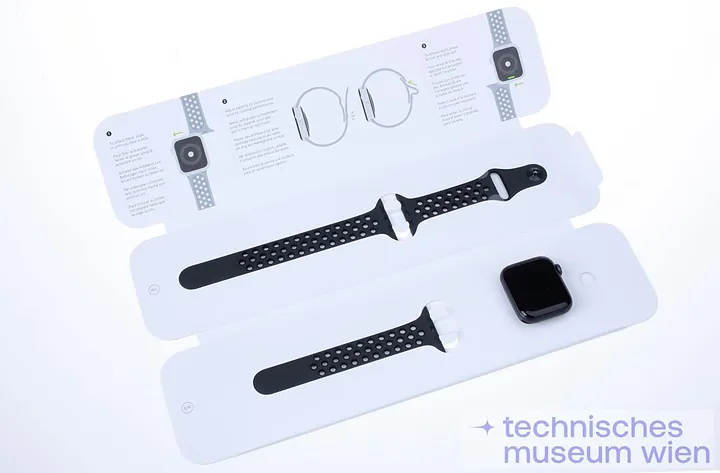
Wristwatches · 2018 (Series 4 released in September 2018; '1977' in the source is the model number A1977)
Apple Watch Series 4 (GPS, 40 mm, model A1977), 2018
Vienna Museum of Science and Technology
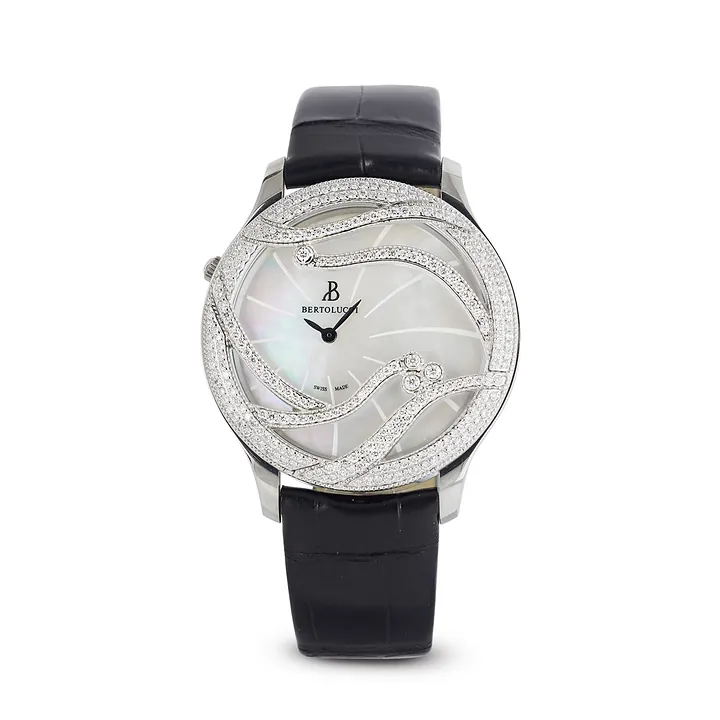
Wristwatches · c. 2010s
Bertolucci Stria III, ref. 11513.50.45.B88.6C1.501, c. 2010s
Antiquorum auction archive, Geneva
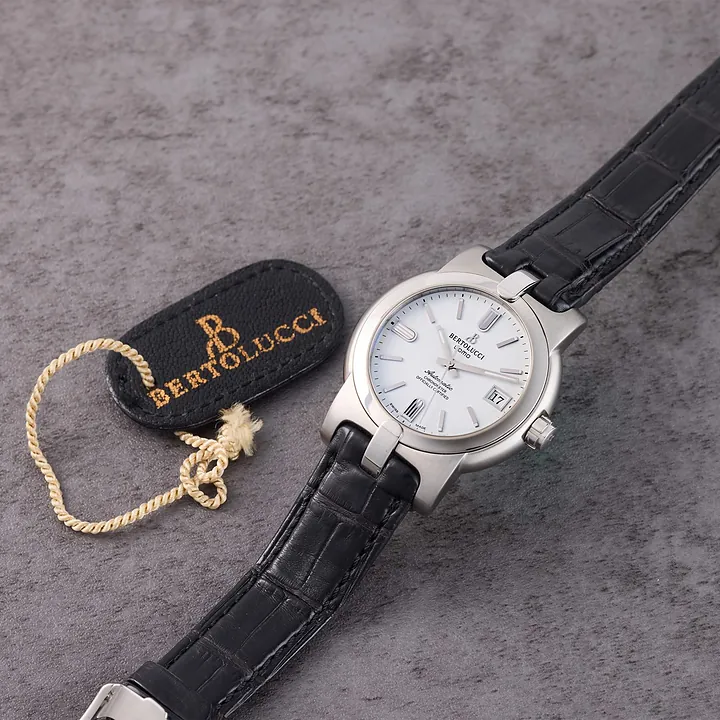
Wristwatches · c. 2010s
Bertolucci Uoma, ref. 824.51.41.10B, c. 2010s
Antiquorum auction archive, Geneva

Wristwatches · c. 2010s
Breguet Type XXI, ref. 3810, c. 2010s (Antiquorum Lot 381-24)
Antiquorum auction archive, Geneva