
Wristwatches · Wristwatch
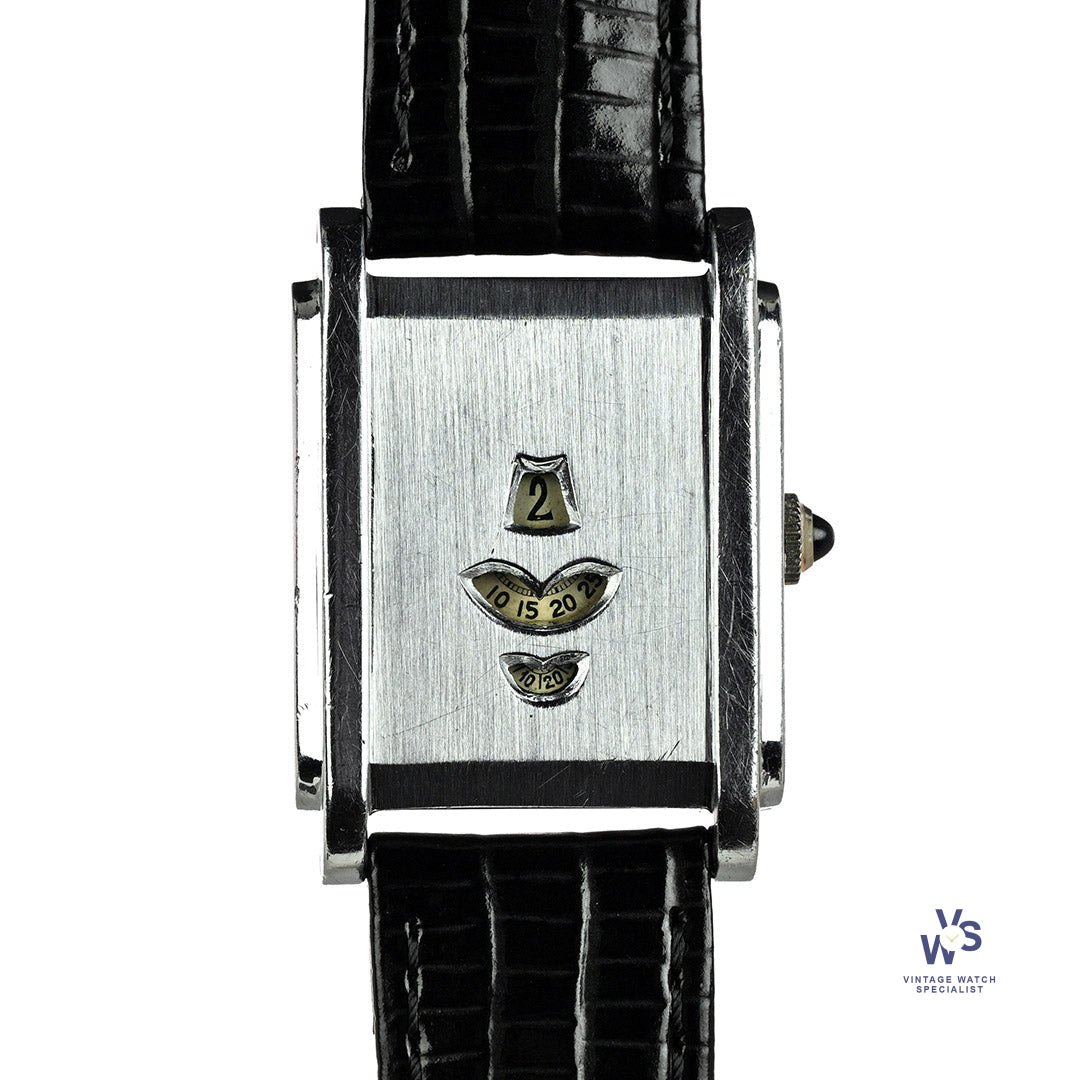
Jump Hours watch, circa 1930s
- Maker / attribution
- Jump (maker)
- Date
- c. 1930s
- Historical period
- Golden Age of Mechanical Watchmaking (1900 – 1945)
- Country of origin
- Unrecorded in source
- Object type
- Wristwatch
- Stock no.
- vws3911
- Credit line
- Dealer listing, Vintage Watch Specialist (vws3911)
- Catalogue title (original)
- Vintage Jump Hours watch - c.1930s (English)
View the source record (dealer listing) ↗ (opens another website in a new tab)Suggest a correction
Record summary
Catalogued by Vintage Watch Specialist (dealer), United Kingdom (stock number vws3911), this is a wristwatch by Jump, dated c. 1930s. The Atlas places it in the Golden Age of Mechanical Watchmaking period (1900 – 1945) of its Wristwatches collection. The record is illustrated with 6 photographs.
Assembled from the source record's structured fields. Dates and attributions are given as the source states them; where a field is missing the Atlas leaves it blank rather than estimating.
Catalogue description
Dealer description — Vintage Watch Specialist
A charming Art Deco style jump hours watch with a beautiful 'smiling' face, very collectable and superb condition, c.1930s Jump hour watches, first introduced in the early 20th century, revolutionised time display by replacing traditional hands with rotating discs viewed through apertures. The “jump” refers to the instantaneous change of the hour numeral, creating a mechanical digital readout. Popularised in the 1920s during the Art Deco era, these watches combined elegance with innovation. Favoured by brands like Audemars Piguet, IWC, and later Gérald Genta, jump hour mechanisms remain prized for their technical ingenuity and distinctive aesthetic charm. What's on Offer This delightful vintage jump hour watch is full of personality — there’s something about those three little apertures that almost resemble a smiling face! Likely dating from the late 1930s to early 1940s, it captures the bold Art Deco aesthetic of its era. The brushed silver-tone front contrasts beautifully with the polished edges, while signs of chrome beneath the case back hint at its vintage construction. Powered by a mechanical movement, its jumping discs for hours, minutes, and seconds make this quirky, characterful timepiece a fascinating slice of horological history.
Historical context
Golden Age of Mechanical Watchmaking (1900 – 1945)
The wristwatch displaces the pocket watch; waterproof cases, self-winding and grand complications.
The wristwatch overtook the pocket watch. Military use in the First World War, aviation, water-resistant cases (1926), automatic winding (1923–31), rectangular Art Deco designs and early chronographs and calendars defined the period.
Read the period in the timelineMore wristwatches from this periodEarlier: Industrial Revolution
Atlas type guide
Wristwatches
Bracelet watches were worn by women from the early nineteenth century — Breguet made one for Caroline Murat, Queen of Naples, in 1810–12 — but the wristwatch only became a man's instrument with military use and aviation in the early twentieth century. Between the World Wars it overtook the pocket watch; the 1920s and 1930s brought rectangular Art Deco cases, water-resistant cases and the first automatic winding systems.
After 1945 the wristwatch became a carrier of identity — dress watches, sports and dive watches, chronographs, calendars — produced by Swiss, American, Japanese, German, Soviet and Chinese industries. The quartz revolution after 1969 and the mechanical renaissance since the 1990s, including the rise of independent watchmakers, complete the story.
What to look for
- The reference number (between the lugs or inside the case back) and serial number, the starting point for dating.
- The calibre: its maker and number are often stamped under the dial or on the bridge.
- Originality of dial, hands and crown — refinished ('redial') dials are common.
- Case material marks: 18K/750, 14K/585, stainless steel, gold-filled, plated.
Dating clues
- Wire-lug cases: before c. 1925.
- Water-resistant screw-down cases: from 1926.
- Quartz movements: from 1969; sapphire crystals widespread after c. 1980.
General guidance written by the Atlas editors about this kind of object. It is not a statement about this particular piece; for that, rely on the source record above and on physical examination.
Related records
Clocks · c. 1890
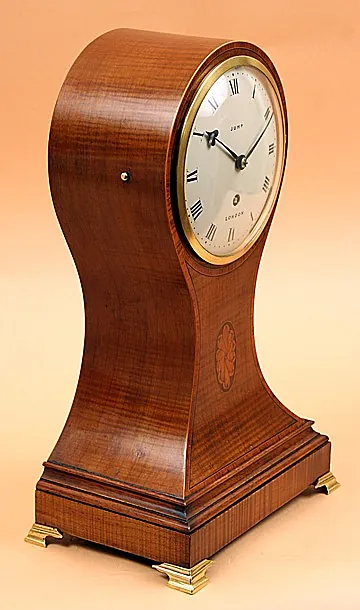
Small fusee mantel clock by Jump, London, c. 1890
P A Oxley (dealer), Wiltshire
Clocks · c. 1880
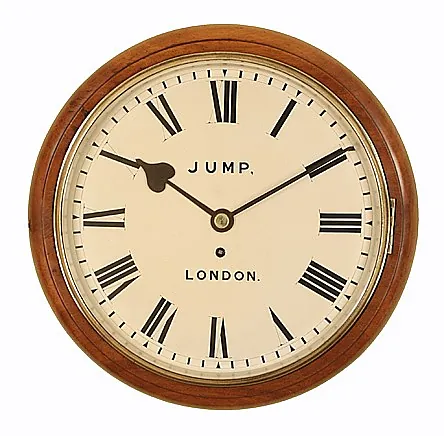
Wall clock by Jump, London, c. 1880
P A Oxley (dealer), Wiltshire
Wristwatches · 2024
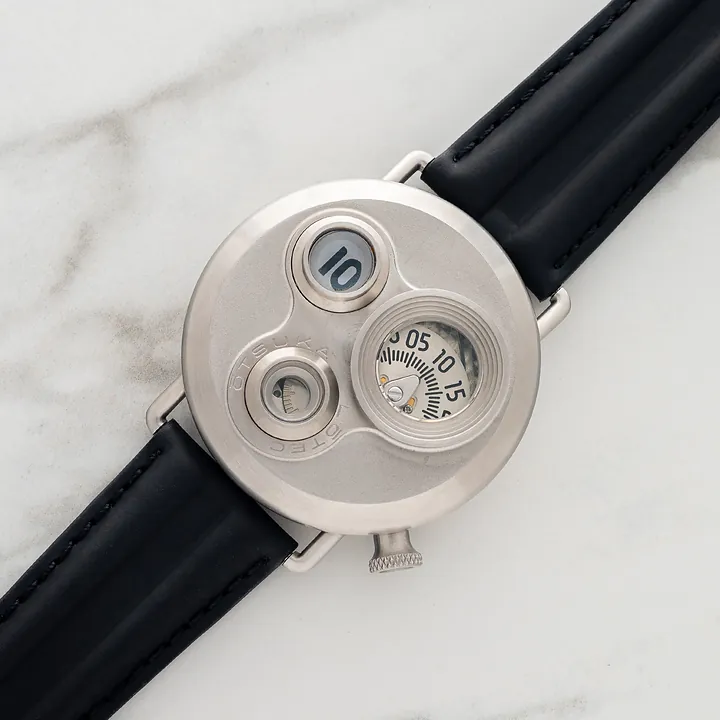
Ōtsuka Lōtec No. 7.5 Jump Hour
Collectors Corner NY (dealer), New York
Wristwatches · 1900–1999
Wristwatch by Mercury, 1900–1999
Modemuseum Hasselt
Wristwatches · 1900–1999
Wristwatch by Nutrix, 1900–1999
Modemuseum Hasselt

Wristwatches · 1920
Wristwatch, 1920
Modemuseum Hasselt

Wristwatches · 1931
Rolex 'Oyster Perpetual' rotor self-winding wrist-watch, lever escapement, in steel case with glass in back, Montres Rolex SA, Geneva, Switzerland, 1931
Science Museum Group, London
Wristwatches · c. 1936
Watch with diamond-set platinum case and gold link bracelet, Cartier, Paris, c. 1936.
Victoria and Albert Museum, London