
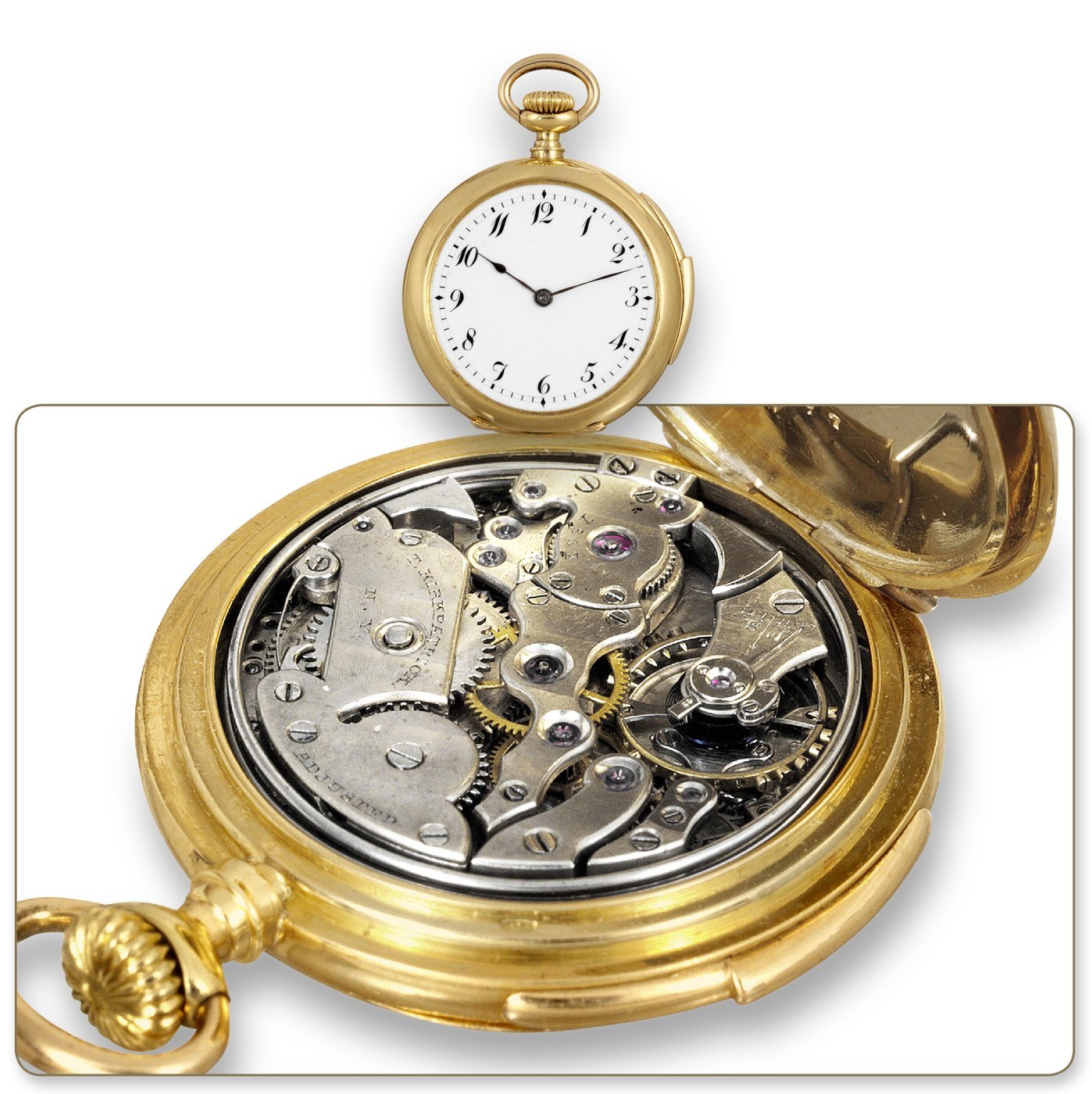
Pocket Watches · Five-minute repeating lady's pendant watch
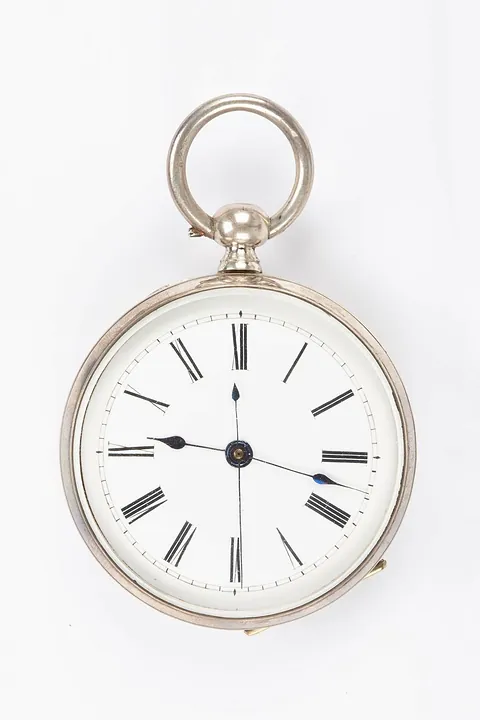
Miniature Five-Minute Repeater Pendant Watch
- Maker / attribution
- T. Kirkpatrick (source attribution)
- Date
- c. 1890
- Historical period
- Industrial Revolution (1850 – 1900)
- Country of origin
- Switzerland
- Object type
- Five-minute repeating lady's pendant watch
- Holding institution
- Antiquorum
- Accession / object no.
- 387
- Credit line
- Antiquorum
- Catalogue title (original)
- Miniature Five-Minute Repeater\nSwiss, No. 7567, retailed by T. Kirkpatrick, New York. Made\ncirca 1890.\nVery fine and extremely rare, miniature five-minute repeating,\nkeyless, lady's pendant watch. (English)
View the source record ↗ (opens another website in a new tab)Suggest a correction
Record summary
Held and catalogued by Antiquorum (object number 387), this is a five-minute repeating lady's pendant watch attributed to T. Kirkpatrick, made in Switzerland, dated c. 1890. The Atlas places it in the Industrial Revolution period (1850 – 1900) of its Pocket Watches collection. The record is illustrated with 1 photograph.
Assembled from the source record's structured fields. Dates and attributions are given as the source states them; where a field is missing the Atlas leaves it blank rather than estimating.
Catalogue description
Original object description
Bearing movement engravings from the New York retailer T. Kirkpatrick and serial number 7567, this Swiss women's miniature pendant watch was manufactured around 1890. It is housed in a four-part gold bassine case measuring 28 mm across, decorated on the case back with a black champlevé enamel monogram. The white enamel dial is appointed with Breguet numerals, spade hands, and an outer minute ring. Powering the watch is a 10-ligne, 29-jewel rhodium-plated movement ornamented with Geneva stripes (fausses côtes). The caliber includes a straight-line lever escapement, an overcoil Breguet spring in blued steel, a bimetallic cut compensation balance, and two polished steel hammers striking wire gongs to sound five-minute intervals on demand. Such five-minute repeating pendant watches of this diminutive scale remain exceptionally scarce.
Case and Dial
The four-piece gold bassine case measures 28 millimeters in diameter and displays mirror-polished surfaces. A personal monogram in black champlevé enamel accents the exterior case back, while a gold inner cuvette shelters the movement. Breguet numerals, black steel spade hands, and a precise peripheral minute track articulate the white enamel dial.
Movement and Function
Spanning 10 lignes across, the rhodium-plated repeating mechanism is finished with fausses côtes along its bridges. Comprising 29 jewels, it incorporates a straight-line lever escapement, an adjustable index regulator, an overcoil blued steel Breguet hairspring, and a temperature-compensating bimetallic cut balance. Rather than striking single minutes, the striking complication uses two polished steel hammers and wire gongs to sound the hours followed by elapsed five-minute increments. The movement plates bear the signature of New York retailer T. Kirkpatrick.
Condition and Rarity
Condition reports from auction analysis rate the gold exterior at 3 (Good) and the enamel dial at 2-01 (Very Good). Technical commentaries highlight that miniature repeating watches are uncommonly rare, with the vast majority designed to repeat single minutes, establishing this five-minute striking example as one of the smallest extant mechanisms of its configuration.
Inscriptions & marks
7567
Historical context
Industrial Revolution (1850 – 1900)
American interchangeable-parts manufacture; railroad time standards; Swiss and German factory systems.
Machine production with interchangeable parts, pioneered by Waltham (1850s) and adopted by Elgin, Longines, Omega and others, made reliable lever watches widely affordable. Keyless winding became standard, railroad watch standards were introduced (1890s), and Swiss and American industries competed globally.
Read the period in the timelineMore pocket watches from this periodEarlier: Precision & Scientific Horology
Atlas type guide
Early spring-driven watches
Portable spring-driven timepieces appeared in southern Germany, France and Italy in the early sixteenth century; Peter Henlein of Nuremberg is traditionally credited, although the historical record is complex. These early watches were worn as pendants or carried, had iron or brass movements with a verge escapement and a foliot or small balance, and used a stackfreed or fusee to equalise spring force. They indicated hours only and were notoriously inaccurate.
From the later sixteenth century watches were made in Blois, Paris, Geneva, London and Augsburg in oval, octagonal, cruciform, skull and other 'form' cases of rock crystal, gilt brass, silver and enamel. They were jewellery and status objects as much as timekeepers.
What to look for
- A single hour hand and often a touch-pin hour ring for feeling the time.
- Stackfreed (a cam and spring) instead of a fusee on German watches.
- Pierced and engraved cocks over the balance, fine gut fusee lines.
- Rock-crystal, enamelled or engraved form cases.
Dating clues
- Drum-shaped German watches: c. 1530–1580.
- Oval and form watches: c. 1580–1650.
- Before c. 1675 there is no balance spring; watches can vary by many minutes a day.
General guidance written by the Atlas editors about this kind of object. It is not a statement about this particular piece; for that, rely on the source record above and on physical examination.
Related records
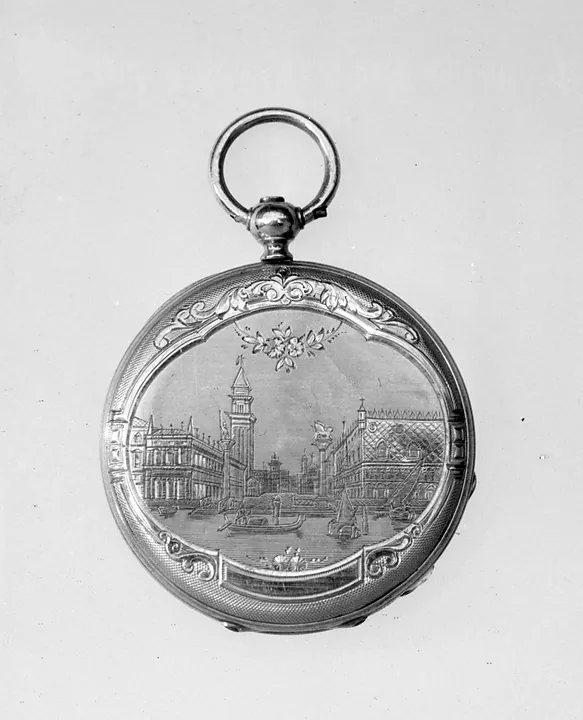
Pocket Watches · c. 1850
Watch by Eugène Bornand, Switzerland, c. 1850
The Metropolitan Museum of Art, New York
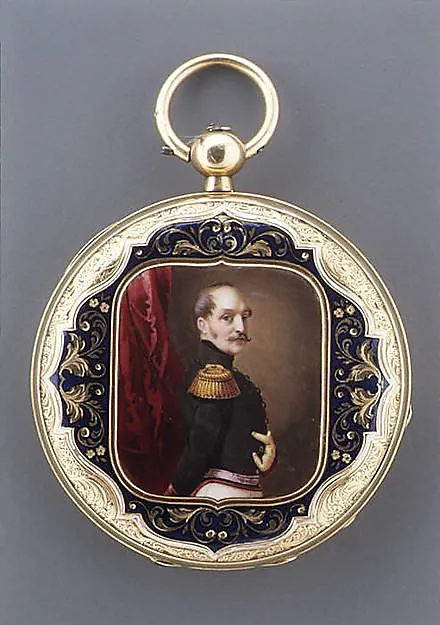
Pocket Watches · probably c. 1850–55
Watch by Firm of Perret & Cie, Switzerland, probably c. 1850–55
The Metropolitan Museum of Art, New York
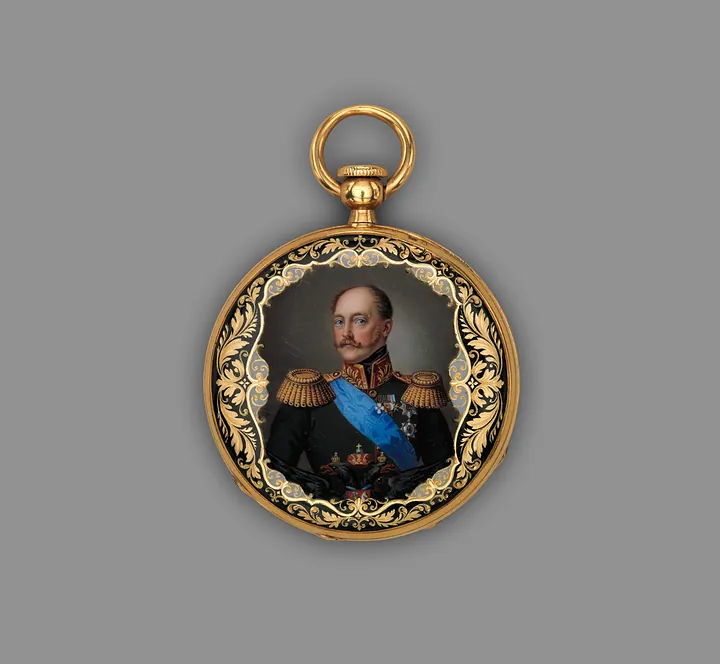
Pocket Watches · c. 1850–55
Watch by François Czapek, c. 1850–55
The Metropolitan Museum of Art, New York
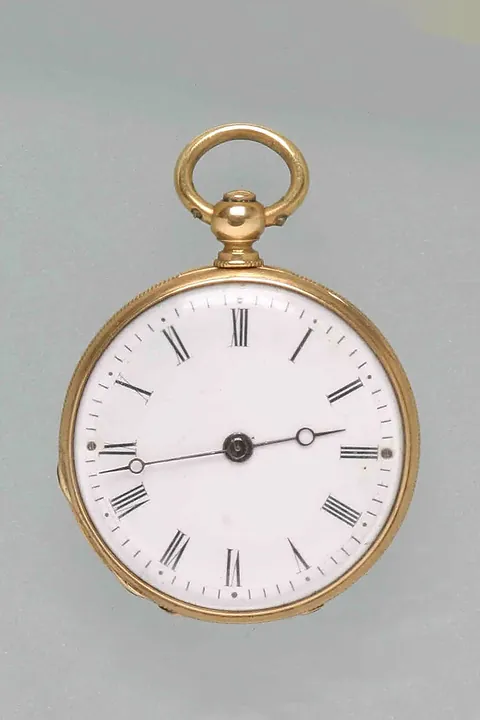
Pocket Watches · c. 1850
Pocket watch by D Bachelard et Fils, Switzerland, c. 1850
German Clock Museum
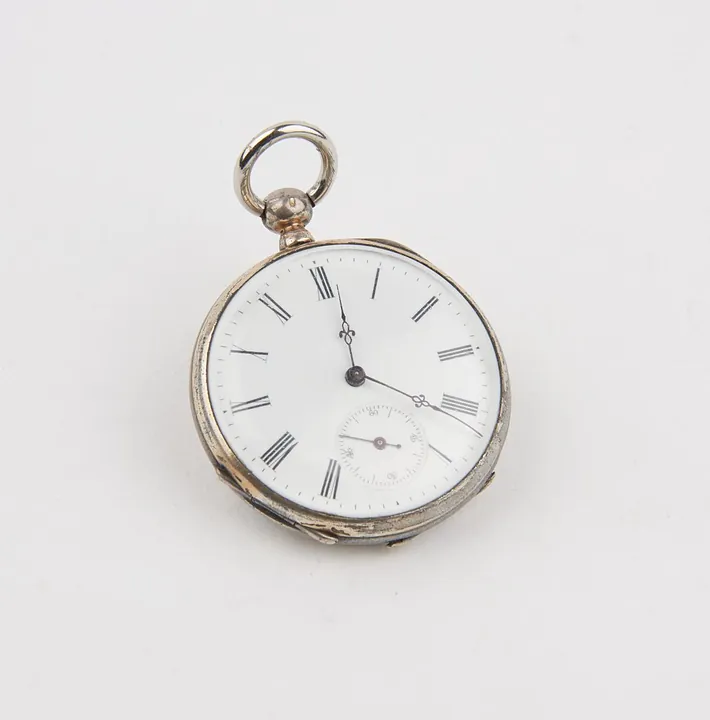
Pocket Watches · 1850–1899
Pocket watch by GT, Switzerland, 1850–1899
Science Museum Group, London
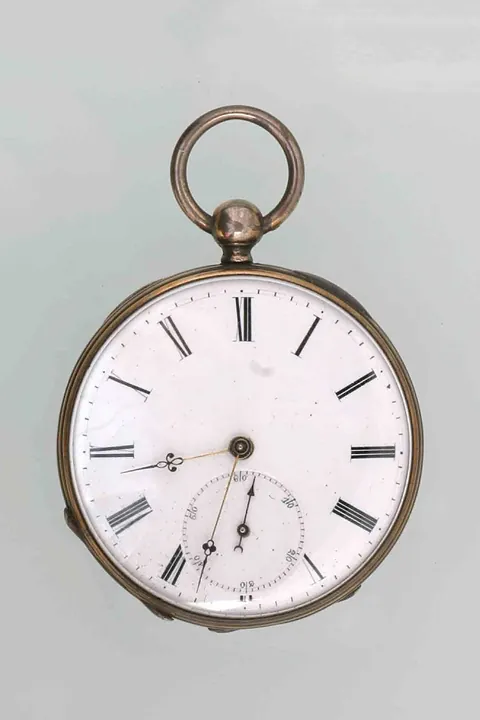
Pocket Watches · c. 1850
Pocket watch by Perret et Cie., Switzerland, c. 1850
German Clock Museum
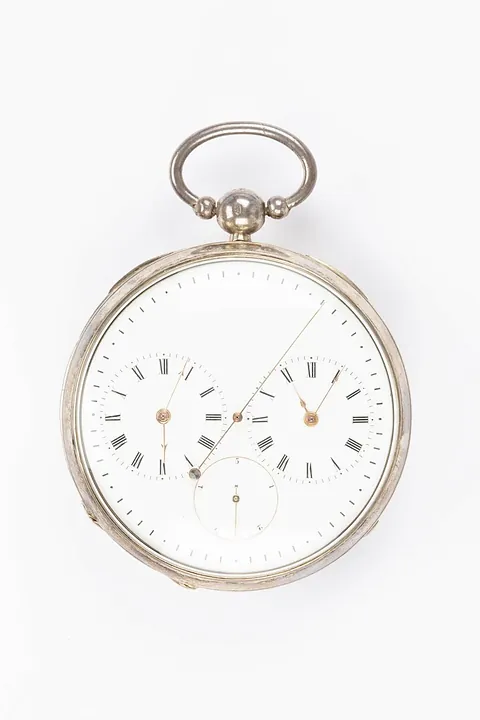
Pocket Watches · c. 1850
Pocket watch, probably Switzerland, c. 1850 (no. 58079)
German Clock Museum
Pocket Watches · c. 1850
Pocket watch, Switzerland, c. 1850 (no. 58081)
German Clock Museum