
Wristwatches · Wristwatch
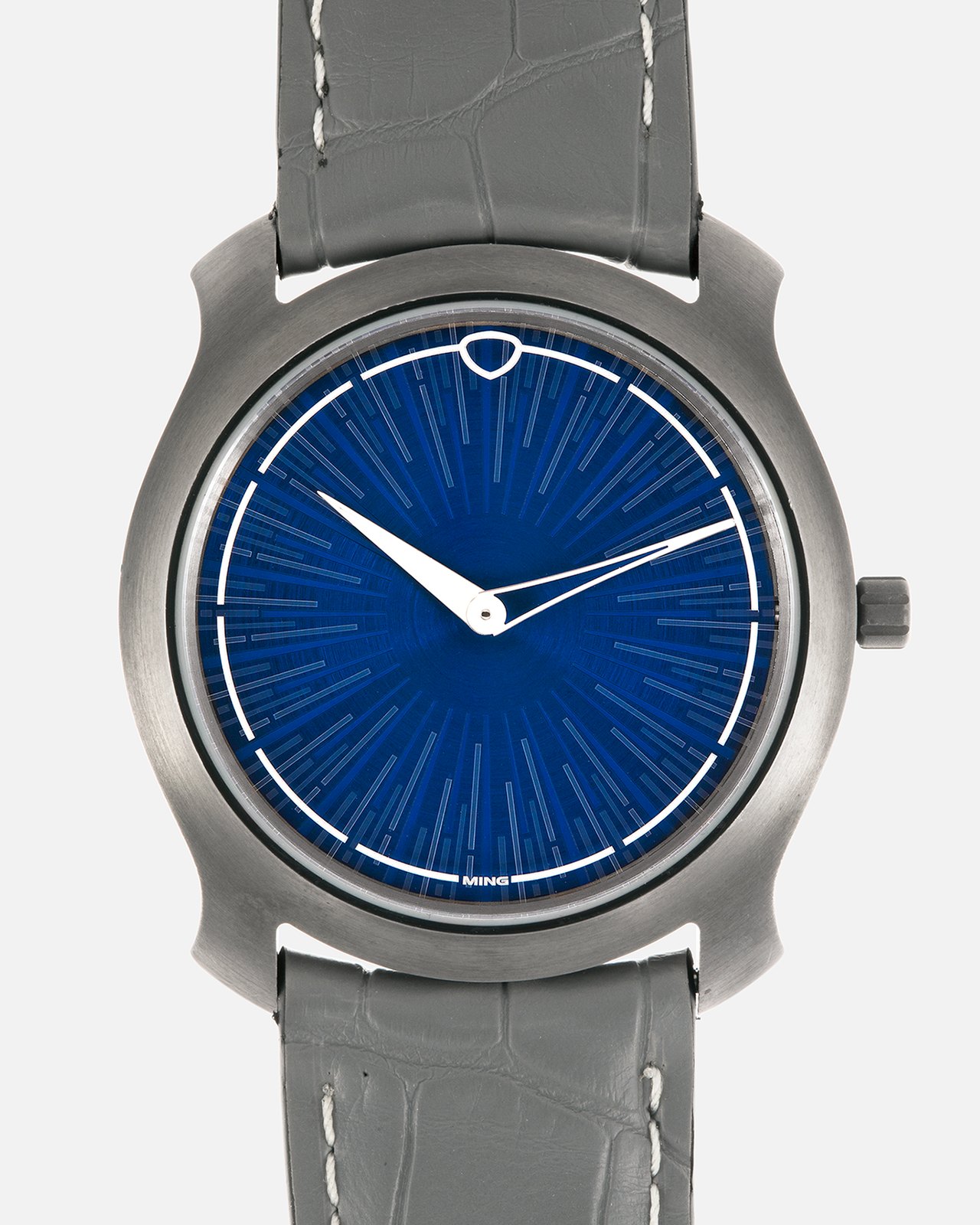
Ming Project 21 Souscription Tantalum, 2025
- Maker / attribution
- MING (maker)
- Date
- 2025
- Historical period
- Contemporary Horology (2010 – Present)
- Country of origin
- Unrecorded in source
- Object type
- Wristwatch
- Dimensions
- Case 75 mm
- Stock no.
- Product 7710373642327
- Credit line
- Dealer listing, S.Song Watches (product 7710373642327)
- Catalogue title (original)
- Ming Project 21 Souscription Tantalum (English)
View the source record (dealer listing) ↗ (opens another website in a new tab)Suggest a correction
Record summary
Catalogued by S.Song Watches (dealer), Seattle (stock number Product 7710373642327), this is a wristwatch by MING, dated 2025. The Atlas places it in the Contemporary Horology period (2010 – Present) of its Wristwatches collection. Recorded dimensions: Case 75 mm. The record is illustrated with 6 photographs.
Assembled from the source record's structured fields. Dates and attributions are given as the source states them; where a field is missing the Atlas leaves it blank rather than estimating.
Catalogue description
Dealer description — S.Song Watches
Being an independent watch brand is no easy feat. Taking on the Swiss juggernauts in a market saturated with countless timepieces is a challenge most would rather avoid. The reality is simple: for every independent success story, there are dozens of brands that fail to gain traction, are absorbed by larger groups, or simply disappear altogether. That being said, if there is one modern independent that has consistently carved out its own identity, it would have to be MING. Since its founding in 2017, the brand has cultivated a loyal following through distinctive design, thoughtful engineering and a willingness to explore ideas that sit well outside the mainstream. The Project 21 Souscription may well be its most fascinating creation. At its heart sits the legendary Frederic Piguet Cal. 21. Introduced in 1925 and measuring just 1.75 mm thick, it remains one of the thinnest serially produced movements ever made. Over the course of its long production run, the calibre found its way into watches from Patek Philippe, Audemars Piguet, Vacheron Constantin, Cartier, Jaeger-LeCoultre and numerous others. For Project 21, MING partnered with Mathis Horlogerie and TitAl SA to comprehensively rework these vintage movements, incorporating newly manufactured components, upgraded finishing and a skeletonised titanium train bridge while preserving the calibre's astonishingly slim profile. The movement is housed within a 35 mm monobloc tantalum case measuring just 6.9 mm thick. While the dimensions are undeniably compact, it carries a surprising amount of heft on the wrist thanks to tantalum's exceptional density. Produced by Joshua Shapiro of J.N. Shapiro Watches in California, the case combines brushed, polished and sandblasted surfaces, while the absence of a separate bezel further emphasises its clean, uninterrupted profile. While the calibre understandably receives much of the attention, I found myself equally fascinated by the case. A 35 mm dress watch is not something most collectors associate with heft, yet the tantalum construction creates exactly that impression. There is a peculiar disconnect between its visual delicacy and physical presence, one that never quite goes away no matter how many times you pick it up. It is unlike almost any other 35 mm watch I have handled, and certainly not what I expected the first time I wore it. Exclusive to the Souscription version is its vivid blue dial and matching movement treatment. Rather than relying on a conventional dial, MING employs a layered architecture consisting of a borosilicate crystal upper dial produced using FEMTOprint technology, a manufacturing process that uses ultra precise femtosecond lasers to machine intricate three dimensional structures within glass. Suspended above an incredibly thin 400-micron CVD-coated brass base, the layered design creates an extraordinary sense of depth, while the subtle radial pattern introduces texture without overwhelming the composition. The indices are etched directly into the external crystal, further enhancing their signature floating effect, while the absence of luminous material feels entirely appropriate for a piece conceived with elegance rather than utility in mind. What I find most compelling about the Project 21 Souscription is that none of its defining qualities are immediately obvious. At first glance, it presents itself as an elegant, compact dress watch. Spend more time with it, however, and its character gradually reveals itself. The unexpected heft of the tantalum case, the depth created by the layered dial and the significance of the historic calibre all become part of the experience. In many ways, it is a study in contrasts: compact yet substantial, technically ambitious yet visually restrained, rooted in a century-old movement yet unmistakably contemporary. Few watches have challenged my expectations quite like the Project 21 Souscription, and fewer still have lingered in my thoughts long after I put them down.
Historical context
Contemporary Horology (2010 – Present)
Silicon components, connected watches, optical-lattice research clocks and a thriving independent scene.
Smartwatches became the world's best-selling watches, while mechanical watchmaking focuses on craft, innovation (silicon components, new escapements) and independent makers.
Read the period in the timelineMore wristwatches from this periodEarlier: Mechanical Renaissance
Atlas type guide
Wristwatches
Bracelet watches were worn by women from the early nineteenth century — Breguet made one for Caroline Murat, Queen of Naples, in 1810–12 — but the wristwatch only became a man's instrument with military use and aviation in the early twentieth century. Between the World Wars it overtook the pocket watch; the 1920s and 1930s brought rectangular Art Deco cases, water-resistant cases and the first automatic winding systems.
After 1945 the wristwatch became a carrier of identity — dress watches, sports and dive watches, chronographs, calendars — produced by Swiss, American, Japanese, German, Soviet and Chinese industries. The quartz revolution after 1969 and the mechanical renaissance since the 1990s, including the rise of independent watchmakers, complete the story.
What to look for
- The reference number (between the lugs or inside the case back) and serial number, the starting point for dating.
- The calibre: its maker and number are often stamped under the dial or on the bridge.
- Originality of dial, hands and crown — refinished ('redial') dials are common.
- Case material marks: 18K/750, 14K/585, stainless steel, gold-filled, plated.
Dating clues
- Wire-lug cases: before c. 1925.
- Water-resistant screw-down cases: from 1926.
- Quartz movements: from 1969; sapphire crystals widespread after c. 1980.
General guidance written by the Atlas editors about this kind of object. It is not a statement about this particular piece; for that, rely on the source record above and on physical examination.
Related records
Wristwatches · 2022
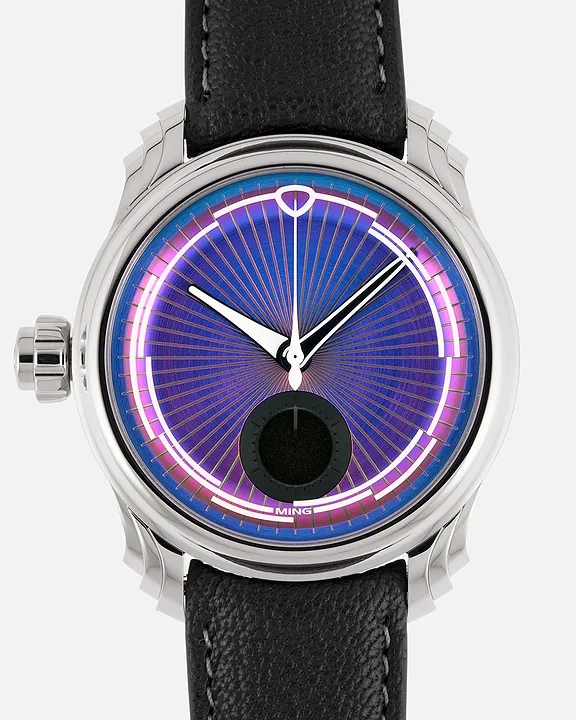
Ming 57.04 Iris Monopusher Chronograph, 2022
S.Song Watches (dealer), Seattle
Wristwatches · 2023
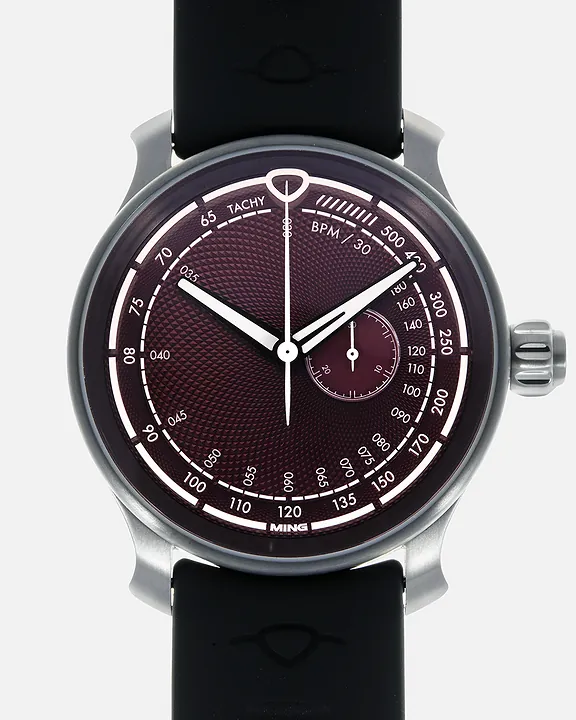
Ming 37.04 Monopusher Chronograph Tantalum, 2023
S.Song Watches (dealer), Seattle
Wristwatches · 2022
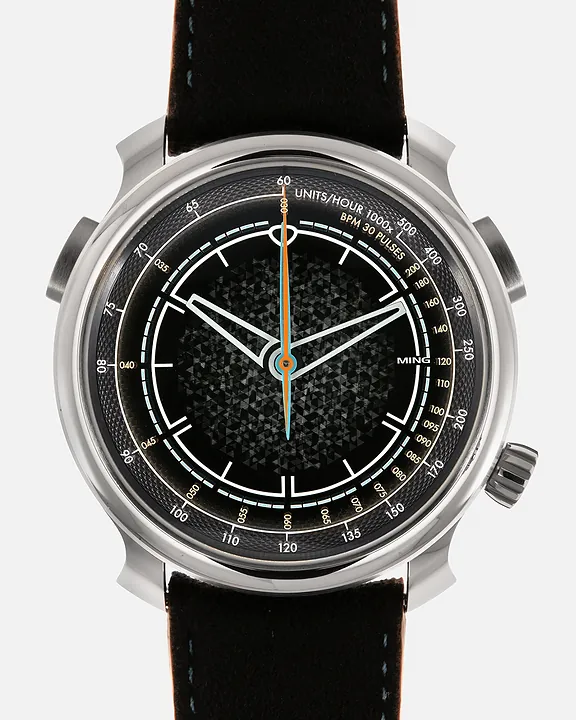
Ming 20.01 Series II Agengraphe Chronograph Special Projects Cave, 2022
S.Song Watches (dealer), Seattle
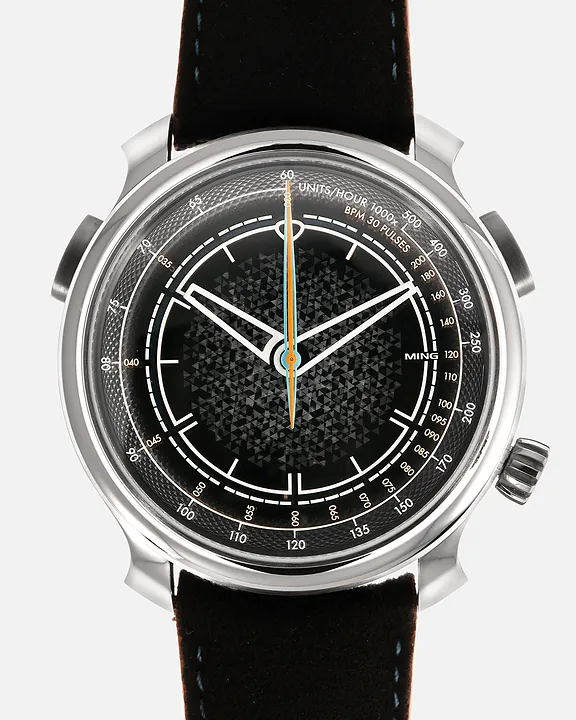
Wristwatches · 2022
Ming 20.01 Series II Agengraphe Chronograph Special Projects Cave, 2022
S.Song Watches (dealer), Seattle
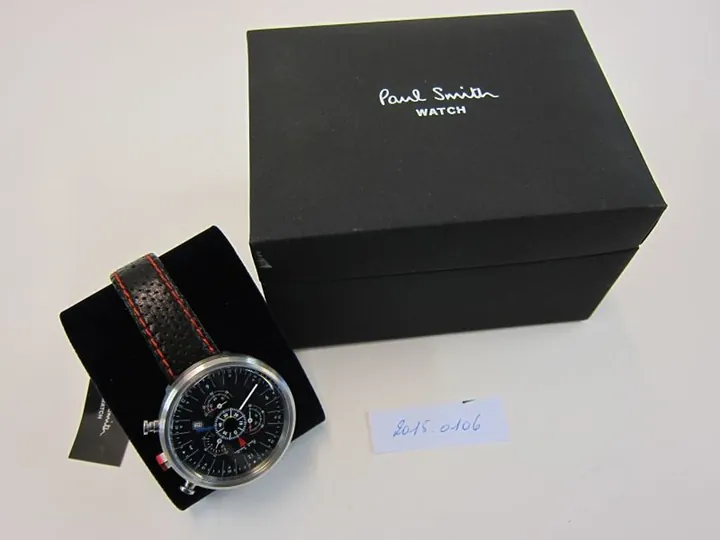
Wristwatches · 2010
Wristwatch, 2010
Modemuseum Hasselt
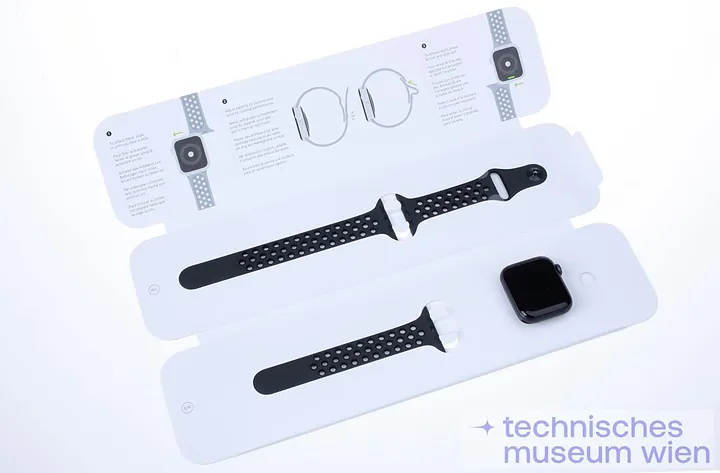
Wristwatches · 2018 (Series 4 released in September 2018; '1977' in the source is the model number A1977)
Apple Watch Series 4 (GPS, 40 mm, model A1977), 2018
Vienna Museum of Science and Technology
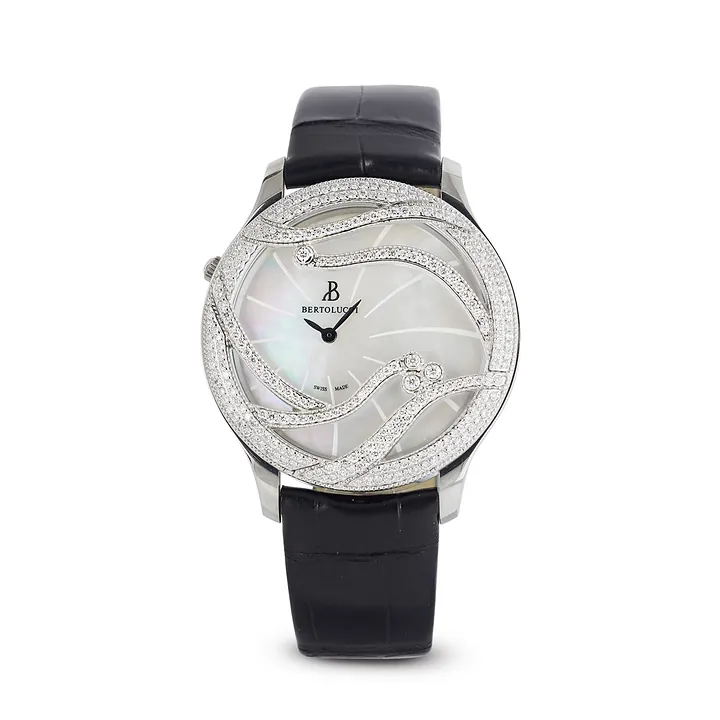
Wristwatches · c. 2010s
Bertolucci Stria III, ref. 11513.50.45.B88.6C1.501, c. 2010s
Antiquorum auction archive, Geneva
Wristwatches · c. 2010s
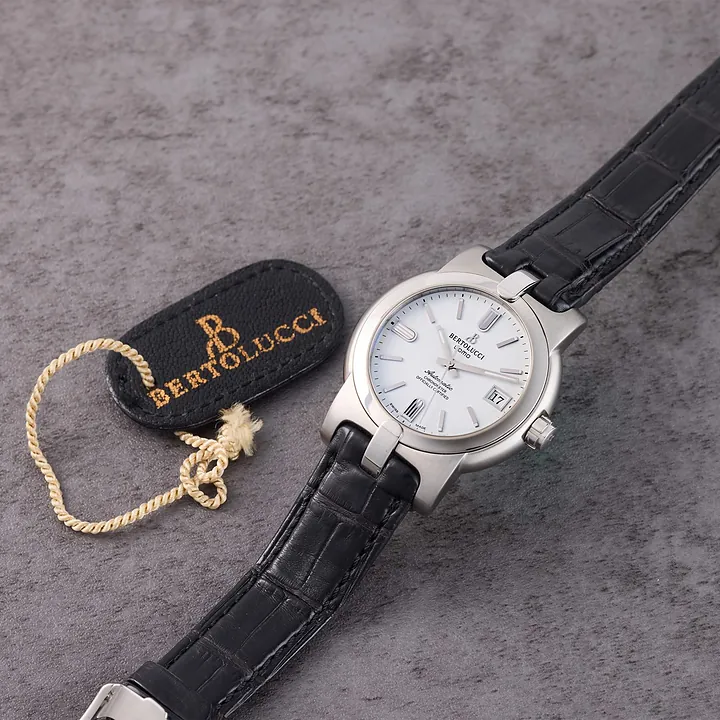
Bertolucci Uoma, ref. 824.51.41.10B, c. 2010s
Antiquorum auction archive, Geneva