
Wristwatches · Wristwatch
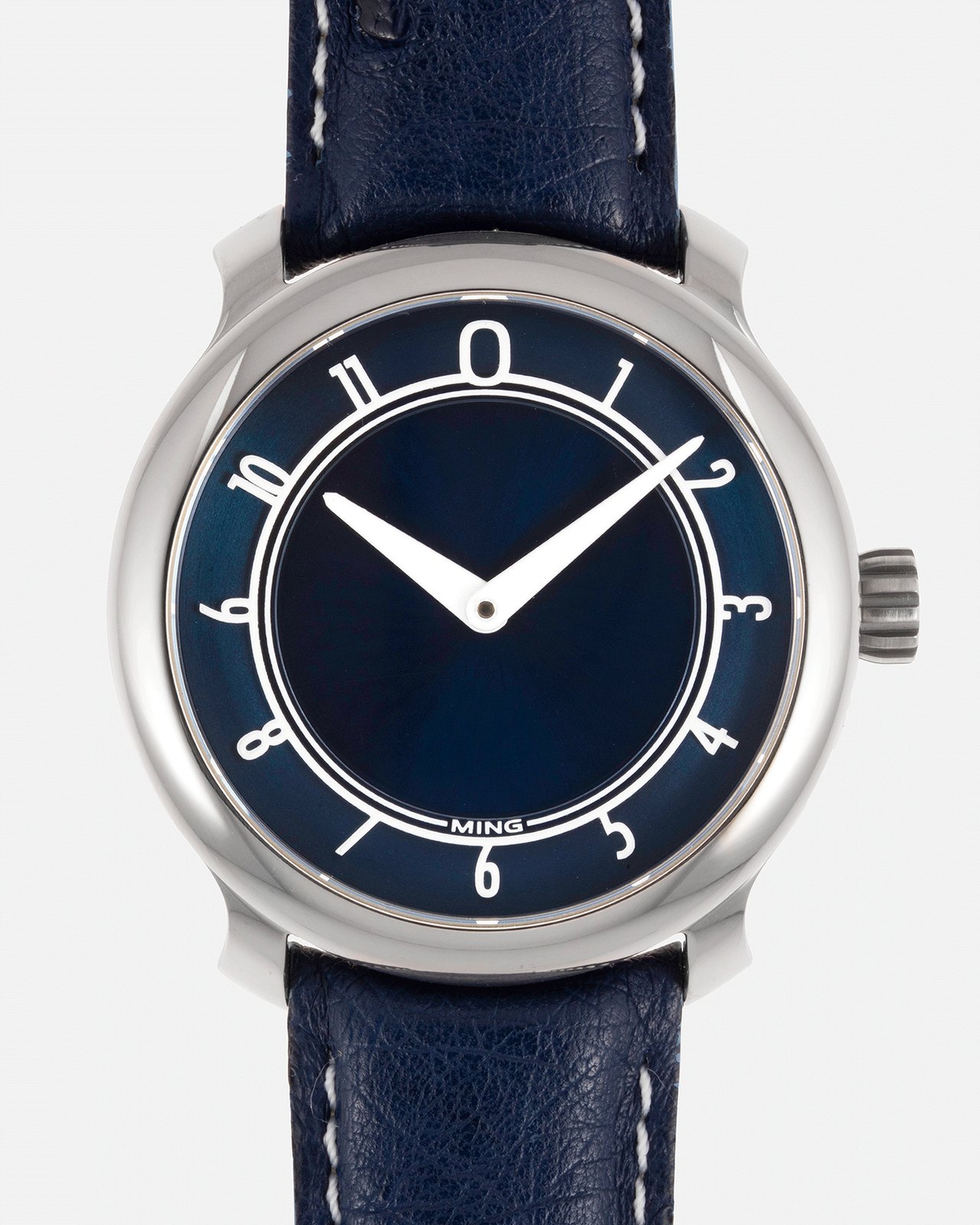
Ming 17.01 Blue, 2017
- Maker / attribution
- MING (maker)
- Date
- 2017
- Historical period
- Contemporary Horology (2010 – Present)
- Country of origin
- Unrecorded in source
- Object type
- Wristwatch
- Dimensions
- Case 38 mm
- Stock no.
- Product 6573378961495
- Credit line
- Dealer listing, S.Song Watches (product 6573378961495)
- Catalogue title (original)
- Ming 17.01 Blue (English)
View the source record (dealer listing) ↗ (opens another website in a new tab)Suggest a correction
Record summary
Catalogued by S.Song Watches (dealer), Seattle (stock number Product 6573378961495), this is a wristwatch by MING, dated 2017. The Atlas places it in the Contemporary Horology period (2010 – Present) of its Wristwatches collection. Recorded dimensions: Case 38 mm. The record is illustrated with 6 photographs.
Assembled from the source record's structured fields. Dates and attributions are given as the source states them; where a field is missing the Atlas leaves it blank rather than estimating.
Catalogue description
Dealer description — S.Song Watches
That being said, if there was a shining light, a name that has defied the odds, through truly original thinking and an unwavering desire for quality, it would have to be MING. The 17.01 was released in 2017 in anthracite and blue, with both having a limited run of 150 pieces. Sized in a 38mm Grade-5 Titanium case, this design has now become the signature look of MING. With short, outward curving lugs and a curved bar strap, the top of the case is polished while the sides are brushed, adding a nice depth to the overall look. The dial is a three-part construction that includes the central guilloché-like pattern, the outer, circular brushed periphery, and the now-famous sapphire donut rings that display the numerals atop it all. With these combined, the dial has an amazing depth that varies in color depending on the lighting, displaying a flat dark blue at times and ranging towards a two-tone monochromatic blue when the central pattern pops. The case is solidly constructed, offering a 100m water resistance with triple crown gaskets and is nitrogen-filled in order to slow down the deterioration of lubricants, enhancing reliability and longevity. The manually wound SW210-1 caliber is no slouch either. MING put it through a 250-hour testing program, adjusted to 5 positions. Furthermore, the 17.06 Copper managed to win the Horological Revelation Prize at the GPHG in 2019, a watch industry award that is akin to the Grammys. It was an amazing feat that truly solidified the MING brand as a true success and with this 17.01 Anthracite, it is worth mentioning that this bears the serial No. 3, making it the third watch ever made by the brand. It is a rare opportunity to purchase a collectible and unique watch, and also a true piece of MING history.
Historical context
Contemporary Horology (2010 – Present)
Silicon components, connected watches, optical-lattice research clocks and a thriving independent scene.
Smartwatches became the world's best-selling watches, while mechanical watchmaking focuses on craft, innovation (silicon components, new escapements) and independent makers.
Read the period in the timelineMore wristwatches from this periodEarlier: Mechanical Renaissance
Atlas type guide
Wristwatches
Bracelet watches were worn by women from the early nineteenth century — Breguet made one for Caroline Murat, Queen of Naples, in 1810–12 — but the wristwatch only became a man's instrument with military use and aviation in the early twentieth century. Between the World Wars it overtook the pocket watch; the 1920s and 1930s brought rectangular Art Deco cases, water-resistant cases and the first automatic winding systems.
After 1945 the wristwatch became a carrier of identity — dress watches, sports and dive watches, chronographs, calendars — produced by Swiss, American, Japanese, German, Soviet and Chinese industries. The quartz revolution after 1969 and the mechanical renaissance since the 1990s, including the rise of independent watchmakers, complete the story.
What to look for
- The reference number (between the lugs or inside the case back) and serial number, the starting point for dating.
- The calibre: its maker and number are often stamped under the dial or on the bridge.
- Originality of dial, hands and crown — refinished ('redial') dials are common.
- Case material marks: 18K/750, 14K/585, stainless steel, gold-filled, plated.
Dating clues
- Wire-lug cases: before c. 1925.
- Water-resistant screw-down cases: from 1926.
- Quartz movements: from 1969; sapphire crystals widespread after c. 1980.
General guidance written by the Atlas editors about this kind of object. It is not a statement about this particular piece; for that, rely on the source record above and on physical examination.
Related records
Wristwatches · 2022
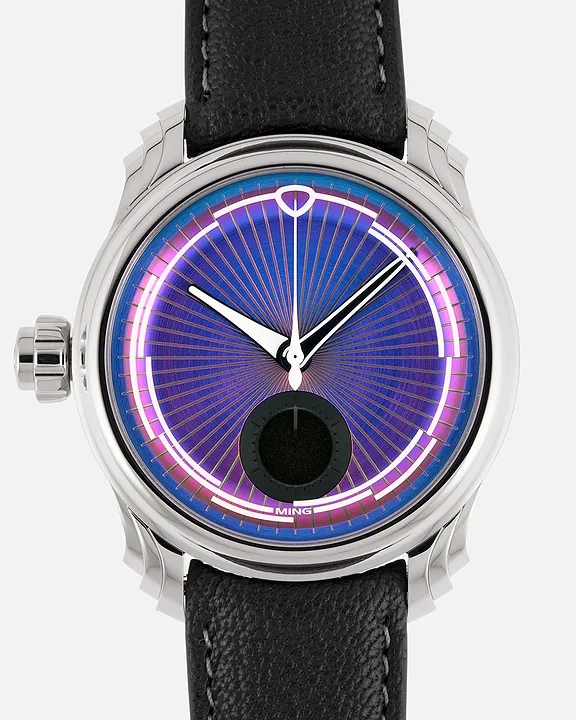
Ming 57.04 Iris Monopusher Chronograph, 2022
S.Song Watches (dealer), Seattle
Wristwatches · 2023
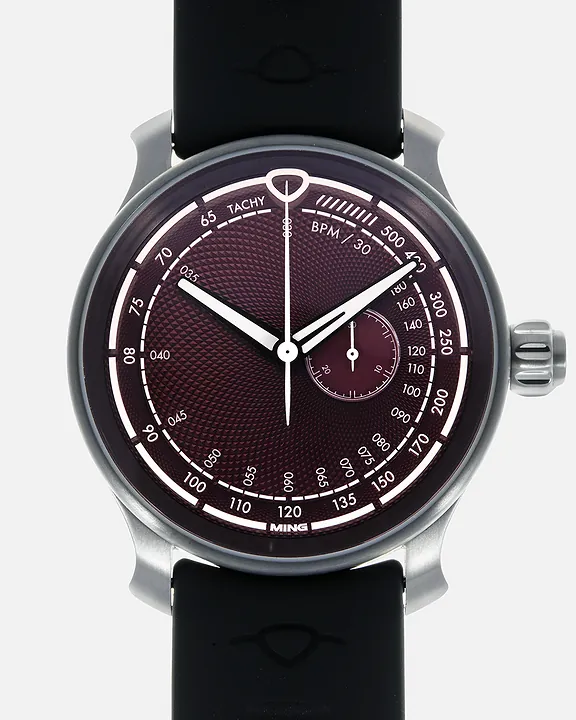
Ming 37.04 Monopusher Chronograph Tantalum, 2023
S.Song Watches (dealer), Seattle
Wristwatches · 2022
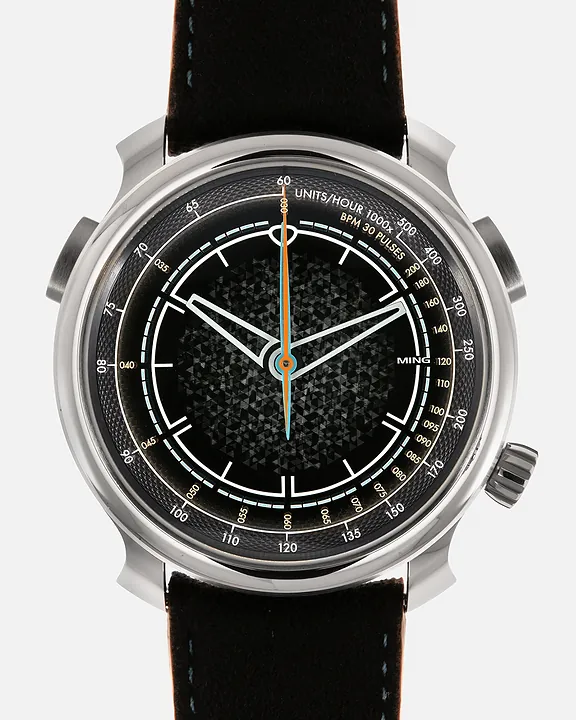
Ming 20.01 Series II Agengraphe Chronograph Special Projects Cave, 2022
S.Song Watches (dealer), Seattle
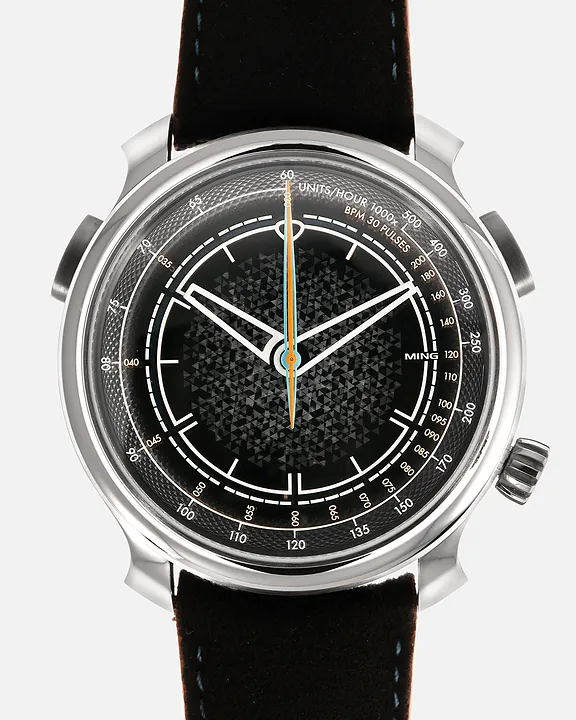
Wristwatches · 2022
Ming 20.01 Series II Agengraphe Chronograph Special Projects Cave, 2022
S.Song Watches (dealer), Seattle
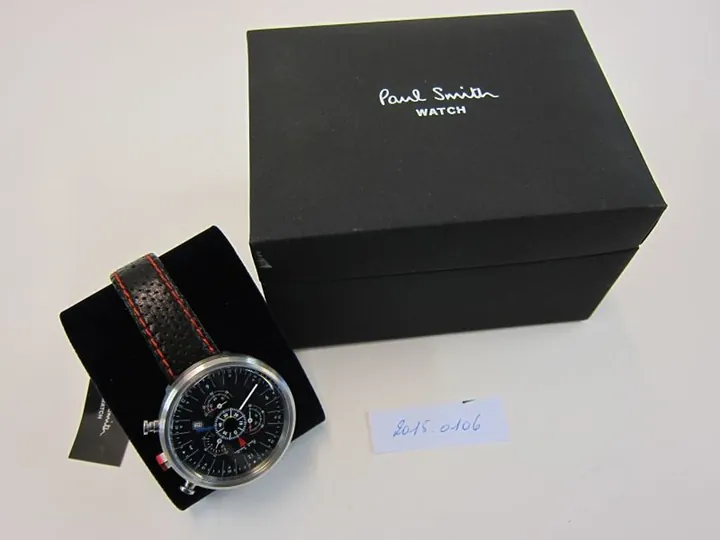
Wristwatches · 2010
Wristwatch, 2010
Modemuseum Hasselt
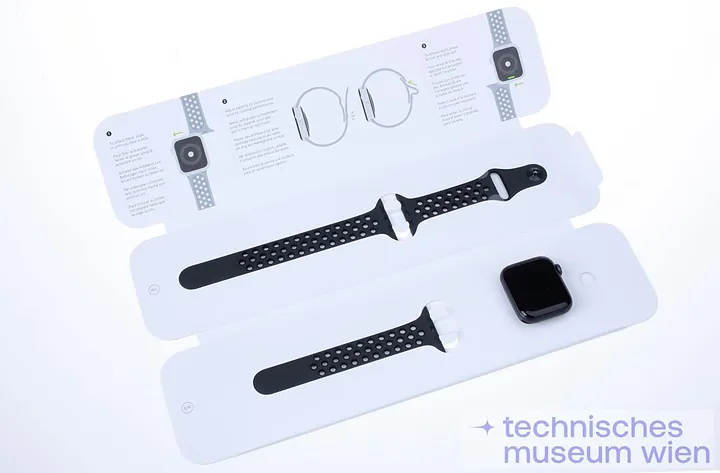
Wristwatches · 2018 (Series 4 released in September 2018; '1977' in the source is the model number A1977)
Apple Watch Series 4 (GPS, 40 mm, model A1977), 2018
Vienna Museum of Science and Technology
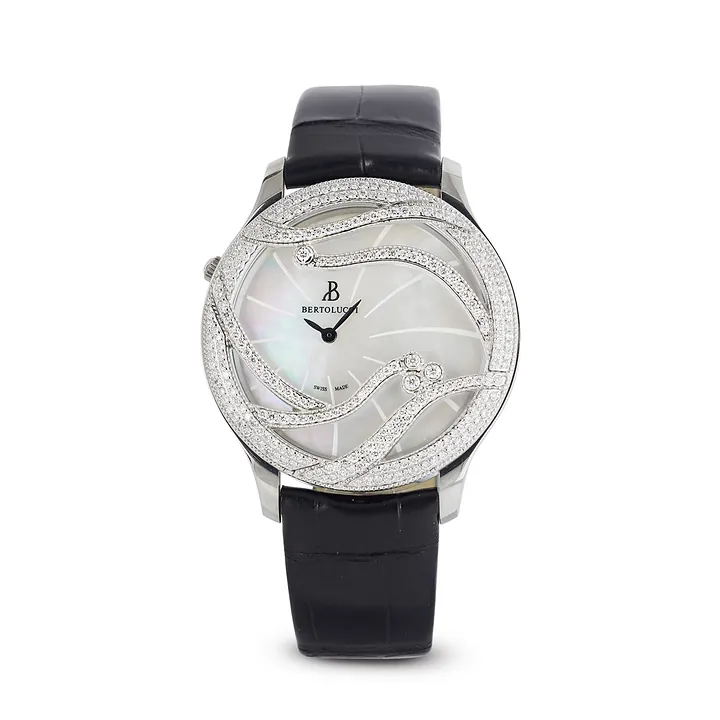
Wristwatches · c. 2010s
Bertolucci Stria III, ref. 11513.50.45.B88.6C1.501, c. 2010s
Antiquorum auction archive, Geneva
Wristwatches · c. 2010s
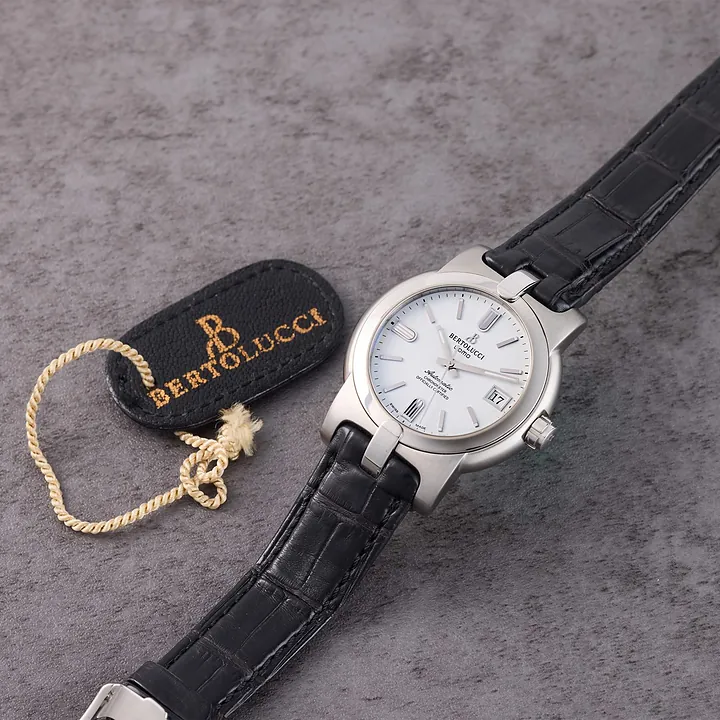
Bertolucci Uoma, ref. 824.51.41.10B, c. 2010s
Antiquorum auction archive, Geneva