
Pocket Watches · Minute repeating pocket watch
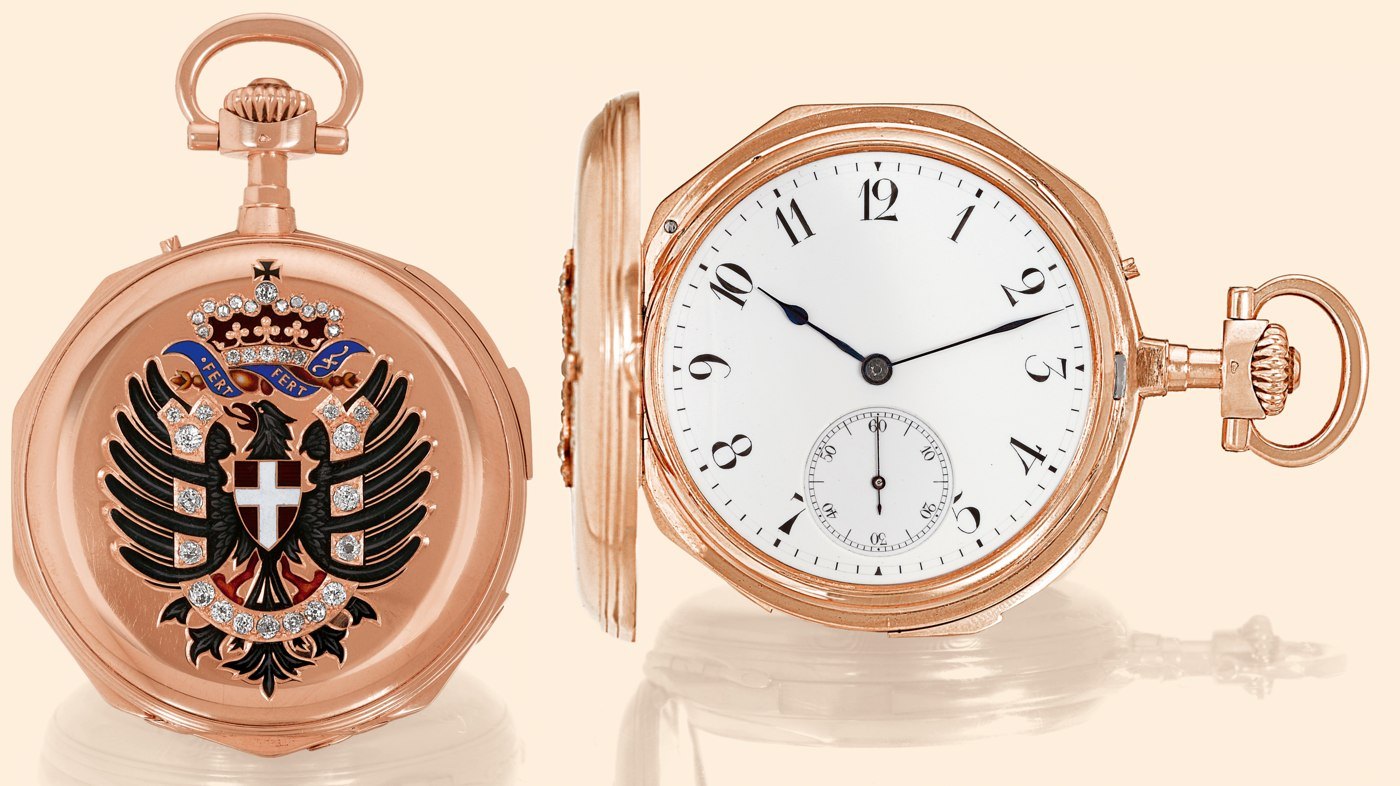
Louis Audemars Royal Presentation Pocket Watch
- Maker / attribution
- Louis Audemars (source attribution)
- Date
- c. 1890
- Historical period
- Industrial Revolution (1850 – 1900)
- Country of origin
- Switzerland
- Object type
- Minute repeating pocket watch
- Materials / technique
- 18K gold
- Dimensions
- 52 mm
- Holding institution
- Antiquorum
- Accession / object no.
- 486
- Credit line
- Antiquorum
- Catalogue title (original)
- 'King Umberto I of Italy Presentation Watch'\nLouis Audemars, Brassus & Geneve, No. 13350. Made\nfor Umberto I, King of Italy, retailed by C. Morel Jeune,\n65, Rue de Rome, à Marseille, circa 1890.\nV (English)
View the source record ↗ (opens another website in a new tab)Suggest a correction
Record summary
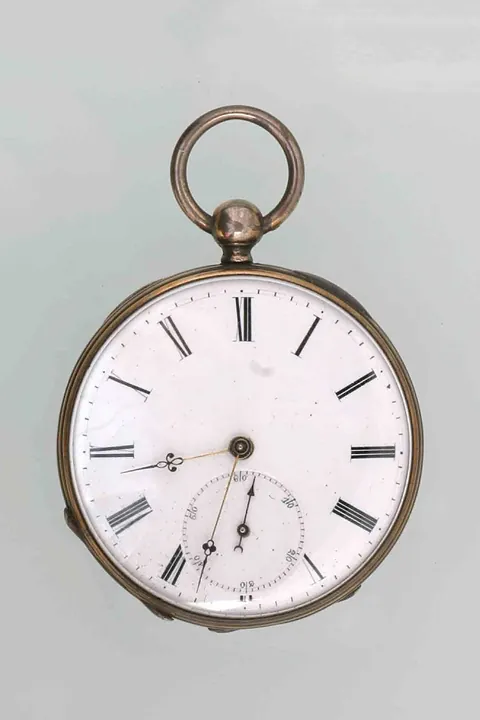
Held and catalogued by Antiquorum (object number 486), this is a minute repeating pocket watch attributed to Louis Audemars, made in Switzerland, dated c. 1890. The Atlas places it in the Industrial Revolution period (1850 – 1900) of its Pocket Watches collection. Materials and techniques recorded by the source: 18K gold. Recorded dimensions: 52 mm. The record is illustrated with 1 photograph.
Assembled from the source record's structured fields. Dates and attributions are given as the source states them; where a field is missing the Atlas leaves it blank rather than estimating.
Catalogue description
Original object description
Bearing serial number 13350, this 52 mm keyless hunting-case pocket watch was crafted around 1890 by the firm Louis Audemars of Brassus and Geneva. Originally marketed in Marseille by C. Morel Jeune, the timepiece served as an official royal gift for King Umberto I of Italy. Its 18K yellow gold four-body "bassine et filets" case presents a polished exterior with a faceted rim, a protective interior gold cuvette on hinges, and a spring-loaded front cover displaying Umberto I's royal coat of arms worked in champlevé enamel and pavé-set diamonds. On the white enamel dial, radial Arabic hour markers are bordered by an outer track for minutes, with blued steel spade hands and an inset seconds counter positioned at 6 o'clock. The repeating mechanism, operated by a lateral case slide, chimes against internal gongs and is powered by a 25-jewel, 19-ligne gilt brass movement equipped with a counterbalanced straight-line lever escapement, a bimetallic compensation balance with cuts, an index regulator, and a blued steel Breguet overcoil spring. Maker signatures are present across both the movement and the case, while an engraved retailer inscription marks the cuvette. The dial is preserved in superior condition, though mechanical servicing is suggested to guarantee reliable timekeeping.
Inscriptions & marks
13350
Historical context
Industrial Revolution (1850 – 1900)
American interchangeable-parts manufacture; railroad time standards; Swiss and German factory systems.
Machine production with interchangeable parts, pioneered by Waltham (1850s) and adopted by Elgin, Longines, Omega and others, made reliable lever watches widely affordable. Keyless winding became standard, railroad watch standards were introduced (1890s), and Swiss and American industries competed globally.
Read the period in the timelineMore pocket watches from this periodEarlier: Precision & Scientific Horology
Atlas type guide
Repeating watches
Before electric light, telling the time in the dark was a real problem. Repeating watches strike the time on demand when a slide or push-piece is operated: quarter repeaters sound hours and quarters, minute repeaters hours, quarters and minutes. Edward Barlow and Daniel Quare disputed the invention in London in the 1680s. Early repeaters struck on a bell inside the case; Abraham-Louis Breguet introduced the gong (a coiled steel wire) around 1780, allowing thinner watches.
Repeaters require a separate train with racks, snails and a governor to control the striking speed, and are among the most demanding complications to make and adjust. Swiss makers of the Vallée de Joux specialised in repeating ébauches in the nineteenth century.
What to look for
- A slide on the case band or a push-piece through the pendant.
- Gongs encircling the movement (after c. 1780) or a bell in the case (earlier); pierced case for sound.
- The racks, snails and governor visible under the dial or on the movement.
- Terms such as 'Minutes', 'Quarts' or 'Répétition' on the dial or cuvette.
Dating clues
- Bell-striking quarter repeaters: c. 1690–1800.
- Gong repeaters and dumb repeaters (striking on the case): after c. 1780.
- Minute repeaters became more common after c. 1830 with Vallée de Joux ébauches.
General guidance written by the Atlas editors about this kind of object. It is not a statement about this particular piece; for that, rely on the source record above and on physical examination.
Read next:Minute repeater
Related records
Pocket Watches · Inventory date 1861
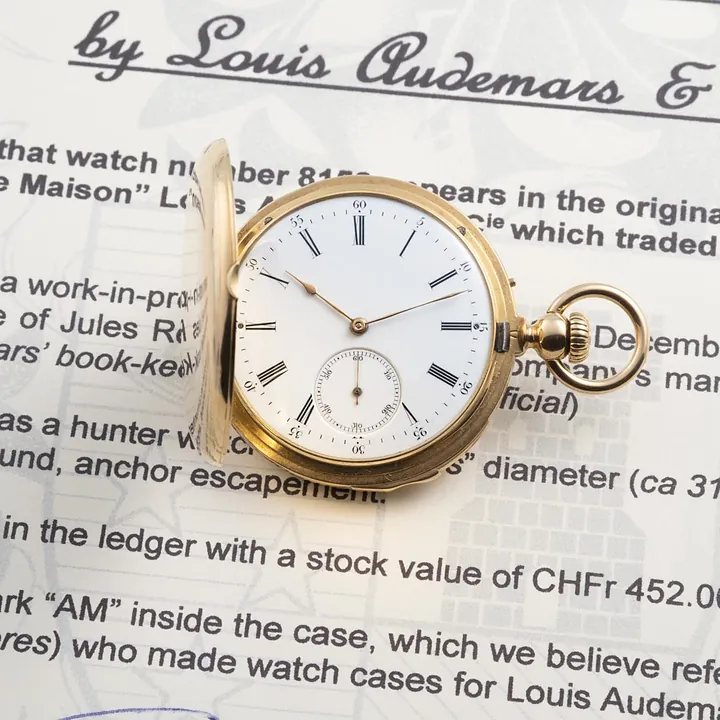
Louis Audemars pocket watch, Inventory date 1861
Antiquorum auction archive, Geneva
Pocket Watches · c. 1885
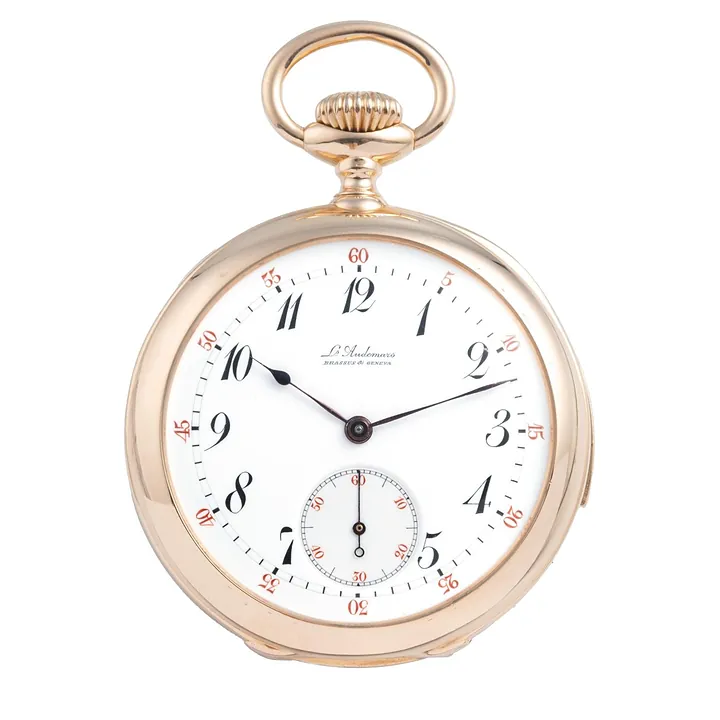
Louis Audemars pocket watch, c. 1885
Antiquorum auction archive, Geneva
Pocket Watches · c. 1850
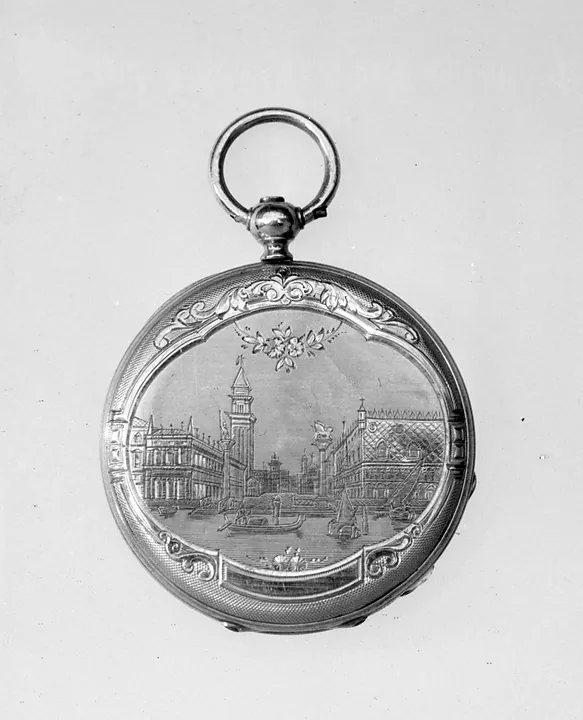
Watch by Eugène Bornand, Switzerland, c. 1850
The Metropolitan Museum of Art, New York
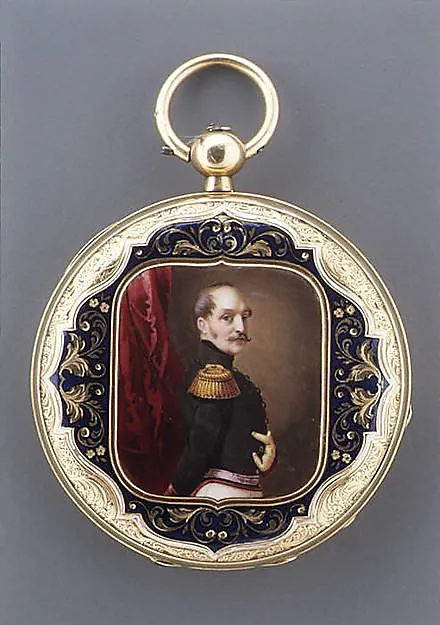
Pocket Watches · probably c. 1850–55
Watch by Firm of Perret & Cie, Switzerland, probably c. 1850–55
The Metropolitan Museum of Art, New York
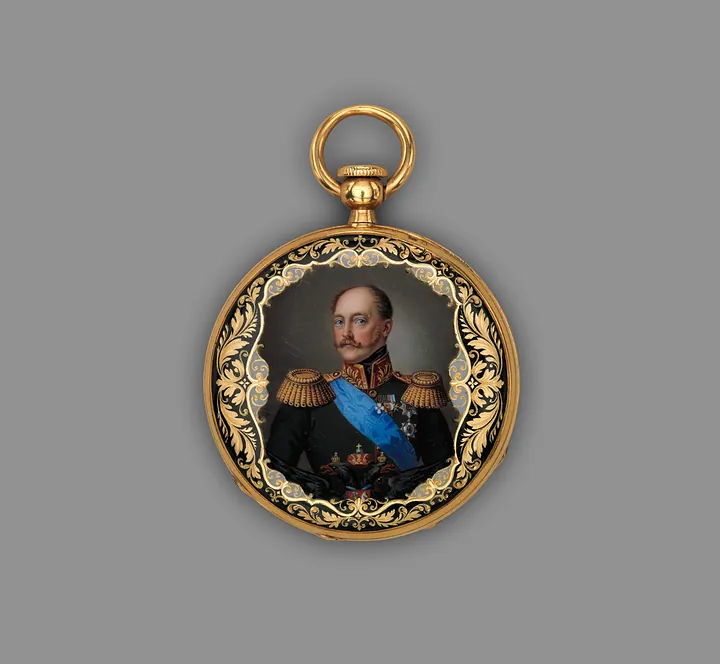
Pocket Watches · c. 1850–55
Watch by François Czapek, c. 1850–55
The Metropolitan Museum of Art, New York
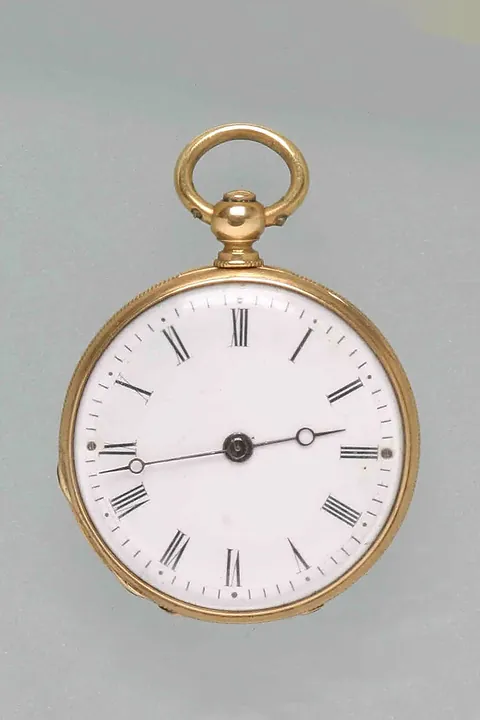
Pocket Watches · c. 1850
Pocket watch by D Bachelard et Fils, Switzerland, c. 1850
German Clock Museum
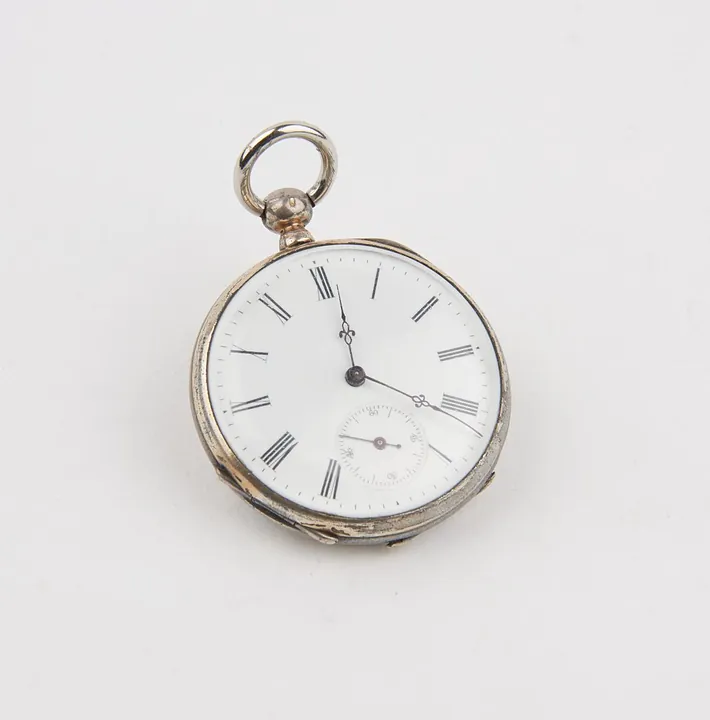
Pocket Watches · 1850–1899
Pocket watch by GT, Switzerland, 1850–1899
Science Museum Group, London
Pocket Watches · c. 1850
Pocket watch by Perret et Cie., Switzerland, c. 1850
German Clock Museum