
Wristwatches · Wristwatch
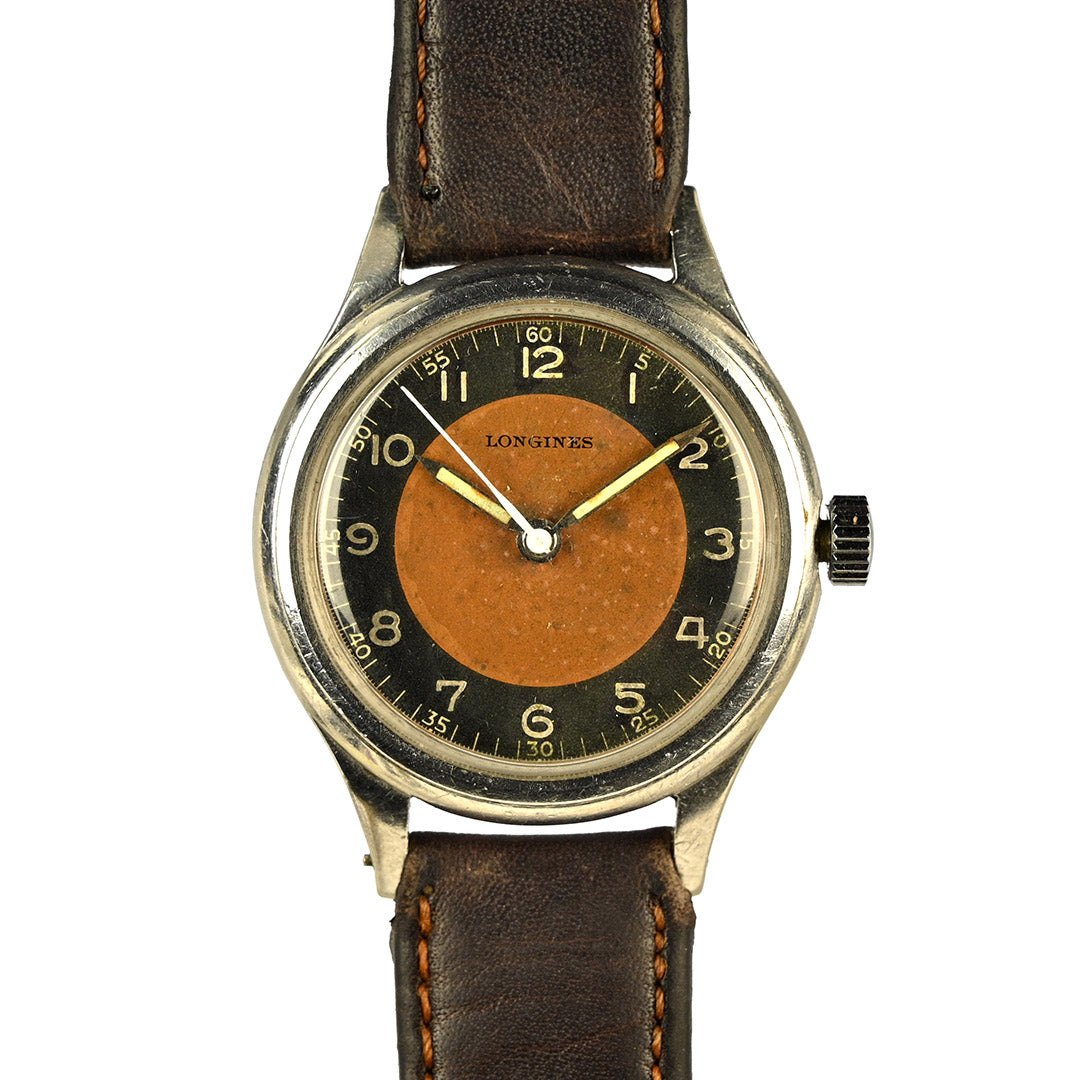
Longines Vintage Sei Tacche Dress Watch, ref. 22969, Matching Case and Lug Numbers, circa 1944
- Maker / attribution
- Longines (maker)
- Date
- c. 1944
- Historical period
- Golden Age of Mechanical Watchmaking (1900 – 1945)
- Country of origin
- Switzerland
- Object type
- Wristwatch
- Dimensions
- Case 33 mm
- Stock no.
- vws2500cs
- Credit line
- Dealer listing, Vintage Watch Specialist (vws2500cs)
- Catalogue title (original)
- Longines Vintage Sei Tacche Dress Watch - Model ref: 22969 - Matching Case and Lug Numbers - c.1944 (English)
View the source record (dealer listing) ↗ (opens another website in a new tab)Suggest a correction
Record summary
Catalogued by Vintage Watch Specialist (dealer), United Kingdom (stock number vws2500cs), this is a wristwatch by Longines, made in Switzerland, dated c. 1944. The Atlas places it in the Golden Age of Mechanical Watchmaking period (1900 – 1945) of its Wristwatches collection. Recorded dimensions: Case 33 mm. The record is illustrated with 6 photographs.
Assembled from the source record's structured fields. Dates and attributions are given as the source states them; where a field is missing the Atlas leaves it blank rather than estimating.
Catalogue description
Dealer description — Vintage Watch Specialist
A Charming Vintages Longines Sei Tacche Watch - Model Ref: 22969, Dated to c.1944 With a Beautiful Tropical Dial and Match Case and Lug Numbers With Longines Extract of Archive. Longines (Long Meadows) was founded in Saint-Imier in 1832 by Auguste Agassiz, a Swiss watchmaker and brother of biologist Louis Agassiz. Auguste had two partners, lawyers Henri Raiguel and Florian Morel; the company's original name was Raiguel Jeune & Cie. What’s On Offer The Longines “sei tacche” and “tre tacche” models were first available in the 1940s and epitomized functional design. Longines was very much up there with Rolex and Omega as a well-trusted and respected watch brand that trailblazed timekeeping in the air with their pilot watches. Longines watches from the 1920s and early 1930s were fitted with snap-back cases that weren't particularly great at protecting the movement from dust and moisture and so they introduced the screw-back case which had 3 or 6 notches. Years later, Italian collectors would use the terms “tre tacche” and “sei tacche” (three-notch and six-notch, respectively) to reference these watches. This watch is in beautiful vintage condition with a stunning two-tone dial in black and tropical chocolate brown. This watch is not dissimilar in style to the military-issued watches of the time with bold Arabic numerals and sword hands. The original ume is still present in the hands and has aged to an attractive pale lemon colour and there is also an outer seconds track present. This is a mid-size watch at 33mm but it is rather robust and wears well on the wrist. The dial is encapsulated underneath an acrylic crystal and encased in stainless steel and boasts matching case and lug numbers which is very rare. The leather strap with contrast stitching brings out the chocolate on the dial and really adds warmth. A beautiful vintage watch from an iconic watchmaker. We requested an Extract of the Archive from Longines which will be supplied upon purchase of this watch, this is the information provided: Originally, the serial number 6'869'051 identifies a wristwatch in stainless steel bearing the reference 5403 and the order number 22969. It is fitted with a Longines mechanical self-winding movement, caliber 23M. It was invoiced on 17 July 1945 to the company Terrasse, which was at that time our agent for Norway and Sweden. Additional information Made from Case: Stainless Steel Dial: Black Crystal: Plexiglas Bracelet: Leather pin buckle strap Technical specifications Winding: Manual Movement Type: Mechanical Calibre: 23M Jewels: 17 Waterproof: Power reserve: Purchase details Condition: Excellent Model Reference: 22969 Date of issue: c.1944 Dimensions Width (without crown): 33mm Lug width: 15mm Lug height: (lug to lug) 41mm Wrist size: Adjustable
Historical context
Golden Age of Mechanical Watchmaking (1900 – 1945)
The wristwatch displaces the pocket watch; waterproof cases, self-winding and grand complications.
The wristwatch overtook the pocket watch. Military use in the First World War, aviation, water-resistant cases (1926), automatic winding (1923–31), rectangular Art Deco designs and early chronographs and calendars defined the period.
Read the period in the timelineMore wristwatches from this periodEarlier: Industrial Revolution
Atlas type guide
Wristwatches
Bracelet watches were worn by women from the early nineteenth century — Breguet made one for Caroline Murat, Queen of Naples, in 1810–12 — but the wristwatch only became a man's instrument with military use and aviation in the early twentieth century. Between the World Wars it overtook the pocket watch; the 1920s and 1930s brought rectangular Art Deco cases, water-resistant cases and the first automatic winding systems.
After 1945 the wristwatch became a carrier of identity — dress watches, sports and dive watches, chronographs, calendars — produced by Swiss, American, Japanese, German, Soviet and Chinese industries. The quartz revolution after 1969 and the mechanical renaissance since the 1990s, including the rise of independent watchmakers, complete the story.
What to look for
- The reference number (between the lugs or inside the case back) and serial number, the starting point for dating.
- The calibre: its maker and number are often stamped under the dial or on the bridge.
- Originality of dial, hands and crown — refinished ('redial') dials are common.
- Case material marks: 18K/750, 14K/585, stainless steel, gold-filled, plated.
Dating clues
- Wire-lug cases: before c. 1925.
- Water-resistant screw-down cases: from 1926.
- Quartz movements: from 1969; sapphire crystals widespread after c. 1980.
General guidance written by the Atlas editors about this kind of object. It is not a statement about this particular piece; for that, rely on the source record above and on physical examination.
Related records
Instruments · c. 1940
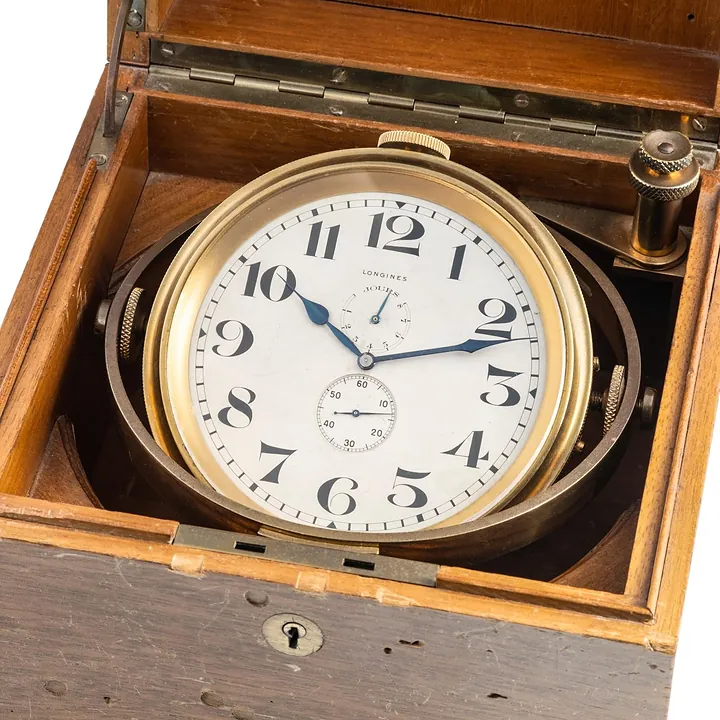
Longines marine chronometer, c. 1940
Antiquorum auction archive, Geneva
Pocket Watches · c. 1910-1920s
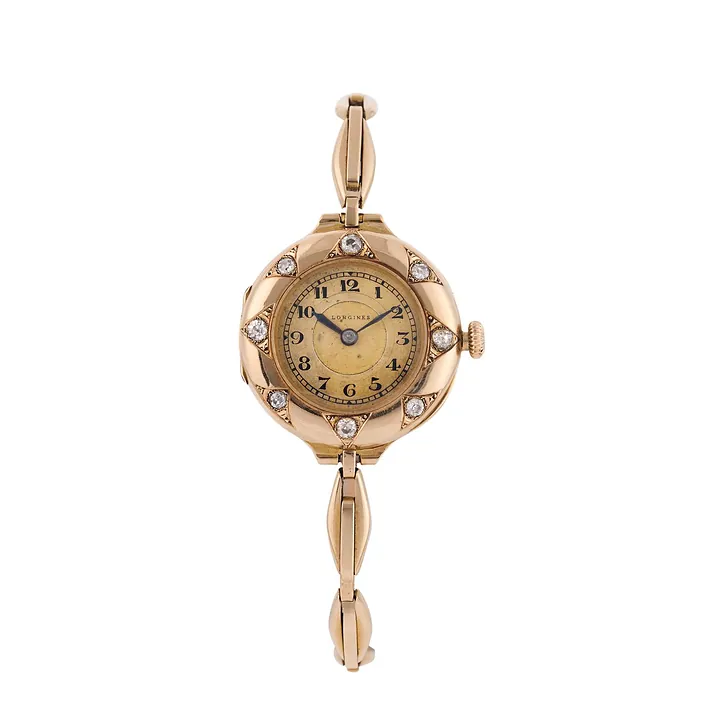
Longines watch, c. 1910-1920s
Antiquorum auction archive, Geneva
Pocket Watches · c. 1915
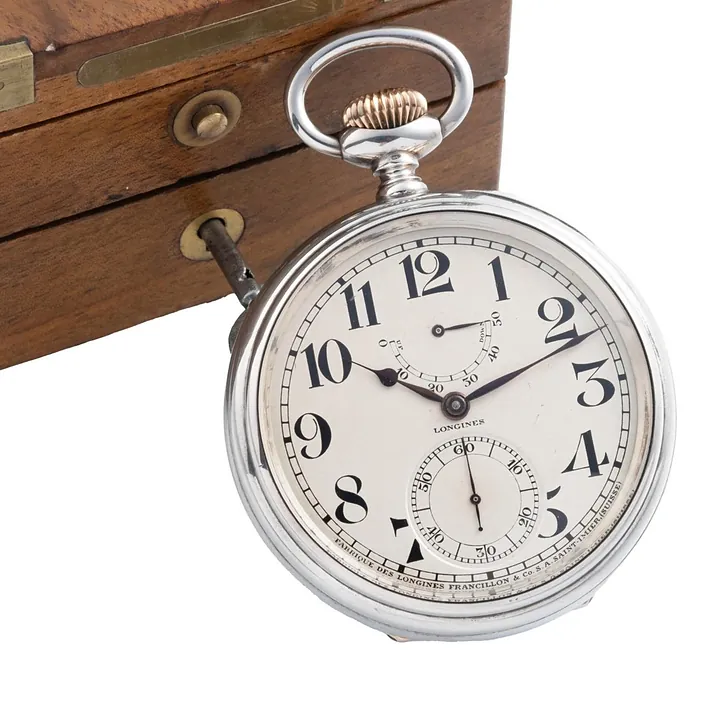
Longines ''torpedo-Boat Watch'', c. 1915
Antiquorum auction archive, Geneva
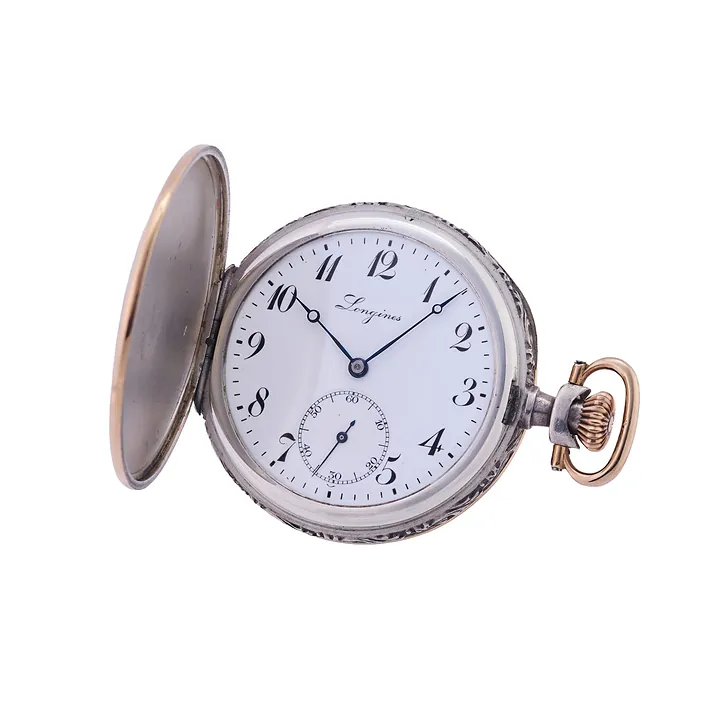
Pocket Watches · c. 1920s
Longines pocket watch, c. 1920s (Antiquorum Lot 389-59)
Antiquorum auction archive, Geneva

Wristwatches · 1931
Rolex 'Oyster Perpetual' rotor self-winding wrist-watch, lever escapement, in steel case with glass in back, Montres Rolex SA, Geneva, Switzerland, 1931
Science Museum Group, London

Wristwatches · 1900–1999
Wristwatch by Certina, Switzerland, 1900–1999
Nordic Museum Foundation
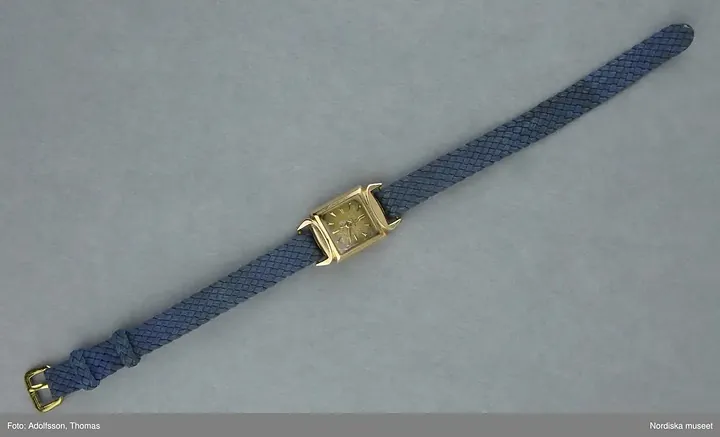
Wristwatches · 1900–1999
Wristwatch by Omega, Västerås, 1900–1999
Nordic Museum Foundation
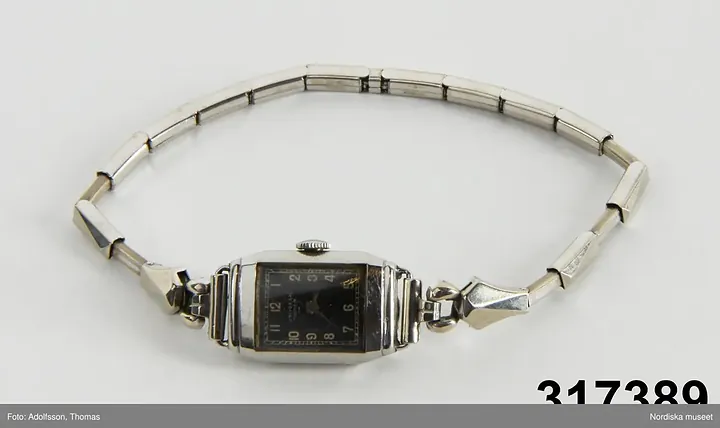
Wristwatches · 1900–1999
Wristwatch by Universal, Switzerland, 1900–1999
Nordic Museum Foundation