
Clocks · Longcase clock
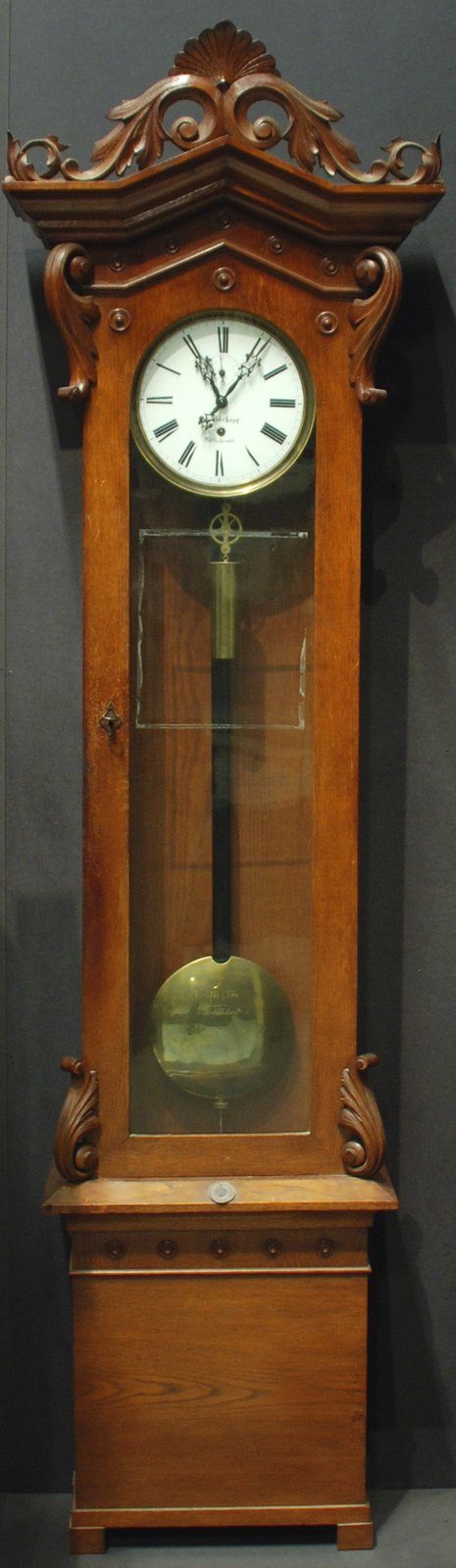
Longcase clock, Sweden, 1889
- Maker / attribution
- Unrecorded in source
- Date
- 1889
- Historical period
- Industrial Revolution (1850 – 1900)
- Country of origin
- Sweden
- Place
- Sverige Karlskrona Blekinge Sverige Blekinge Karlskrona Karlskrona
- Object type
- Longcase clock
- Materials / technique
- Ek Glas
- Dimensions
- Bredd 580 mm Djup 240 mm
- Holding institution
- Blekinge Museum
- Accession / object no.
- blm_item_25789
- Credit line
- Blekinge Museum
- Catalogue title (original)
- Golvur (Swedish)
View the source record ↗ (opens another website in a new tab)Suggest a correction
Record summary
Held and catalogued by Blekinge Museum (object number blm_item_25789), this is a longcase clock, made in Sverige Karlskrona Blekinge Sverige Blekinge Karlskrona Karlskrona, Sweden, dated 1889. The Atlas places it in the Industrial Revolution period (1850 – 1900) of its Clocks collection. Materials and techniques recorded by the source: Ek Glas. Recorded dimensions: Bredd 580 mm Djup 240 mm. The record is illustrated with 3 photographs.
Assembled from the source record's structured fields. Dates and attributions are given as the source states them; where a field is missing the Atlas leaves it blank rather than estimating.
Catalogue description
Catalogue description from Blekinge Museum
Golvur i fodral av trä. Släphaksgång, separat pendelupphängning, med meterpendel, enbart gångverk helt i mässing. Rund vit urtavla med svarta romerska siffor. Särskild sekundtavla. Gravering på urverksbotten: "Otto Böckert, Karlskrona 1889". Fodral av massiv ek, rektangulär sockel med sparsam dekor, kvadratiska golvklossar, utkragad sockelsims, mittdel rak, glas på tre sidor, i över och nederkant utanpåliggande kraftiga hörndekorelement i form av akantusblad, kraftigt utkragad profilerad krönsims, ovantill prydd med utskuren dekor av symmetriskt ställda akantusslingor i mitten en snäcka. Bakttill bräda för väggmontage längd 60 cm. Påklistrad medaljong, med Otto Böckerts namn ingraverat och texten: "För skicklighet och välförhållande". "A. Lindberg". På pendeln ingraverat: "Detta Otto böckert:s gesällprov d. 3/10 1889 skall ärvas avärdsidan". På glasets insida ett upptejpat fotografi och text om Otto Böckerts skicklighet. Tillverkat av urmakaren Otto Böckert 1866-1940 Karlskrona. De första golvuren kommer under slutet av 1600-talet. Lodens tyngd kräver en kraftigare konstruktion. I Sverige kom inhemsk produktion igång under början av 1700-talet. Hos allmogen var golvuren mycket populära från mitten av 1700-talet fram till 1800-talets mitt. (Litt: Åstrand, Barbro 1980: "Gamla ur - ur Kulturen samlingar".) Gåva 22 mars 1993 av Folke Böckert Karlskrona. Negativnr: 95:177,8
Shown in the original language of the source catalogue. An editor-reviewed English translation has not yet been published; we do not publish machine translations as authoritative text.
Historical context
Industrial Revolution (1850 – 1900)
American interchangeable-parts manufacture; railroad time standards; Swiss and German factory systems.
Factory production transformed the clock into an everyday object. American makers (Seth Thomas, Ansonia, Waterbury) and German factories (Junghans, Gustav Becker, Lenzkirch) sold millions of shelf, wall and alarm clocks worldwide; France produced standardised Paris movements and carriage clocks; electric time distribution began.
Read the period in the timelineMore clocks from this periodEarlier: Precision & Scientific Horology
Atlas type guide
Longcase (tall-case or grandfather) clocks
The longcase clock was born from two seventeenth-century innovations: Christiaan Huygens's pendulum (1656–57) and the anchor escapement (c. 1670). A long seconds pendulum, nearly a metre long, swings with a small arc, and enclosing it together with the driving weights in a tall wooden case protected the mechanism and created a new piece of furniture. London makers such as Ahasuerus Fromanteel, Thomas Tompion and Joseph Knibb set the pattern.
By the eighteenth century longcase clocks were made throughout Britain, the Netherlands, Scandinavia (the Swedish Mora clock), France (the Comtoise from the Franche-Comté), Germany and colonial America. Eight-day movements with two weights became standard in better clocks; thirty-hour clocks with one weight and a rope or chain were cheaper alternatives.
What to look for
- Winding holes in the dial: two (eight-day, going and striking) or none (thirty-hour, pulled up by a chain).
- Brass dials with applied chapter rings (earlier) versus painted iron 'white' dials (after c. 1770 in Britain).
- Moon-phase arches, date apertures, seconds dials and maker's name on the dial.
- Case woods and style: ebonised, walnut marquetry, lacquer, oak or mahogany; regional styles from London, Lancashire, Scotland or America.
- Whether the movement and dial match the case — 'marriages' are common.
Dating clues
- Square brass dials suggest c. 1670–1720; arched brass dials c. 1715–1790.
- Painted (white) dials were made by Birmingham dial-makers from about 1772.
- Comtoise clocks with repoussé pendulums are mostly nineteenth century.
General guidance written by the Atlas editors about this kind of object. It is not a statement about this particular piece; for that, rely on the source record above and on physical examination.
Read next:Anchor (recoil) escapementDeadbeat escapementAnchor escapement
Related records
Clocks · 1857
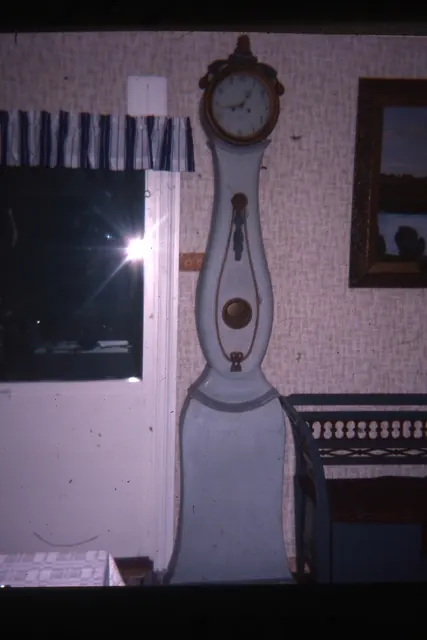
Longcase clock, Sweden, 1857
National Association of Swedish Handicraft Societies
Clocks · 1888–1900
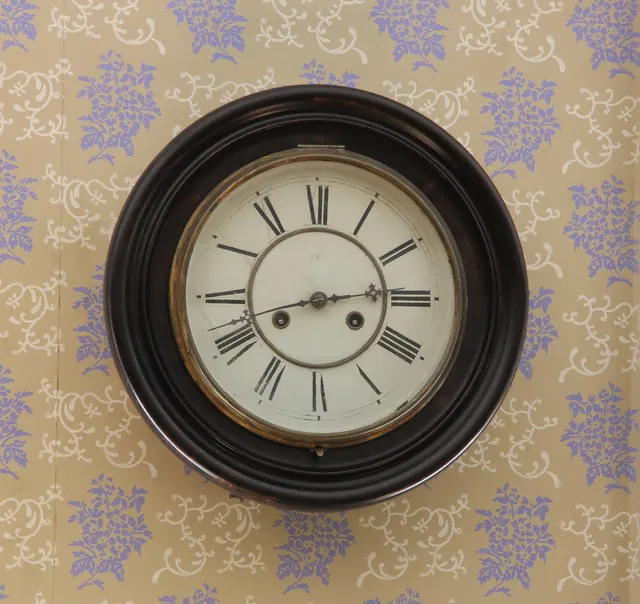
Clock by Junghans, Sweden, 1888–1900
Skansen
Clocks · 1872
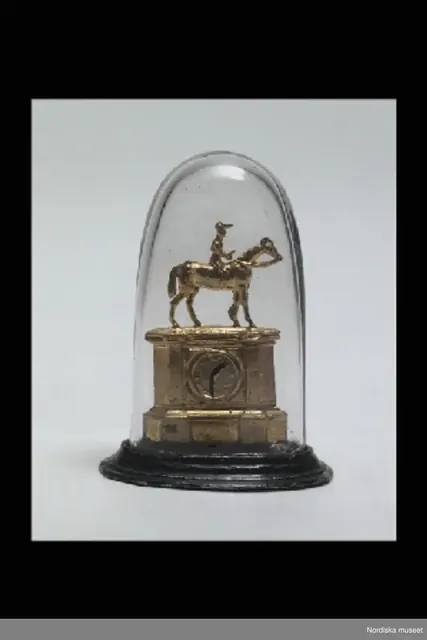
Clock by W A Bandel, Sweden, 1872
Nordic Museum Foundation
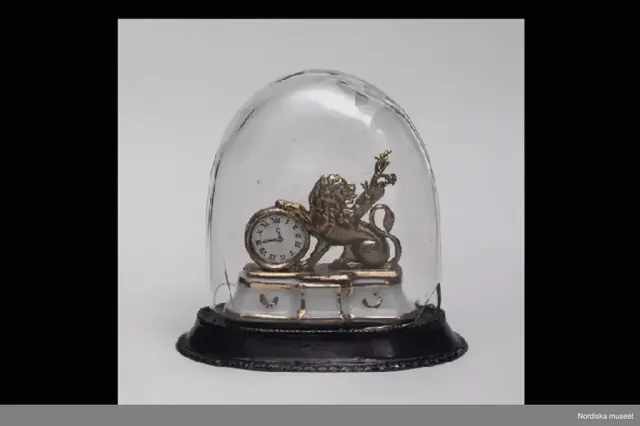
Clocks · 1880–1889
Table clock, Sweden, 1880–1889
Nordic Museum Foundation
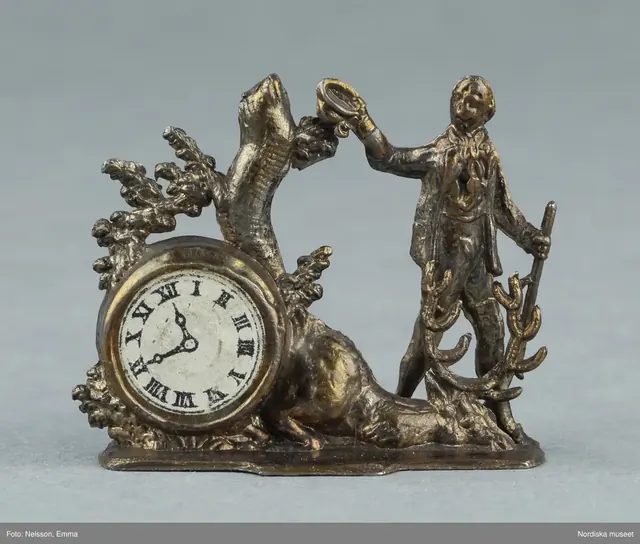
Clocks · 1856
Table clock by Emilie Kihlberg, Sweden, 1856
Nordic Museum Foundation
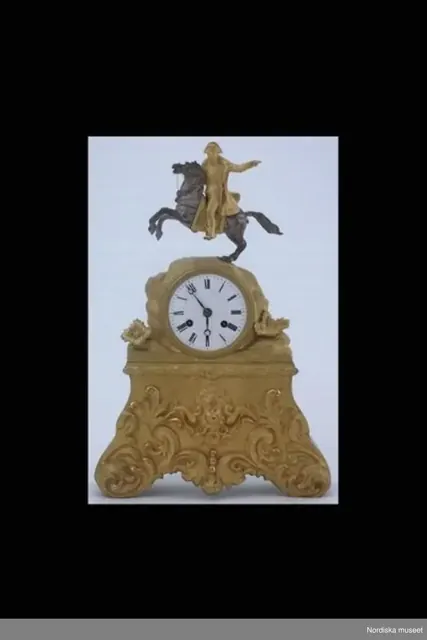
Clocks · 1880
Table clock, Sweden, 1880
Nordic Museum Foundation
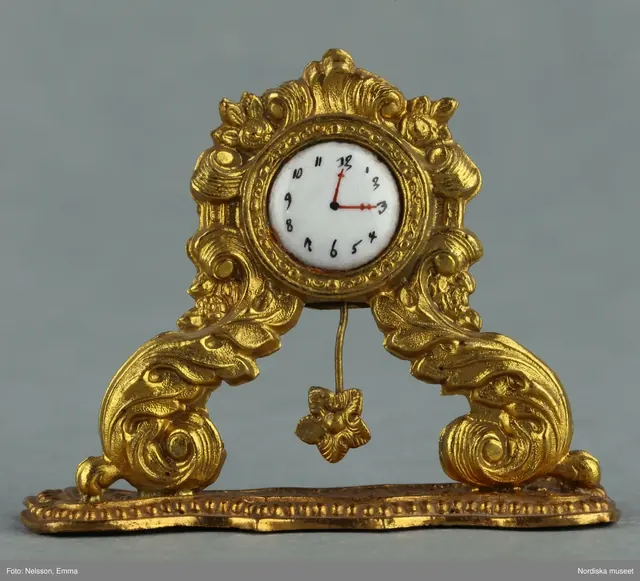
Clocks · 1860
Table clock by Ella von Rosen, Sweden, 1860
Nordic Museum Foundation
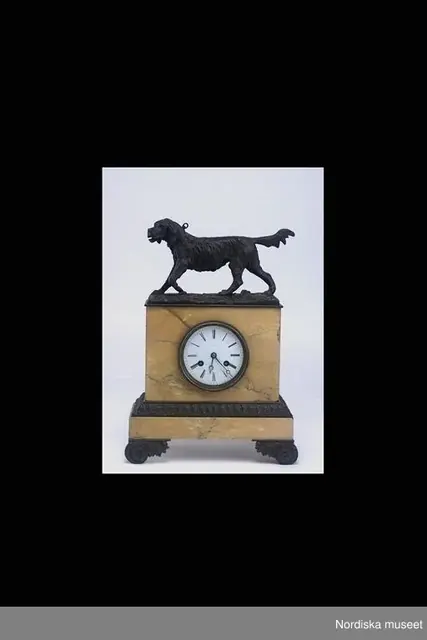
Clocks · 1850
Table clock, Sweden, 1850
Nordic Museum Foundation