
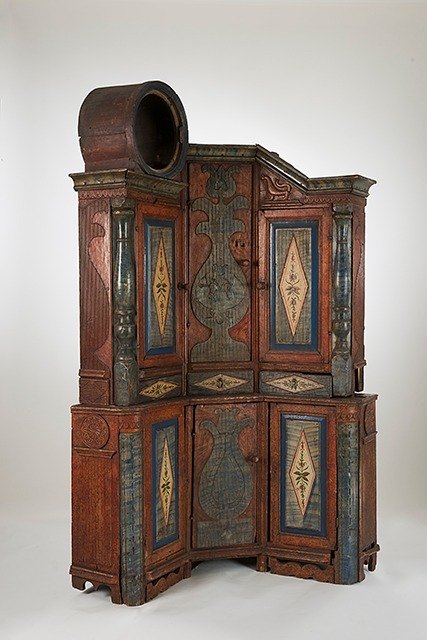
Clocks · Longcase clock
Longcase clock, 1840–1880
- Maker / attribution
- Unrecorded in source
- Date
- 1840–1880
- Historical period
- Industrial Revolution (1850 – 1900)
- Country of origin
- Unrecorded in source
- Place
- Vöyri, Etelä-Pohjanmaa
- Object type
- Longcase clock
- Materials / technique
- wood
- Dimensions
- height: 187 cm; width, yksi sivu: 88 cm; depth: 28 cm
- Holding institution
- Suomen kansallismuseo
- Accession / object no.
- K6695:
- Credit line
- Suomen kansallismuseo (via Finna)
- Catalogue title (original)
- kaappi; kaappikello; lattiakaappi (Finnish)
View the source record ↗ (opens another website in a new tab)Suggest a correction
Record summary
Held and catalogued by Suomen kansallismuseo (object number K6695:), this is a longcase clock, made in Vöyri, Etelä-Pohjanmaa, dated 1840–1880. The Atlas places it in the Industrial Revolution period (1850 – 1900) of its Clocks collection. Materials and techniques recorded by the source: wood. Recorded dimensions: height: 187 cm; width, yksi sivu: 88 cm; depth: 28 cm. The record is illustrated with 6 photographs.
Assembled from the source record's structured fields. Dates and attributions are given as the source states them; where a field is missing the Atlas leaves it blank rather than estimating.
Catalogue description
Description — Suomen kansallismuseo
fyysinen kuvaus: Kaksiosainen nurkkakaappi, joka on saanut vaikutteita empire- ja kustavilaistyyleistä. Kaapin pohjaväri on punaruskea. Kulmissa on siniset koristepylväät. Kaapin ovissa ja kyljissä on leikkauskoristelua. Keskimmäisissä kaapinovissa on tyylitellyt leikkauksin tehdyt tulppaanit, jotka on maalattu siniseksi. Ylimmän tulppaanin keskellä on kaksipäinen kotka -kuvio. Kaapin sivuovissa on sinisellä pohjalla vaaleat vinoneliöt, joissa on kasviaiheiset maalaukset. Sama kasviaihe toistuu keskellä olevassa laatikostossa. Kaapin yläreunaa kiertää akantuksenlehtikoristeet. Kaapin oikeaan yläkulmaan on veistetty tyylitelty eläin. Vasemman puoleisen kaapin päällä on paikka kellolle. Koristelu: maalaus- ja puuleikkauskoristelu
Shown in the original language of the source catalogue. An editor-reviewed English translation has not yet been published; we do not publish machine translations as authoritative text.
Historical context
Industrial Revolution (1850 – 1900)
American interchangeable-parts manufacture; railroad time standards; Swiss and German factory systems.
Factory production transformed the clock into an everyday object. American makers (Seth Thomas, Ansonia, Waterbury) and German factories (Junghans, Gustav Becker, Lenzkirch) sold millions of shelf, wall and alarm clocks worldwide; France produced standardised Paris movements and carriage clocks; electric time distribution began.
Read the period in the timelineMore clocks from this periodEarlier: Precision & Scientific Horology
Atlas type guide
Longcase (tall-case or grandfather) clocks
The longcase clock was born from two seventeenth-century innovations: Christiaan Huygens's pendulum (1656–57) and the anchor escapement (c. 1670). A long seconds pendulum, nearly a metre long, swings with a small arc, and enclosing it together with the driving weights in a tall wooden case protected the mechanism and created a new piece of furniture. London makers such as Ahasuerus Fromanteel, Thomas Tompion and Joseph Knibb set the pattern.
By the eighteenth century longcase clocks were made throughout Britain, the Netherlands, Scandinavia (the Swedish Mora clock), France (the Comtoise from the Franche-Comté), Germany and colonial America. Eight-day movements with two weights became standard in better clocks; thirty-hour clocks with one weight and a rope or chain were cheaper alternatives.
What to look for
- Winding holes in the dial: two (eight-day, going and striking) or none (thirty-hour, pulled up by a chain).
- Brass dials with applied chapter rings (earlier) versus painted iron 'white' dials (after c. 1770 in Britain).
- Moon-phase arches, date apertures, seconds dials and maker's name on the dial.
- Case woods and style: ebonised, walnut marquetry, lacquer, oak or mahogany; regional styles from London, Lancashire, Scotland or America.
- Whether the movement and dial match the case — 'marriages' are common.
Dating clues
- Square brass dials suggest c. 1670–1720; arched brass dials c. 1715–1790.
- Painted (white) dials were made by Birmingham dial-makers from about 1772.
- Comtoise clocks with repoussé pendulums are mostly nineteenth century.
General guidance written by the Atlas editors about this kind of object. It is not a statement about this particular piece; for that, rely on the source record above and on physical examination.
Read next:Anchor (recoil) escapementDeadbeat escapementAnchor escapement
Related records
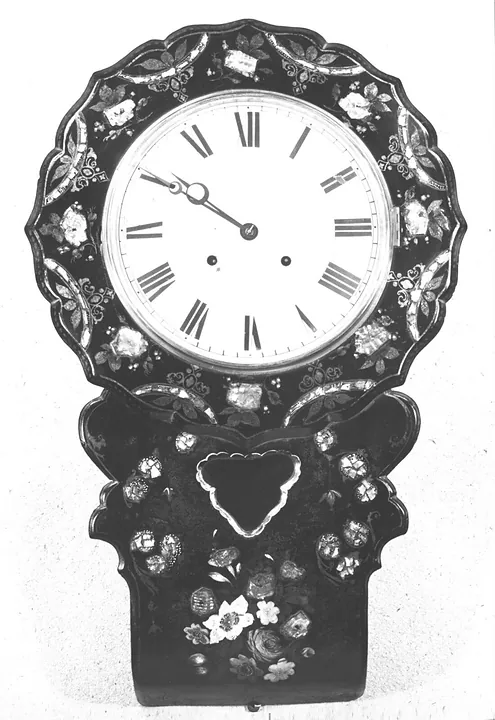
Clocks · 1830–1870
Wall clock in a papier mâché case with painted decoration. English, mid 19th century.
Victoria and Albert Museum, London
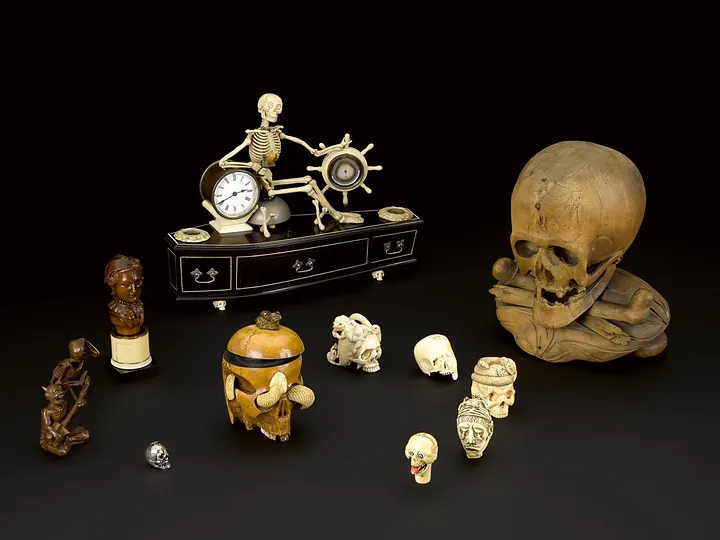
Clocks · 1840–1900
Alarm clock, mounted on model of coffin with skeleton, probably English, 1840–1900
Science Museum Group, London
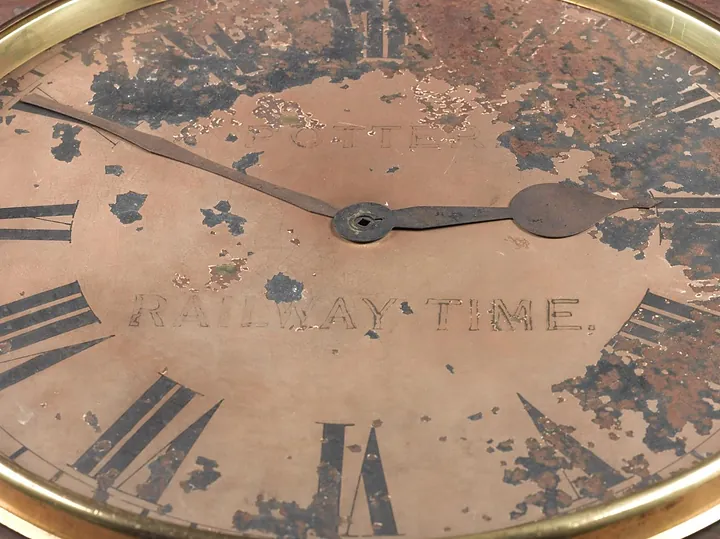
Clocks · 1840–1880
Clock dial marked "Potter, Railway Time" with two hands, unknown maker, British, 1840–1880
Science Museum Group, London
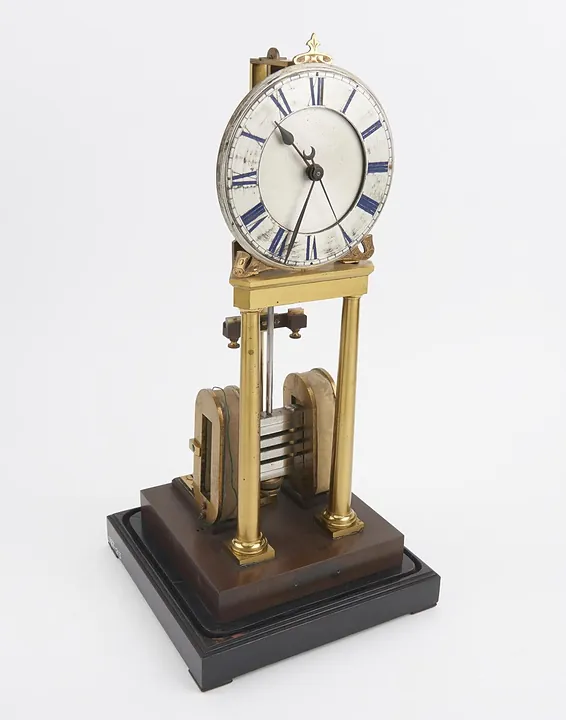
Clocks · 1840–1877
Electric clock of the Bain type
Science Museum Group, London
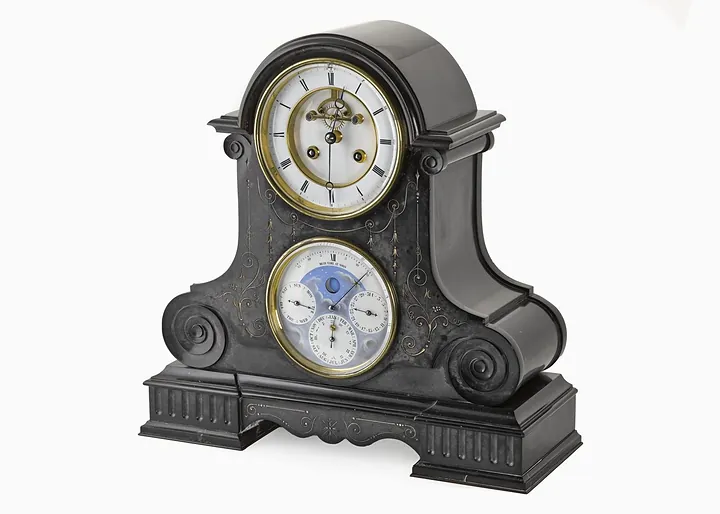
Clocks · 1840–1878
Mantel clock by A. Brocot, France, 1840–1878
Science Museum Group, London
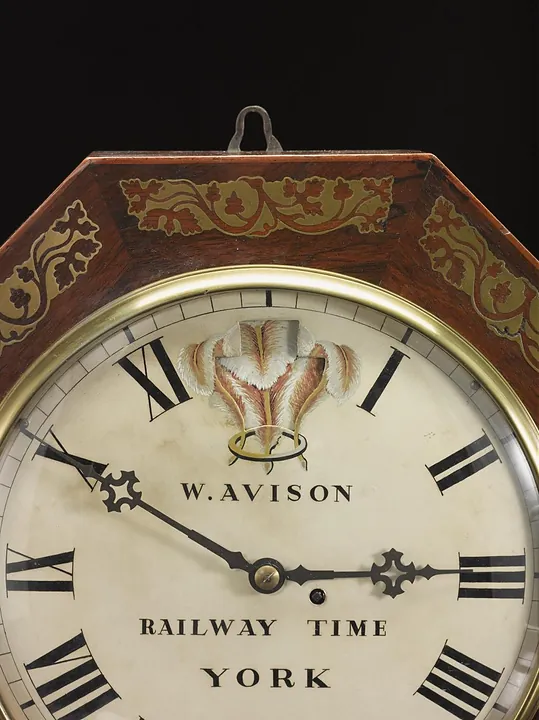
Clocks · 1840–1880
Wall Clock in octagonal case with Prince of Wales Feathers above makers name "W. Avison, Railway Time, York", made by William Avison, England, 1840–1880.
Science Museum Group, London
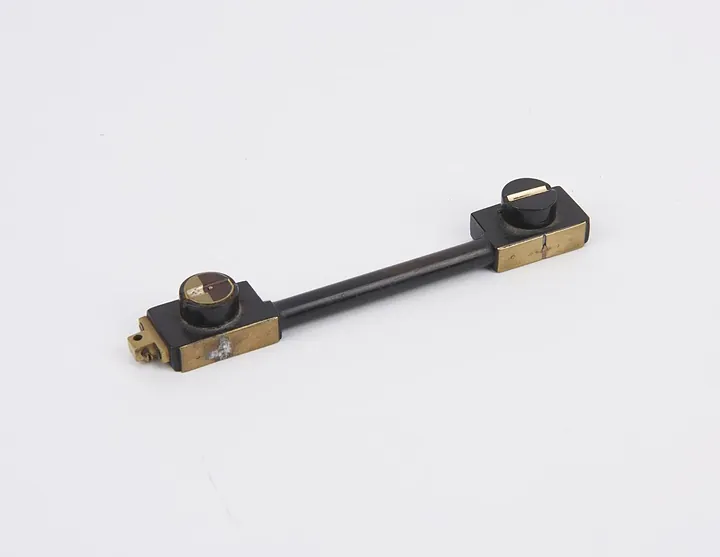
Clocks · 1841–1870
Contact bar from electric clock, unsigned, London, England, 1841–1870
Science Museum Group, London
Clocks · 1841–1870
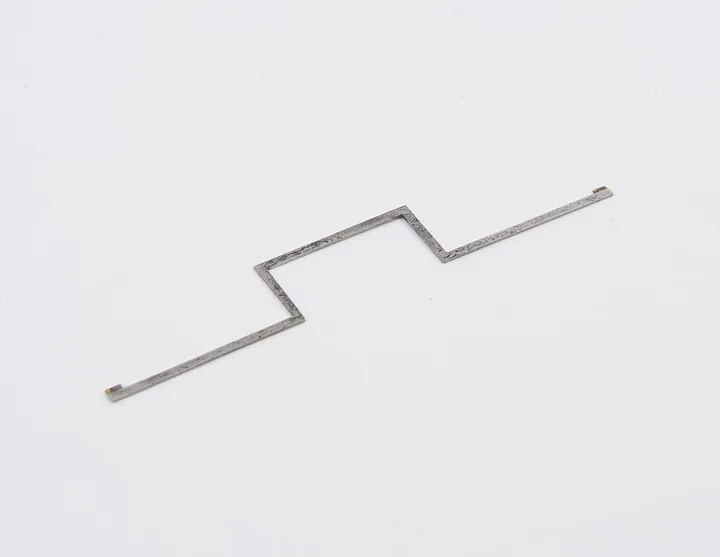
Contactor from electric clock, unsigned, London, England, 1841–1870
Science Museum Group, London