
Wristwatches · Wristwatch
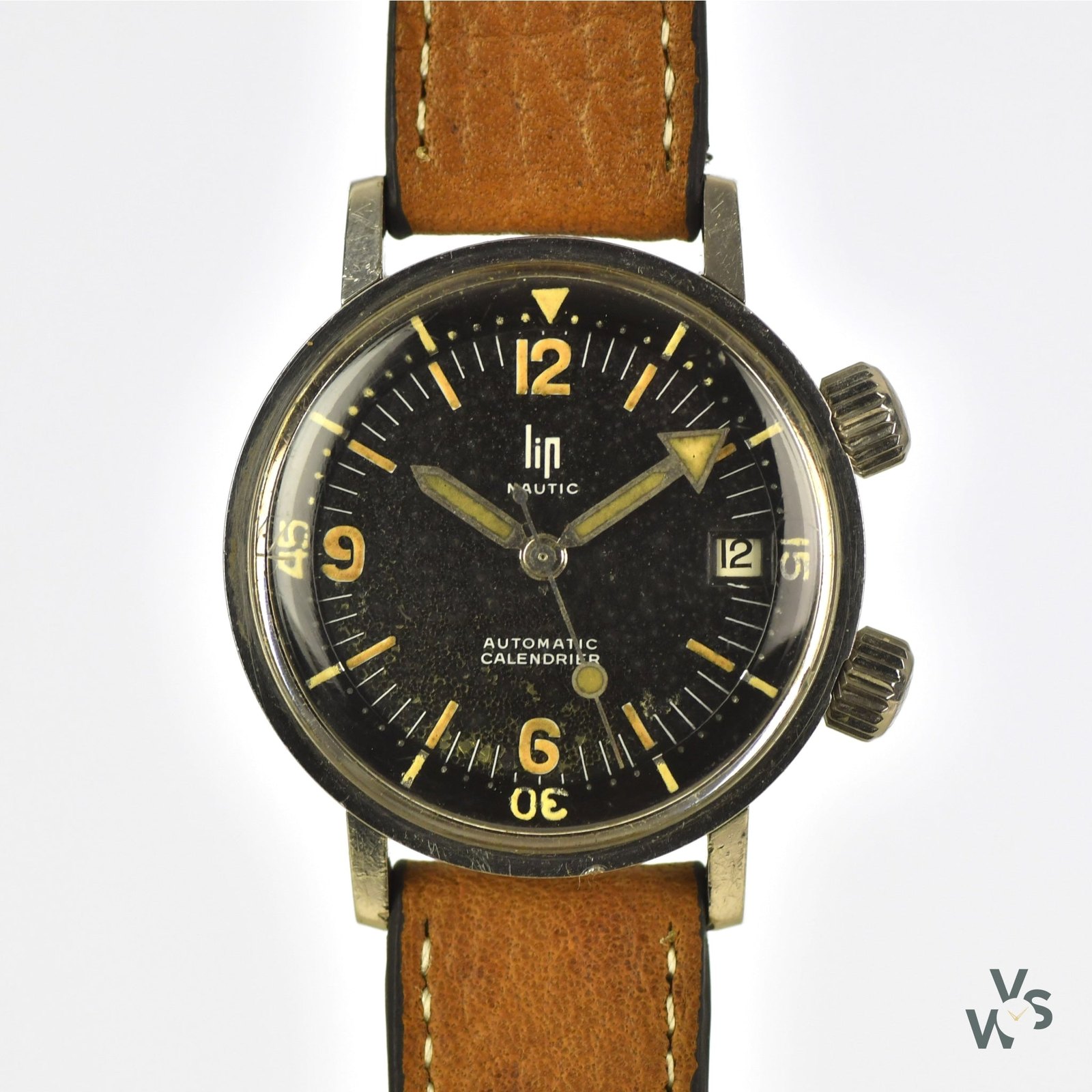
LIP Nautic Automatic Divers Watch, Super Compressor, circa 1966
- Maker / attribution
- Lip (maker)
- Date
- c. 1966
- Historical period
- Modern Mechanical Horology (1945 – 1969)
- Country of origin
- Unrecorded in source
- Object type
- Wristwatch
- Dimensions
- Case 36 mm
- Stock no.
- vws1780
- Credit line
- Dealer listing, Vintage Watch Specialist (vws1780)
- Catalogue title (original)
- LIP - Nautic Automatic Divers Watch - Super Compressor - c.1966 (English)
View the source record (dealer listing) ↗ (opens another website in a new tab)Suggest a correction
Record summary
Catalogued by Vintage Watch Specialist (dealer), United Kingdom (stock number vws1780), this is a wristwatch by Lip, dated c. 1966. The Atlas places it in the Modern Mechanical Horology period (1945 – 1969) of its Wristwatches collection. Recorded dimensions: Case 36 mm. The record is illustrated with 6 photographs.
Assembled from the source record's structured fields. Dates and attributions are given as the source states them; where a field is missing the Atlas leaves it blank rather than estimating.
Catalogue description
Dealer description — Vintage Watch Specialist
A very Clean, Vintage, LiP Nautic Automatic "Calendrier" Super Compressor, Diving Watch from c.1966. Frederic Samuel Lipmann, grandson of Emmanuel and son of Ernest was born in Besançon on November 2, 1905. After a chaotic schooling in Paris, he failed the baccalaureate exam in 1922. His father then brought him back to the family cradle and puts him in the watchmaking school of Besançon. After completing his military service, he left for the United States in 1928 on a study tour where he visited the watchmaking factories and assembly plants of the Harley Davidson and Indian motorcycles. This trip and his passion for motorsport will influence his vision and methods. In August 1931 he joined the family company. "Genius" for some, "crazy", for others, "Fred" upsets traditions. Under his direction, Lip Sa innovates and becomes the first watchmaker in France. 1954 marks the peak of the company with 1,500 employees, 300,000 watches a year, and in 1960, the Palente factory. But Fred Lipmann cannot adapt to the watchmaking market in full evolution with the arrival of quartz and in February 1971, passes the hand. He will die in Paris on November 9th, 1996. About Super-Compressor; Super Compressor is a trademarked name for specific case designs made by the case manufacturer Ervin Piquerez S.A. (EPSA). They designed a patented case sealing method that actually became more water-tight the deeper the watch went. The deeper you went, the more pressure was applied to the case-back, pressing it against the O-ring gasket. What’s On Offer A rare and sought-after LiP diving watch, using a 36mm EPSA Super-Compressor case, it is Lip’s interpretation of the coveted two (cross-hatched) crown diver watch from the mid-1960s. Existing in three versions (manual, self-winding with or without date), this is the most complicated "Calendrier" version with a date window at 3 o’clock and the automatic movement. This is a really unique piece that has aged beautifully over the years. The black dial has a speckling of attractive patina whilst the Lip signature, minute markers, and date window remain sharp. The oversize Arabic numerals and chunky hands give a real contemporary aesthetic as do the substantial proportions of the watch. A stylish and comfortable everyday wearer that would transition happily between occasions. We love the retro feel and classic lines of this watch, paired with a handmade leather strap in tan leather it is comfortable on the wrist, runs like a dream, and keeps great time. What more could you possibly want?
Historical context
Modern Mechanical Horology (1945 – 1969)
Tool watches for divers, pilots and astronauts; electric watches anticipate the electronic age.
The classic era of the mechanical wristwatch: dive watches, chronographs for motor racing and space flight, GMT watches for jet travel, slim dress watches, automatic calendars, and the rise of Japanese manufacturers alongside Swiss, American, German and Soviet industries.
Read the period in the timelineMore wristwatches from this periodEarlier: Golden Age of Mechanical Watchmaking
Atlas type guide
Dive and water-resistant watches
Keeping water and dust out of a wristwatch was a long-standing challenge. Rolex's screw-down Oyster case (1926) and Omega's Marine (1932) were landmarks; in the early 1950s Blancpain's Fifty Fathoms and Rolex's Submariner defined the professional dive watch with rotating bezels for timing dives, luminous dials and high water resistance. The ISO 6425 standard (1982) later codified what a 'diver's watch' must do.
Dive watches became icons of post-war design and exploration, and their evolution — helium escape valves, ceramic bezels, saturation-diving depth ratings — records the history of underwater work.
What to look for
- Unidirectional or bidirectional rotating bezel with minute markings.
- Screw-down crown and case back; depth rating printed on the dial.
- Luminous hands and markers (radium before c. 1960, tritium c. 1960–1998, then Super-LumiNova).
- Reference numbers on the case between the lugs or inside the back.
Dating clues
- Screw-down Oyster cases: from 1926.
- Professional dive watches: from 1953.
- Tritium 'T' marks on dials: c. 1960–1998.
General guidance written by the Atlas editors about this kind of object. It is not a statement about this particular piece; for that, rely on the source record above and on physical examination.
Related records
Wristwatches · 1970s
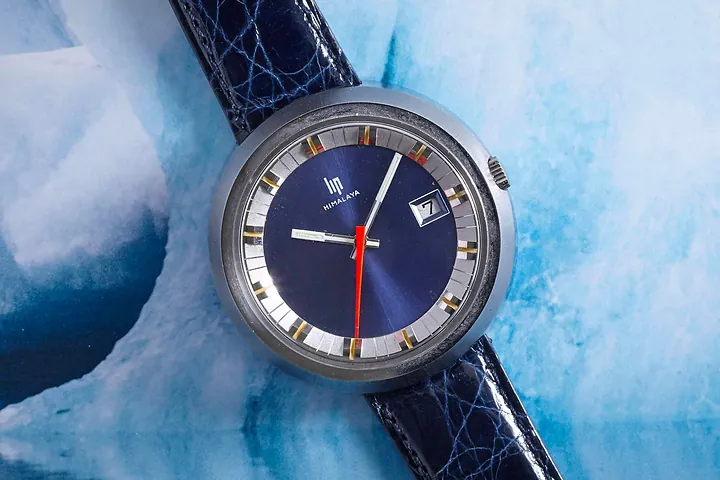
Wristwatch by Lip, 1970s
Analog/Shift (dealer), New York
Wristwatches · c. 1974
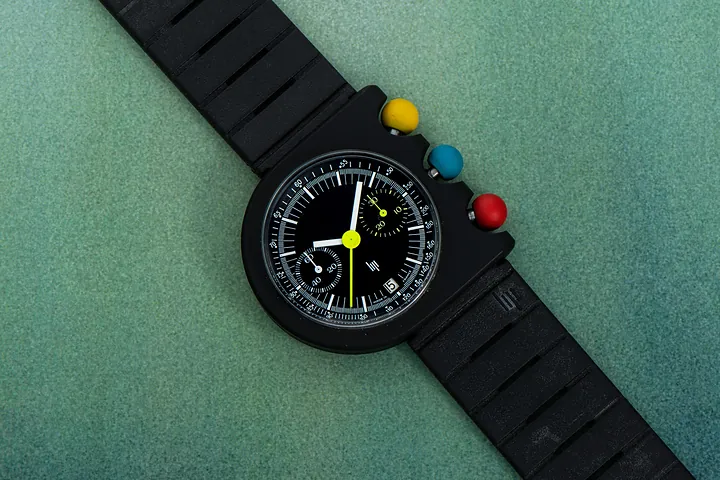
LIP Mach 2000 'Dark Master' Chronograph, c. 1974
Analog/Shift (dealer), New York
Wristwatches · late 1960s
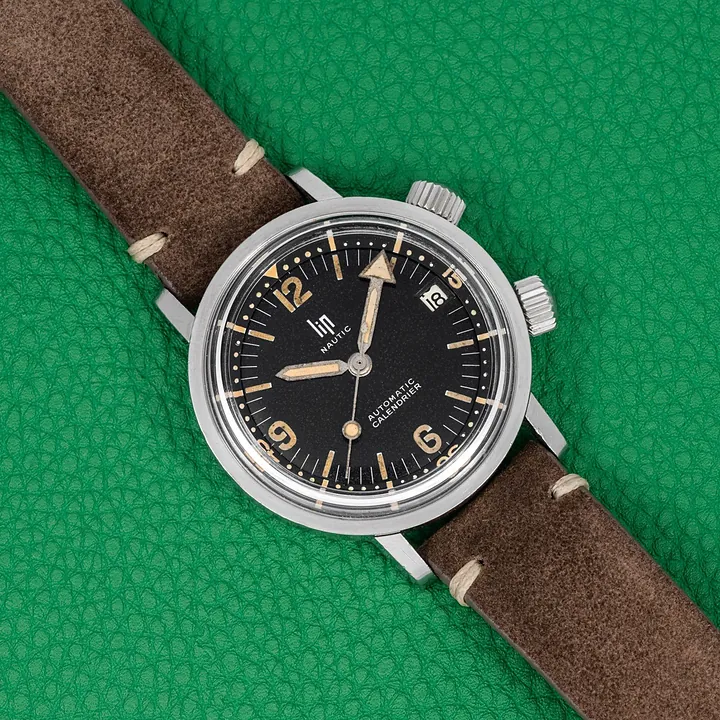
LIP Nautic Super Compressor, late 1960s
Analog/Shift (dealer), New York
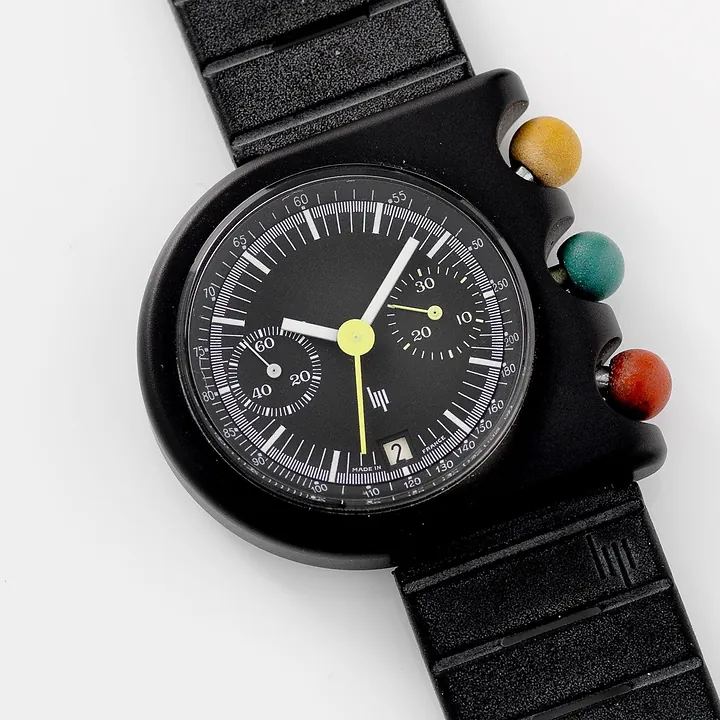
Wristwatches · 1970s
Vintage NOS Lip Mach 2000 Chronograph, 1970s
Bulang & Sons (dealer), Copenhagen

Wristwatches · 1945
Wristwatch by Eterna, 1945
Museum Rotterdam

Wristwatches · c. 1945
Breitling Premier, ref. 790, c. 1945
Antiquorum auction archive, Geneva

Wristwatches · c. 1945
Universal Genève Uni-Compax, ref. 22492, c. 1945
Antiquorum auction archive, Geneva
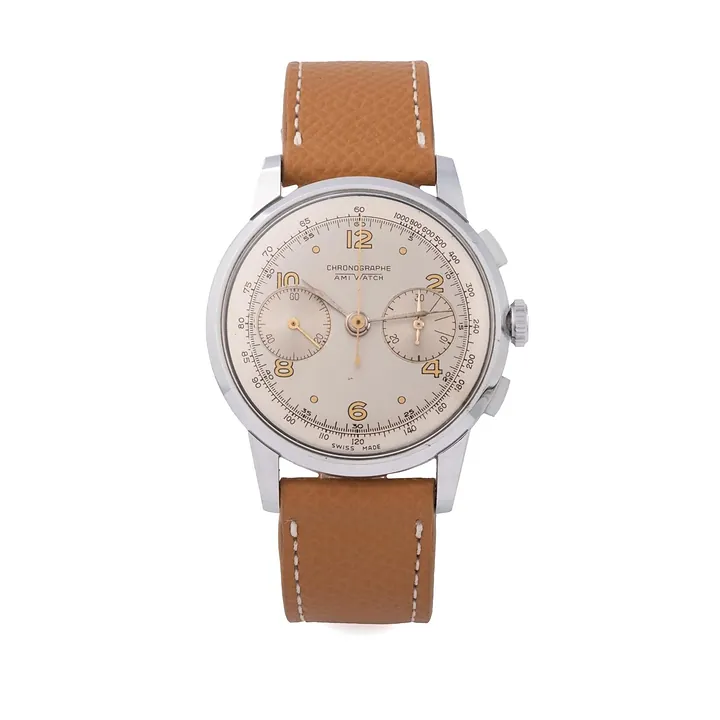
Wristwatches · c. 1950s
Ami Watch Chronographe, c. 1950s
Antiquorum auction archive, Geneva