
Wristwatches · Wristwatch
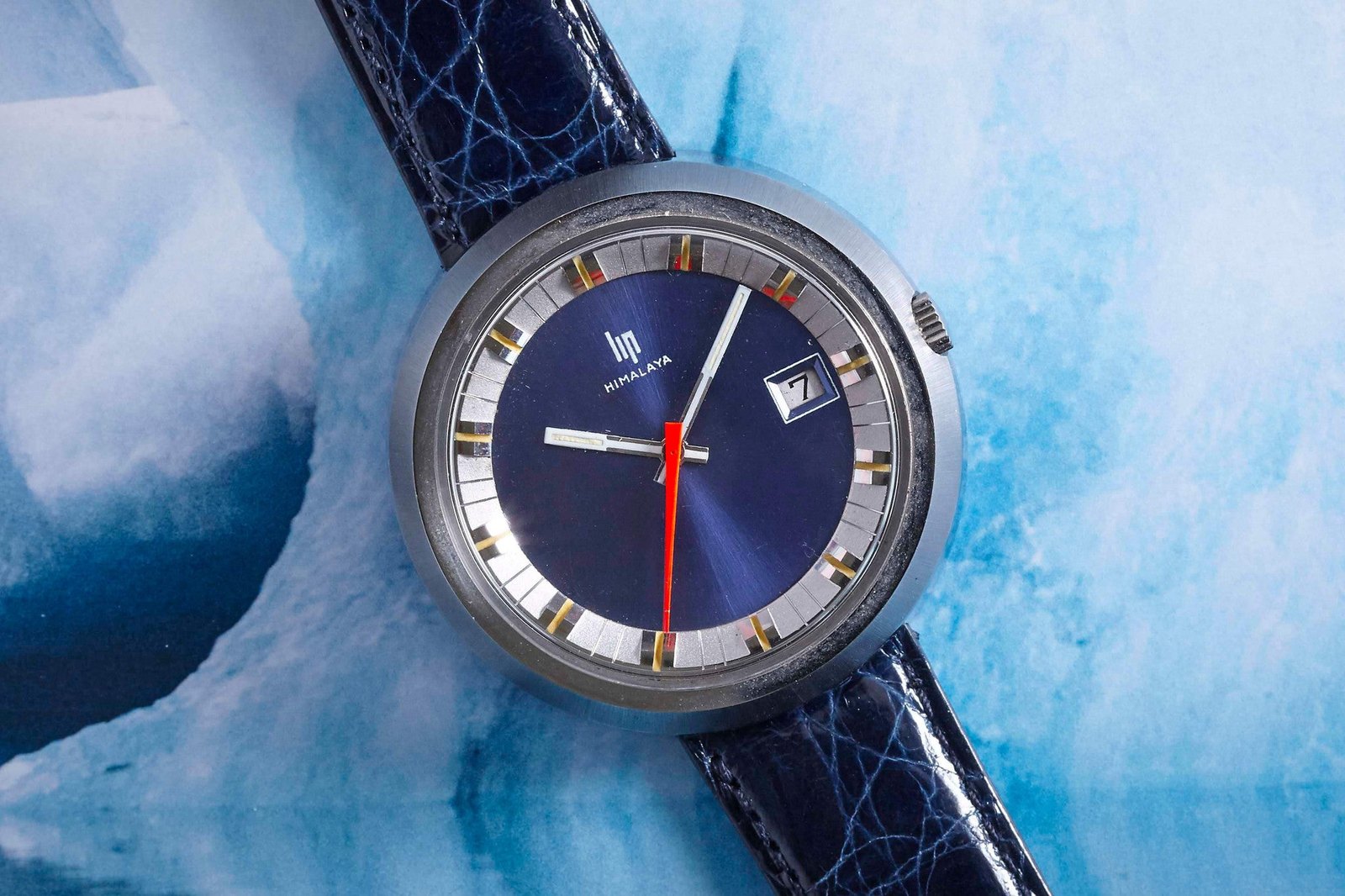
Wristwatch by Lip, 1970s
- Maker / attribution
- Lip (maker)
- Date
- 1970s
- Historical period
- Quartz Revolution (1969 – 1990)
- Country of origin
- Unrecorded in source
- Object type
- Wristwatch
- Dimensions
- Case 40 mm
- Stock no.
- Product 2061001601
- Credit line
- Dealer listing, Analog/Shift (product 2061001601)
- Catalogue title (original)
- Lip Himalaya (English)
View the source record (dealer listing) ↗ (opens another website in a new tab)Suggest a correction
Record summary
Catalogued by Analog/Shift (dealer), New York (stock number Product 2061001601), this is a wristwatch by Lip, dated 1970s. The Atlas places it in the Quartz Revolution period (1969 – 1990) of its Wristwatches collection. Recorded dimensions: Case 40 mm. The record is illustrated with 6 photographs.
Assembled from the source record's structured fields. Dates and attributions are given as the source states them; where a field is missing the Atlas leaves it blank rather than estimating.
Catalogue description
Dealer description — Analog/Shift
We admit it, we do tend to get carried away pontificating about vintage watches. Whether it is the history of a particular piece or some oft-forgotten sidenote in the development of a particular case design or movement, there are numerous elements to vintage timepieces that make them so desirable. On the other hand, much like women, sometimes all it takes to get us excited about a particular timepiece are some killer looks. Case in point: This sexy as all-hell Lip Himalaya from the 1970s. Although the name Lip may be unfamiliar to you, the French brand has horological roots going back to 1867 and was the first manufacture to use phosphorescent material (radium) on the watch dials and hands to allow for visibility in low light conditions. They also had early forays into electric watches, though are probably best known for their striking mid-century modernist designs, incorporating vibrant color into asymmetrical cases. Dating from the 1970s, this particular wristwatch is just plain cool. Sized at an infinitely wearable 40mm, this manually-winding designer wristwatch features a colorful blue sunburst dial with minimalist printing, and a beautifully sloped inner bezel with luminescent hour markers. Simple bâton hands with warmly patinated luminescent inserts and a striking fluorescent orange sweep seconds hand rounds out this terrifically 70s aesthetic. But the cherry on top is the incredibly crisp circular case in near-mint condition with deep brushing and an ergonomically thoughtful curved case back design. This watch might not fit the archetype of most of the timepieces we offer here at analog/shift, but it is an absolute pillar of design, and will make someone who appreciates true style very, very happy!
Historical context
Quartz Revolution (1969 – 1990)
Seiko's Astron begins mass quartz timekeeping; traditional industries contract sharply.
Quartz and digital watches transformed the market after 1969. Swiss employment collapsed, Japanese and Hong Kong production soared, and the Swatch (1983) helped the Swiss industry recover; mechanical watches survived as luxury goods.
Read the period in the timelineMore wristwatches from this periodEarlier: Modern Mechanical Horology
Atlas type guide
Wristwatches
Bracelet watches were worn by women from the early nineteenth century — Breguet made one for Caroline Murat, Queen of Naples, in 1810–12 — but the wristwatch only became a man's instrument with military use and aviation in the early twentieth century. Between the World Wars it overtook the pocket watch; the 1920s and 1930s brought rectangular Art Deco cases, water-resistant cases and the first automatic winding systems.
After 1945 the wristwatch became a carrier of identity — dress watches, sports and dive watches, chronographs, calendars — produced by Swiss, American, Japanese, German, Soviet and Chinese industries. The quartz revolution after 1969 and the mechanical renaissance since the 1990s, including the rise of independent watchmakers, complete the story.
What to look for
- The reference number (between the lugs or inside the case back) and serial number, the starting point for dating.
- The calibre: its maker and number are often stamped under the dial or on the bridge.
- Originality of dial, hands and crown — refinished ('redial') dials are common.
- Case material marks: 18K/750, 14K/585, stainless steel, gold-filled, plated.
Dating clues
- Wire-lug cases: before c. 1925.
- Water-resistant screw-down cases: from 1926.
- Quartz movements: from 1969; sapphire crystals widespread after c. 1980.
General guidance written by the Atlas editors about this kind of object. It is not a statement about this particular piece; for that, rely on the source record above and on physical examination.
Related records
Wristwatches · c. 1974
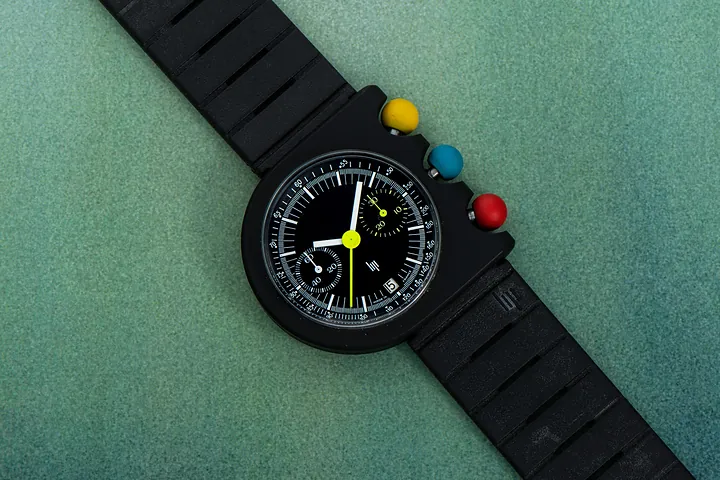
LIP Mach 2000 'Dark Master' Chronograph, c. 1974
Analog/Shift (dealer), New York
Wristwatches · late 1960s
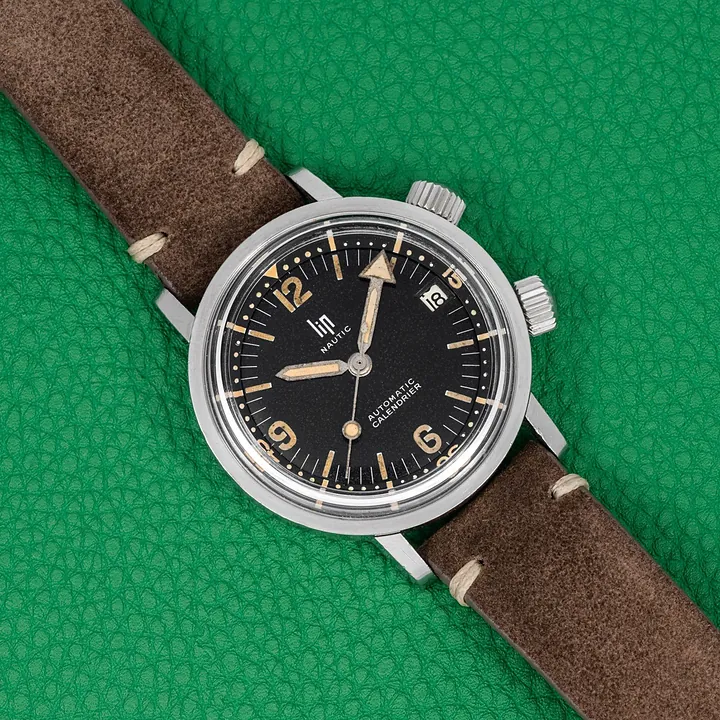
LIP Nautic Super Compressor, late 1960s
Analog/Shift (dealer), New York
Wristwatches · 1970s
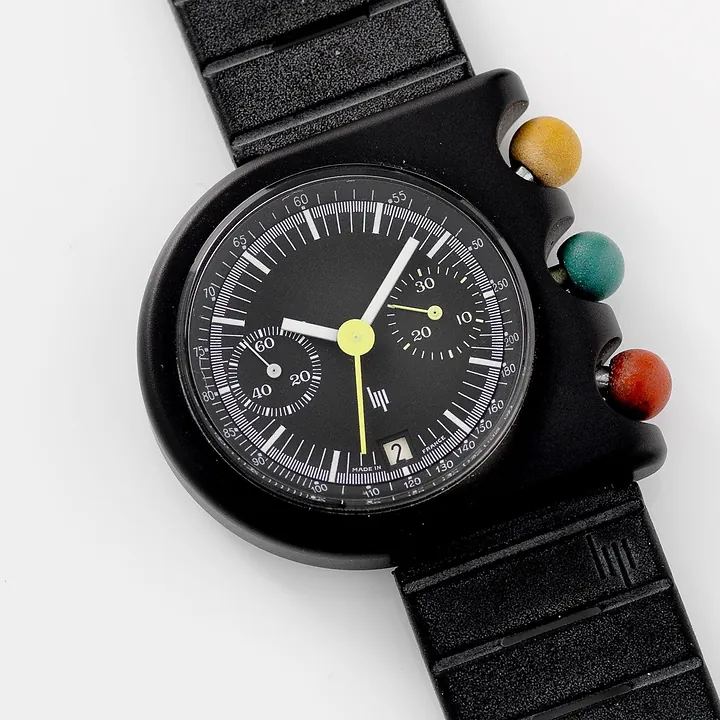
Vintage NOS Lip Mach 2000 Chronograph, 1970s
Bulang & Sons (dealer), Copenhagen
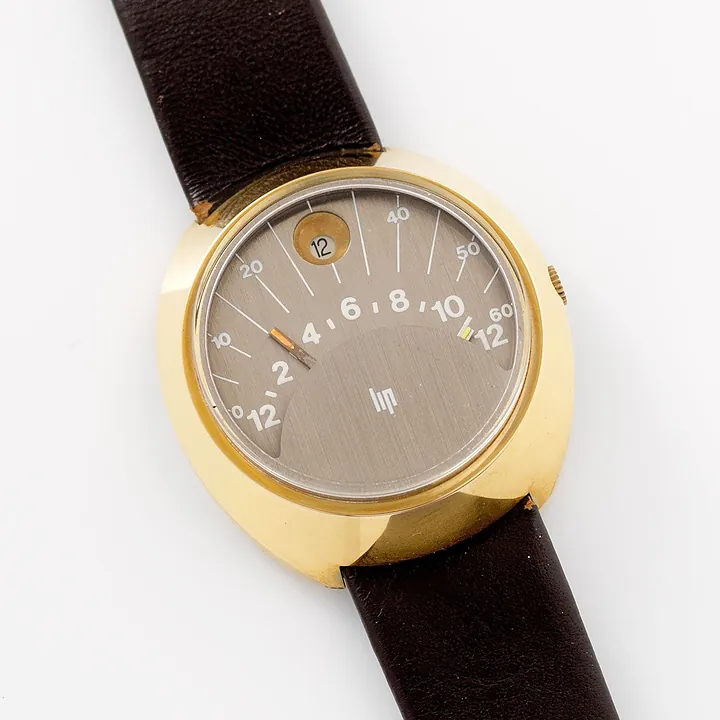
Wristwatches · 1970s
Vintage NOS Lip Retrograde Watch, 1970s
Bulang & Sons (dealer), Copenhagen

Wristwatches · 1970
Wristwatch by Heno, Switzerland, 1970
Museum Rotterdam
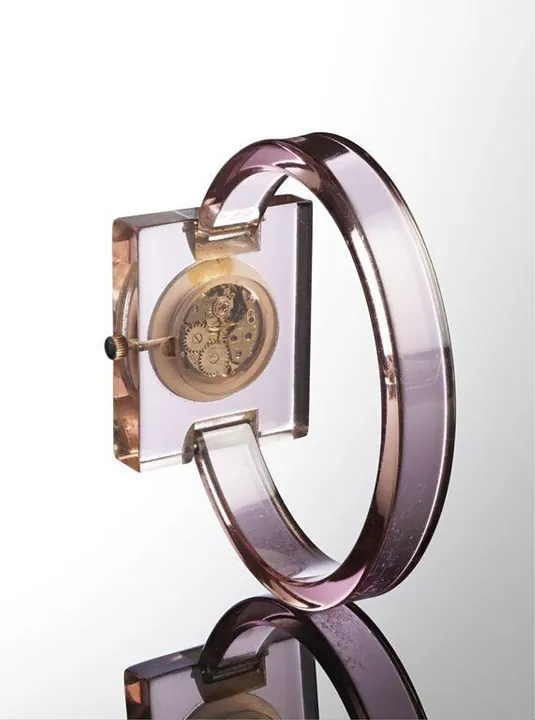
Wristwatches · 1970s
Wristwatch, plastic, by Gucci; Italy, 1970s.
Victoria and Albert Museum, London
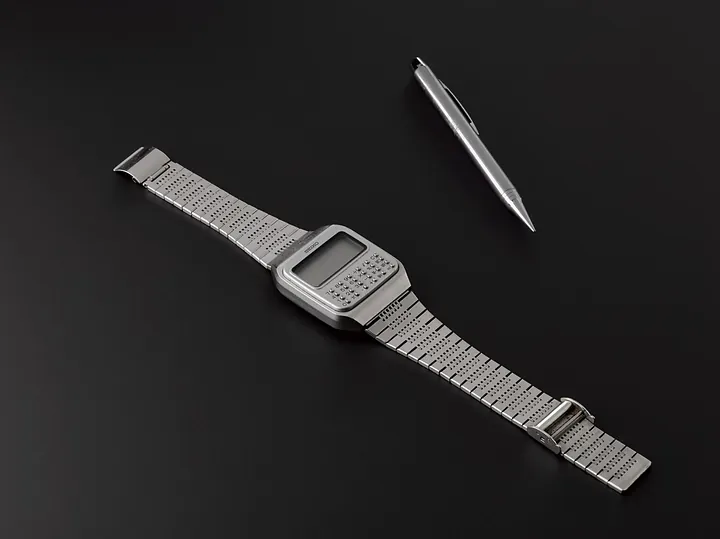
Wristwatches · 1978
Calculator wristwatch by Suwa Seikosha Co. Limited, Japan, 1978
Science Museum Group, London
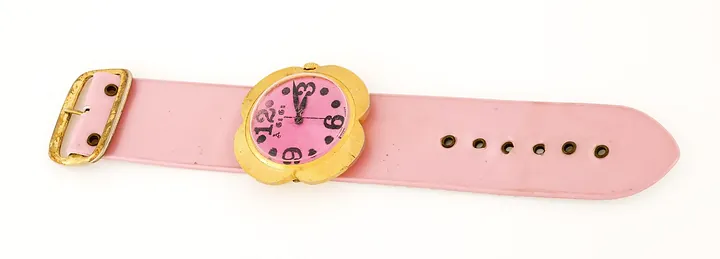
Wristwatches · 1980
Wristwatch, 1980 (no. 71413)
Museum Rotterdam