
Wristwatches · Wristwatch
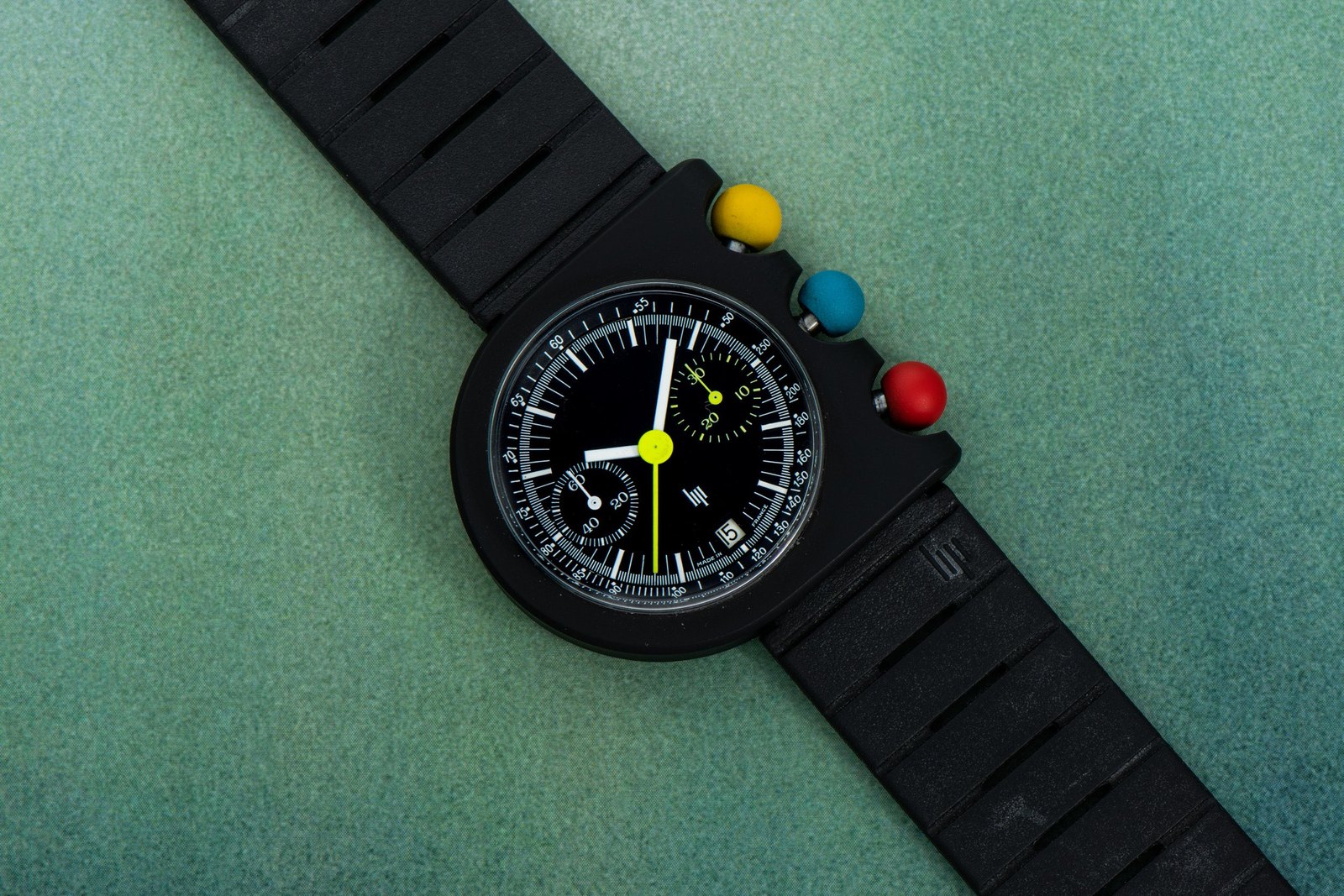
LIP Mach 2000 'Dark Master' Chronograph, c. 1974
- Maker / attribution
- Lip (maker)
- Date
- c. 1974
- Historical period
- Quartz Revolution (1969 – 1990)
- Country of origin
- Unrecorded in source
- Object type
- Wristwatch
- Dimensions
- Case 39.5 mm
- Stock no.
- 40990993
- Credit line
- Dealer listing, Analog/Shift (40990993)
- Catalogue title (original)
- LIP Mach 2000 'Dark Master' Chronograph (English)
View the source record (dealer listing) ↗ (opens another website in a new tab)Suggest a correction
Record summary
Catalogued by Analog/Shift (dealer), New York (stock number 40990993), this is a wristwatch by Lip, dated c. 1974. The Atlas places it in the Quartz Revolution period (1969 – 1990) of its Wristwatches collection. Recorded dimensions: Case 39.5 mm. The record is illustrated with 6 photographs.
Assembled from the source record's structured fields. Dates and attributions are given as the source states them; where a field is missing the Atlas leaves it blank rather than estimating.
Catalogue description
Dealer description — Analog/Shift
It isn’t often that a watch is an example of iconic industrial design, masterminded by a giant in the field — but in the case of this watch, it most certainly is. The designer in question was Roger Tallon. Born in 1929, Tallon studied as an engineer. Afterwards, he worked for Caterpillar France and DuPont. Commissions from American companies Frigidaire and General Electric exposed him to the thoughtful utility of American design, an idea that would inform his creations from then on. In 1973, a tumultuous year for the Lip watch company, Tallon designed this watch, the Mach 2000 ‘Dark Master’ Chronograph. Although one in a series of sports watches Lip commissioned from Tallon, the Dark Master is certainly the standout. Minimal without being spare, functional while still being fun, it’s without a doubt one of the most distinctive watches we’ve ever come across. Dating to circa 1974, thus Mach 2000 is housed in a 39.5mm, all-black plastic case with a steel case back, a plastic crystal, an unsigned, blue rubber winding crown, and yellow and red rubber chronograph pushers. It features a gloss black tritium dial with painted baton indices, an outer tachymeter track, a dual-register chronograph, a date window at 6 o’clock, white stick hands, and a yellow seconds hand. Powered by a hand-wound Valjoux chronograph movement and paired to a rubber strap with a stainless steel pin buckle, this outrageously cool watch is in excellent condition throughout and includes its inner box. You couldn’t possibly find a more unique — and iconic! — model than the Mach 2000. If you’re not one to follow the pack, pick this one up today!
Historical context
Quartz Revolution (1969 – 1990)
Seiko's Astron begins mass quartz timekeeping; traditional industries contract sharply.
Quartz and digital watches transformed the market after 1969. Swiss employment collapsed, Japanese and Hong Kong production soared, and the Swatch (1983) helped the Swiss industry recover; mechanical watches survived as luxury goods.
Read the period in the timelineMore wristwatches from this periodEarlier: Modern Mechanical Horology
Atlas type guide
Chronographs and split-seconds watches
A chronograph is a watch with an additional seconds hand that can be started, stopped and returned to zero independently of the timekeeping. Louis Moinet built an early example in 1816 and Nicolas Rieussec a recording 'chronographe' in 1821; Adolphe Nicole's heart-shaped reset cam (patented 1862) made the modern return-to-zero possible. Split-seconds (rattrapante) chronographs add a second hand that can be stopped for intermediate times; flyback chronographs restart instantly.
Chronographs were essential tools for doctors (pulsometer scales), artillery (telemeter), engineers and sport. In wristwatches, Valjoux, Venus, Lemania and later the automatic chronographs of 1969 (Zenith El Primero, the Chronomatic Calibre 11 group and Seiko 6139) are milestones.
What to look for
- Push-pieces on the case band or a single button in the crown (monopusher).
- Subsidiary registers for minutes and hours; tachymeter, telemeter or pulsometer scales.
- Column wheel versus cam control visible in the movement.
- Calibre markings of specialist makers (Valjoux, Lemania, Venus, Landeron).
Dating clues
- Pocket chronographs with heart cam reset: after 1862.
- Wrist chronographs: from c. 1910; two-button designs from the 1930s.
- Automatic chronographs: from 1969.
General guidance written by the Atlas editors about this kind of object. It is not a statement about this particular piece; for that, rely on the source record above and on physical examination.
Read next:Flyback chronographChronograph
Related records
Wristwatches · 1970s
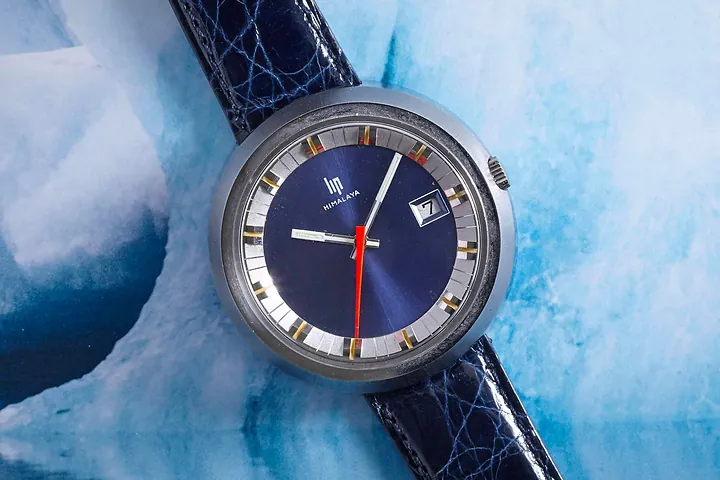
Wristwatch by Lip, 1970s
Analog/Shift (dealer), New York
Wristwatches · late 1960s
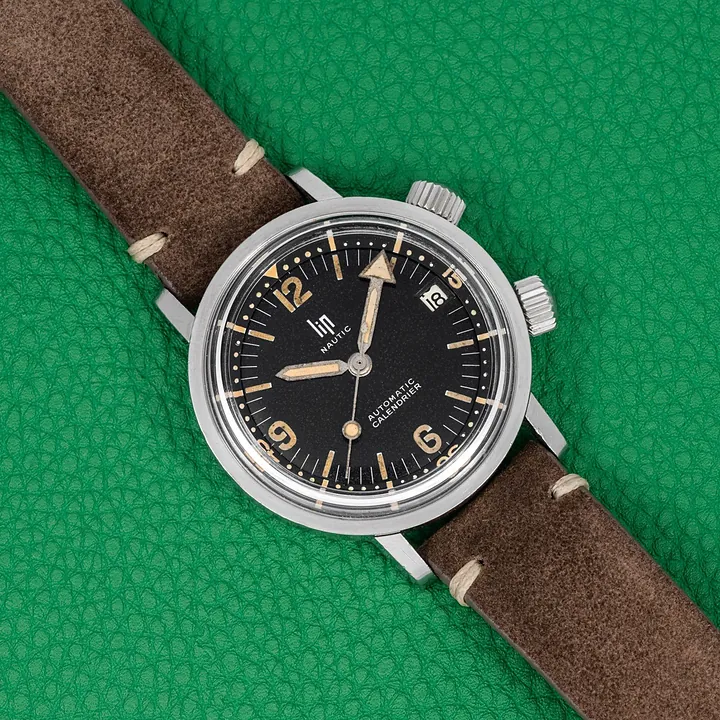
LIP Nautic Super Compressor, late 1960s
Analog/Shift (dealer), New York
Wristwatches · 1970s
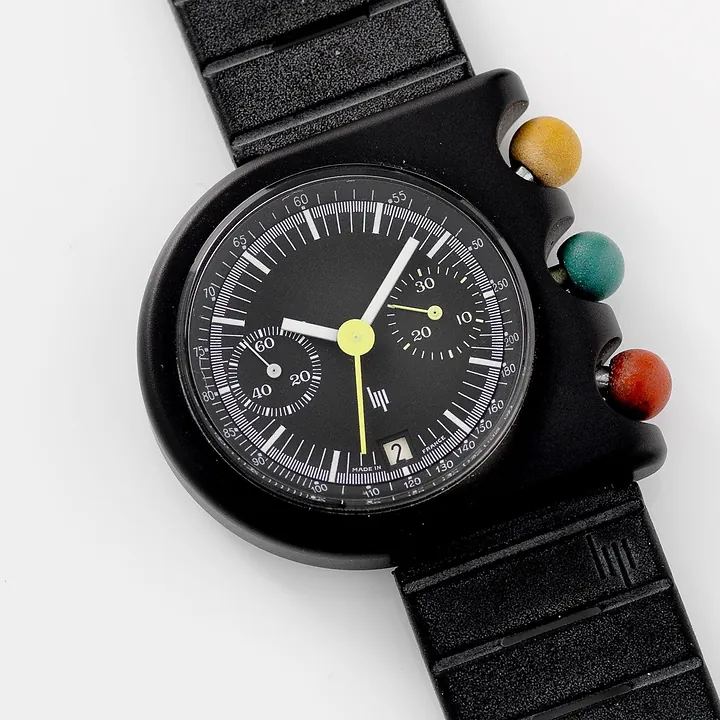
Vintage NOS Lip Mach 2000 Chronograph, 1970s
Bulang & Sons (dealer), Copenhagen
Wristwatches · 1970s
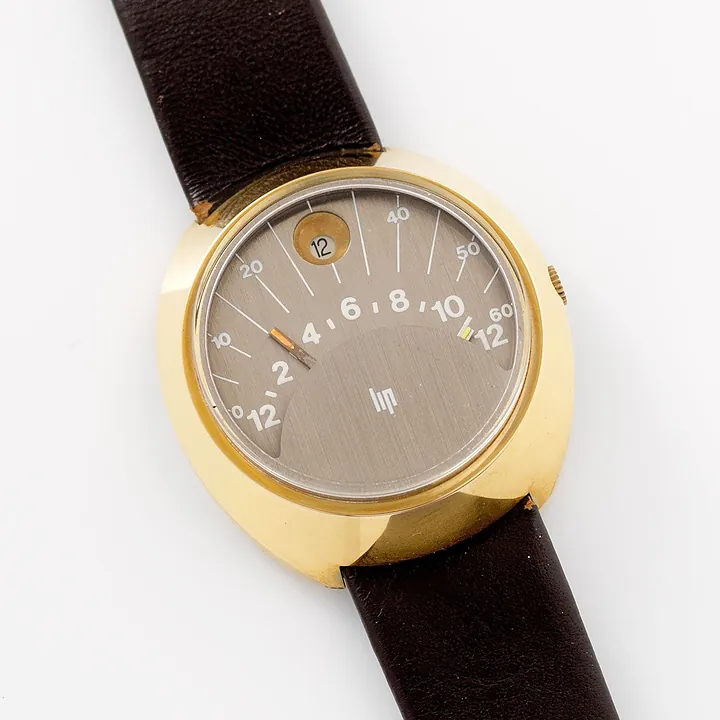
Vintage NOS Lip Retrograde Watch, 1970s
Bulang & Sons (dealer), Copenhagen

Wristwatches · 1970
Wristwatch by Heno, Switzerland, 1970
Museum Rotterdam
Wristwatches · 1970s
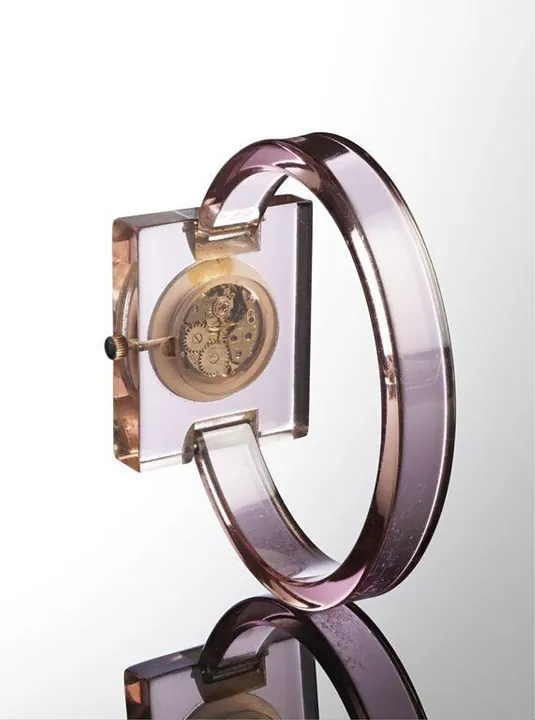
Wristwatch, plastic, by Gucci; Italy, 1970s.
Victoria and Albert Museum, London
Wristwatches · 1978
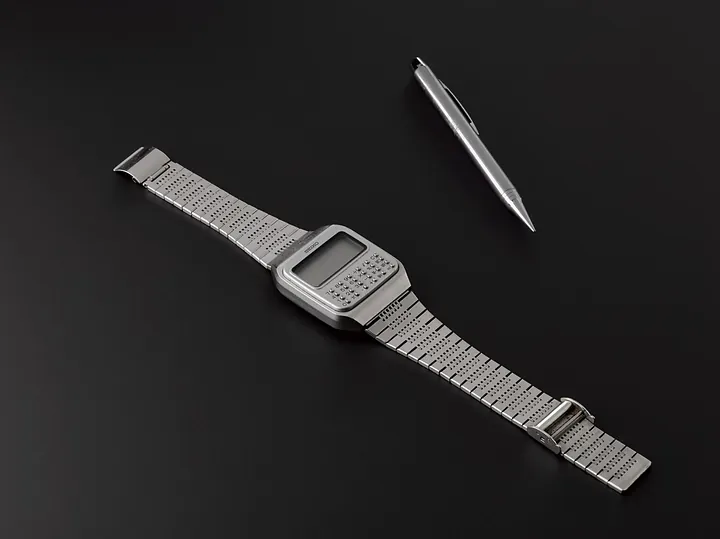
Calculator wristwatch by Suwa Seikosha Co. Limited, Japan, 1978
Science Museum Group, London
Wristwatches · 1980
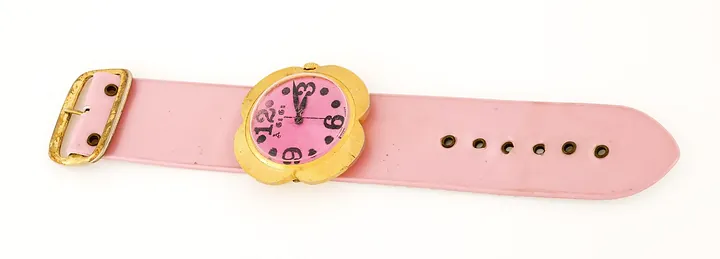
Wristwatch, 1980 (no. 71413)
Museum Rotterdam