
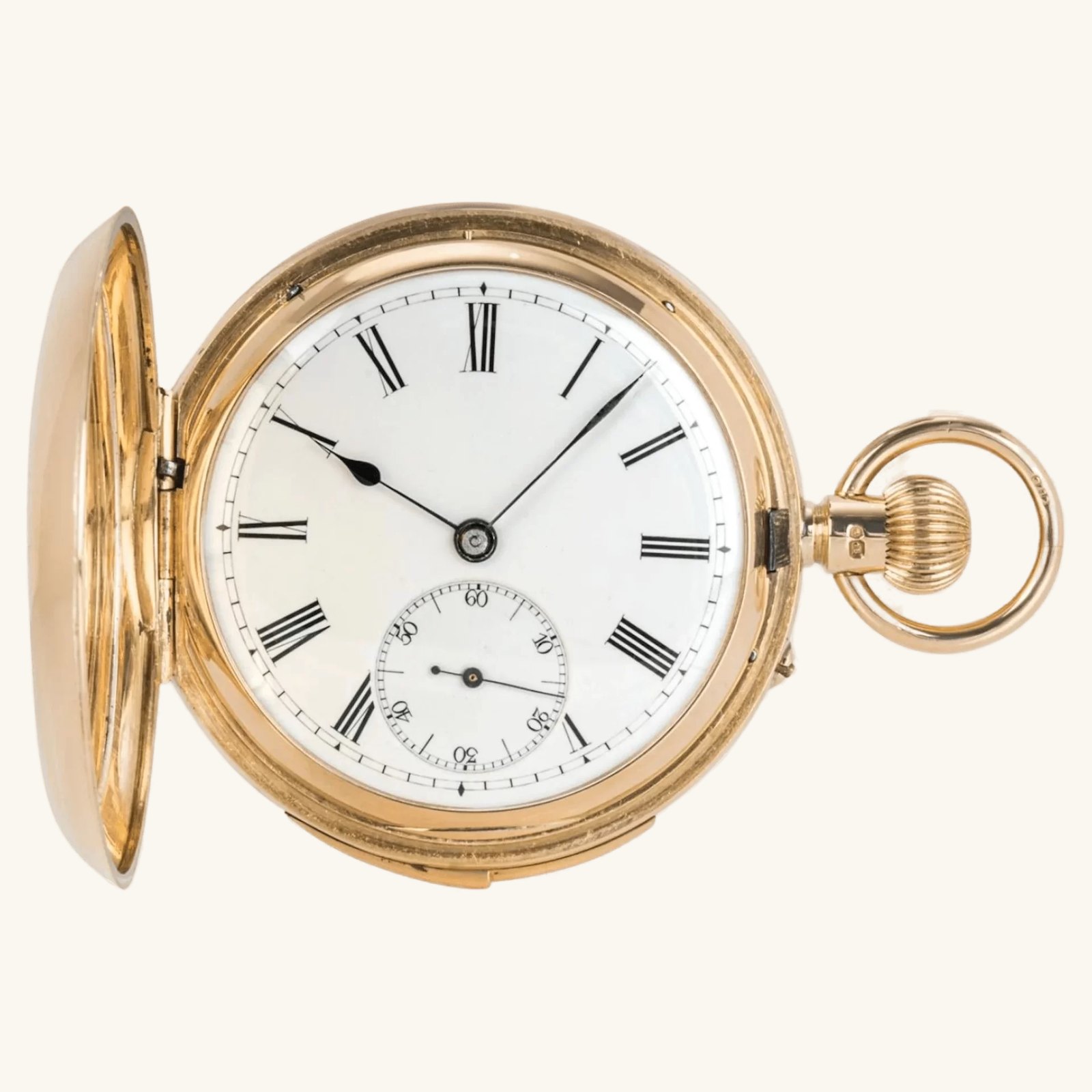
Pocket Watches · Pocket watch
LeCourltre 18CT Gold Minute Repeater PocketWatch
- Maker / attribution
- Unrecorded in source
- Date
- 20th century
- Historical period
- Golden Age of Mechanical Watchmaking (1900 – 1945)
- Country of origin
- Unrecorded in source
- Object type
- Pocket watch
- Materials / technique
- gold
- Dealer
- WatchMuseum.org shop
- Stock no.
- Product 2908
- Credit line
- Dealer listing, WatchMuseum.org shop (product 2908)
- Catalogue title (original)
- LeCourltre 18CT Gold Minute Repeater PocketWatch (English)
View the source record (dealer listing) ↗ (opens another website in a new tab)Suggest a correction
Record summary
Catalogued by WatchMuseum.org shop (stock number Product 2908), this is a pocket watch, dated 20th century. The Atlas places it in the Golden Age of Mechanical Watchmaking period (1900 – 1945) of its Pocket Watches collection. Materials and techniques recorded by the source: gold. The record is illustrated with 6 photographs.
Assembled from the source record's structured fields. Dates and attributions are given as the source states them; where a field is missing the Atlas leaves it blank rather than estimating.
Catalogue description
Dealer description — WatchMuseum.org shop
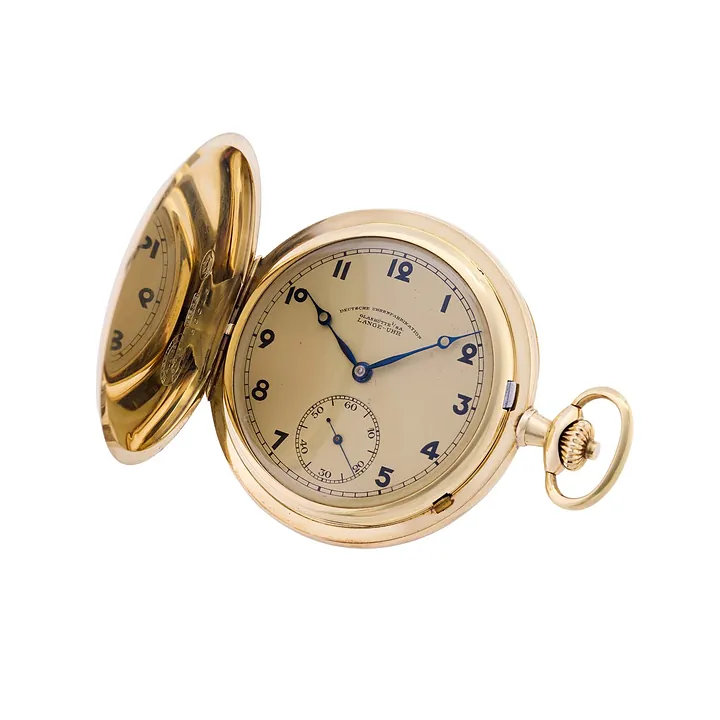
The LeCourltre 18CT Gold Minute Repeater Pocket Watch is a breathtaking testament to the artistry and precision of early 20th-century horology, crafted by the renowned Jaeger-LeCoultre. This exquisite timepiece, originating from France, is encased in a robust 18-carat gold full hunter case, exuding an aura of timeless elegance and sophistication. Its round case, with a diameter of 52 mm, is meticulously designed with plain covers and features a repeater slide on the side, a hallmark of its intricate functionality. The immaculate white enamel dial is a canvas of classic beauty, adorned with Roman numerals, an outer minute track, and a subsidiary seconds dial positioned at six o’clock. The dial is further enhanced by the elegant blued steel spade hands and a matching seconds hand, which together create a harmonious visual symphony. At the heart of this masterpiece lies a highly jeweled Swiss Keyless lever movement, fully signed by LeCoultre, which is a marvel of engineering with its micrometre regulation and compensation balance. The movement is a spectacle in itself, showcasing visible polished steel hammers that melodiously strike the hours, quarters, and minutes, embodying the watch’s minute repeater function. This pocket watch is not merely a timekeeping device but a piece of history, reflecting LeCoultre’s early craftsmanship and dedication to excellence. Its pristine condition further underscores its value, making it an exceptional addition to any discerning collector’s assortment, where it will undoubtedly be cherished as a symbol of horological heritage and luxury. Introducing a magnificent Le Coultre pocket watch from circa 1900s, featuring a heavy 18ct gold full hunter case beautifully finished with plain covers and a repeater slide on the side. The pristine white enamel dial is adorned with Roman Numerals, an outer minute track, and a subsidiary seconds dial at six o’clock, all complemented by sleek blued steel spade hands and a matching seconds hand. In addition, the highly jewelled Swiss Keyless lever movement is fully signed by Le Coultre, boasts micrometre regulation and a compensation balance, and showcases visible polished steel hammers that strike the hours, quarters, and minutes. This is a stunning timepiece that exemplifies Le Coultre’s early craftsmanship and would make an exceptional addition to any collector’s assortment. Creator: Jaeger-LeCoultre Case Material: Gold,18k Gold Case Shape: Round Case Dimensions: Diameter: 52 mm (2.05 in) Place of Origin: France Period: Early 20th Century Date of Manufacture: 20th century Condition: Excellent
Historical context
Golden Age of Mechanical Watchmaking (1900 – 1945)
The wristwatch displaces the pocket watch; waterproof cases, self-winding and grand complications.
The pocket watch reached technical maturity and then began to give way to the wristwatch after the First World War. Complicated watches for collectors such as Henry Graves Jr. and James Ward Packard, railroad watches, and slim Art Deco dress watches are characteristic.
Read the period in the timelineMore pocket watches from this periodEarlier: Industrial Revolution
Atlas type guide
Repeating watches
Before electric light, telling the time in the dark was a real problem. Repeating watches strike the time on demand when a slide or push-piece is operated: quarter repeaters sound hours and quarters, minute repeaters hours, quarters and minutes. Edward Barlow and Daniel Quare disputed the invention in London in the 1680s. Early repeaters struck on a bell inside the case; Abraham-Louis Breguet introduced the gong (a coiled steel wire) around 1780, allowing thinner watches.
Repeaters require a separate train with racks, snails and a governor to control the striking speed, and are among the most demanding complications to make and adjust. Swiss makers of the Vallée de Joux specialised in repeating ébauches in the nineteenth century.
What to look for
- A slide on the case band or a push-piece through the pendant.
- Gongs encircling the movement (after c. 1780) or a bell in the case (earlier); pierced case for sound.
- The racks, snails and governor visible under the dial or on the movement.
- Terms such as 'Minutes', 'Quarts' or 'Répétition' on the dial or cuvette.
Dating clues
- Bell-striking quarter repeaters: c. 1690–1800.
- Gong repeaters and dumb repeaters (striking on the case): after c. 1780.
- Minute repeaters became more common after c. 1830 with Vallée de Joux ébauches.
General guidance written by the Atlas editors about this kind of object. It is not a statement about this particular piece; for that, rely on the source record above and on physical examination.
Read next:Minute repeater
Related records
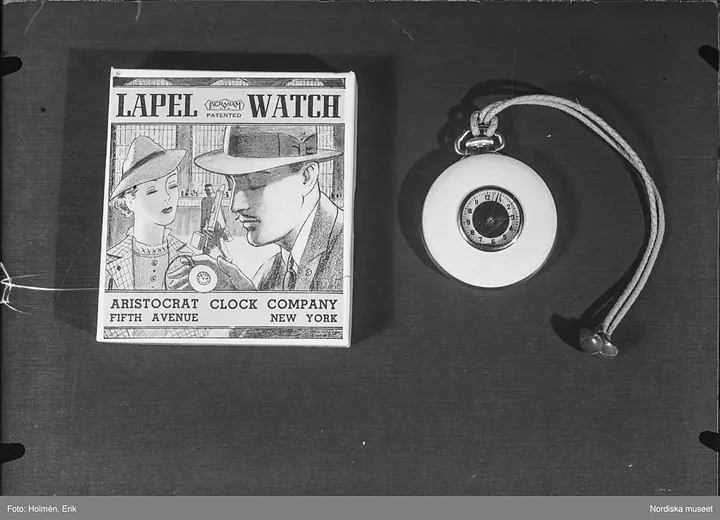
Pocket Watches · 1900–1999
Lapel watch by Erik Holmén, 1900–1999
Nordic Museum Foundation
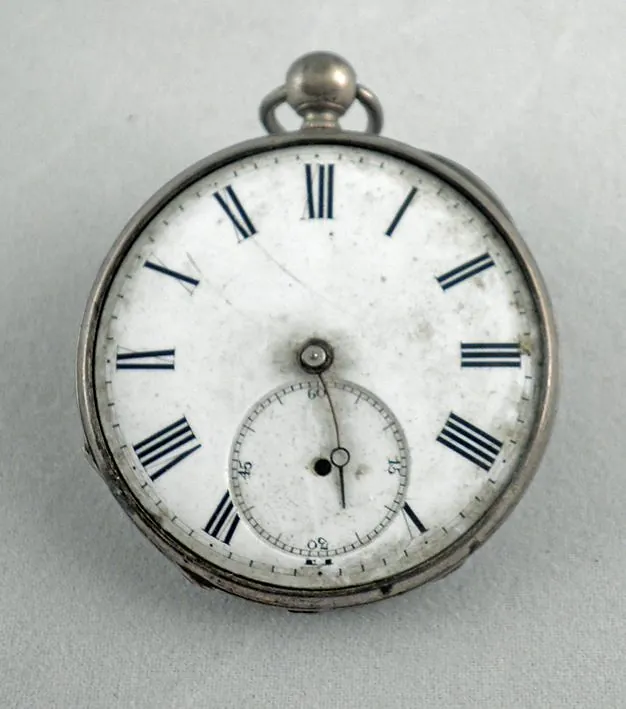
Pocket Watches · 1873–1930
Pocket watch, Lilla Malma socken, 1873–1930
Sörmland Museum
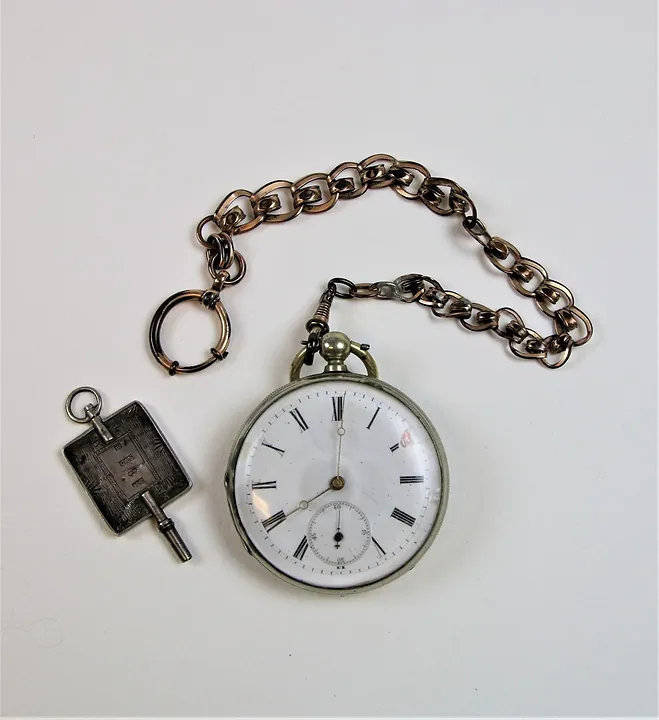
Pocket Watches · 1880–1920
Pocket watch, Sweden, 1880–1920
Sörmland Museum
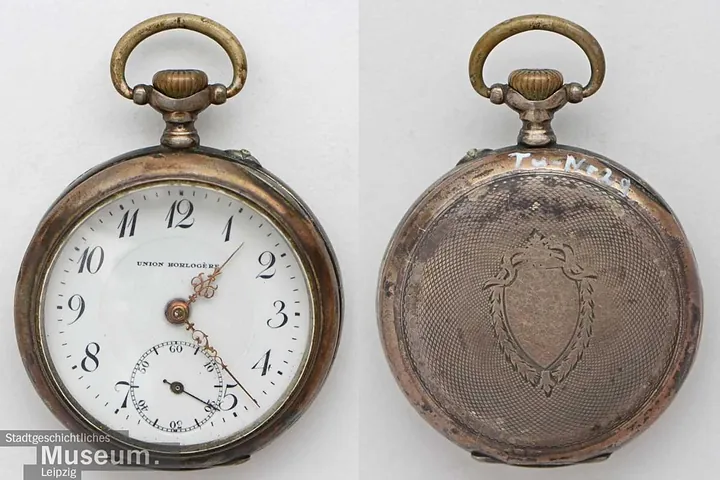
Pocket Watches · 1890–1910
Pocket watch by Union Horlogère, France, 1890–1910
Museum of City History Leipzig
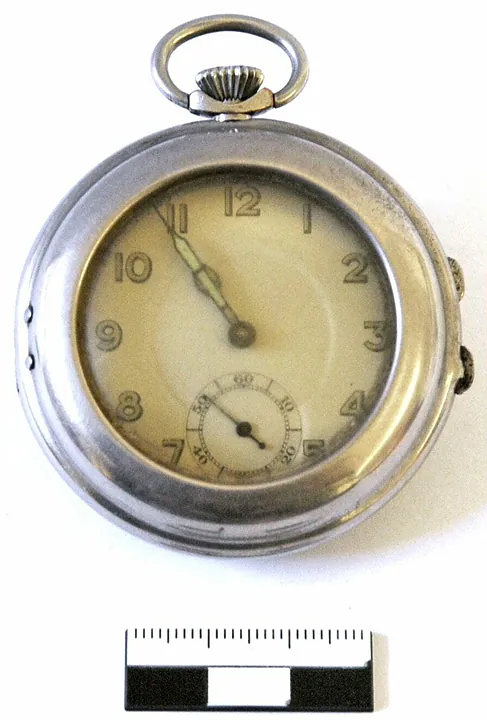
Pocket Watches · 1891–1945
Pocket watch, Germany, 1891–1945
Montanhistorisches Dokumentationszentrum
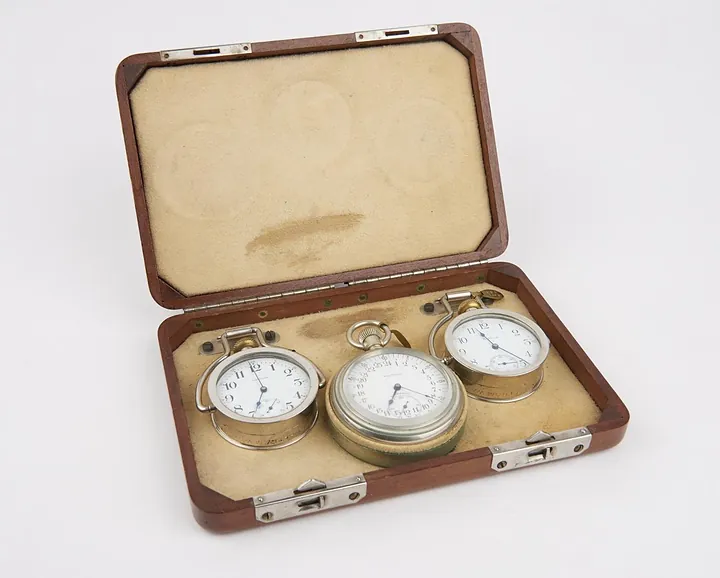
Pocket Watches · c. 1900
Pocket watch by American Waltham Watch Company, United States, c. 1900
Science Museum Group, London
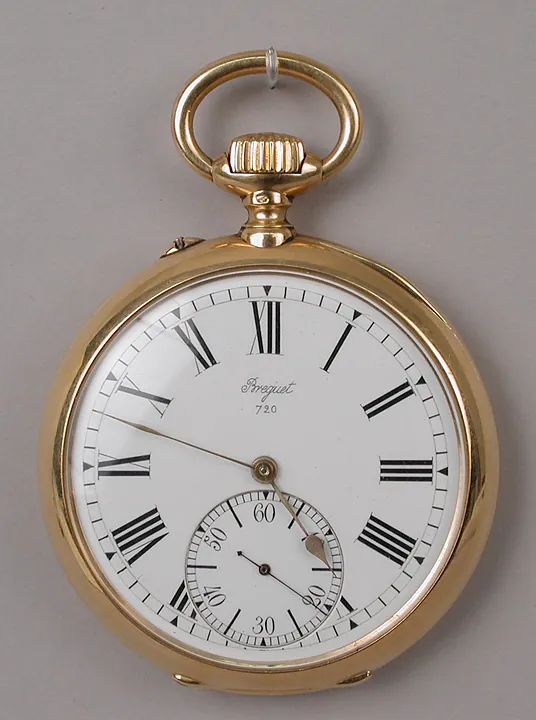
Pocket Watches · c. 1900
Pocket watch by Firm of Breguet et Fils, France, c. 1900
The Metropolitan Museum of Art, New York
Pocket Watches · c. 1900
A.Lange & Söhne pocket watch, c. 1900
Antiquorum auction archive, Geneva