
Clocks · Clock
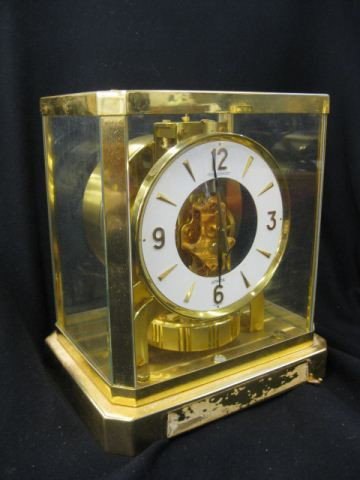
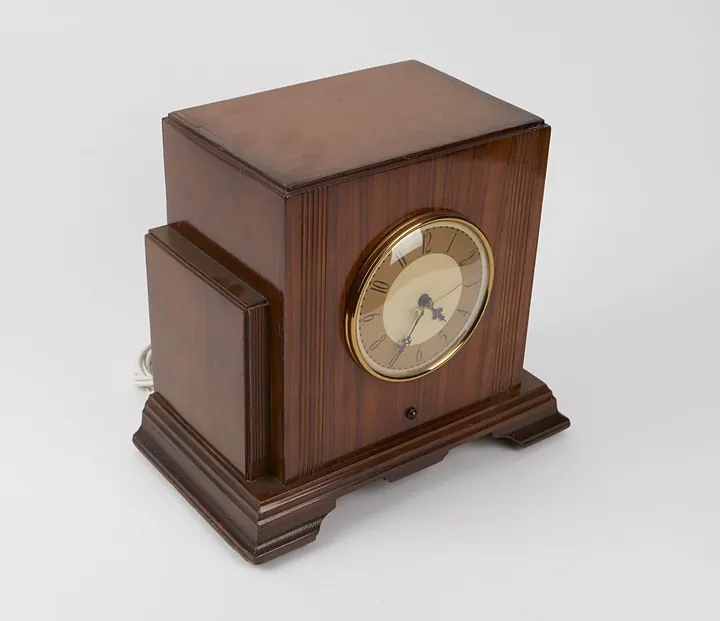
Le Coultre "Atmos" Clock, circa 1950's
- Maker / attribution
- Jaeger-Lecoultre (maker)
- Date
- c. 1950
- Historical period
- Modern Mechanical Horology (1945 – 1969)
- Country of origin
- Unrecorded in source
- Object type
- Clock
- Auction house
- LiveAuctioneers auction archive
- Lot
- Item 9399052
- Credit line
- Auction lot record: lot 1005, Huge 2 Day Antique Auction June 24 & 25, Richard D. Hatch & Associates (2011), via LiveAuctioneers
- Catalogue title (original)
- Le Coultre "Atmos" Clock, circa 1950's, (English)
View the source record (auction lot) ↗ (opens another website in a new tab)Suggest a correction
Record summary
Catalogued by LiveAuctioneers auction archive (lot Item 9399052), this is a clock by Jaeger-Lecoultre, dated c. 1950. The Atlas places it in the Modern Mechanical Horology period (1945 – 1969) of its Clocks collection. The record is illustrated with 4 photographs.
Assembled from the source record's structured fields. Dates and attributions are given as the source states them; where a field is missing the Atlas leaves it blank rather than estimating.
Catalogue description
Lot description — Richard D. Hatch & Associates
circa 1950's, atmospheric, running, 8" x 9 1/2", working. In 1928 a Neuchatel engineer called Jean-Leon Reutter built a clock driven quite literally by air. But it took the Jaeger-LeCoultre workshop a few more years to convert this idea into a technical form that could be patented. And to perfect it to such a degree that the Atmos practically achieved perpetual motion. In 1936 production of the Atmos began. The technical principle is a beguiling one: inside a hermetically sealed capsule is a mixture of gas and liquid (ethyl chloride) which expands as the temperature rises and contracts as it falls, making the capsule move like a concertina. This motion constantly winds the mainspring, a variation in temperature of only one degree in the range between 15 and 30 degrees centigrade being sufficient for two days' operation. To convert this small amount of energy into motion, everything inside the Atmos naturally has to work as smoothly and quietly as possible. The balance, for example, executes only two torsional oscillations per minute, which is 150 times slower that the pendulum in a conventional clock. So it's not surprising that 60 million Atmos clocks together consume no more energy that one 15-watt light bulb. All its other parts, too, are not only of the highest precision, but also practically wear-free. An Atmos can therefore expect to enjoy a service life of a good 600 years, although with today's air pollution a through cleaning is recommended about every twenty years. Admirers of advanced technology, however, aren't the only ones who get their money's worth. Connoisseurs of elegant forms, precious materials and traditional craftsmanship, do so as well. Because every Atmos is still made entirely by hand; and with some models a single clock takes a whole month to produce. Not counting the five weeks of trial and adjustment that every Atmos has to undergo. Only then, were the Jaeger-LeCoultre master watchmakers happy enough with the state of things to confirm it with a signature and allow another Atmos to leave the workshop. After which, many end up in the very best homes, because for decades now the world's most celebrated watch-making country has been presenting its distinguished guests with this masterpiece of Swiss artistry. The Atmos has had the honour to be associated with great statesmen, royalty, and other renowned people including John F. Kennedy, Sir Winston Churchill, General Charles DeGaulle, and Charlie Chaplin. The above information comes from LeCoultre catalogues and documents. The following is primarily from Living on Air - History of the Atmos Clock by Jean Lebet, generally available from horological bookseller www.arlingtonbooks.com. Jean-Leon Reutter, in France, designed the Atmos Clock in 1927 and this is referred too as the Atmos 0. These prototypes were never sold and never called the Atmos 0 at that time. His clocks were driven by a "mercury in glass" expansion device which rotated a cylinder which wound the mainspring by ratchet. The mechanism operates on temperature change only. The clocks are slightly different to the later Atmos models in minor details of escapement. On June 01, 1929, Compagnie generale de radio (CGR) created a department devoted to the manufacture and sales of the Atmos clock. Jean-Leon Reutter was appointed to manage that department. It is unclear how many were made and sold but they are referred to these as Atmos I's. Two French patents were granted for the Atmos 0 (624.595) and for the Atmos I (664.689) but that company never produced the Atmos 0. They are very nicely made and typically they have a plate saying "Reutter Brevet" (Brevet = Patent). In September 1932 LeCoultre entered an agreement to develop movements for CGR and first deliveries were made in mid 1933 and these movements were called the 30" A calibre. Annual production of these movements was between one and two thousand for years 1933 and 1934. On July 27, 1935, CGR agreed to transfer all production to LeCoultre and all remaining stock and work in process. LeCoultre continued to sell the Atmos I while it was developing the Atmos II, which the primary improvement was the change from an ammonia and mercury "bellows" to a canister filled with ethyl chloride. By January 15, 1936, LeCoultre announced its "new" Atmos and they were still using the 30" A calibre movement. These "new" Atmos' were later called Atmos II's. By November of 1936 the Atmos I production was stopped completely. Problems arose and "full" production of the Atmos II did not start until mid 1939. The next model was the Atmos III, which included the 519 caliber and 529 caliber. Serial number's for the Atmos II and Atmos III are somewhat intertwined because of LeCoultre purchasing the entire stock of CGR. There is evidence of overlapping in all LeCoultre models; there are no "absolutes" of serial numbers and caliber numbers. The Atmos II and the Atmos III have serial numbers ranging from around 4,000 to 59,999 and production went from 1936 until late 1955. The Atmos IV included calibers 522 and 532 and have serial numbers from 60,000 to 69,999. The important thing to know here is that this is LeCoultre's shortest full production run ever. The Atmos V consist of the caliber 526 and the Atmos VI, VII, and VIII consists of the caliber 528 and the 528/1 represents the Atmos VIII. Serial range from 70,000 to 599,999. The important point here is that this is the last of the "genuine" Reutter design Atmos made and production stopped late in 1983.
Historical context
Modern Mechanical Horology (1945 – 1969)
Tool watches for divers, pilots and astronauts; electric watches anticipate the electronic age.
Post-war clocks combined new materials and industrial design: plastic and metal cases, battery-powered transistor movements from the late 1950s, and design classics by George Nelson, Max Bill and others. The first caesium atomic clock (1955) moved the definition of time from astronomy to physics.
Read the period in the timelineMore clocks from this periodEarlier: Golden Age of Mechanical Watchmaking
Atlas type guide
Domestic clocks
A clock combines four systems: a source of power (falling weight, coiled spring, or later electricity), a gear train that divides time, an escapement and oscillator that regulate it (foliot, pendulum or balance), and an indicating system of dial and hands or a bell. Its history runs from the large iron weight-driven clocks of the late thirteenth century to Renaissance spring-driven table clocks, the pendulum revolution of 1656, the factory clocks of the nineteenth century and electric and quartz clocks of the twentieth.
Domestic clocks also reflect regional furniture and decorative traditions — English longcase and bracket clocks, French pendules, Viennese regulators, Black Forest and American shelf clocks — and therefore record changing tastes as much as technical progress.
What to look for
- How the clock is powered: weights, spring barrel, fusee, electric coil.
- The oscillator: foliot, short pendulum, long seconds pendulum or balance.
- Whether it strikes: hour only (count wheel) or hours and quarters (rack striking).
- The maker or retailer's name on dial and movement, and any factory trademarks.
- Signs of alteration — replaced dials, converted escapements, 'married' cases.
Dating clues
- Before 1656 clocks used foliots or balances; after, most domestic clocks have pendulums.
- Anchor escapements spread after c. 1670; minute hands became common at the same time.
- Factory production in America and Germany transformed prices after c. 1840.
General guidance written by the Atlas editors about this kind of object. It is not a statement about this particular piece; for that, rely on the source record above and on physical examination.
Related records
Wristwatches · c. 1930
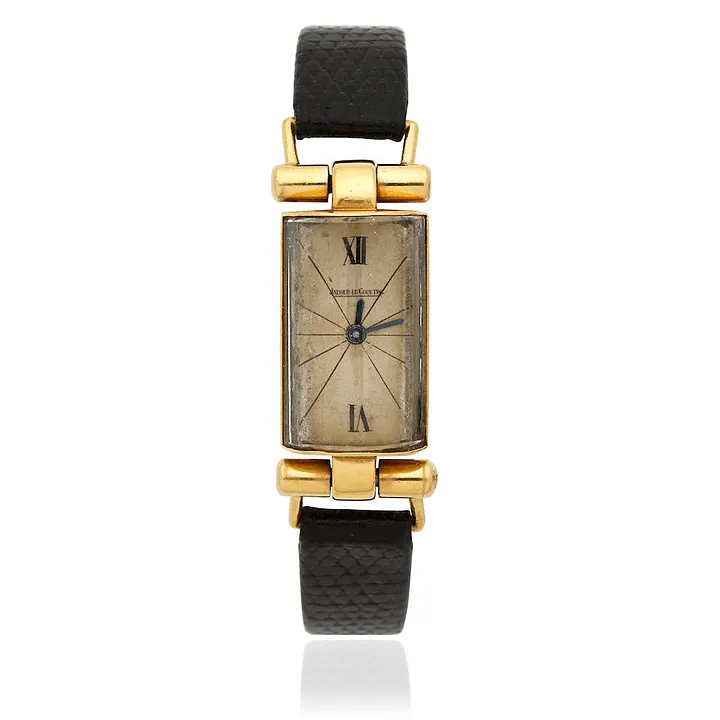
Jaeger-LeCoultre. An 18K gold manual wind wristwatch Duoplan, circa 1930
LiveAuctioneers auction archive
Wristwatches · c. 1997
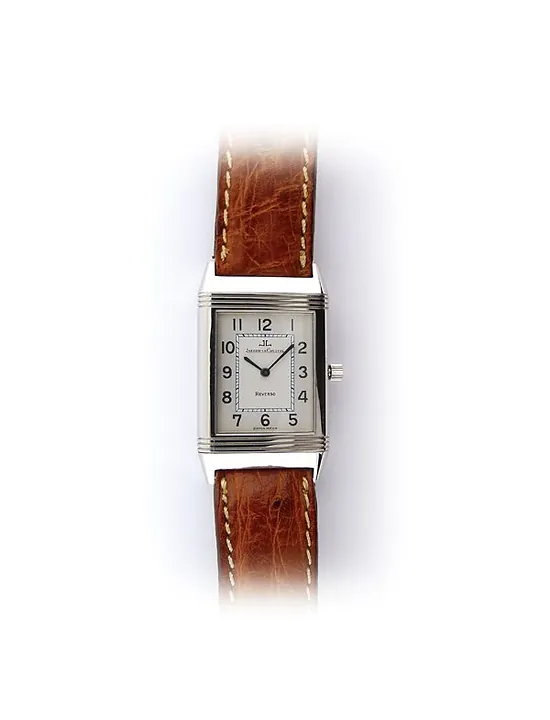
Jaeger-LeCoultre Reverso Classique, c. 1997
LiveAuctioneers auction archive
Wristwatches · c. 1970
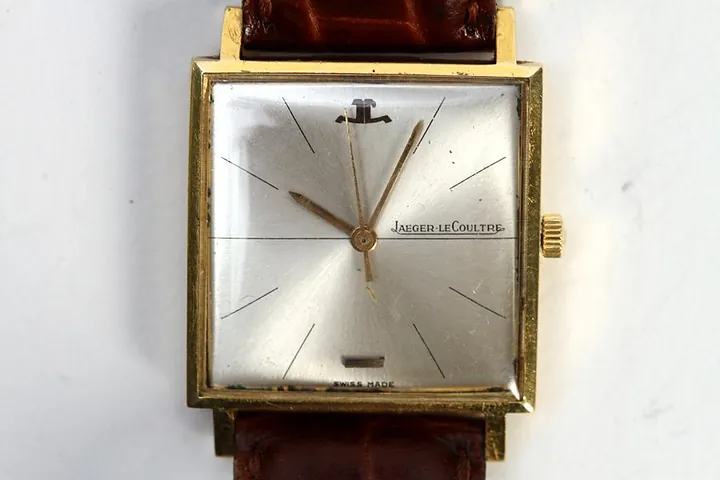
18K yellow gold gents Jaeger LeCoultre wristwatch, c. 1970
LiveAuctioneers auction archive
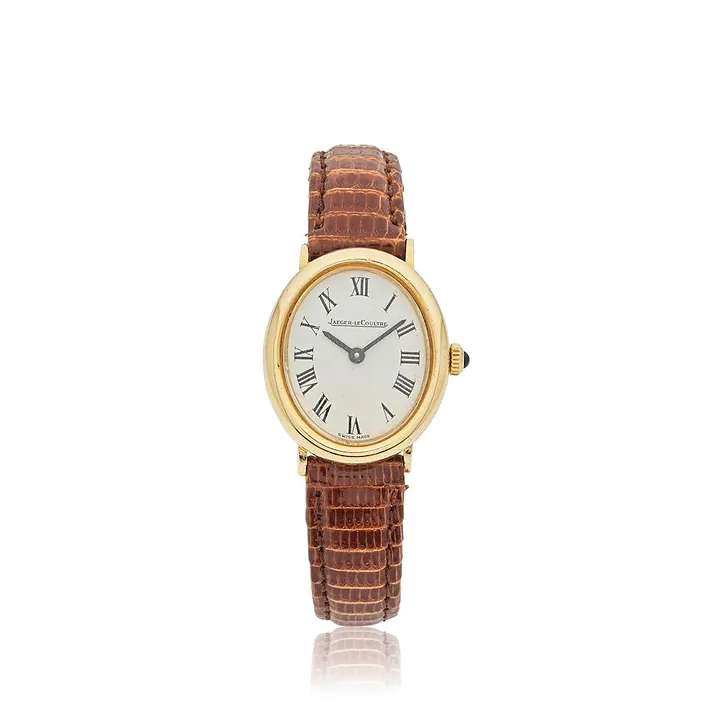
Wristwatches · c. 1970
Jaeger-LeCoultre. A fine lady's 18K gold manual wind wristwatch Jaeger-LeCoultre, c. 1970
LiveAuctioneers auction archive
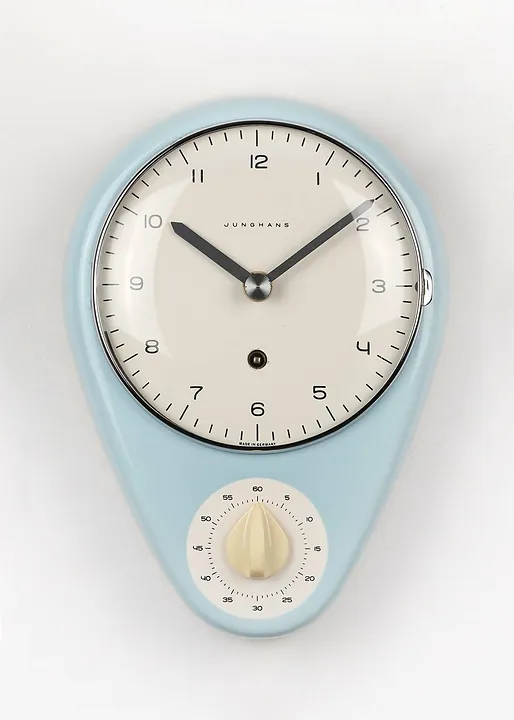
Clocks · c. 1960
Clock, Germany, c. 1960 (no. 58196)
German Clock Museum
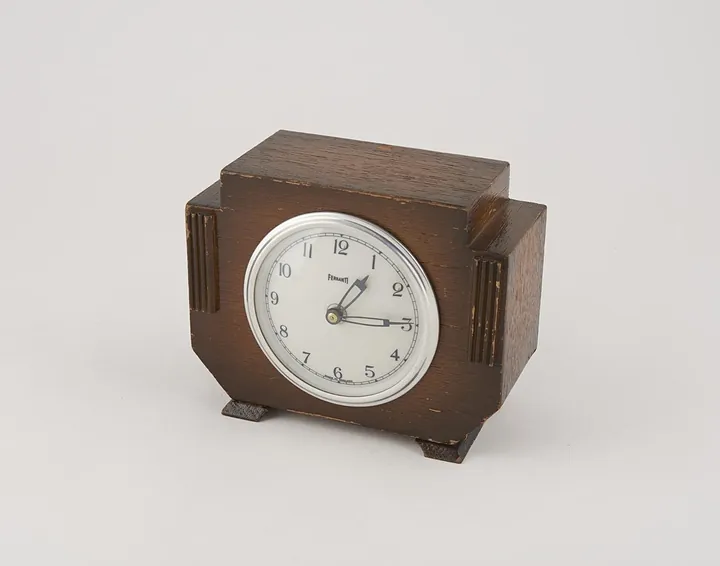
Clocks · 1930–1960
Ferranti electric mantel clock. (no. Y1996.10.820)
Science Museum Group, London
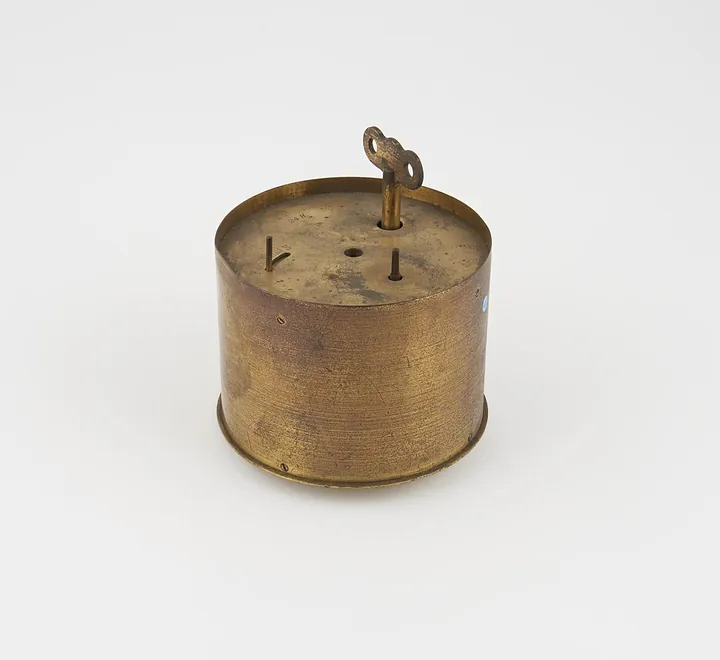
Clocks · 1931–1970
Clock and drum for recorder, 24 hours, English, 1931–1970.
Science Museum Group, London
Clocks · 1937; 1980
Clock by Bestone and Hammond, United States, 1937; 1980
Science Museum Group, London