
Clocks · Skeleton clock
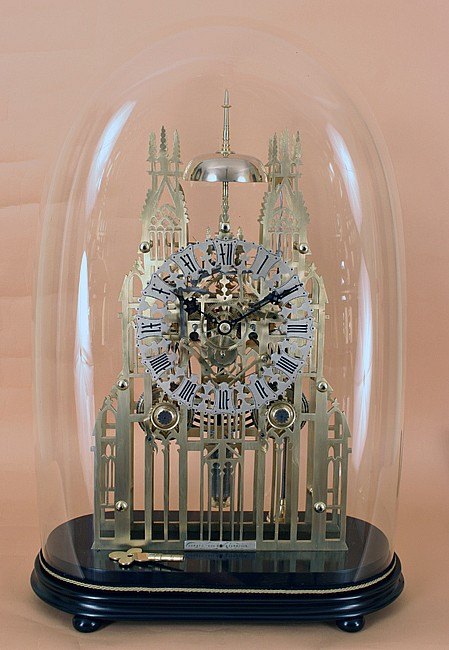
Large skeleton clock attributed to Evans of Handsworth, c. 1855
- Maker / attribution
- Unrecorded in source
- Date
- c. 1855
- Historical period
- Industrial Revolution (1850 – 1900)
- Country of origin
- Unrecorded in source
- Object type
- Skeleton clock
- Materials / technique
- ebonised
- Dimensions
- Height 27 in (69 cm)
- Stock no.
- Product 261
- Credit line
- Dealer listing, P A Oxley (product 261)
- Catalogue title (original)
- Large Skeleton Clock attributed to Evans of Handsworth (English)
View the source record (dealer listing) ↗ (opens another website in a new tab)Suggest a correction
Record summary
Catalogued by P A Oxley (dealer), Wiltshire (stock number Product 261), this is a skeleton clock, dated c. 1855. The Atlas places it in the Industrial Revolution period (1850 – 1900) of its Clocks collection. Materials and techniques recorded by the source: ebonised. Recorded dimensions: Height 27 in (69 cm). The record is illustrated with 6 photographs.
Assembled from the source record's structured fields. Dates and attributions are given as the source states them; where a field is missing the Atlas leaves it blank rather than estimating.
Catalogue description
Dealer description — P A Oxley
An impressive and very fine quality double fusee Skeleton Clock in York Minster design by this well known maker. The 8 day duration double fusee chain driven movement with six spoke wheel work, seven plate pillars, large thick plates depicting York Minster Cathedral, anchor escapement, striking the hours on a coiled blued gong to the rear and a passing strike on the half hour on a large polished bell. The silvered brass skeletonised chapter ring with matching blued steel hands and the retailers name of Morath Bros of Liverpool on a silvered plaque to the base of the front plate. The compensated pendulum with an ebonised wood rod and a cylindrical Zinc/Pewter bob with large brass regulation adjustment. The bespoke ebonised base with four bun feet, surrounded by an oval shaped Victorian glass dome. The clock also features its original brass winding key. Note: William Frederick Evans appears to have specialised in Skeleton Clocks and in particular models depicting the various well known buildings throughout the UK such as the Scott Memorial & Westminster Cathedral. He was born in 1818 and exhibited at The Great Exhibition in 1851. Morath Brothers originated from Germany and specialised in retailing English Fusee Skeleton Clocks and examples from the Black Forest Area in Germany. Maker Evans of Handsworth
Historical context
Industrial Revolution (1850 – 1900)
American interchangeable-parts manufacture; railroad time standards; Swiss and German factory systems.
Factory production transformed the clock into an everyday object. American makers (Seth Thomas, Ansonia, Waterbury) and German factories (Junghans, Gustav Becker, Lenzkirch) sold millions of shelf, wall and alarm clocks worldwide; France produced standardised Paris movements and carriage clocks; electric time distribution began.
Read the period in the timelineMore clocks from this periodEarlier: Precision & Scientific Horology
Atlas type guide
Skeleton clocks
A skeleton clock displays its movement: the plates are pierced to a minimum so that wheels, escapement and fusee can be seen, usually under a glass dome. French makers produced fine skeleton clocks in the late eighteenth century; in Victorian England they became popular showpieces, with frames in the shapes of cathedrals and famous buildings.
What to look for
- Pierced brass plates in scroll or architectural shapes.
- A glass dome and wooden or marble base.
- Fusee movements and sometimes passing strike on a bell.
Dating clues
- French skeleton clocks: c. 1780–1830.
- English cathedral-style skeleton clocks: c. 1840–1890.
General guidance written by the Atlas editors about this kind of object. It is not a statement about this particular piece; for that, rely on the source record above and on physical examination.
Related records
Clocks · 1830–1870
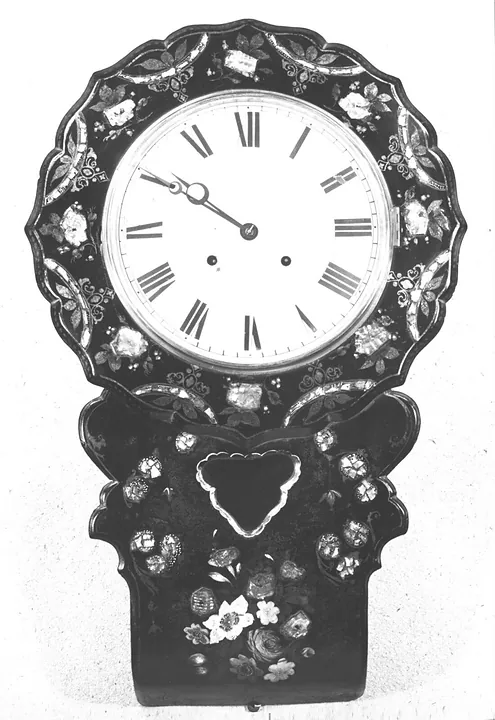
Wall clock in a papier mâché case with painted decoration. English, mid 19th century.
Victoria and Albert Museum, London
Clocks · 1840–1900
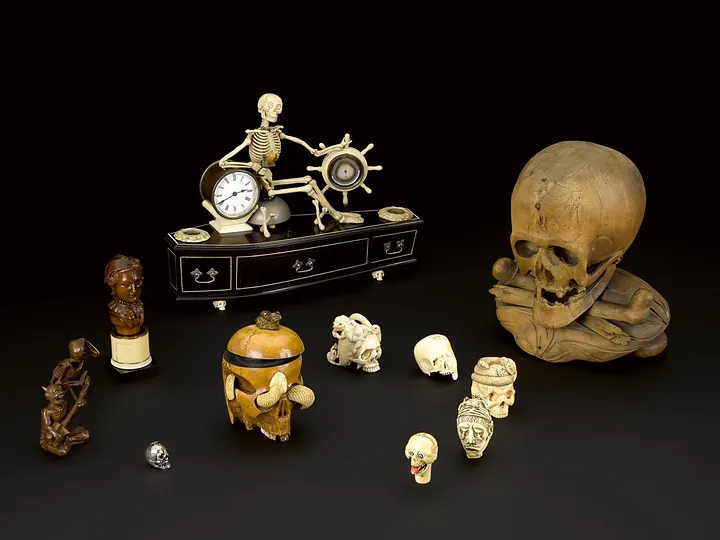
Alarm clock, mounted on model of coffin with skeleton, probably English, 1840–1900
Science Museum Group, London
Clocks · 1840–1880
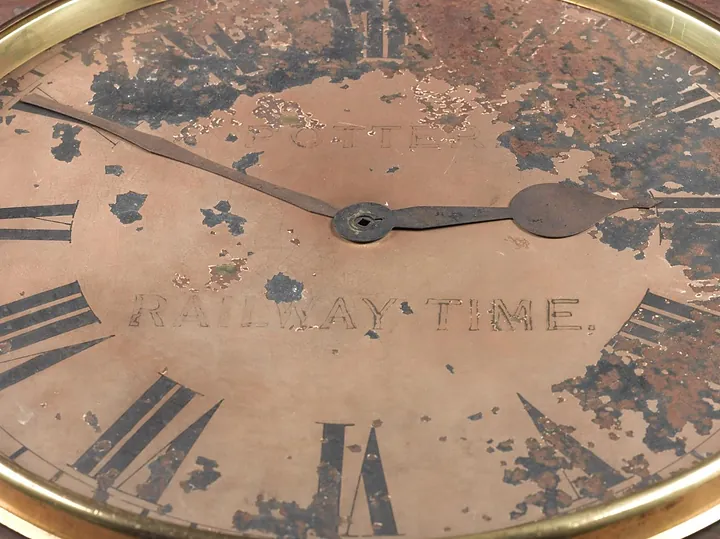
Clock dial marked "Potter, Railway Time" with two hands, unknown maker, British, 1840–1880
Science Museum Group, London
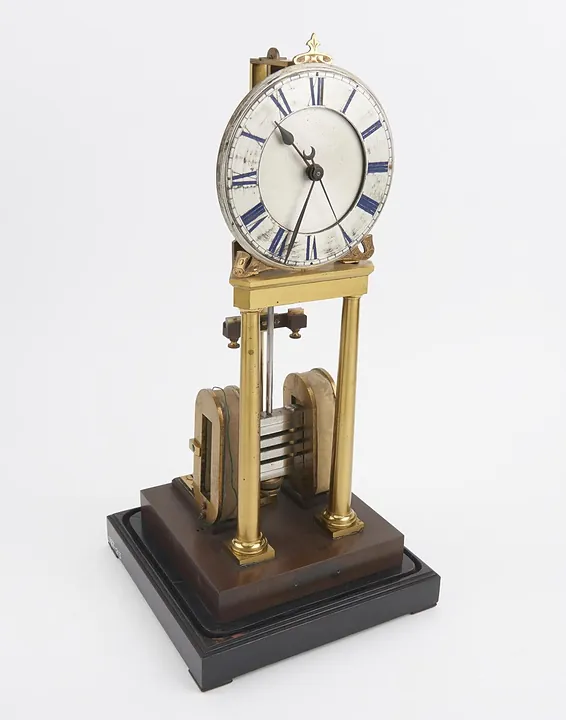
Clocks · 1840–1877
Electric clock of the Bain type
Science Museum Group, London
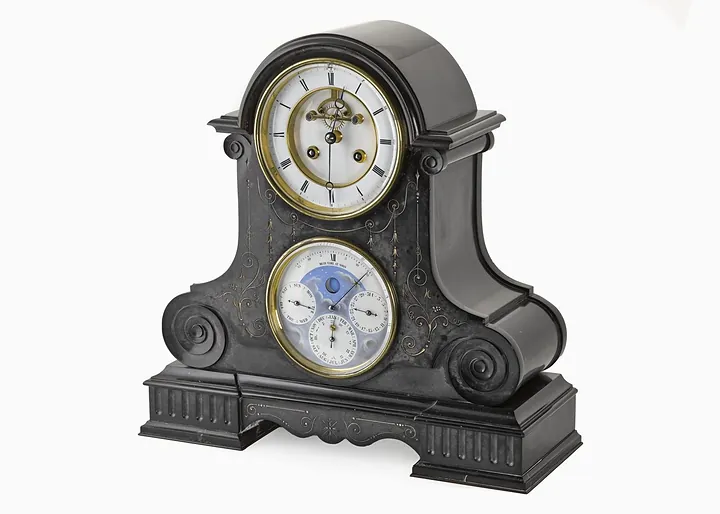
Clocks · 1840–1878
Mantel clock by A. Brocot, France, 1840–1878
Science Museum Group, London
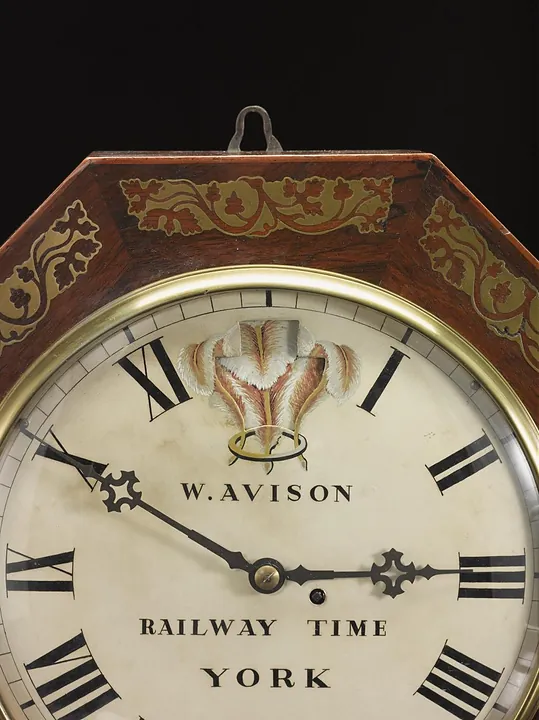
Clocks · 1840–1880
Wall Clock in octagonal case with Prince of Wales Feathers above makers name "W. Avison, Railway Time, York", made by William Avison, England, 1840–1880.
Science Museum Group, London
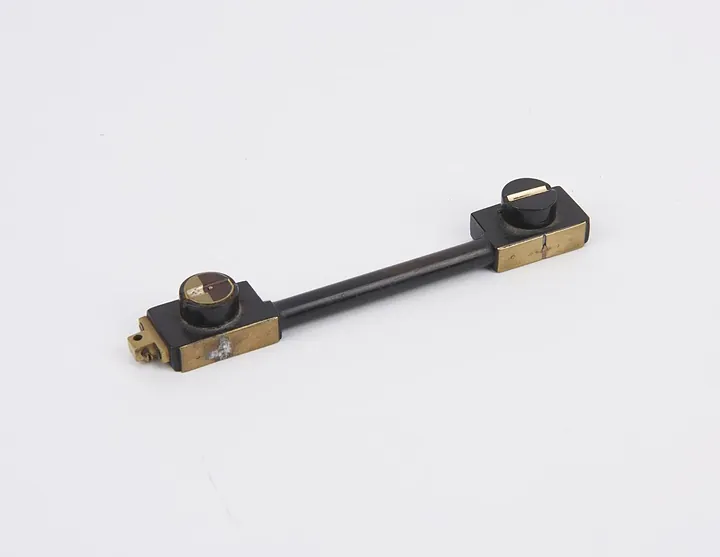
Clocks · 1841–1870
Contact bar from electric clock, unsigned, London, England, 1841–1870
Science Museum Group, London
Clocks · 1841–1870
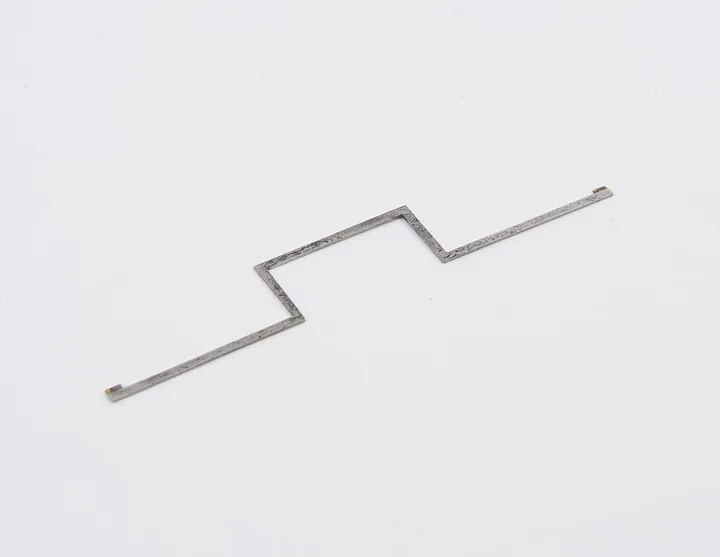
Contactor from electric clock, unsigned, London, England, 1841–1870
Science Museum Group, London