
Clocks · Porcelain mantle clock
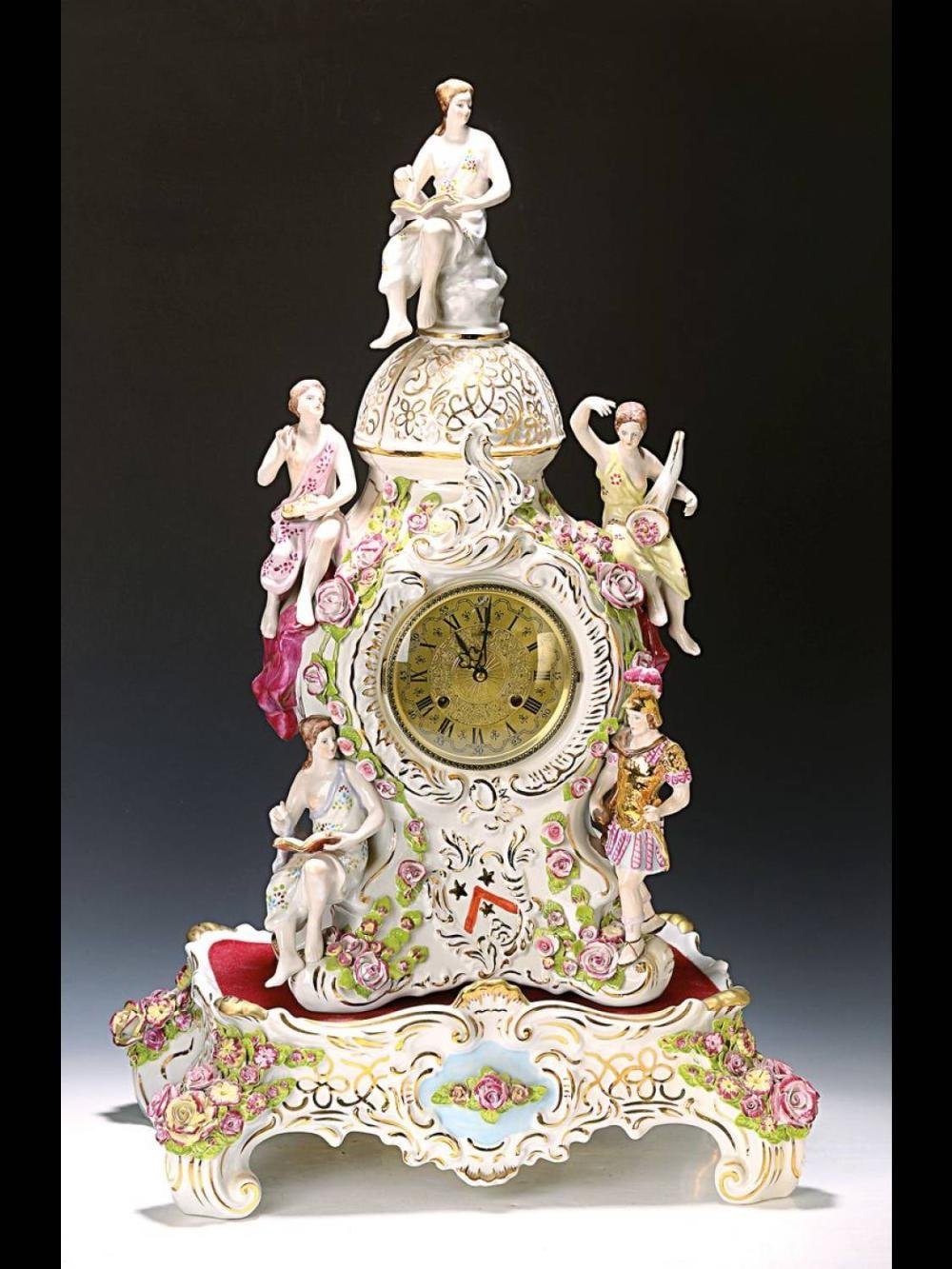
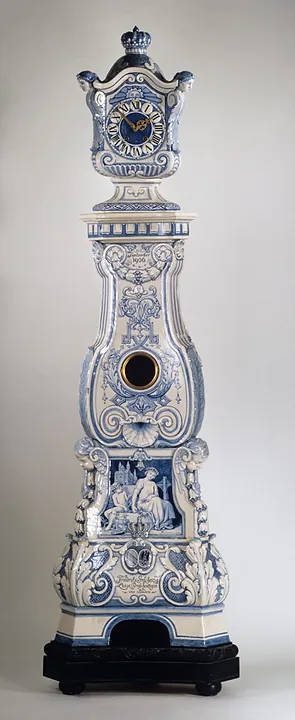
Large porcelain clock with matching pedestal
- Maker / attribution
- Dugena (source attribution)
- Date
- 20th c.
- Historical period
- Golden Age of Mechanical Watchmaking (1900 – 1945)
- Country of origin
- Germany
- Object type
- Porcelain mantle clock
- Dimensions
- Approx. 76cm
- Auction house
- Henry's Auktionshaus (via Invaluable)
- Lot
- 5152
- Credit line
- Henry's Auktionshaus (via Invaluable)
- Catalogue title (original)
- Large porcelain clock, Thuringia, 20th c., matching (English)
View the source record (auction lot) ↗ (opens another website in a new tab)Suggest a correction
Record summary
Catalogued by Henry's Auktionshaus (via Invaluable) (lot 5152), this is a porcelain mantle clock attributed to Dugena, made in Germany, dated 20th c.. The Atlas places it in the Golden Age of Mechanical Watchmaking period (1900 – 1945) of its Clocks collection. Recorded dimensions: Approx. 76cm. The record is illustrated with 1 photograph.
Assembled from the source record's structured fields. Dates and attributions are given as the source states them; where a field is missing the Atlas leaves it blank rather than estimating.
Catalogue description
Original object description
Originating in Thuringia during the 20th century, this large porcelain clock sits upon a separate four-footed scroll base. Elaborate gilt decoration, applied floral elements, four figures flanking the dial, and a summit sculpture of a seated woman writing adorn the structure. A rear Bakelite sliding panel provides internal access, while a glazed door protects the front, accompanied by a factory mark on the reverse. The brass dial is inscribed "Dugena". Internally, a round brass-plate movement with a floating anchor escapement drives an eight-day cycle and performs a two-bell double strike on the half-hours. The porcelain body is evaluated between conditions 2 and 3, remaining sound despite the loss of one applied flower, while the mechanism rates at condition 3 due to gummy, resinified lubricants requiring professional cleaning.
Historical context
Golden Age of Mechanical Watchmaking (1900 – 1945)
The wristwatch displaces the pocket watch; waterproof cases, self-winding and grand complications.
Between 1900 and 1945 clocks were electrified: master-clock systems ran factories and offices, synchronous mains clocks entered homes, and the Shortt free-pendulum clock set new standards of accuracy before the first quartz clocks (1927). Art Deco design reshaped mantel and table clocks.
Read the period in the timelineMore clocks from this periodEarlier: Industrial Revolution
Atlas type guide
Domestic clocks
A clock combines four systems: a source of power (falling weight, coiled spring, or later electricity), a gear train that divides time, an escapement and oscillator that regulate it (foliot, pendulum or balance), and an indicating system of dial and hands or a bell. Its history runs from the large iron weight-driven clocks of the late thirteenth century to Renaissance spring-driven table clocks, the pendulum revolution of 1656, the factory clocks of the nineteenth century and electric and quartz clocks of the twentieth.
Domestic clocks also reflect regional furniture and decorative traditions — English longcase and bracket clocks, French pendules, Viennese regulators, Black Forest and American shelf clocks — and therefore record changing tastes as much as technical progress.
What to look for
- How the clock is powered: weights, spring barrel, fusee, electric coil.
- The oscillator: foliot, short pendulum, long seconds pendulum or balance.
- Whether it strikes: hour only (count wheel) or hours and quarters (rack striking).
- The maker or retailer's name on dial and movement, and any factory trademarks.
- Signs of alteration — replaced dials, converted escapements, 'married' cases.
Dating clues
- Before 1656 clocks used foliots or balances; after, most domestic clocks have pendulums.
- Anchor escapements spread after c. 1670; minute hands became common at the same time.
- Factory production in America and Germany transformed prices after c. 1840.
General guidance written by the Atlas editors about this kind of object. It is not a statement about this particular piece; for that, rely on the source record above and on physical examination.
Read next:Verge escapementFoliot
Related records
Wristwatches · c. 1970
Dugena wristwatch, Chronograph Automatic, circa 1970
Antiquorum auction archive, Geneva
Wristwatches · 1960s
Gübelin 'Oversize' Waterproof Chronograph, 1960s
Analog/Shift (dealer), New York
Wristwatches · 1960s
Gübelin 'Oversize' Waterproof Chronograph, 1960s
Analog/Shift (dealer), New York
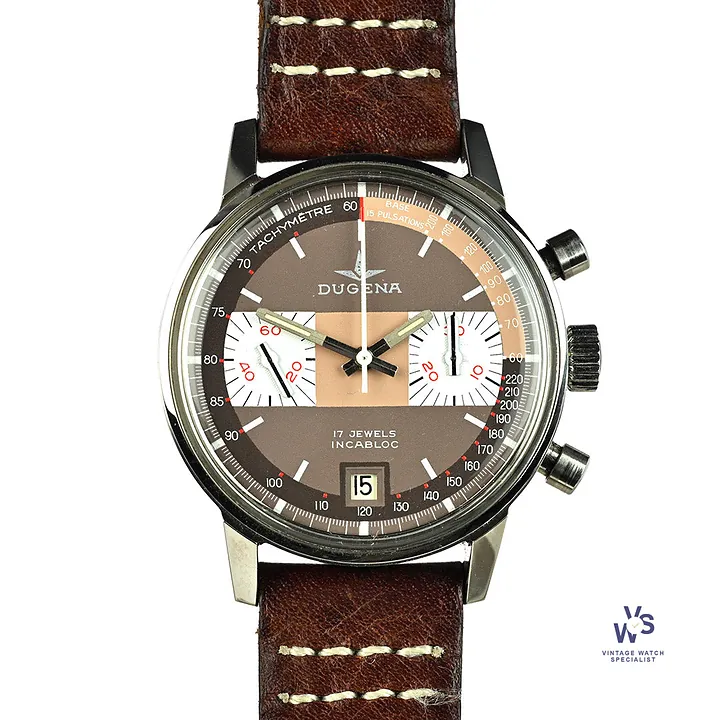
Wristwatches · c. 1970s
Dugena Chronograph, Manual Wind, Valjoux 7734 Movement, circa 1970s
Vintage Watch Specialist (dealer), United Kingdom
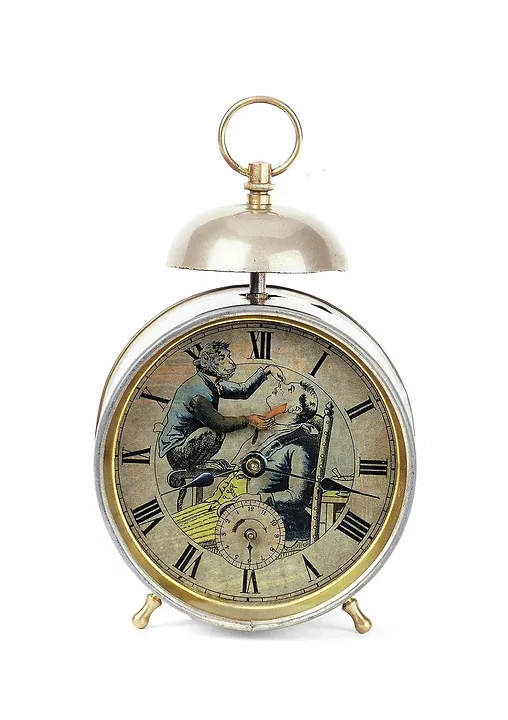
Clocks · c. 1900
Alarm clock by Union Clock Company, Germany, c. 1900
German Clock Museum
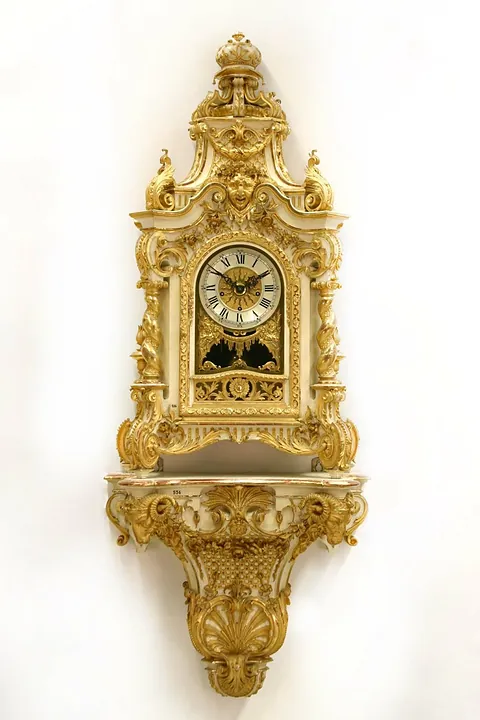
Clocks · 1900
Clock by Josef Münzer, Germany, 1900
German Clock Museum
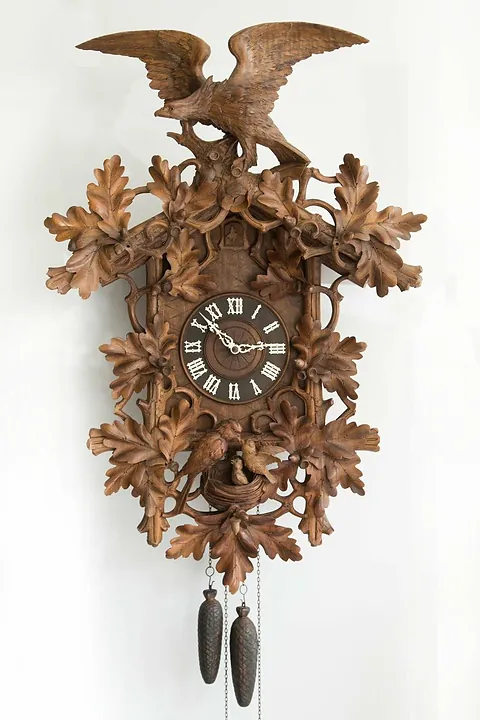
Clocks · c. 1900
Cuckoo / black forest clock by Gebr. Lehnis, Germany, c. 1900
German Clock Museum
Clocks · 1900–1999
Longcase clock by Staatliche Majolika-Manufaktur Karlsruhe, Germany, 1900–1999
Badisches Landesmuseum Karlsruhe