
Wristwatches · Wristwatch
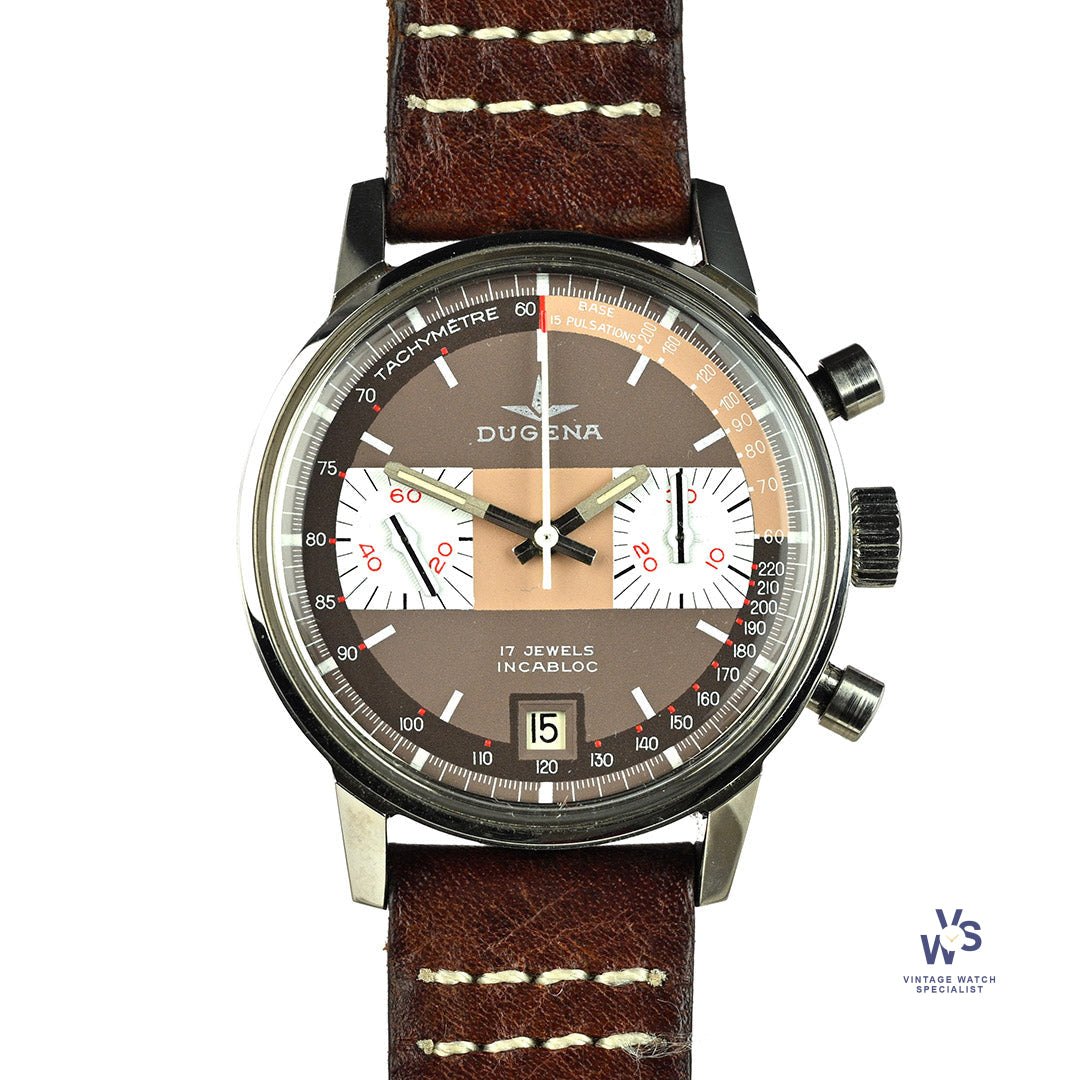
Dugena Chronograph, Manual Wind, Valjoux 7734 Movement, circa 1970s
- Maker / attribution
- Dugena (maker)
- Date
- c. 1970s
- Historical period
- Quartz Revolution (1969 – 1990)
- Country of origin
- Unrecorded in source
- Object type
- Wristwatch
- Stock no.
- vws4195cs
- Credit line
- Dealer listing, Vintage Watch Specialist (vws4195cs)
- Catalogue title (original)
- Dugena Chronograph - Manual Wind - Valjoux 7734 Movement - c.1970s (English)
View the source record (dealer listing) ↗ (opens another website in a new tab)Suggest a correction
Record summary
Catalogued by Vintage Watch Specialist (dealer), United Kingdom (stock number vws4195cs), this is a wristwatch by Dugena, dated c. 1970s. The Atlas places it in the Quartz Revolution period (1969 – 1990) of its Wristwatches collection. The record is illustrated with 6 photographs.
Assembled from the source record's structured fields. Dates and attributions are given as the source states them; where a field is missing the Atlas leaves it blank rather than estimating.
Catalogue description
Dealer description — Vintage Watch Specialist
Dugena, Manual Wind Chronograph with Valjoux Calibre 7734 Two Register Chronograph - c.1970 Dugena watches trace their origins to Germany in 1917, when the Deutsche Uhrmacher-Genossenschaft Alpina (DUAL) was founded as a cooperative of watchmakers and retailers. The brand name Dugena emerged in the 1940s and became widely known across Germany for producing reliable, affordable wristwatches. Dugena offered a wide range of mechanical and later quartz models, often using quality Swiss movements. Particularly popular in post-war Europe, Dugena watches remain appreciated today for their solid construction and understated design. What's on Offer This 1970s Dugena Chronograph is a superb example of vintage sporting design, featuring a distinctive brown and white “reverse panda” dial that immediately captures attention. The contrasting sub-dials, paired with crisp red accents and outer scales, give the watch a dynamic and highly legible layout. The dial is rich in functionality, incorporating a tachymeter scale for measuring speed over distance and a pulsations scale—designed for taking heart rate readings—adding both practicality and period charm. These features reflect the era’s focus on multi-purpose chronographs, blending sport and utility in one cohesive design. The case presents sharply, with clean lines and a polished presence that enhances its visual impact on the wrist. Powered by the highly regarded Valjoux chronograph movement, this piece offers both reliability and mechanical pedigree. Finished on a leather strap that complements the warm tones of the dial, this Dugena delivers a fantastic blend of style, substance, and vintage appeal—an excellent entry point into classic chronographs.
Historical context
Quartz Revolution (1969 – 1990)
Seiko's Astron begins mass quartz timekeeping; traditional industries contract sharply.
Quartz and digital watches transformed the market after 1969. Swiss employment collapsed, Japanese and Hong Kong production soared, and the Swatch (1983) helped the Swiss industry recover; mechanical watches survived as luxury goods.
Read the period in the timelineMore wristwatches from this periodEarlier: Modern Mechanical Horology
Atlas type guide
Chronographs and split-seconds watches
A chronograph is a watch with an additional seconds hand that can be started, stopped and returned to zero independently of the timekeeping. Louis Moinet built an early example in 1816 and Nicolas Rieussec a recording 'chronographe' in 1821; Adolphe Nicole's heart-shaped reset cam (patented 1862) made the modern return-to-zero possible. Split-seconds (rattrapante) chronographs add a second hand that can be stopped for intermediate times; flyback chronographs restart instantly.
Chronographs were essential tools for doctors (pulsometer scales), artillery (telemeter), engineers and sport. In wristwatches, Valjoux, Venus, Lemania and later the automatic chronographs of 1969 (Zenith El Primero, the Chronomatic Calibre 11 group and Seiko 6139) are milestones.
What to look for
- Push-pieces on the case band or a single button in the crown (monopusher).
- Subsidiary registers for minutes and hours; tachymeter, telemeter or pulsometer scales.
- Column wheel versus cam control visible in the movement.
- Calibre markings of specialist makers (Valjoux, Lemania, Venus, Landeron).
Dating clues
- Pocket chronographs with heart cam reset: after 1862.
- Wrist chronographs: from c. 1910; two-button designs from the 1930s.
- Automatic chronographs: from 1969.
General guidance written by the Atlas editors about this kind of object. It is not a statement about this particular piece; for that, rely on the source record above and on physical examination.
Read next:Flyback chronographChronograph
Related records
Wristwatches · c. 1970
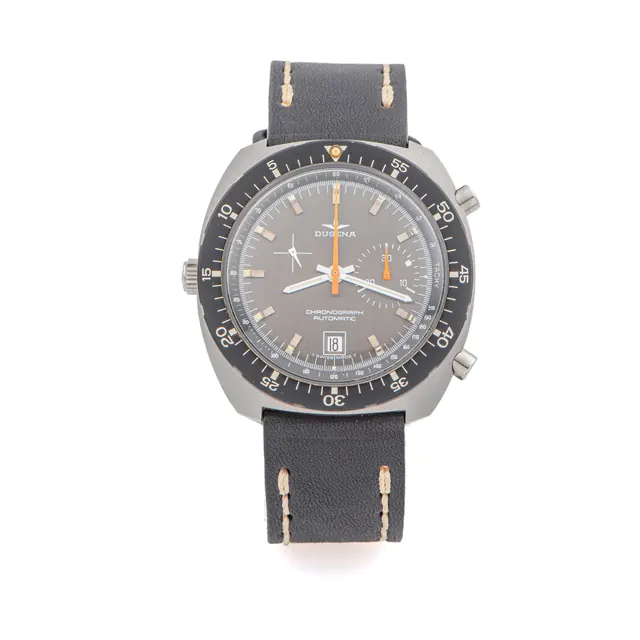
Dugena wristwatch, Chronograph Automatic, circa 1970
Antiquorum auction archive, Geneva
Wristwatches · 1960s
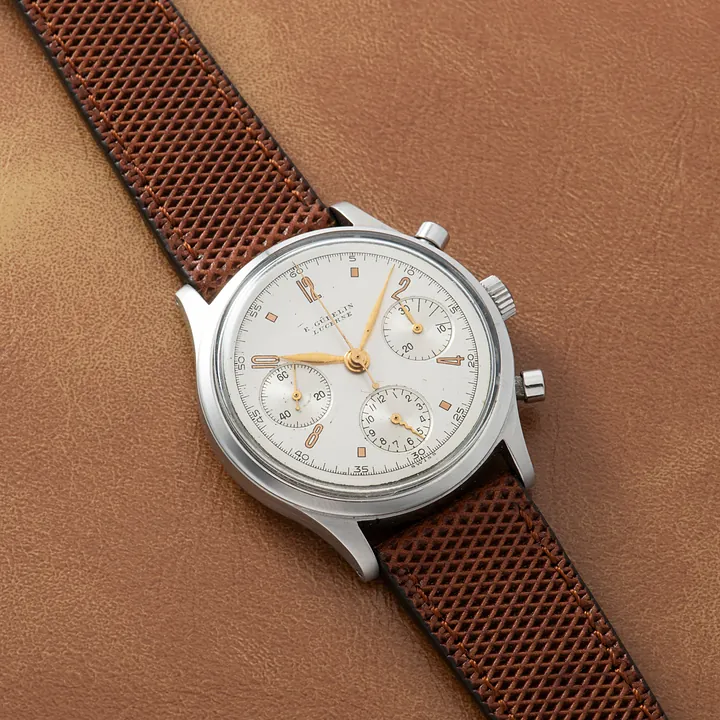
Gübelin 'Oversize' Waterproof Chronograph, 1960s
Analog/Shift (dealer), New York
Wristwatches · 1960s
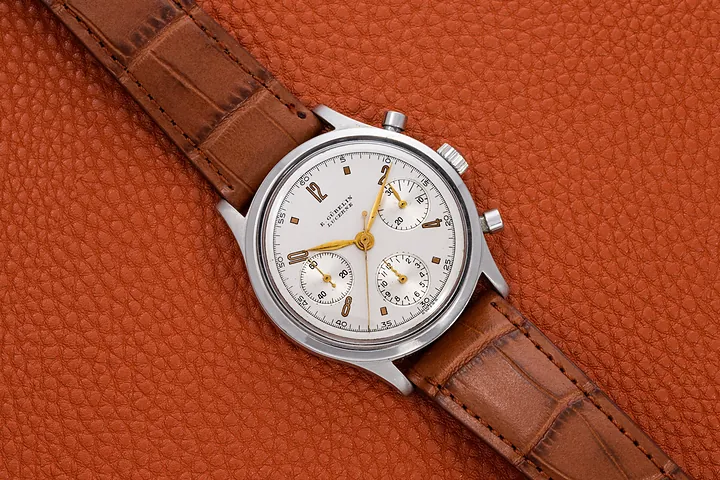
Gübelin 'Oversize' Waterproof Chronograph, 1960s
Analog/Shift (dealer), New York
Wristwatches · 1970s
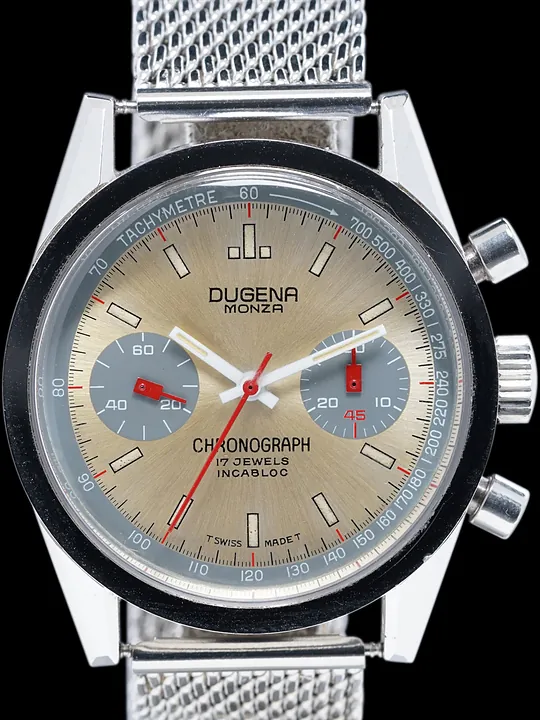
Dugena Monza Chronograph Valjoux Cal. 7733, 1970s
Craft & Tailored (dealer), Los Angeles

Wristwatches · 1970
Wristwatch by Heno, Switzerland, 1970
Museum Rotterdam
Wristwatches · 1970s
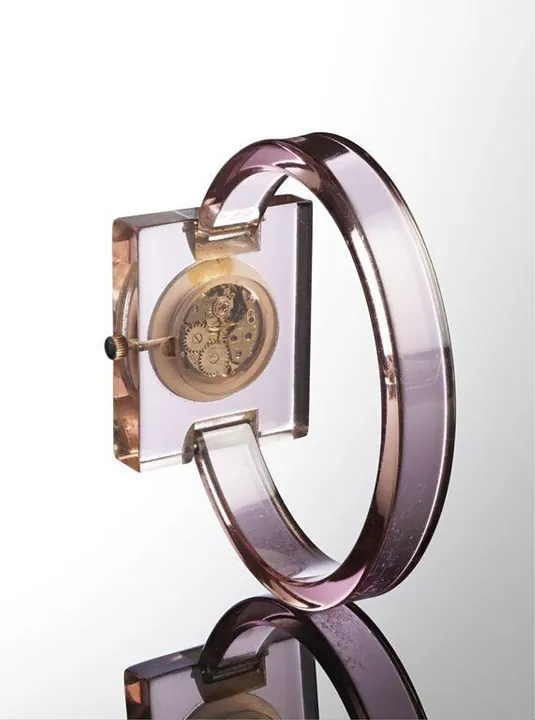
Wristwatch, plastic, by Gucci; Italy, 1970s.
Victoria and Albert Museum, London
Wristwatches · 1978
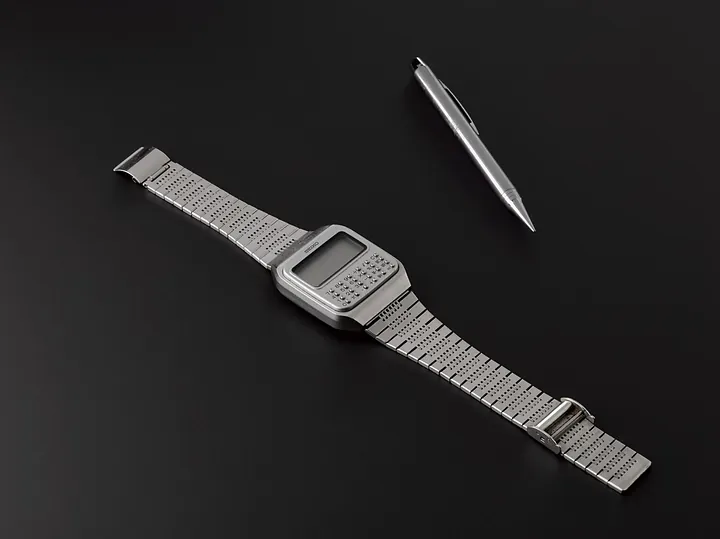
Calculator wristwatch by Suwa Seikosha Co. Limited, Japan, 1978
Science Museum Group, London
Wristwatches · 1980
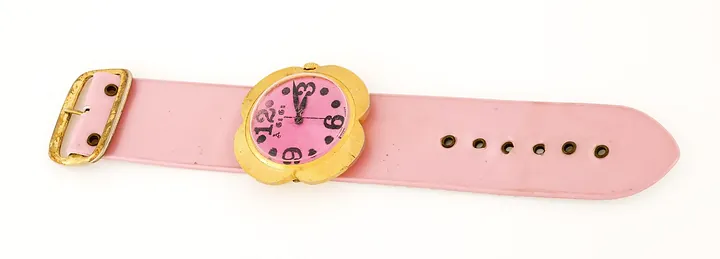
Wristwatch, 1980 (no. 71413)
Museum Rotterdam