
Wristwatches · Wristwatch
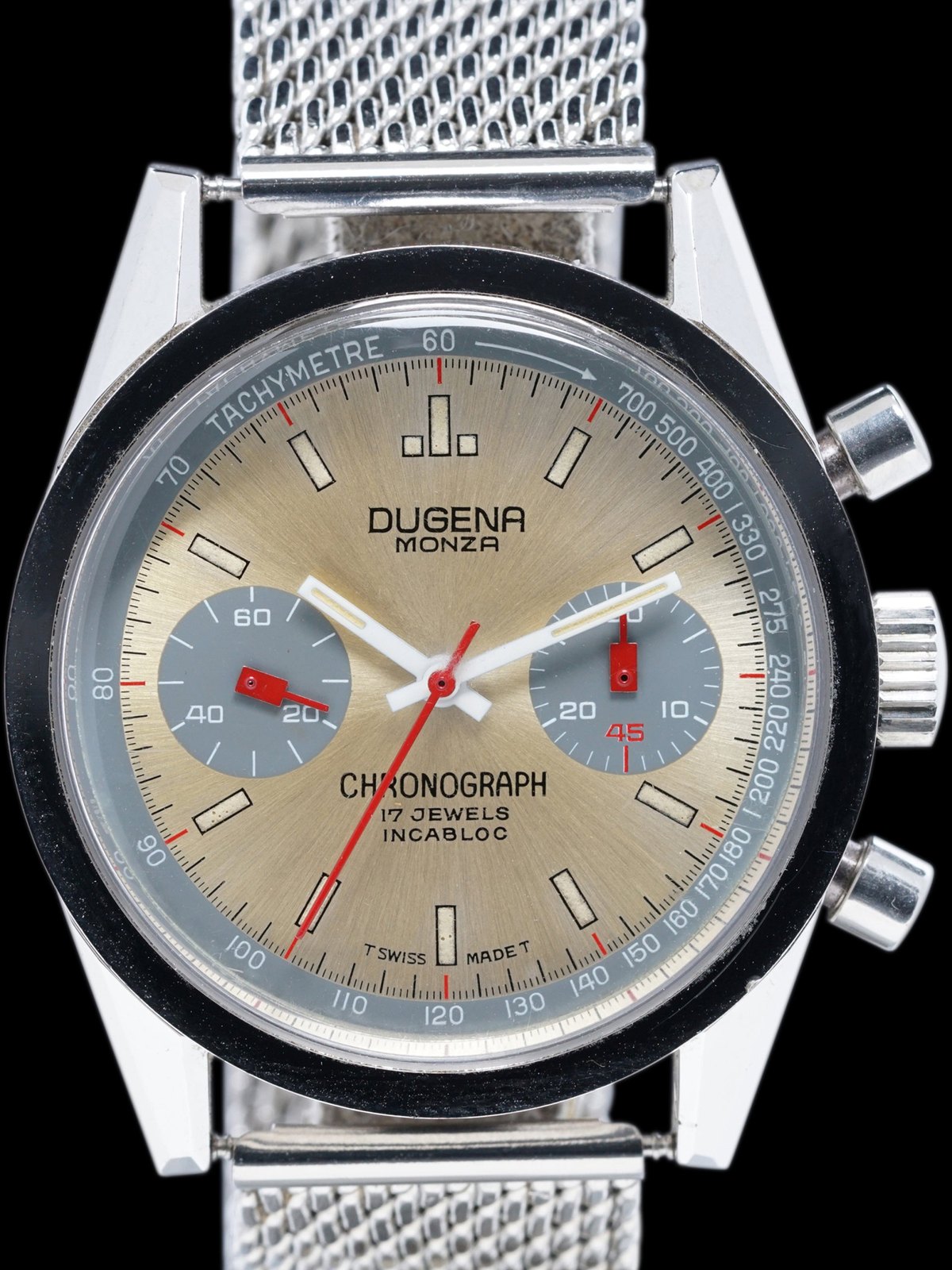
Dugena Monza Chronograph Valjoux Cal. 7733, 1970s
- Maker / attribution
- Dugena (maker)
- Date
- 1970s
- Historical period
- Quartz Revolution (1969 – 1990)
- Country of origin
- Unrecorded in source
- Object type
- Wristwatch
- Stock no.
- DUGMZ7733
- Credit line
- Dealer listing, Craft & Tailored (DUGMZ7733)
- Catalogue title (original)
- 1970s Dugena Monza Chronograph Valjoux Cal. 7733 (English)
View the source record (dealer listing) ↗ (opens another website in a new tab)Suggest a correction
Record summary
Catalogued by Craft & Tailored (dealer), Los Angeles (stock number DUGMZ7733), this is a wristwatch by Dugena, dated 1970s. The Atlas places it in the Quartz Revolution period (1969 – 1990) of its Wristwatches collection. The record is illustrated with 6 photographs.
Assembled from the source record's structured fields. Dates and attributions are given as the source states them; where a field is missing the Atlas leaves it blank rather than estimating.
Catalogue description
Dealer description — Craft & Tailored
In 1942, with the Axis Powers finally defeated, the little-known brand, Dugena, was born. Or rather reborn, from the remains of the once-great watch brand, Alpina. The well-known company was disallowed from selling watches in Germany during the war, so at the first chance, they changed their name and once again began to build robust, gorgeous watches and found fantastic success. Dugena as a brand and this "Monza" model, in particular, are the types of things that make watch collecting so rewarding, and just straight-up fun. SPECS Stock # DUGMZ7733 Brand Dugena Style Monza Chronograph Model N/A Serial 52XXXX Size Men's Material Stainless Steel Dial Silver "Aged" Millimeters 37 Bracelet Mesh Bracelet CASE & BRACELET The Monza shows off a fantastic stainless steel case with long, sharp, beveled lugs and a screw-down case back. The steel mesh bracelet meets the case with the beloved look of the simple straight bar. Inside the case, the Monza features the Incabloc system for balance wheel shock protection. DIAL & HANDS The dial is a gorgeous mixture of golden creams, blue greys, and bright reds. The dial features two grey subdials, one 45 minute chronograph counter and one running second, both with short, pointed red hands. The golden sunburst dial is held in by a grey outer tachymeter scale and features lightly aged tritium hour markers. The handset is bright white, also with aged tritium, with a shock of red in the long and slender chronograph hand. ACCESSORIES Non. The watch is keeping time, previous service history is unknown.
Historical context
Quartz Revolution (1969 – 1990)
Seiko's Astron begins mass quartz timekeeping; traditional industries contract sharply.
Quartz and digital watches transformed the market after 1969. Swiss employment collapsed, Japanese and Hong Kong production soared, and the Swatch (1983) helped the Swiss industry recover; mechanical watches survived as luxury goods.
Read the period in the timelineMore wristwatches from this periodEarlier: Modern Mechanical Horology
Atlas type guide
Chronographs and split-seconds watches
A chronograph is a watch with an additional seconds hand that can be started, stopped and returned to zero independently of the timekeeping. Louis Moinet built an early example in 1816 and Nicolas Rieussec a recording 'chronographe' in 1821; Adolphe Nicole's heart-shaped reset cam (patented 1862) made the modern return-to-zero possible. Split-seconds (rattrapante) chronographs add a second hand that can be stopped for intermediate times; flyback chronographs restart instantly.
Chronographs were essential tools for doctors (pulsometer scales), artillery (telemeter), engineers and sport. In wristwatches, Valjoux, Venus, Lemania and later the automatic chronographs of 1969 (Zenith El Primero, the Chronomatic Calibre 11 group and Seiko 6139) are milestones.
What to look for
- Push-pieces on the case band or a single button in the crown (monopusher).
- Subsidiary registers for minutes and hours; tachymeter, telemeter or pulsometer scales.
- Column wheel versus cam control visible in the movement.
- Calibre markings of specialist makers (Valjoux, Lemania, Venus, Landeron).
Dating clues
- Pocket chronographs with heart cam reset: after 1862.
- Wrist chronographs: from c. 1910; two-button designs from the 1930s.
- Automatic chronographs: from 1969.
General guidance written by the Atlas editors about this kind of object. It is not a statement about this particular piece; for that, rely on the source record above and on physical examination.
Read next:Flyback chronographChronograph
Related records
Wristwatches · c. 1970
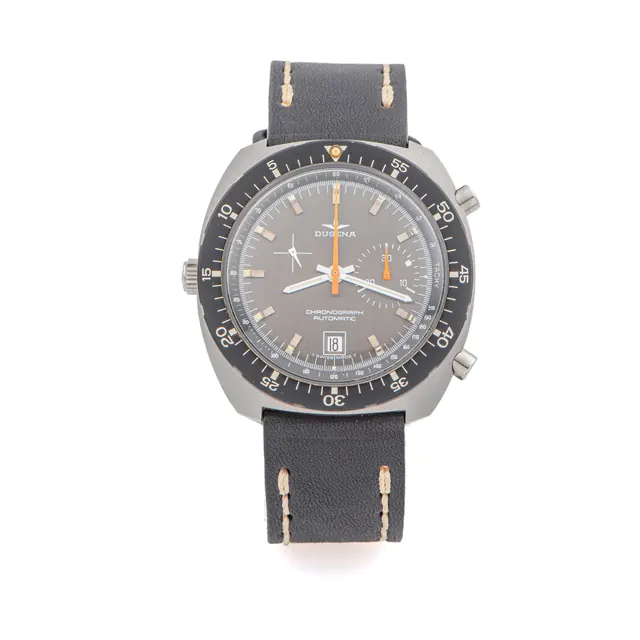
Dugena wristwatch, Chronograph Automatic, circa 1970
Antiquorum auction archive, Geneva
Wristwatches · 1960s
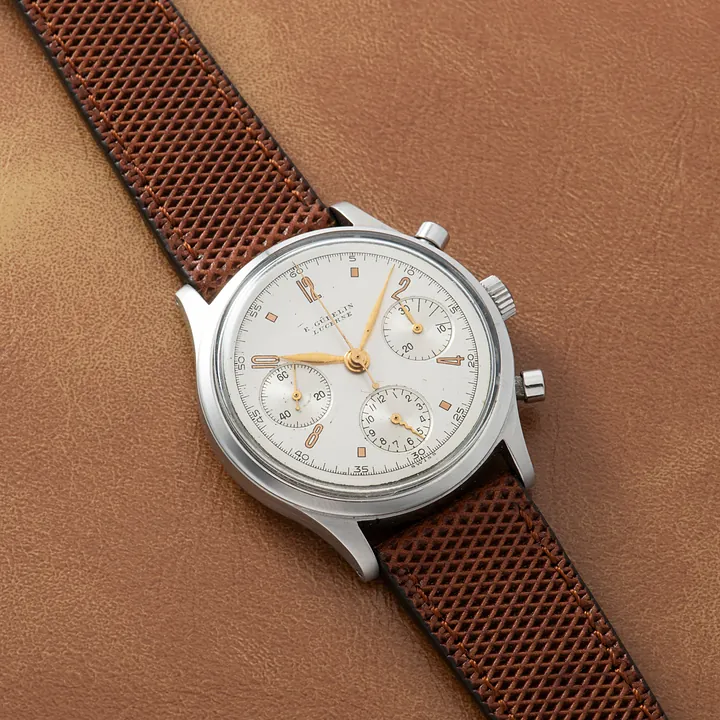
Gübelin 'Oversize' Waterproof Chronograph, 1960s
Analog/Shift (dealer), New York
Wristwatches · 1960s
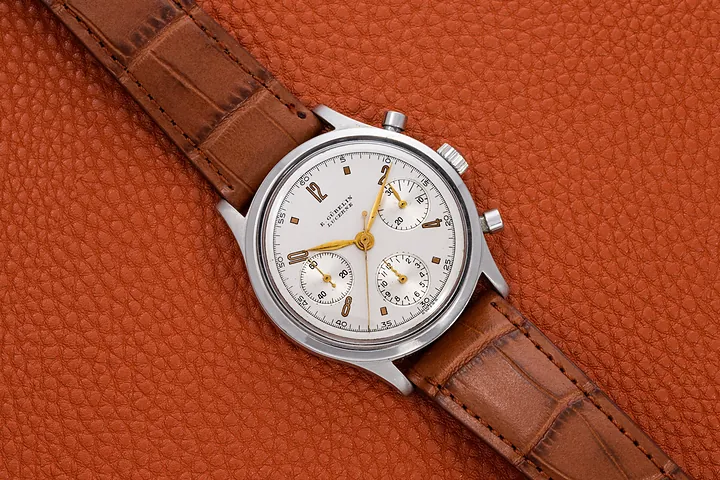
Gübelin 'Oversize' Waterproof Chronograph, 1960s
Analog/Shift (dealer), New York
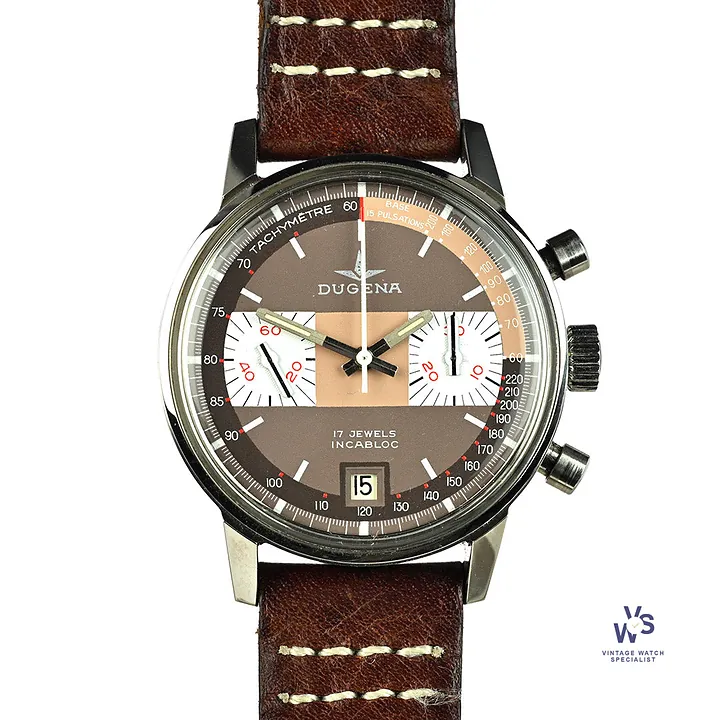
Wristwatches · c. 1970s
Dugena Chronograph, Manual Wind, Valjoux 7734 Movement, circa 1970s
Vintage Watch Specialist (dealer), United Kingdom

Wristwatches · 1970
Wristwatch by Heno, Switzerland, 1970
Museum Rotterdam
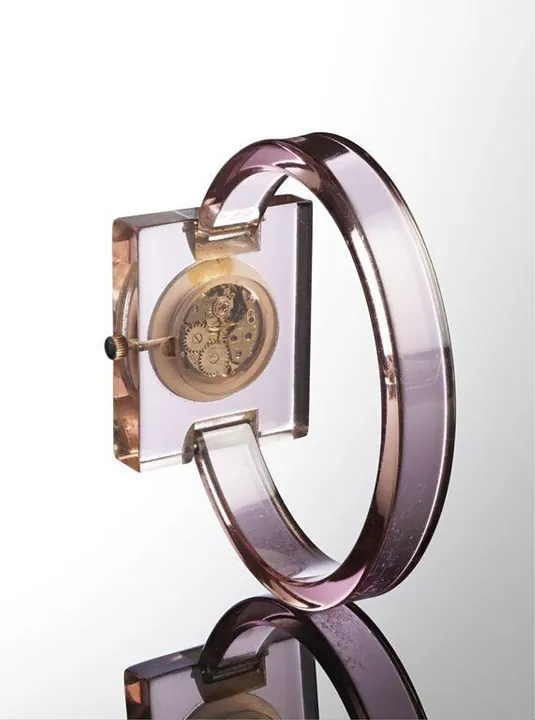
Wristwatches · 1970s
Wristwatch, plastic, by Gucci; Italy, 1970s.
Victoria and Albert Museum, London
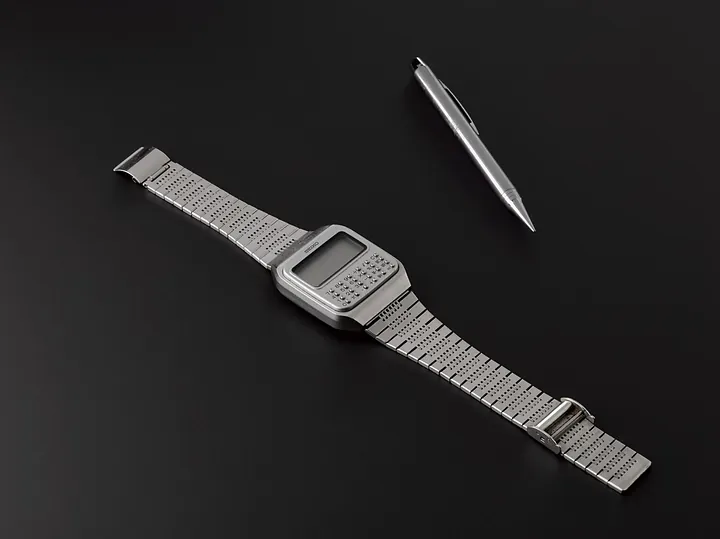
Wristwatches · 1978
Calculator wristwatch by Suwa Seikosha Co. Limited, Japan, 1978
Science Museum Group, London
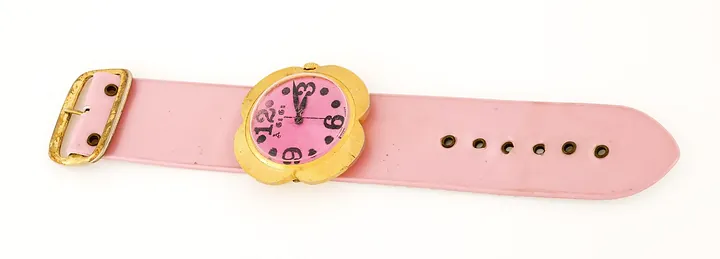
Wristwatches · 1980
Wristwatch, 1980 (no. 71413)
Museum Rotterdam