
Wristwatches · Wristwatch
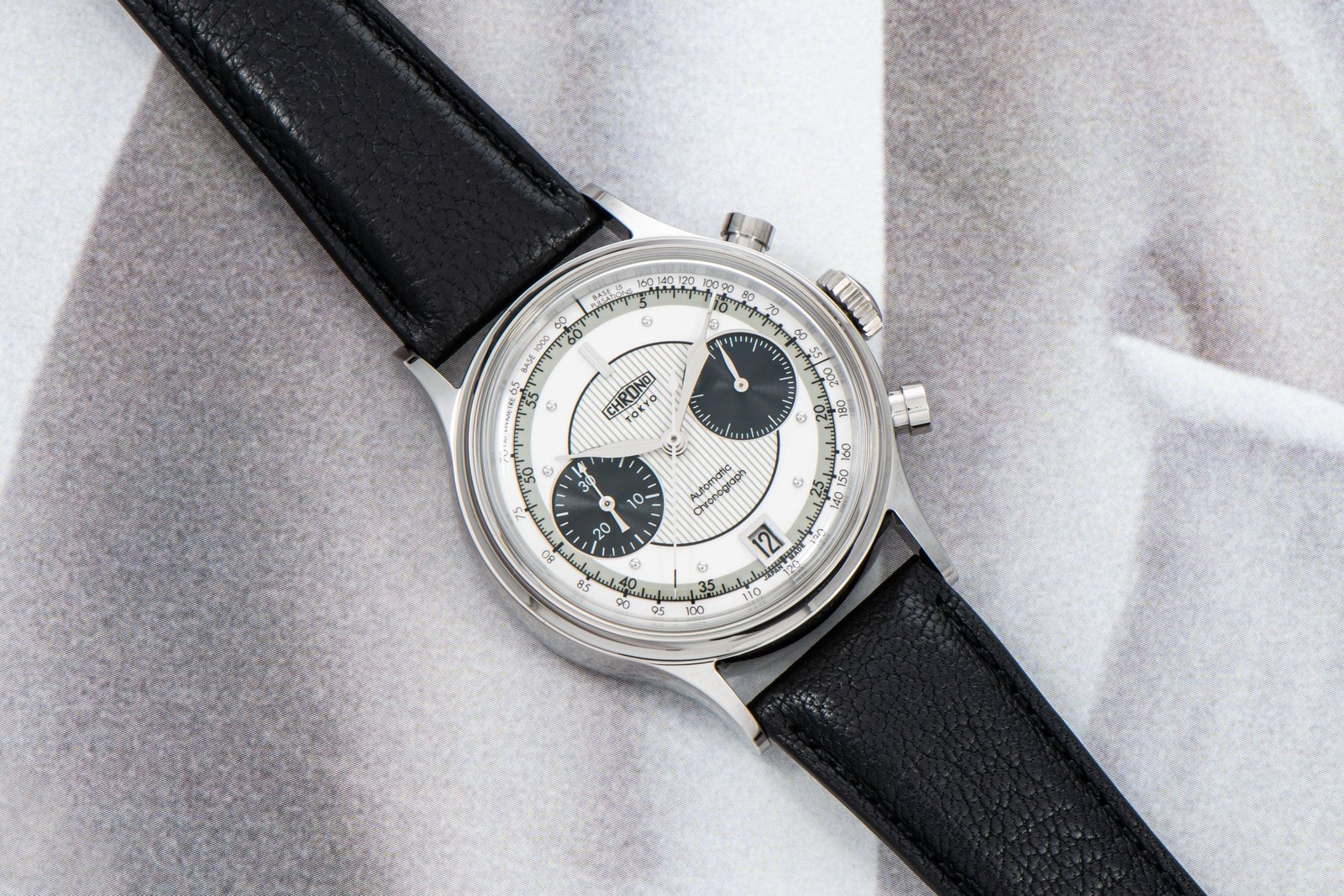
Kurono Chronograph 1, c. 2020
- Maker / attribution
- Kurono (maker)
- Date
- c. 2020
- Historical period
- Contemporary Horology (2010 – Present)
- Country of origin
- Unrecorded in source
- Object type
- Wristwatch
- Dimensions
- Case 38 mm
- Stock no.
- 40990631
- Credit line
- Dealer listing, Analog/Shift (40990631)
- Catalogue title (original)
- Kurono Chronograph 1 (English)
View the source record (dealer listing) ↗ (opens another website in a new tab)Suggest a correction
Record summary
Catalogued by Analog/Shift (dealer), New York (stock number 40990631), this is a wristwatch by Kurono, dated c. 2020. The Atlas places it in the Contemporary Horology period (2010 – Present) of its Wristwatches collection. Recorded dimensions: Case 38 mm. The record is illustrated with 6 photographs.
Assembled from the source record's structured fields. Dates and attributions are given as the source states them; where a field is missing the Atlas leaves it blank rather than estimating.
Catalogue description
Dealer description — Analog/Shift
What if you could combine the best in vintage vibe with modern tech for the perfect everyday watch? Well, now you can. Japanese independent Kurono Tokyo is the brainchild of watchmaker Hajime Asaoka. Under the mandate of bringing Asaoka’s design sensibility to the masses using assembly line manufacturing — rather than the handmade haute horlogerie pieces for which he is primarily known — the company is able to offer beautiful watches for several thousand dollars, rather than tens of thousands. This particular watch, the Chronograph 1, dates to circa 2020 and features a 38mm stainless steel case, barrel pushers, a box sapphire crystal, an unsigned crown, a handsome, multi-tone white dial with black sub-registers, a taupe outer tachymeter scale, and a matching syringe handset. In outstanding condition, it comes paired to a black calf leather strap measuring 20mm at the lugs with a steel pin buckle. Powering the Chronograph 1 is the mechanical Seiko NE86A movement, with column wheel actuation and a vertical clutch for that classic chronograph feel. Featuring 34 jewels and a power reserve of 45 hours, it’s the perfect Japanese pairing for this beauty of a watch.
Historical context
Contemporary Horology (2010 – Present)
Silicon components, connected watches, optical-lattice research clocks and a thriving independent scene.
Smartwatches became the world's best-selling watches, while mechanical watchmaking focuses on craft, innovation (silicon components, new escapements) and independent makers.
Read the period in the timelineMore wristwatches from this periodEarlier: Mechanical Renaissance
Atlas type guide
Chronographs and split-seconds watches
A chronograph is a watch with an additional seconds hand that can be started, stopped and returned to zero independently of the timekeeping. Louis Moinet built an early example in 1816 and Nicolas Rieussec a recording 'chronographe' in 1821; Adolphe Nicole's heart-shaped reset cam (patented 1862) made the modern return-to-zero possible. Split-seconds (rattrapante) chronographs add a second hand that can be stopped for intermediate times; flyback chronographs restart instantly.
Chronographs were essential tools for doctors (pulsometer scales), artillery (telemeter), engineers and sport. In wristwatches, Valjoux, Venus, Lemania and later the automatic chronographs of 1969 (Zenith El Primero, the Chronomatic Calibre 11 group and Seiko 6139) are milestones.
What to look for
- Push-pieces on the case band or a single button in the crown (monopusher).
- Subsidiary registers for minutes and hours; tachymeter, telemeter or pulsometer scales.
- Column wheel versus cam control visible in the movement.
- Calibre markings of specialist makers (Valjoux, Lemania, Venus, Landeron).
Dating clues
- Pocket chronographs with heart cam reset: after 1862.
- Wrist chronographs: from c. 1910; two-button designs from the 1930s.
- Automatic chronographs: from 1969.
General guidance written by the Atlas editors about this kind of object. It is not a statement about this particular piece; for that, rely on the source record above and on physical examination.
Read next:Flyback chronographChronograph
Related records
Wristwatches · 2022
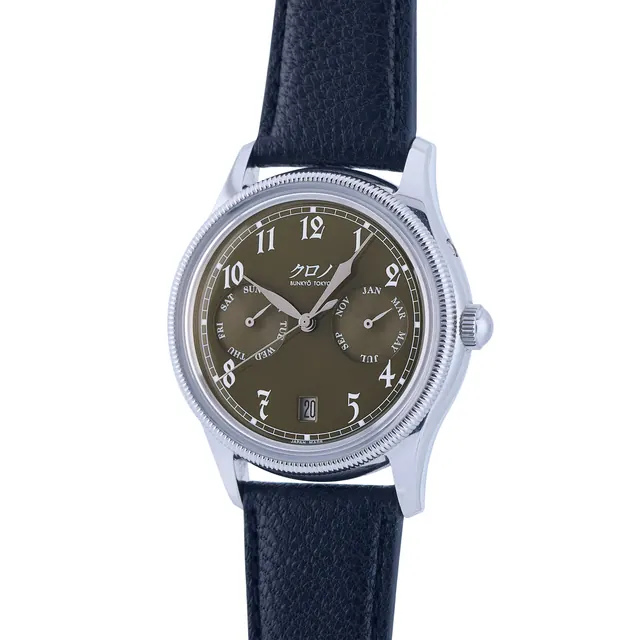
Kurono wristwatch, Calendrier, 2022
Antiquorum auction archive, Geneva
Wristwatches · c. 2020
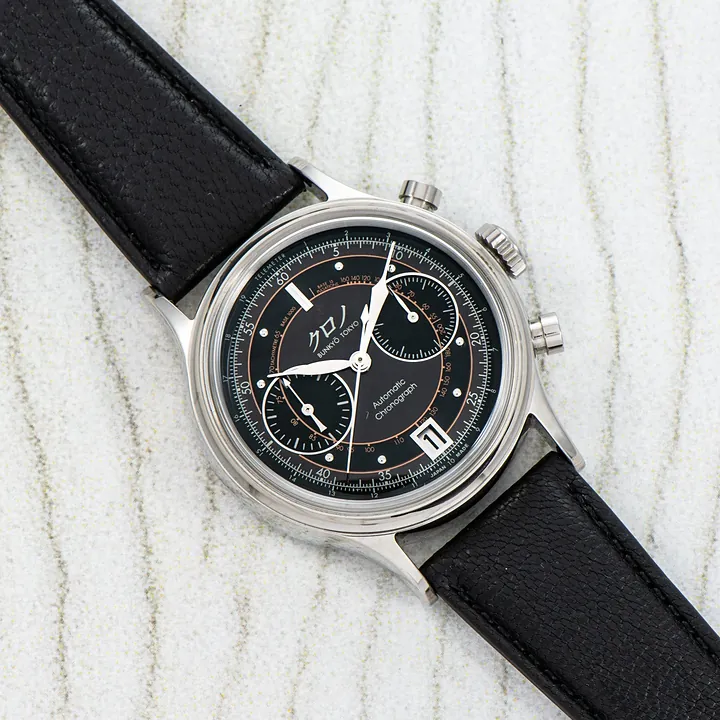
Kurono Chronograph 2, c. 2020
Analog/Shift (dealer), New York
Wristwatches · c. 2020
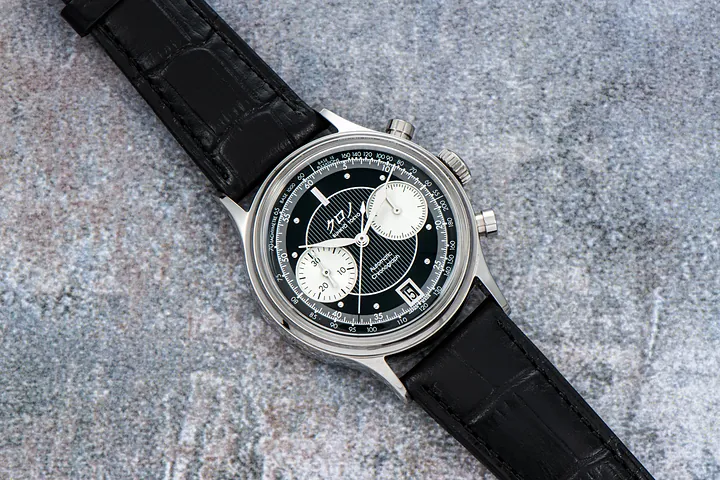
Kurono Chronograph 1, c. 2020
Analog/Shift (dealer), New York
Wristwatches · 2022
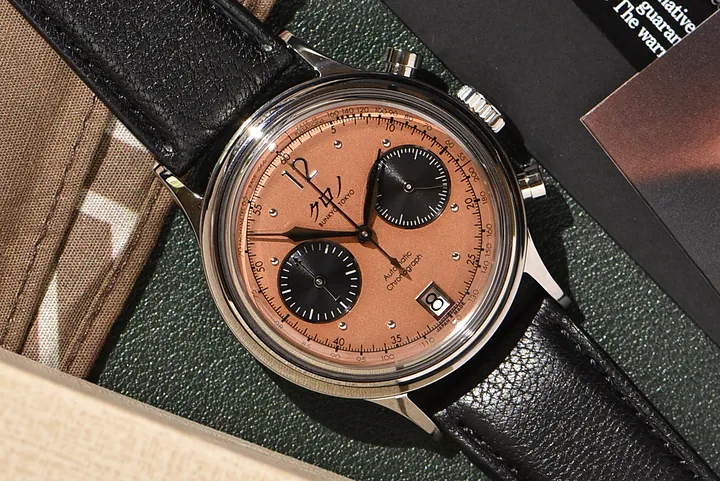
Kurono Tokyo Chronograph 1 Mk. 2 Salmon DIal Brand New and Unworn, 2022
Huntington Company (dealer)
Wristwatches · 2010
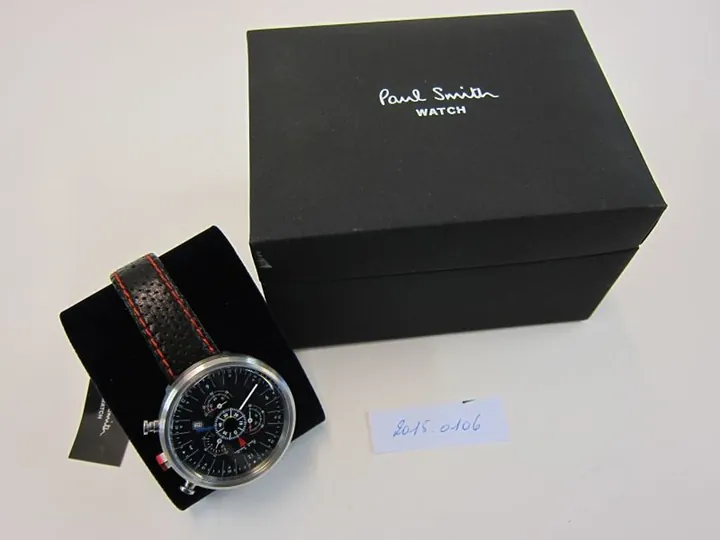
Wristwatch, 2010
Modemuseum Hasselt
Wristwatches · 2018 (Series 4 released in September 2018; '1977' in the source is the model number A1977)
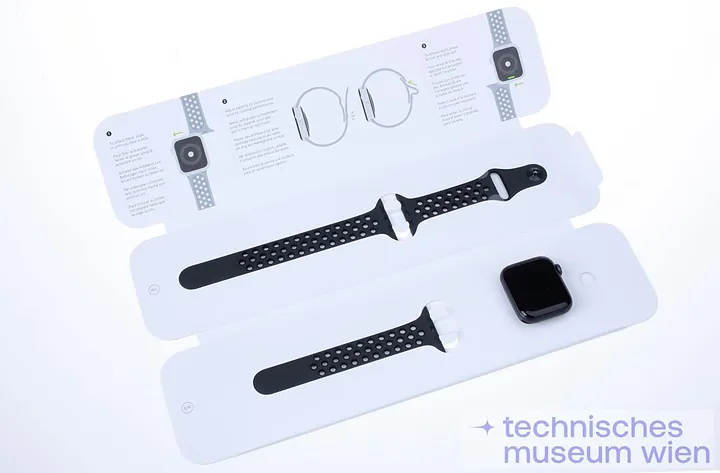
Apple Watch Series 4 (GPS, 40 mm, model A1977), 2018
Vienna Museum of Science and Technology
Wristwatches · c. 2010s
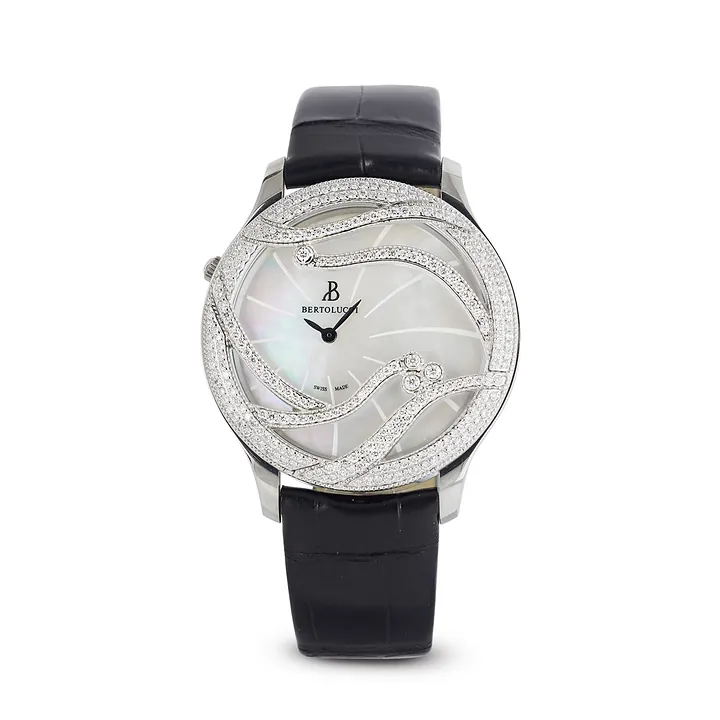
Bertolucci Stria III, ref. 11513.50.45.B88.6C1.501, c. 2010s
Antiquorum auction archive, Geneva
Wristwatches · c. 2010s
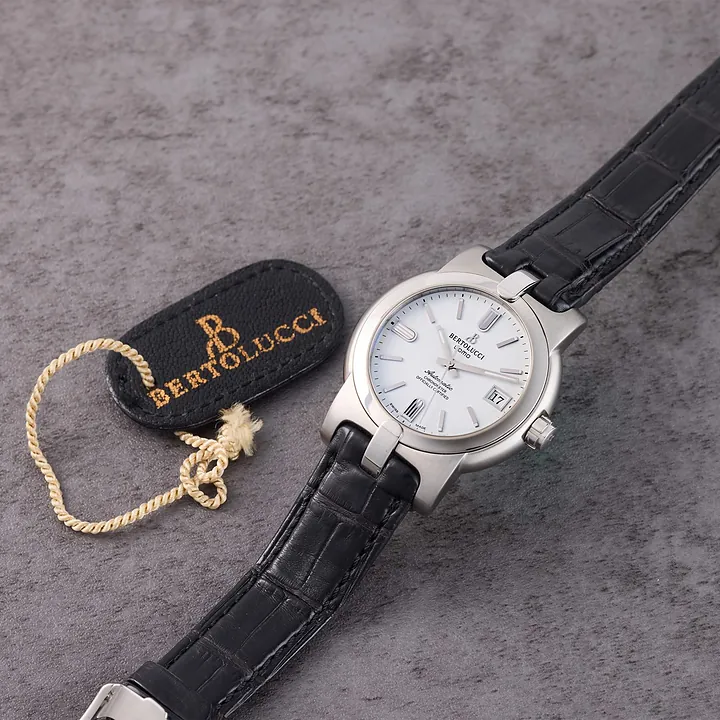
Bertolucci Uoma, ref. 824.51.41.10B, c. 2010s
Antiquorum auction archive, Geneva