
Clocks · Mantel clock
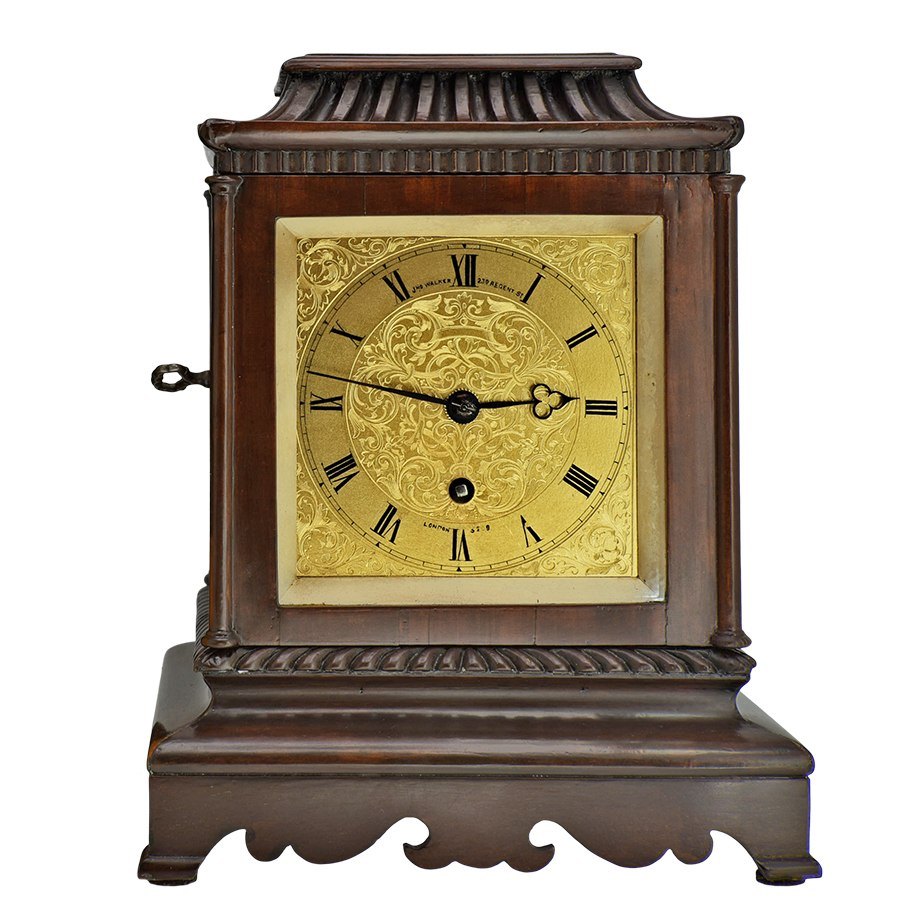
John Walker English Four Glass Fusee Mantel Clock
- Maker / attribution
- John Walker (source attribution)
- Date
- c. 1845
- Historical period
- Precision & Scientific Horology (1750 – 1850)
- Country of origin
- England
- Object type
- Mantel clock
- Materials / technique
- Honduran mahogany
- Dimensions
- 12″ High x 9″ Wide x 7″ Deep
- Holding institution
- Renaissance Antiques
- Accession / object no.
- john-walker-english-four-glass-fusee-mantel-clock-abde2dbe99
- Credit line
- Renaissance Antiques
- Catalogue title (original)
- English Four Glass Case Chain-Driven Fusee Mantel Clock - Renaissance Antiques (English)
View the source record ↗ (opens another website in a new tab)Suggest a correction
Record summary
Held and catalogued by Renaissance Antiques (object number john-walker-english-four-glass-fusee-mantel-clock-abde2dbe99), this is a mantel clock attributed to John Walker, made in England, dated c. 1845. The Atlas places it in the Precision & Scientific Horology period (1750 – 1850) of its Clocks collection. Materials and techniques recorded by the source: Honduran mahogany. Recorded dimensions: 12″ High x 9″ Wide x 7″ Deep. The record is illustrated with 1 photograph.
Assembled from the source record's structured fields. Dates and attributions are given as the source states them; where a field is missing the Atlas leaves it blank rather than estimating.
Catalogue description
Original object description
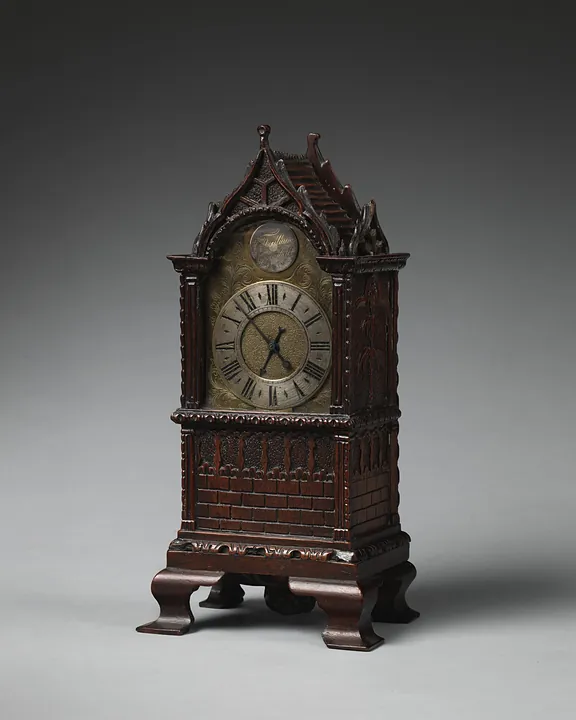
Dating to approximately 1845, this English four-glass mantel clock stands in a Honduran mahogany case recorded at 12″ in height, 9″ in width, and 7″ in depth. The housing is fitted with beveled glass panels and features gadrooned moldings, a stepped plinth, a fluted cresting, and a shaped apron base, with a winding key positioned on the left side. Foliate and floral scrollwork is engraved across the square gilt brass dial around a Roman chapter ring, which is pointed by an open spade or trefoil hour hand and a straight minute hand, with a winding aperture set above VI; it is signed 'Walker, 230 Regent St London'. The movement bedplate reportedly bears the additional marking 'John Walker London'. Dealer accounts describe the interior mechanism as a chain fusee with maintaining power and an oversized, jeweled platform escapement, though these internal mechanical specifications lack direct physical verification.
Historical context
Precision & Scientific Horology (1750 – 1850)
Harrison solves longitude; Mudge invents the lever; Breguet's Paris workshop defines the modern watch.
The age of the deadbeat escapement, compensated pendulums and observatory regulators. Domestic clocks spread through the middle classes: English longcase and bracket clocks, French gilt-bronze mantel clocks, Viennese Biedermeier wall clocks, Black Forest painted-shield clocks, and the first American shelf clocks.
Read the period in the timelineMore clocks from this periodEarlier: Early Modern Horology
Atlas type guide
Mantel and French pendule clocks
The mantel clock — the French pendule de cheminée — is as much decorative art as timekeeper. From the late seventeenth century Parisian clockmakers worked with cabinet-makers, bronze founders and gilders (ciseleurs-doreurs) to create cases in Boulle marquetry, gilt bronze and marble, while the movements were often supplied by specialist makers. Clocks of the Louis XIV, Louis XV and Louis XVI periods, and Empire clocks with allegorical figures, set fashions copied across Europe.
The nineteenth century industrialised the type. The 'Paris movement', a standardised round movement with silk-thread or Brocot suspension and count-wheel striking, was made in huge numbers by firms such as Japy and Vincenti, and fitted into cases of every style and material.
What to look for
- Round 'Paris' movements with makers' stamps (e.g. Japy Frères, Vincenti, S. Marti) and medal marks from exhibitions.
- Suspension type: silk thread (earlier) or Brocot adjustable suspension (after c. 1840).
- Visible Brocot escapement on the dial in later clocks.
- Fire-gilt (mercury) gilding on bronzes versus later electro-gilding.
- Signed dials naming a retailer rather than the movement maker.
Dating clues
- Silk-suspension Paris movements: c. 1800–1850.
- Brocot suspension and visible escapements: after c. 1840.
- Exhibition medal stamps on movements give dates after the medal year.
General guidance written by the Atlas editors about this kind of object. It is not a statement about this particular piece; for that, rely on the source record above and on physical examination.
Read next:Anchor (recoil) escapement
Related records
Clocks · 1838
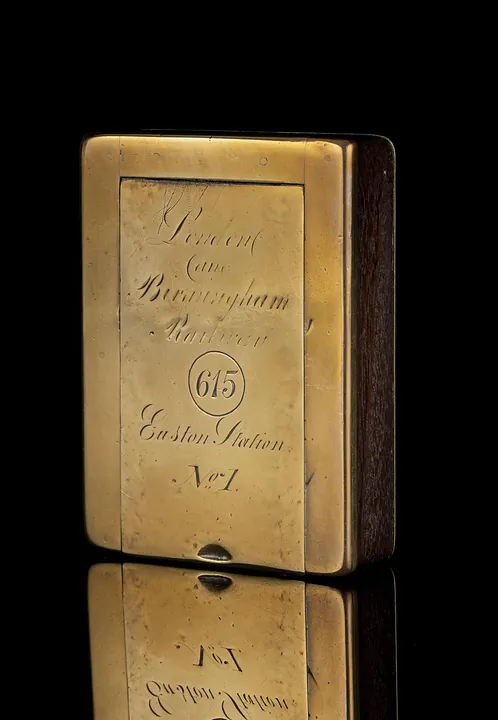
Clock, guard's, ovoid type, brass and lignum vitae case, by John Walker, London, London & Birmingham Railway No 615, Euston Station No 1, c1838.
Science Museum Group, London
Clocks · 19th century
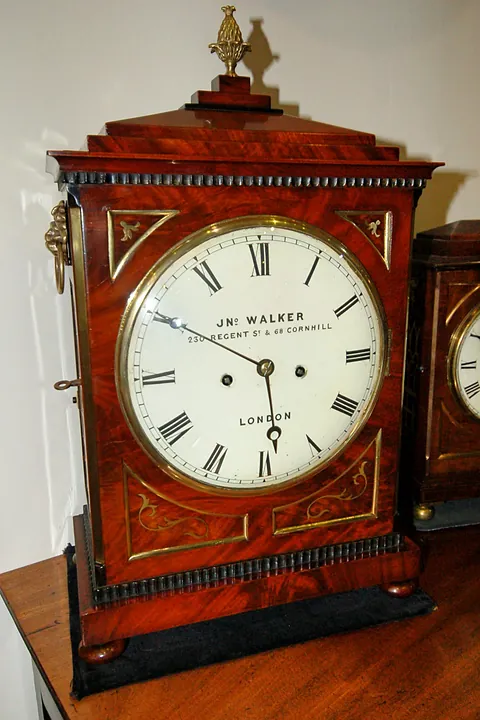
Bracket Clock by John Walker, London
Pendulum of Mayfair (dealer), London
Pocket Watches · c. 1887 / case 1913
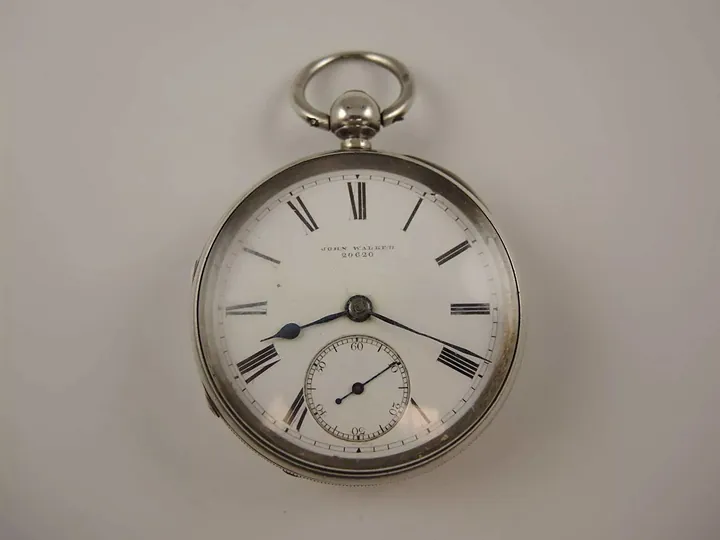
John Walker silver key-wound pocket watch
Atlam Watches / Antiques Boutique
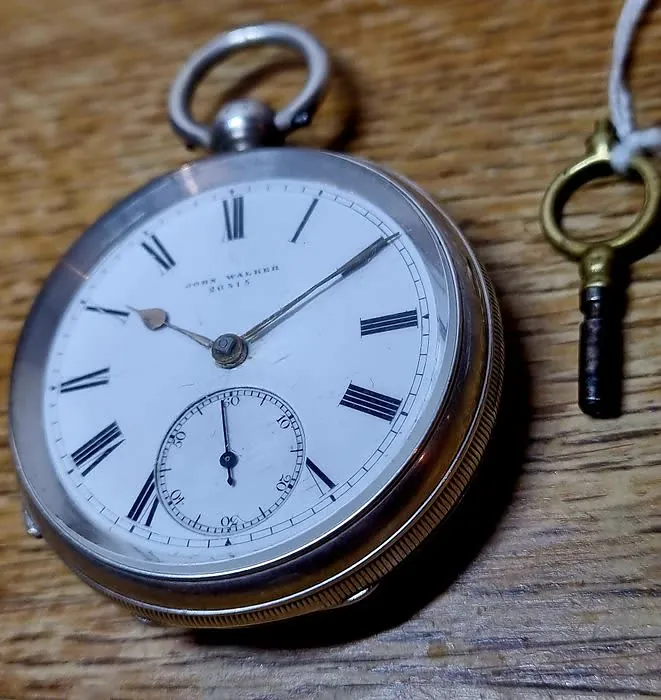
Pocket Watches · 1850–1900
John Walker pocket watch 20515
Catawiki
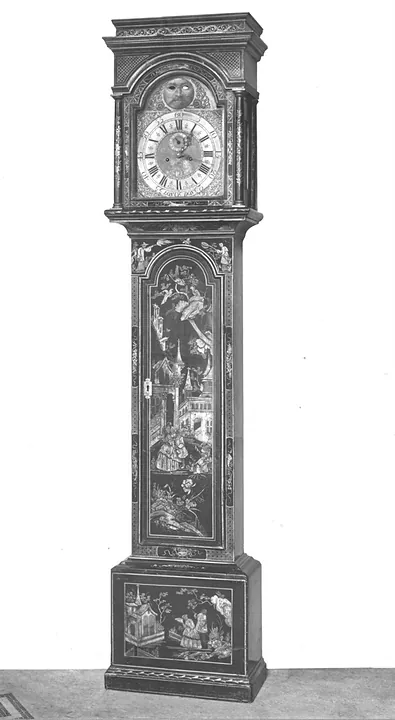
Clocks · 1740–1760
Longcase clock, English, 1740–1760, japanned wood, John Ellicott
Victoria and Albert Museum, London
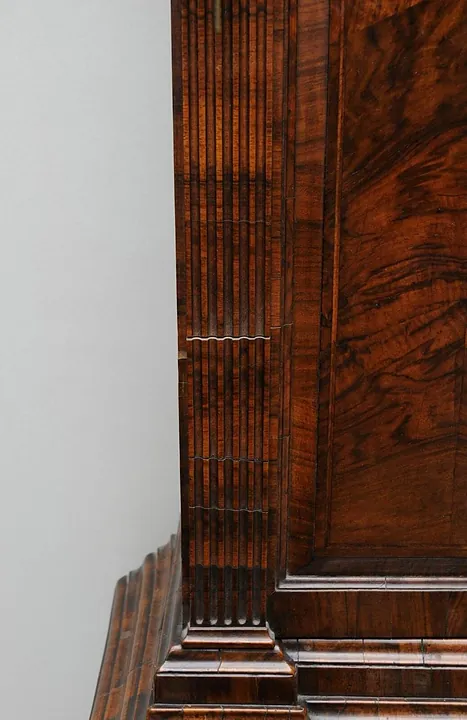
Clocks · c.1750
Long-case clock, English, ca. 1750, by Richard Peyton of Gloucester
Victoria and Albert Museum, London
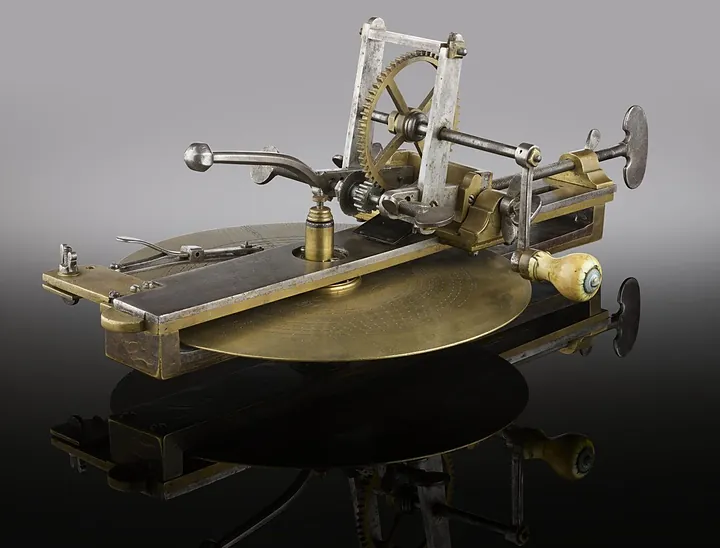
Clocks · 1751
Large wheel engine, signed and dated "John Tipping, Whildon Green, 1751".
Science Museum Group, London
Clocks · 1755
Bracket clock by John Fordham, England, 1755
The Metropolitan Museum of Art, New York