
Clocks · Skeleton clock
Jaeger-LeCoultre Skeleton Clock
- Maker / attribution
- Jaeger-LeCoultre (source attribution)
- Date
- Mid 20th century
- Historical period
- Modern Mechanical Horology (1945 – 1969)
- Country of origin
- Switzerland
- Object type
- Skeleton clock
- Dimensions
- H: 15.8, Base: 21.2 x 4.5 cm
- Auction house
- McKenzies Auctioneers
- Lot
- 172
- Credit line
- McKenzies Auctioneers
- Catalogue title (original)
- Sold at Auction: Jaeger-LeCoultre Skeleton Clock. (English)
View the source record (auction lot) ↗ (opens another website in a new tab)Suggest a correction
Record summary
Catalogued by McKenzies Auctioneers (lot 172), this is a skeleton clock attributed to Jaeger-LeCoultre, made in Switzerland, dated Mid 20th century. The Atlas places it in the Modern Mechanical Horology period (1945 – 1969) of its Clocks collection. Recorded dimensions: H: 15.8, Base: 21.2 x 4.5 cm. The record is illustrated with 1 photograph.
Assembled from the source record's structured fields. Dates and attributions are given as the source states them; where a field is missing the Atlas leaves it blank rather than estimating.
Catalogue description
Original object description
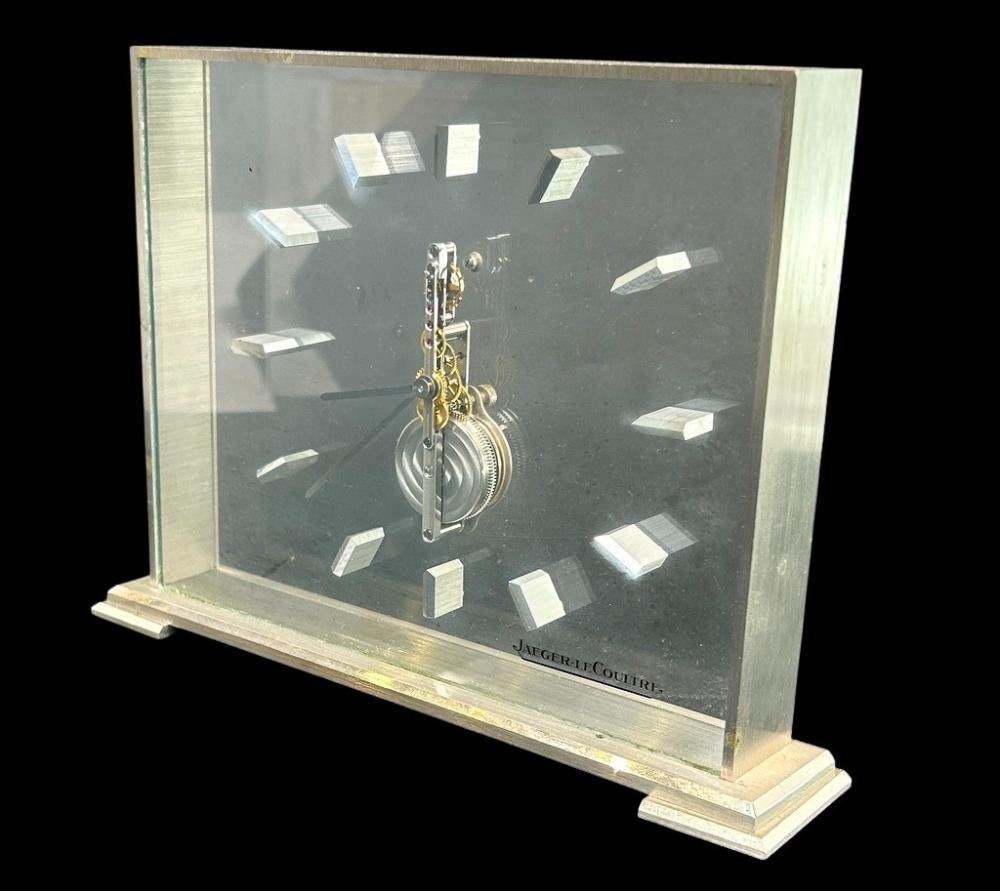
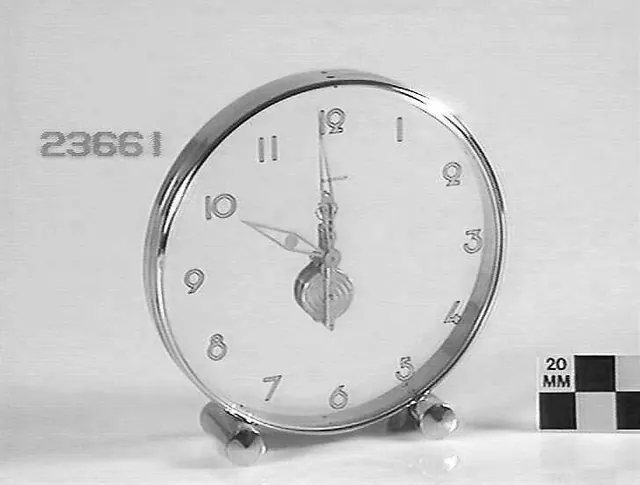
Attributed to the mid-20th century in an auction catalogue from McKenzies Auctioneers, this Jaeger-LeCoultre skeleton timepiece features a clear acrylic panel set within a brushed silver-colored metal surround and anchored to a stepped base. Standing 15.8 cm tall, the clock rests on a 21.2 by 4.5 cm plinth. The transparent housing exposes a vertically stacked mechanical movement complete with an in-line gear train and an open mainspring barrel. Hour positions are designated by applied silver-toned block batons laid out radially, and "JAEGER-LECOULTRE" is lettered in black across the bottom right of the acrylic. The case is catalogued as bearing the stamped number 356. With source imagery restricted to a single upfront three-quarter view, the operational state, jewel count, precise movement caliber, and exact rendering or placement of the case stamp cannot be verified.
Inscriptions & marks
356
Historical context
Modern Mechanical Horology (1945 – 1969)
Tool watches for divers, pilots and astronauts; electric watches anticipate the electronic age.
Post-war clocks combined new materials and industrial design: plastic and metal cases, battery-powered transistor movements from the late 1950s, and design classics by George Nelson, Max Bill and others. The first caesium atomic clock (1955) moved the definition of time from astronomy to physics.
Read the period in the timelineMore clocks from this periodEarlier: Golden Age of Mechanical Watchmaking
Atlas type guide
Skeleton clocks
A skeleton clock displays its movement: the plates are pierced to a minimum so that wheels, escapement and fusee can be seen, usually under a glass dome. French makers produced fine skeleton clocks in the late eighteenth century; in Victorian England they became popular showpieces, with frames in the shapes of cathedrals and famous buildings.
What to look for
- Pierced brass plates in scroll or architectural shapes.
- A glass dome and wooden or marble base.
- Fusee movements and sometimes passing strike on a bell.
Dating clues
- French skeleton clocks: c. 1780–1830.
- English cathedral-style skeleton clocks: c. 1840–1890.
General guidance written by the Atlas editors about this kind of object. It is not a statement about this particular piece; for that, rely on the source record above and on physical examination.
Read next:FuseeAnchor (recoil) escapement
Related records
Clocks · 1937–1938
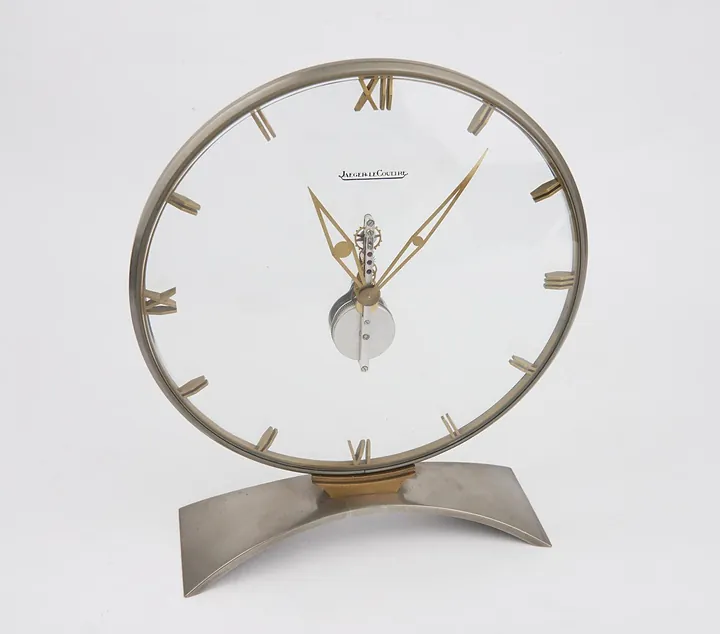
Skeleton clock by Jaeger-LeCoultre, Switzerland, 1937–1938
Science Museum Group, London
Movements & Components · 1953
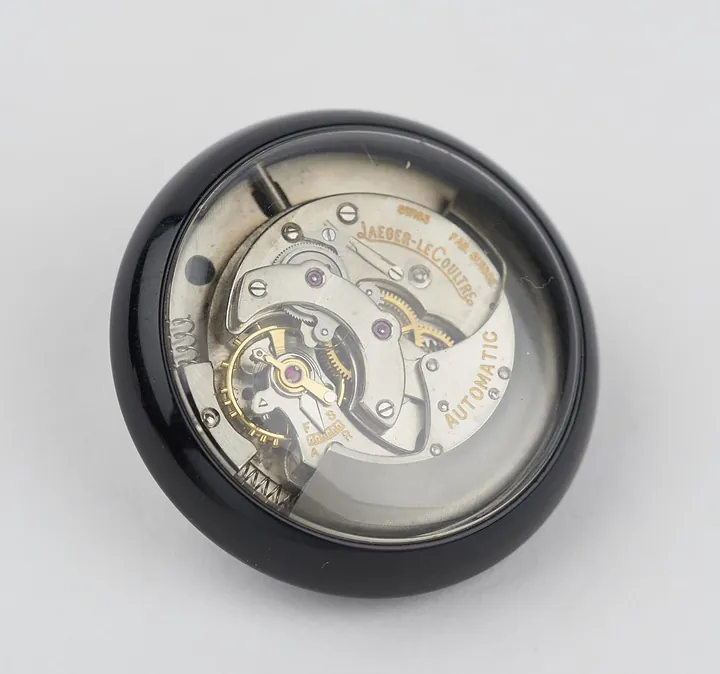
Automatic watch movement, Jaeger-LeCoultre, 1953, Geneva, Switzerland, showing self-winding mechanism
Science Museum Group, London
Wristwatches · 1953
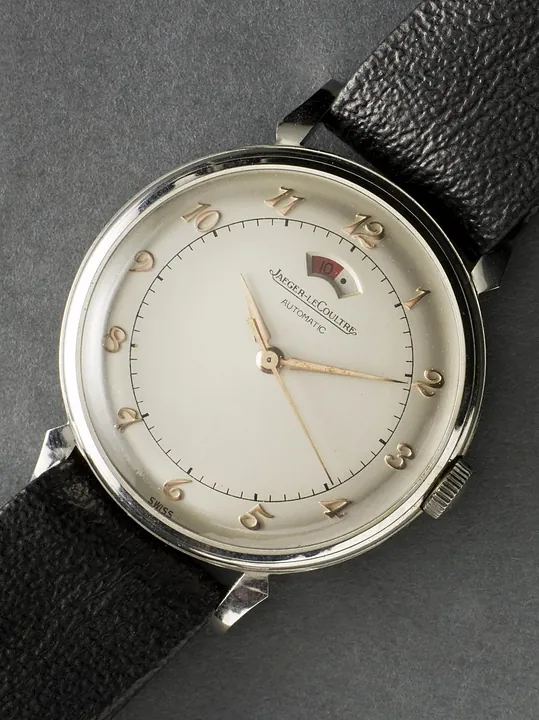
Automatic Wrist-watch, Jaeger-LeCoultre, Geneva, Switzerland, with reserve power indicator complete in steel case, 1953. Back numbered 564556.
Science Museum Group, London
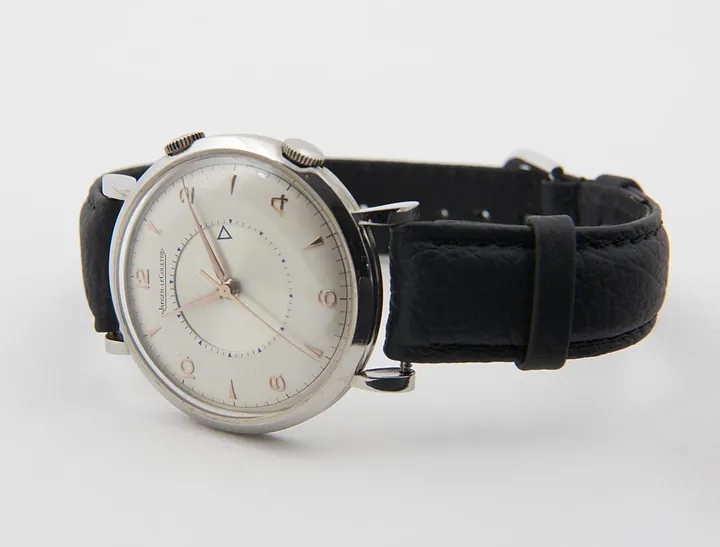
Wristwatches · 1953
Wrist-watch, 'Memovox' alarm, Jaeger-LeCoultre, Geneva, Switzerland, complete in steel case, 1953.
Science Museum Group, London
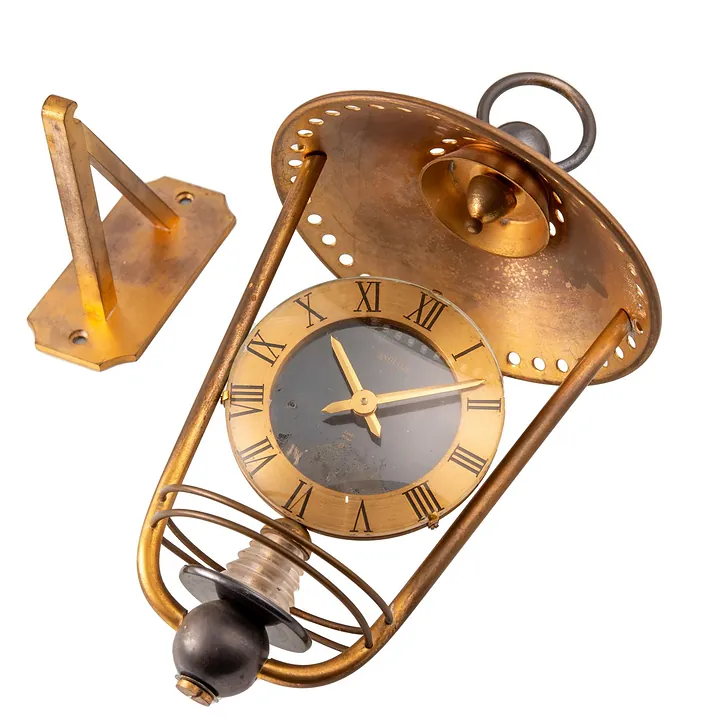
Clocks · c. 1950
Angelus Retailed by Gobbi, Milano, c. 1950
Antiquorum auction archive, Geneva
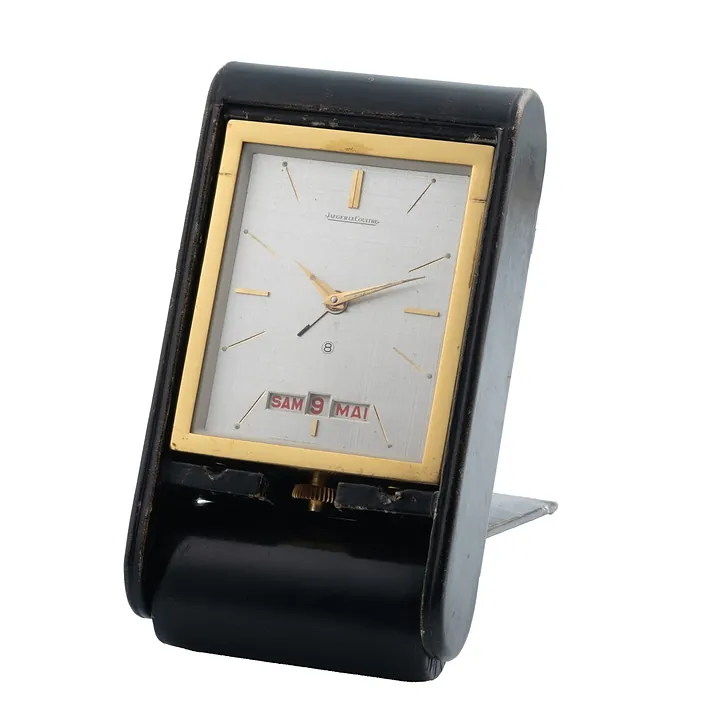
Clocks · c. 1960s
Jaeger Lecoultre Ados Calendrier, c. 1960s
Antiquorum auction archive, Geneva
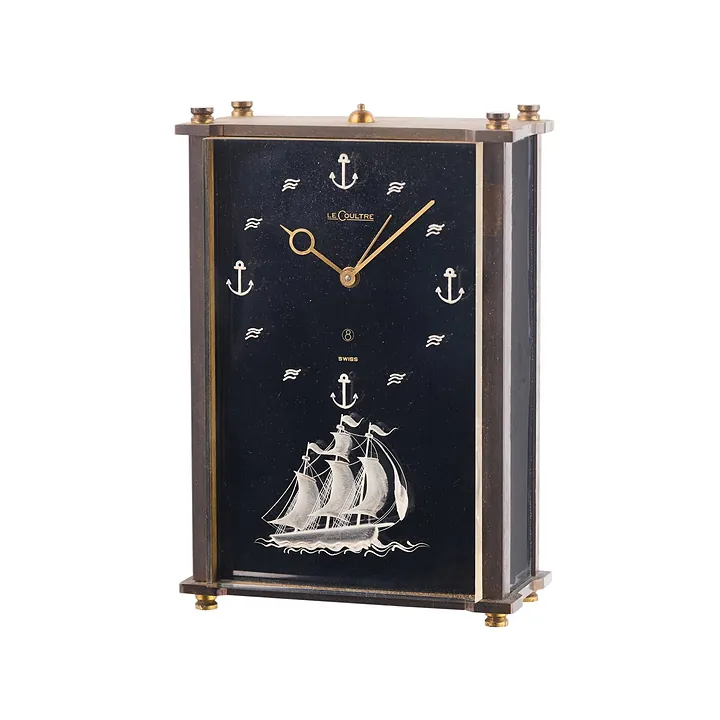
Clocks · c. 1960s
Lecoultre Music Alarm, ref. 2163, c. 1960s
Antiquorum auction archive, Geneva
Clocks · 1953
Mantel Clock - Jaeger-LeCoultre, Switzerland, 1953
Museums Victoria, Melbourne