
Wristwatches · Wristwatch
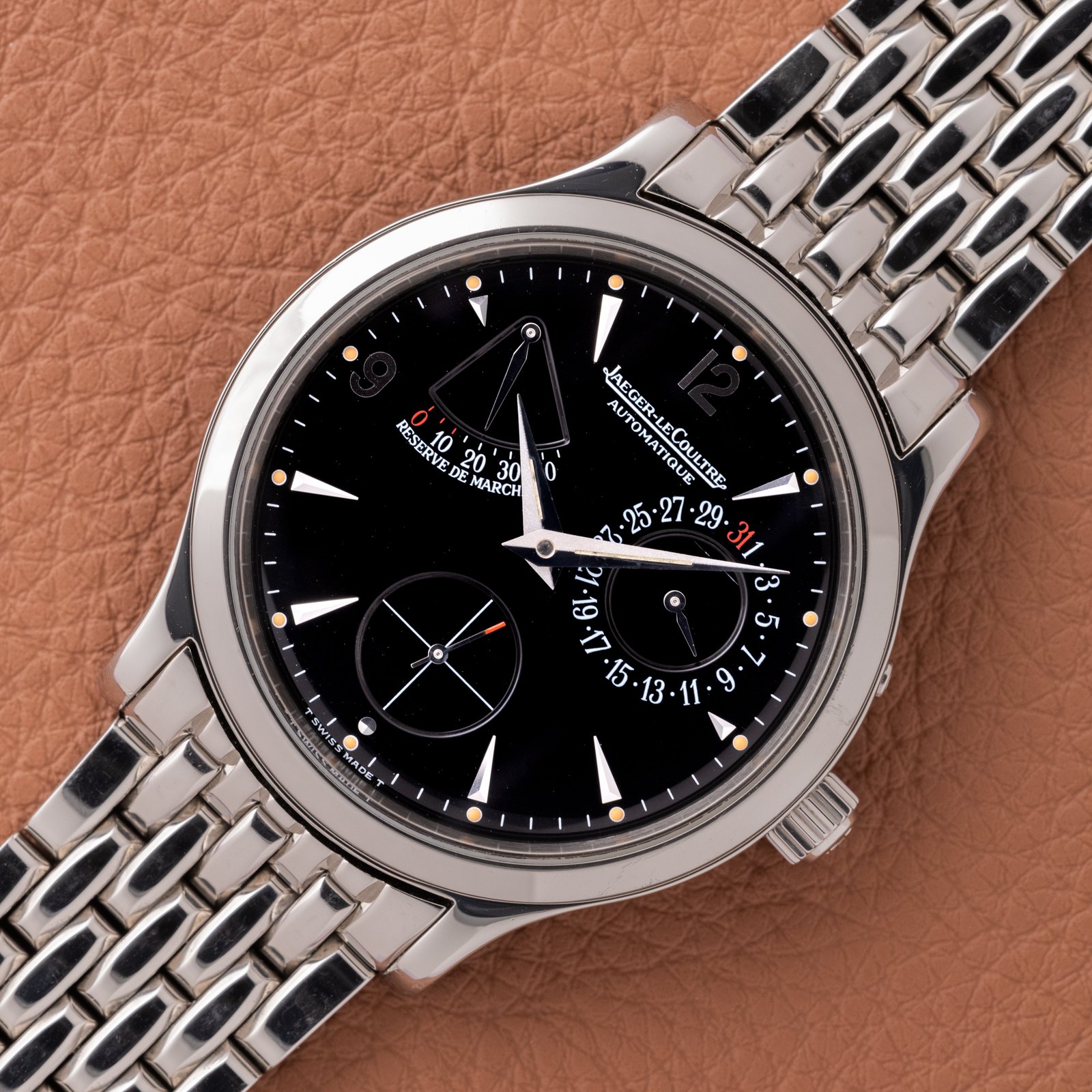
Jaeger-LeCoultre Master Black Réserve de Marche (Ref. 140.8.93.S), 1990s
- Maker / attribution
- Jaeger-LeCoultre (maker)
- Date
- 1990s
- Historical period
- Mechanical Renaissance (1990 – 2010)
- Country of origin
- Switzerland
- Object type
- Wristwatch
- Dimensions
- Case 37 mm
- Stock no.
- Product 8806112723127
- Credit line
- Dealer listing, Huntington Company (product 8806112723127)
- Catalogue title (original)
- 1990s Jaeger-LeCoultre Master Black Réserve de Marche (Ref. 140.8.93.S) (English)
View the source record (dealer listing) ↗ (opens another website in a new tab)Suggest a correction
Record summary
Catalogued by Huntington Company (dealer) (stock number Product 8806112723127), this is a wristwatch by Jaeger-LeCoultre, made in Switzerland, dated 1990s. The Atlas places it in the Mechanical Renaissance period (1990 – 2010) of its Wristwatches collection. Recorded dimensions: Case 37 mm. The record is illustrated with 6 photographs.
Assembled from the source record's structured fields. Dates and attributions are given as the source states them; where a field is missing the Atlas leaves it blank rather than estimating.
Catalogue description
Dealer description — Huntington Company
History and Significance The Master Réserve de Marche comes from a particularly interesting period in modern Jaeger-LeCoultre. During the 1990s, the manufacture was rebuilding its identity around watches that emphasized traditional complications and serious movement making without chasing the size or visual drama that would define much of the following decade. The reference 140.8.93.S captures that philosophy beautifully. It manages to offer a useful set of complications while still feeling restrained and distinctly classical. The dial architecture is one of the strongest parts of the design. A power-reserve indicator occupies the upper portion of the dial, the date receives its own subsidiary display, and the running seconds completes the arrangement below. There is plenty of information present, yet none of it feels forced into the available space. Jaeger-LeCoultre managed to give each indication a clear purpose while preserving the visual hierarchy of a traditional watch. The black dial changes the personality considerably. Much of the Master collection from this era is associated with lighter, more formal dials, while this execution has a sportier and slightly more unusual character. The tritium has aged into a rich pumpkin tone, creating a warm contrast against the black surface. It gives an otherwise restrained Jaeger-LeCoultre an enormous amount of character without changing the underlying design. Turning the reference 140.8.93.S over reveals another important part of the story. The exhibition caseback places the automatic movement on display, reinforcing Jaeger-LeCoultre's long-standing reputation as a manufacture rather than treating the caliber as something purely functional and hidden away. During an era when many watches of this size and style still used closed casebacks, that decision mattered. The Master Réserve de Marche was designed to make the mechanics part of the experience. At 37mm, the entire package represents a sweet spot for this generation of complicated Jaeger-LeCoultre watches. The proportions allow the multiple displays to breathe without turning the watch into something oversized, while the bracelet gives the traditionally styled Master case a less formal personality. Watches like the reference 140.8.93.S demonstrate why 1990s Jaeger-LeCoultre has become such an interesting area to revisit. There is serious watchmaking here, but it remains subtle enough to reward discovery rather than demand attention. Writer's Thoughts This is exactly the kind of 1990s Jaeger-LeCoultre that deserves more attention. The reference 140.8.93.S has enough complication to remain interesting, but it never feels like the dial is trying to show off. The black dial and pumpkin-colored tritium make what could have been a very conservative Master-series watch feel considerably more playful. On the bracelet, it becomes even easier to imagine wearing regularly rather than reserving it for formal occasions. Our Promise Every watch is thoroughly vetted, carefully described with complete transparency, and guaranteed authentic. Each piece is offered in honest condition, ensuring collectors receive a timepiece that reflects both originality and integrity. Specifications Brand: Jaeger-LeCoultre Model: Master Réserve de Marche Reference: 140.8.93.S Year: 1990s Case Material: Stainless steel Case Size: 37mm Dial: Black dial with power reserve, date, subsidiary seconds, and aged tritium lume Movement: Automatic Strap/Buckle: Stainless steel bracelet Buckle/Clasp: Jaeger-LeCoultre clasp Contents: Watch only Condition Case: Stainless steel case presents well with signs of wear consistent with age and use. Dial: Black dial remains attractive with clean printing and warm pumpkin-colored tritium lume. Hands: Hands present well with aged tritium that complements the dial. Crystal: Crystal presents well overall with light signs of wear. Strap/Buckle: Stainless steel bracelet presents well with signs of wear consistent with use. Buckle/Clasp: Jaeger-LeCoultre clasp remains present and shows normal signs of use.
Historical context
Mechanical Renaissance (1990 – 2010)
Mechanical watches return as cultural objects; independent watchmaking flourishes.
Mechanical watches returned as cultural and luxury objects. Complications, tourbillons and new materials proliferated; independent watchmakers such as George Daniels, F.P. Journe and Philippe Dufour revived artisanal watchmaking; collecting vintage watches became a major field.
Read the period in the timelineMore wristwatches from this periodEarlier: Quartz Revolution
Atlas type guide
Wristwatches
Bracelet watches were worn by women from the early nineteenth century — Breguet made one for Caroline Murat, Queen of Naples, in 1810–12 — but the wristwatch only became a man's instrument with military use and aviation in the early twentieth century. Between the World Wars it overtook the pocket watch; the 1920s and 1930s brought rectangular Art Deco cases, water-resistant cases and the first automatic winding systems.
After 1945 the wristwatch became a carrier of identity — dress watches, sports and dive watches, chronographs, calendars — produced by Swiss, American, Japanese, German, Soviet and Chinese industries. The quartz revolution after 1969 and the mechanical renaissance since the 1990s, including the rise of independent watchmakers, complete the story.
What to look for
- The reference number (between the lugs or inside the case back) and serial number, the starting point for dating.
- The calibre: its maker and number are often stamped under the dial or on the bridge.
- Originality of dial, hands and crown — refinished ('redial') dials are common.
- Case material marks: 18K/750, 14K/585, stainless steel, gold-filled, plated.
Dating clues
- Wire-lug cases: before c. 1925.
- Water-resistant screw-down cases: from 1926.
- Quartz movements: from 1969; sapphire crystals widespread after c. 1980.
General guidance written by the Atlas editors about this kind of object. It is not a statement about this particular piece; for that, rely on the source record above and on physical examination.
Related records
Clocks · 1937–1938
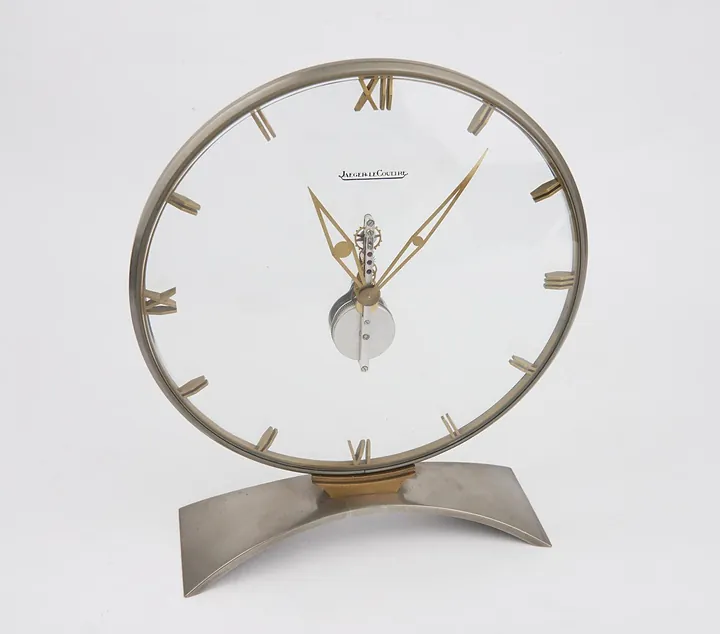
Skeleton clock by Jaeger-LeCoultre, Switzerland, 1937–1938
Science Museum Group, London
Movements & Components · 1953
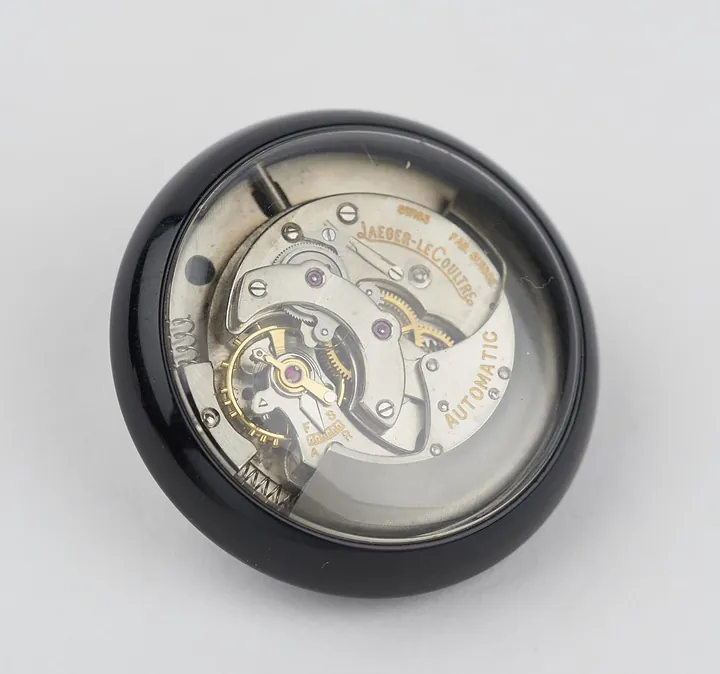
Automatic watch movement, Jaeger-LeCoultre, 1953, Geneva, Switzerland, showing self-winding mechanism
Science Museum Group, London
Wristwatches · 1953
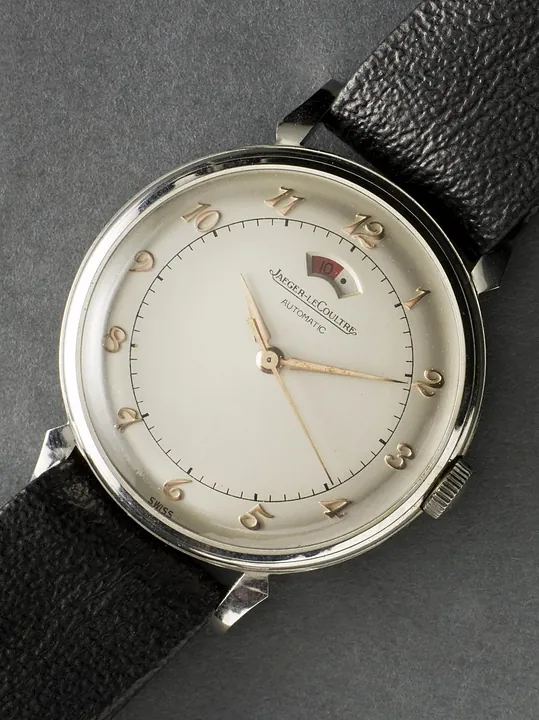
Automatic Wrist-watch, Jaeger-LeCoultre, Geneva, Switzerland, with reserve power indicator complete in steel case, 1953. Back numbered 564556.
Science Museum Group, London
Wristwatches · 1953
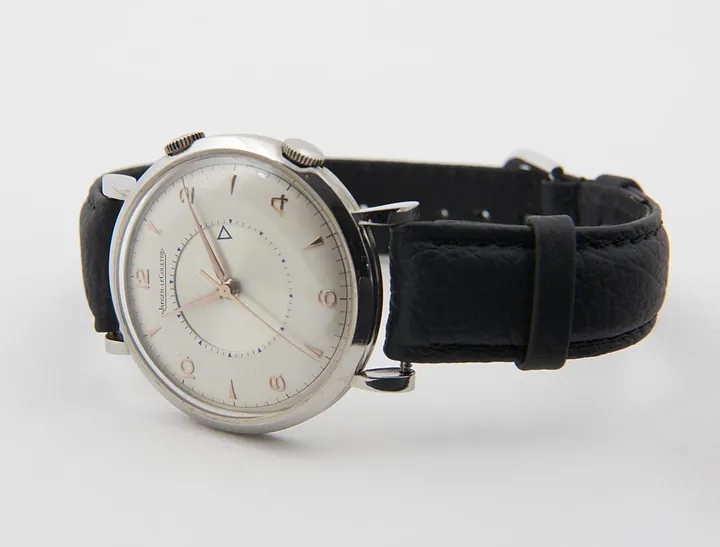
Wrist-watch, 'Memovox' alarm, Jaeger-LeCoultre, Geneva, Switzerland, complete in steel case, 1953.
Science Museum Group, London

Wristwatches · 2008
Wristwatch by Breitling?, 2008
Museum Rotterdam

Wristwatches · c. 1990s
Audemars Piguet Bamboo, c. 1990s
Antiquorum auction archive, Geneva

Wristwatches · c. 1990
Audemars Piguet Huitieme Perpetual Calendar, ref. 25696PT, c. 1990
Antiquorum auction archive, Geneva

Wristwatches · c. 1990
Breitling Chronomat, ref. b13050.1, c. 1990
Antiquorum auction archive, Geneva