
Clocks · Clock
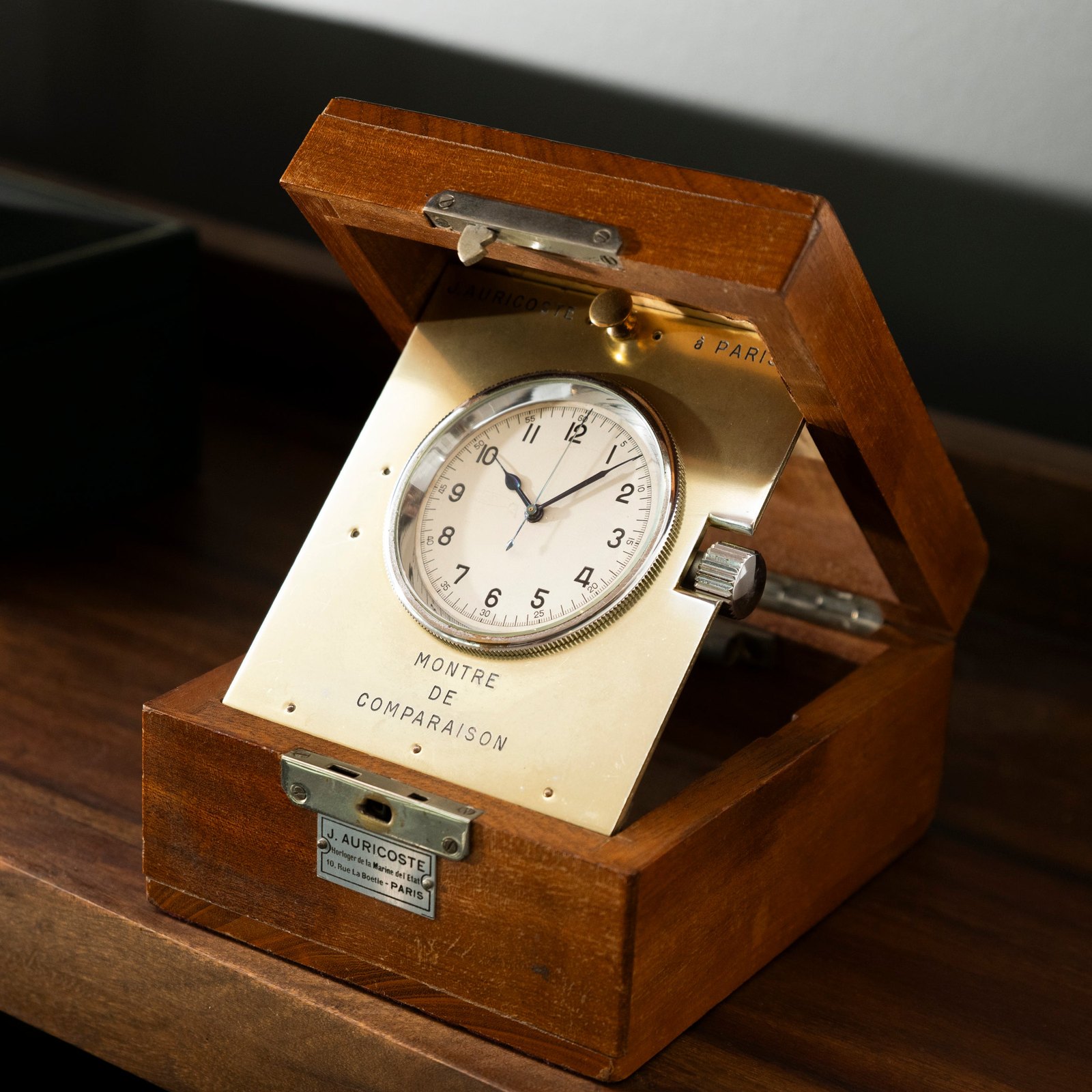
J. Auricoste Reference Chronometer, 1960s
- Maker / attribution
- J. Auricoste (maker)
- Date
- 1960s
- Historical period
- Modern Mechanical Horology (1945 – 1969)
- Country of origin
- Unrecorded in source
- Object type
- Clock
- Dimensions
- Case 68 mm
- Stock no.
- 39131772
- Credit line
- Dealer listing, Analog/Shift (39131772)
- Catalogue title (original)
- J. Auricoste Reference Chronometer (English)
View the source record (dealer listing) ↗ (opens another website in a new tab)Suggest a correction
Record summary
Catalogued by Analog/Shift (dealer), New York (stock number 39131772), this is a clock by J. Auricoste, dated 1960s. The Atlas places it in the Modern Mechanical Horology period (1945 – 1969) of its Clocks collection. Recorded dimensions: Case 68 mm. The record is illustrated with 6 photographs.
Assembled from the source record's structured fields. Dates and attributions are given as the source states them; where a field is missing the Atlas leaves it blank rather than estimating.
Catalogue description
Dealer description — Analog/Shift
Sure, Analog:Shift is a business built around the love of watches — mostly mechanical watches. But, in essence, it’s our love for timepieces and timekeeping in general that are the common themes throughout the items we procure. And that includes the love of clocks in general: pocket watches, travel clocks, and more. After all, in the couple hundred years before the First World War, personal timekeeping was all about the pocket watch, and before that, it was larger clocks that were front and center, horologically. We still believe a good clock — such as a classic travel model from the 1920s or 1930s — has a place in the watch lover’s collection. This particular timepiece is a scarce desktop chronometer made by J. Auricoste, a French manufacturer of aeronautical clocks and watches established in 1854. Housed in a handsome mahogany box measuring 5.5" x 4.25" x 2.75" , it features a nickel-plated 68mm hand-wound clock fit into a brass plate. A special hacking feature resets the seconds hand to the "0" position during setting, thus allowing the user to coordinate a set of timepieces to the clock as a reference — like, say, the wristwatches of a fighter squadron. A silvered dial with an outer 1/5th-seconds track, large black 'Arabic' indices, and a black 'spade' handset prioritizes legibility, while timekeeping is provided by the hand-wound Lemania cal. LWO 1170 movement with 3/4 plate, frosted and gilt finishing a Glucydur screw balance, and 18 jewels. Dating to the 1960s, this handsome piece of French watchmaking history is an ideal desktop ornament for someone who appreciates function-first design and horological excellence. Grab it before it's gone!
Historical context
Modern Mechanical Horology (1945 – 1969)
Tool watches for divers, pilots and astronauts; electric watches anticipate the electronic age.
Post-war clocks combined new materials and industrial design: plastic and metal cases, battery-powered transistor movements from the late 1950s, and design classics by George Nelson, Max Bill and others. The first caesium atomic clock (1955) moved the definition of time from astronomy to physics.
Read the period in the timelineMore clocks from this periodEarlier: Golden Age of Mechanical Watchmaking
Atlas type guide
Marine chronometers
A marine chronometer is a precision timekeeper carried at sea to find longitude: the navigator compares local noon, observed with a sextant, with the time at a reference meridian kept by the chronometer. Each hour of difference corresponds to fifteen degrees of longitude. John Harrison proved the method in the 1760s; Pierre Le Roy, Ferdinand Berthoud, John Arnold and Thomas Earnshaw then developed the detent escapement and the compensation balance that made chronometers practical to manufacture.
By the nineteenth century London, Liverpool, Le Locle and Glashütte supplied navies and merchant fleets. A typical box chronometer has a spring-detent escapement, a fusee to equalise mainspring torque, a bimetallic compensation balance with a helical balance spring, and is mounted in gimbals inside a wooden box so that it stays level.
What to look for
- Gimbals and a three-tier wooden box with a glazed inner lid.
- A power-reserve ('up and down') indicator on the dial, usually showing 56 hours on two-day instruments.
- Spring-detent escapement and a cylindrical (helical) balance spring visible through the movement.
- Admiralty or navy marks (broad arrow), and rating certificates from observatories.
- The maker's number on the dial and movement; many makers' registers survive, allowing dating.
Dating clues
- Earnshaw-type spring-detent chronometers became standard after about 1800.
- Auxiliary compensation devices on the balance appear from the mid-nineteenth century.
- Quartz and radio time signals ended routine use of mechanical chronometers in the 1970s and 1980s.
General guidance written by the Atlas editors about this kind of object. It is not a statement about this particular piece; for that, rely on the source record above and on physical examination.
Read next:Spring detent (chronometer) escapementFuseeBalance spring (hairspring)Detent escapement
Related records
Clocks · c. 1960
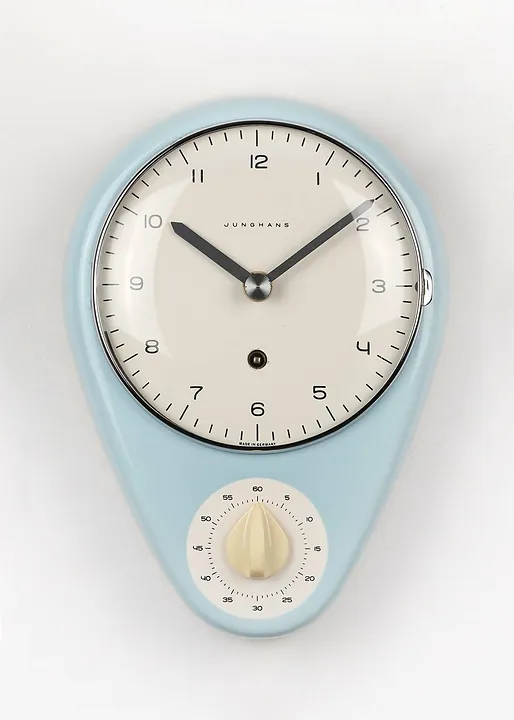
Clock, Germany, c. 1960 (no. 58196)
German Clock Museum
Clocks · 1930–1960
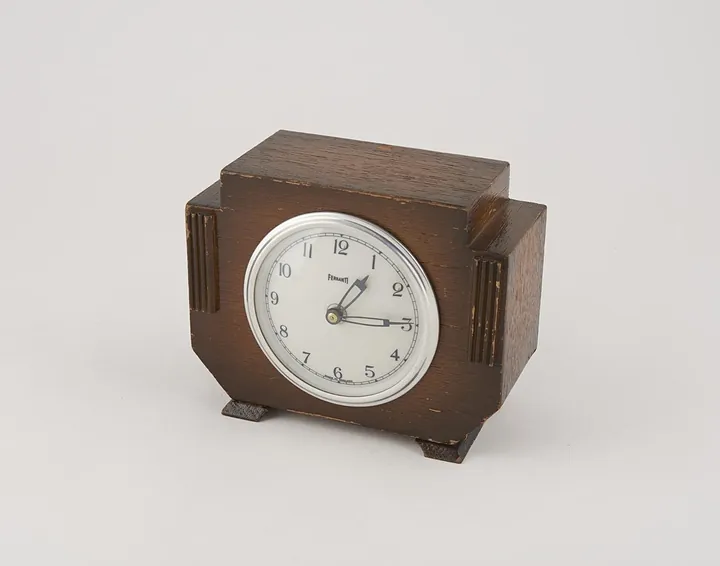
Ferranti electric mantel clock. (no. Y1996.10.820)
Science Museum Group, London
Clocks · 1931–1970
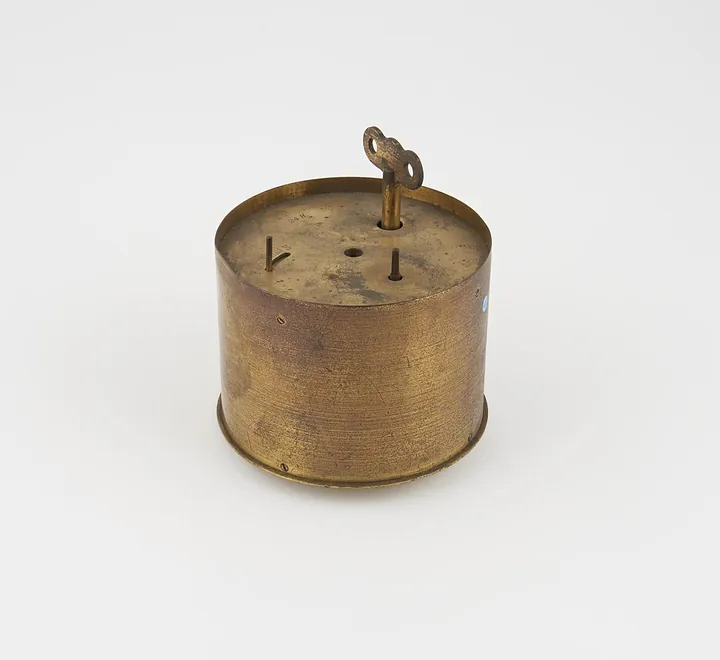
Clock and drum for recorder, 24 hours, English, 1931–1970.
Science Museum Group, London
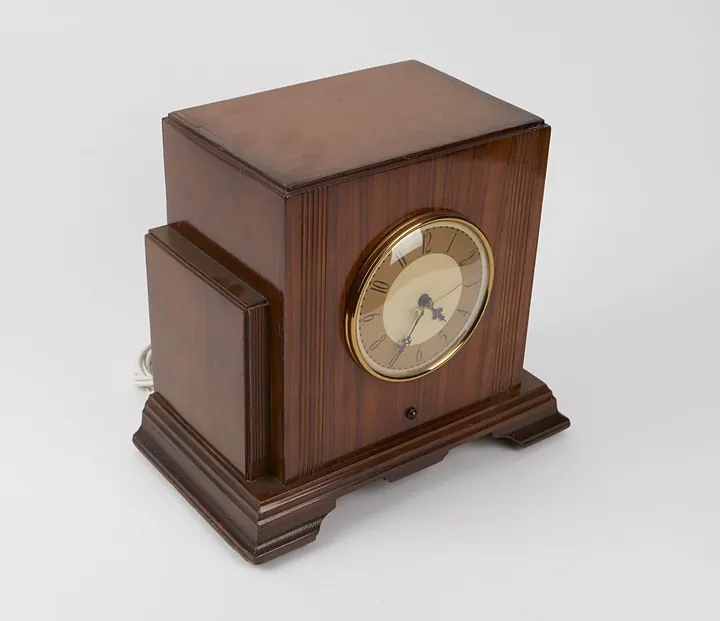
Clocks · 1937; 1980
Clock by Bestone and Hammond, United States, 1937; 1980
Science Museum Group, London
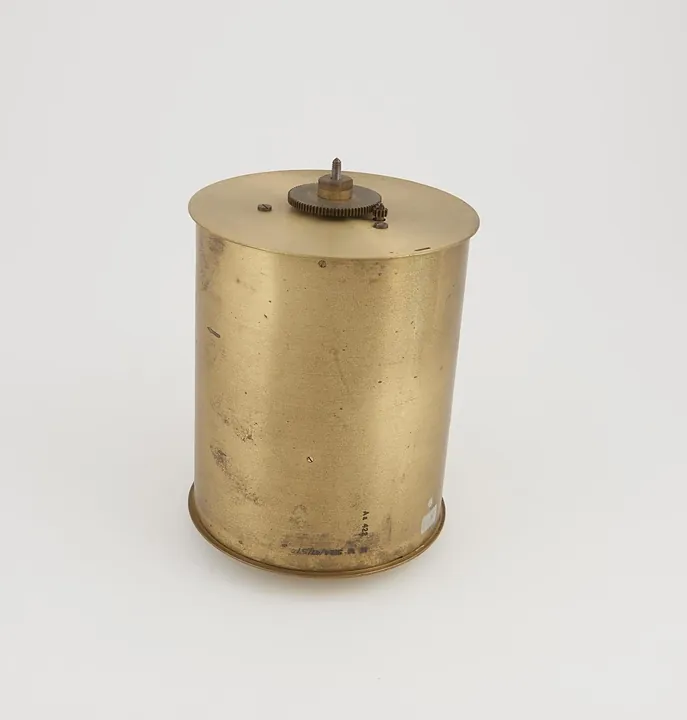
Clocks · 1940–1967
Drum and clock, English, 1940-1947, MO W 5124/ 47/ 57.
Science Museum Group, London
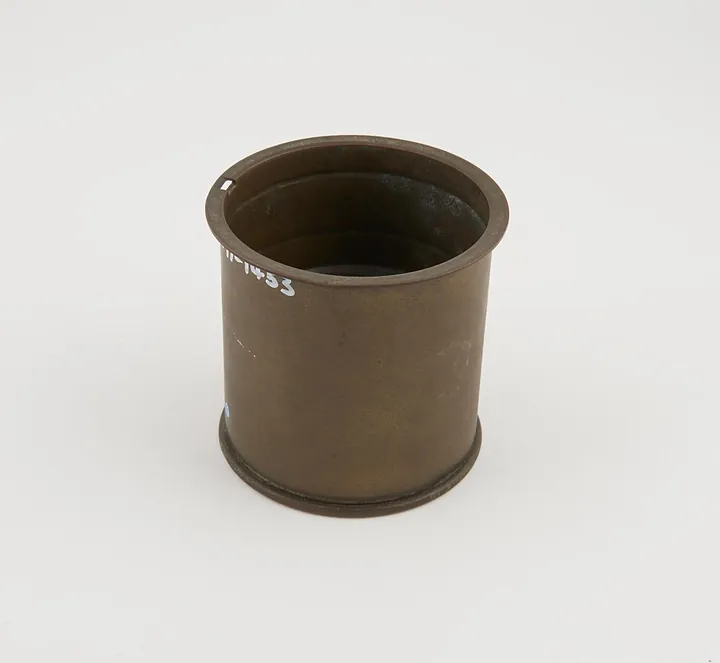
Clocks · 1940–1950
Drum and clock. by Smith's English Clocks Ltd., London, for Air Ministry.
Science Museum Group, London
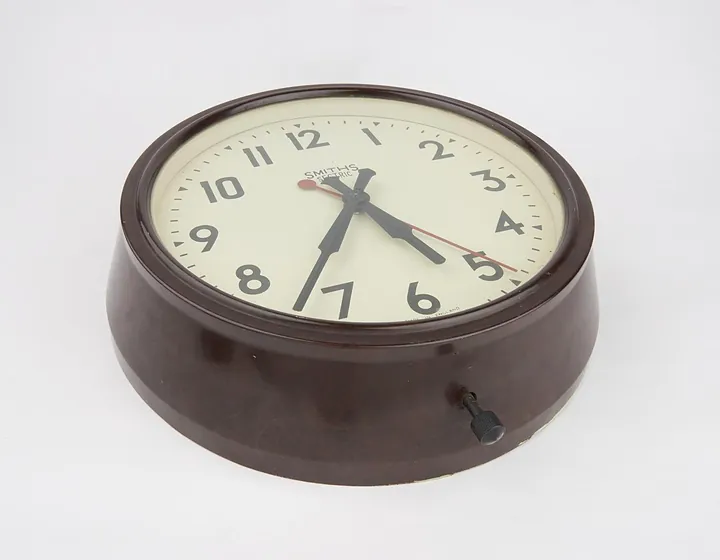
Clocks · c. 1946
Smiths Sectric synchronous motor electric wall clock with centre seconds hand, by Smiths English Clocks Ltd, England c. 1946
Science Museum Group, London
Clocks · c. 1947
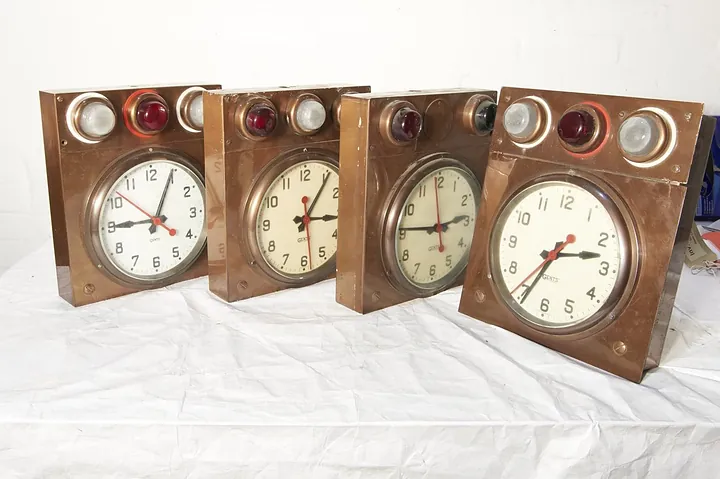
Four studio slave clocks installed at BBC Broadcasting House made by Gents of Leicester.
Science Museum Group, London