
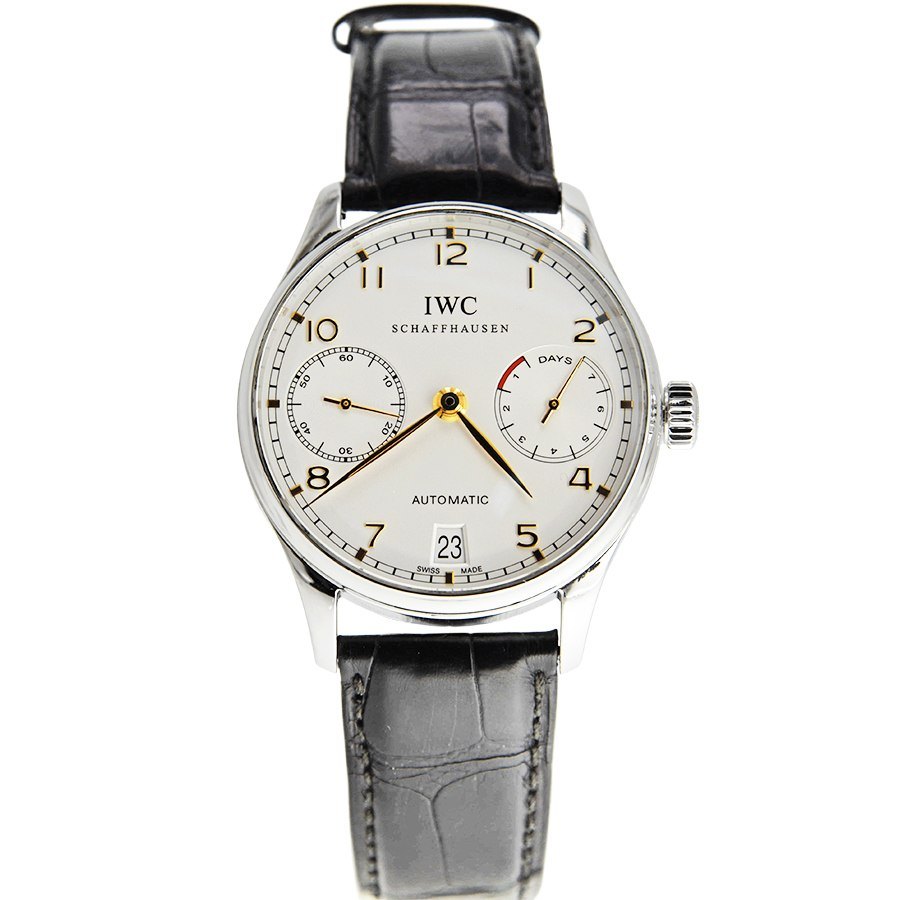
Wristwatches · Automatic power reserve wristwatch
IWC Schaffhausen Portugieser 7-Day Power Reserve Wrist Watch
- Maker / attribution
- IWC Schaffhausen (source attribution)
- Date
- c. 2014
- Historical period
- Contemporary Horology (2010 – Present)
- Country of origin
- Switzerland
- Object type
- Automatic power reserve wristwatch
- Materials / technique
- Stainless steel
- Holding institution
- Renaissance Antiques
- Accession / object no.
- MICO G3985 P
- Credit line
- Renaissance Antiques
- Catalogue title (original)
- IWC Schaffhausen Portugieser 7-Day Power Reserve Wrist Watch - Renaissance Antiques (English)
View the source record ↗ (opens another website in a new tab)Suggest a correction
Record summary
Held and catalogued by Renaissance Antiques (object number MICO G3985 P), this is an automatic power reserve wristwatch attributed to IWC Schaffhausen, made in Switzerland, dated c. 2014. The Atlas places it in the Contemporary Horology period (2010 – Present) of its Wristwatches collection. Materials and techniques recorded by the source: Stainless steel. The record is illustrated with 1 photograph.
Assembled from the source record's structured fields. Dates and attributions are given as the source states them; where a field is missing the Atlas leaves it blank rather than estimating.
Catalogue description
Original object description
Originating circa 2014, this IWC Schaffhausen Portugieser watch is built with a 42 mm stainless steel case featuring front and exhibition rear sapphire crystals, a grooved crown at 3 o'clock, and a leather strap with an alligator pattern and contrast stitching. The silver dial presents an outer railway track, applied gold Arabic numerals, and gold feuille hands, alongside complications including running subsidiary seconds at 9 o'clock, a 7-day power reserve dial with a red sector at 3 o'clock, and a 6 o'clock calendar aperture displaying the date '23'. Running on a 31-jewel automatic mechanism—which was mistakenly documented as a chronograph despite having no timing subregisters or external pushers—the piece retains its original documentation card and presentation case.
Inscriptions & marks
3908578
Historical context
Contemporary Horology (2010 – Present)
Silicon components, connected watches, optical-lattice research clocks and a thriving independent scene.
Smartwatches became the world's best-selling watches, while mechanical watchmaking focuses on craft, innovation (silicon components, new escapements) and independent makers.
Read the period in the timelineMore wristwatches from this periodEarlier: Mechanical Renaissance
Atlas type guide
Automatic (self-winding) watches
Self-winding watches use the wearer's motion to wind the mainspring. Abraham-Louis Perrelet and Breguet made 'perpétuelle' pocket watches with oscillating weights in the late eighteenth century, but the principle only became practical in the wristwatch. John Harwood patented a bumper automatic in 1923; Rolex's Perpetual rotor (1931) winding in one direction, and later bidirectional rotors (Eterna, Felsa Bidynator), established the modern form. Micro-rotors (Universal Genève, Buren) and peripheral rotors made automatic watches thinner.
What to look for
- A semicircular rotor turning 360° over the movement, or a 'bumper' weight that rebounds between springs.
- 'Automatic', 'Perpetual' or 'Self-winding' on the dial.
- A sealed screw-back case, since automatic watches are wound less often by the crown.
Dating clues
- Bumper automatics: 1923–c. 1955.
- Full rotors: from 1931 (Rolex); widespread after c. 1950.
- Micro-rotors: from 1954–1958.
General guidance written by the Atlas editors about this kind of object. It is not a statement about this particular piece; for that, rely on the source record above and on physical examination.
Related records
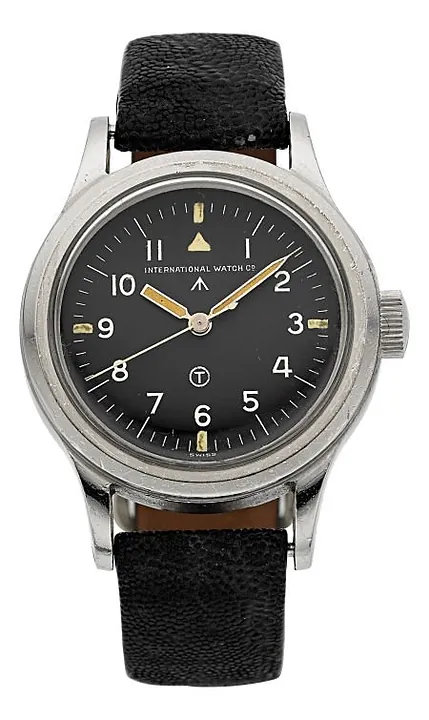
Wristwatches · c. 1948
IWC Rare British Military RAF "Mark XI" Wristwat, c. 1948
LiveAuctioneers auction archive
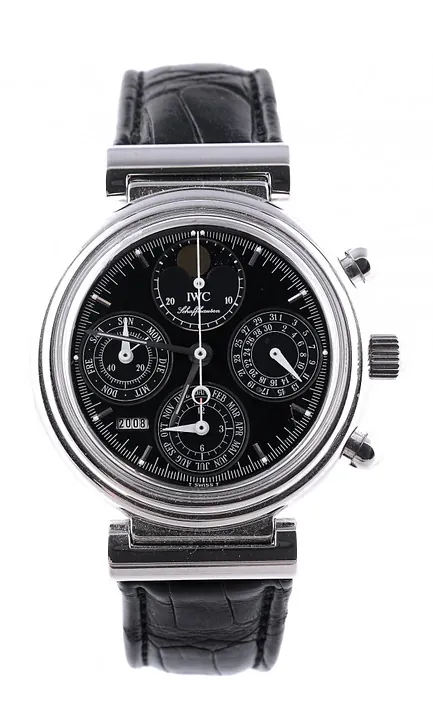
Wristwatches · c. 2000
IWC, Da Vinci Rattrapante, ref. 3751, a stainless steel, c. 2000
LiveAuctioneers auction archive
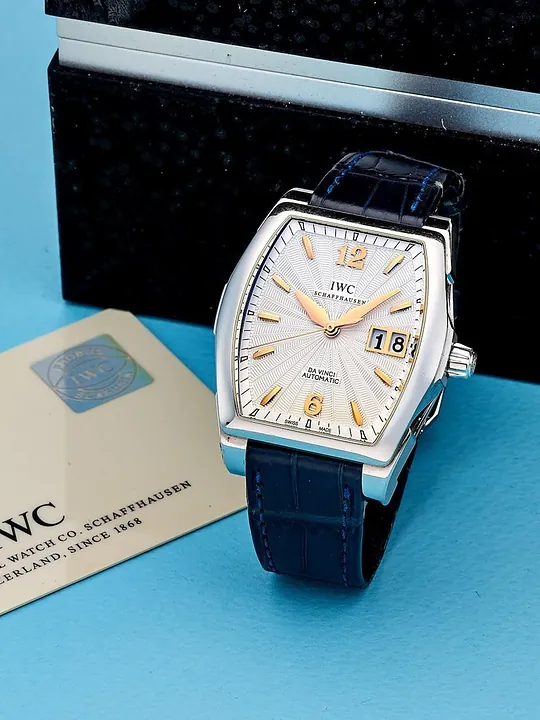
Wristwatches · c. 2010
IWC | Da Vinci, REF.IW452305, a stainless steel wristwatch with Date, circa 2010
LiveAuctioneers auction archive
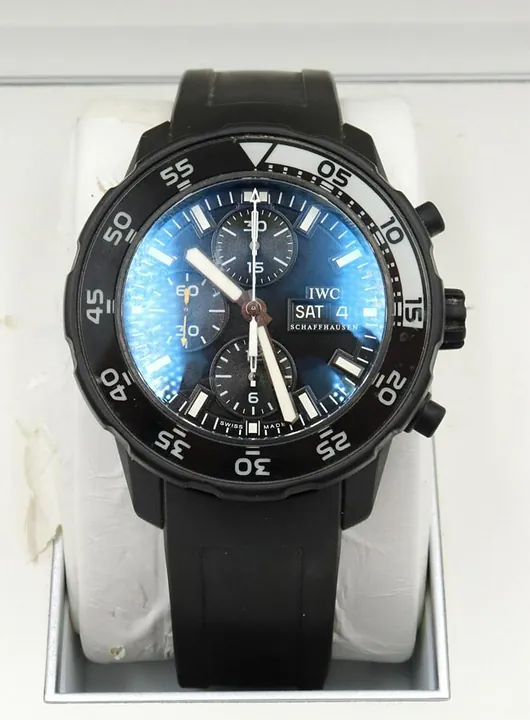
Wristwatches · c. 2011
IWC "Aquatimer Galapagos" Chronograph Wristwatch, c. 2011
LiveAuctioneers auction archive

Wristwatches · c. 2010s
Breguet Type XXI, ref. 3810, c. 2010s (Antiquorum Lot 381-24)
Antiquorum auction archive, Geneva

Wristwatches · c. 2010s
Breguet Type XXI, ref. 3810, c. 2010s (Antiquorum Lot 386-229)
Antiquorum auction archive, Geneva

Wristwatches · Sold in September 2010
Breitling Cosmonaute, ref. A 22322, Sold in September 2010
Antiquorum auction archive, Geneva

Wristwatches · c. 2010
Corum Bubble Chrono, ref. 396.150.20, c. 2010
Antiquorum auction archive, Geneva