
Wristwatches · Wristwatch
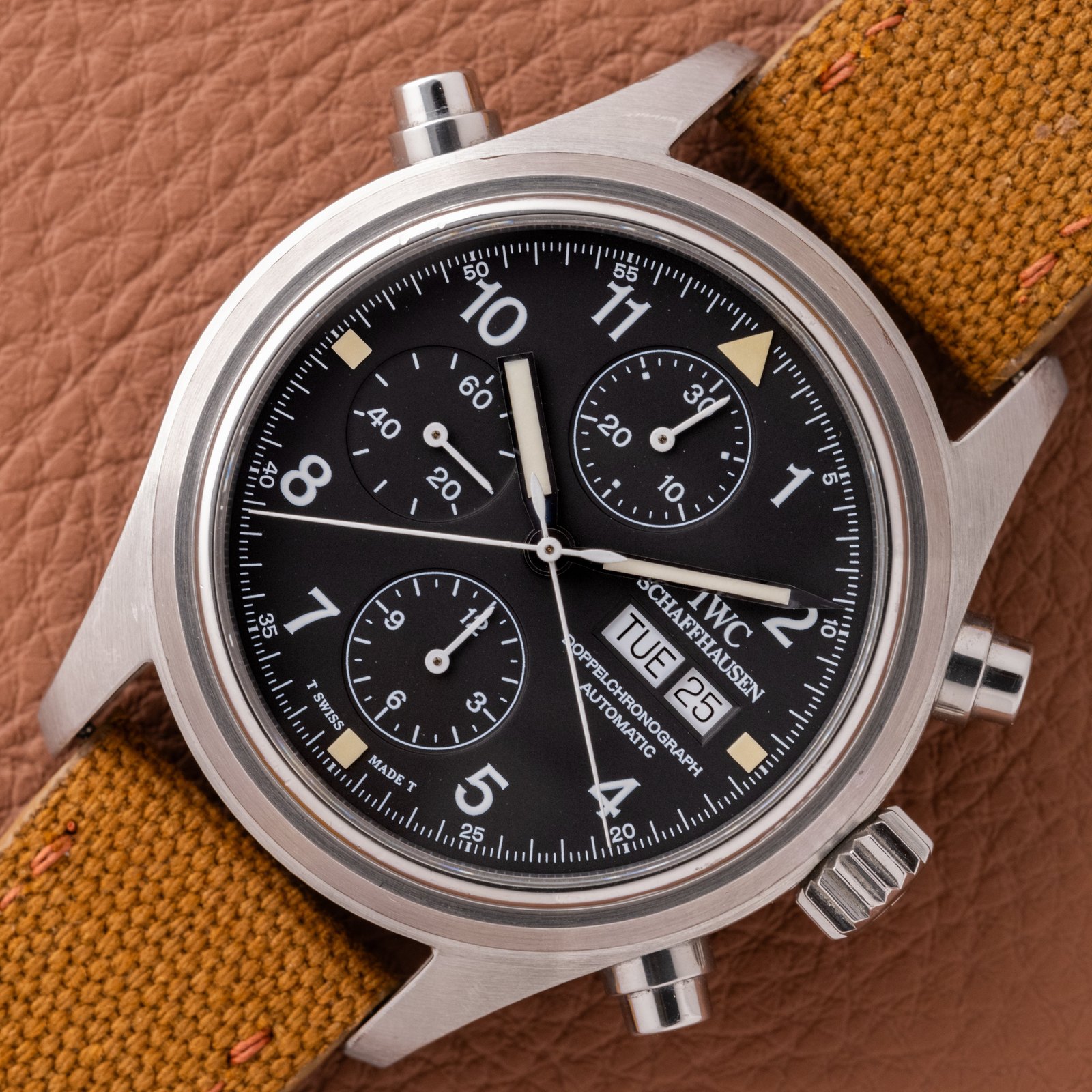
IWC Double Chronograph Split Seconds Tritium Dial (Ref. IW3713), 1990s
- Maker / attribution
- IWC (maker)
- Date
- 1990s
- Historical period
- Mechanical Renaissance (1990 – 2010)
- Country of origin
- Switzerland
- Object type
- Wristwatch
- Dimensions
- Case 42 mm
- Stock no.
- Product 8533404975287
- Credit line
- Dealer listing, Huntington Company (product 8533404975287)
- Catalogue title (original)
- 1990s IWC Double Chronograph Split Seconds Tritium Dial (Ref. IW3713) (English)
View the source record (dealer listing) ↗ (opens another website in a new tab)Suggest a correction
Record summary
Catalogued by Huntington Company (dealer) (stock number Product 8533404975287), this is a wristwatch by IWC, made in Switzerland, dated 1990s. The Atlas places it in the Mechanical Renaissance period (1990 – 2010) of its Wristwatches collection. Recorded dimensions: Case 42 mm. The record is illustrated with 6 photographs.
Assembled from the source record's structured fields. Dates and attributions are given as the source states them; where a field is missing the Atlas leaves it blank rather than estimating.
Catalogue description
Dealer description — Huntington Company
History and Significance The IWC Double Chronograph, or Doppelchronograph, is one of the more technically interesting chronographs to come out of the 1990s. Building on the Valjoux 7750 architecture, IWC engineered a split-seconds complication that allowed the wearer to time multiple events simultaneously. At the time, this was a serious mechanical achievement, especially considering the relative simplicity and robustness of the base movement. The IW3713 represents an earlier execution of this concept, housed in a clean, instrument-style case with strong pilot watch influences. The dial layout is highly legible despite the added complexity of the split-seconds function, which is not always easy to achieve. Large Arabic numerals, bold hands, and a clear day-date display make it practical, while the additional pusher at 10 o’clock signals that there is more going on beneath the surface. What sets this example apart is the early tritium dial. Over time, these dials develop a softer, warmer tone that contrasts nicely against the otherwise utilitarian design. The evenly aged lume across the markers adds a level of character that later luminova examples simply do not have, giving the watch a more collected feel without losing its tool-watch identity. Writer’s Thoughts The split-second function adds a level of interaction that most chronographs lack, making the watch more engaging over time. The tritium dial does a lot here. It softens what could otherwise feel like a very technical, almost sterile design. It’s also just a solid daily option for someone who wants a chronograph that’s a bit different but still practical. Our Promise Every watch is thoroughly vetted, carefully described with complete transparency, and guaranteed authentic. Each piece is offered in honest condition, ensuring collectors receive a timepiece that reflects both originality and integrity. Specifications Brand: IWC Model: Double Chronograph (Ref. IW3713) Year: circa 1990s Case Material: Stainless steel Case Size: 42mm Dial: Black tritium dial with evenly aged lume Movement: Automatic IWC caliber 79230 split-seconds chronograph Strap/Bracelet: Brown strap Buckle/Clasp: Tang buckle Contents: Watch only Condition Case: Shows light wear consistent with age, with a strong overall shape. Dial: Dial is mint with evenly aged tritium lume across all markers. Hands: Service hands are in excellent condition with clean appearance. Crystal: Crystal shows light wear but remains clear. Strap/Bracelet: Strap is new.
Historical context
Mechanical Renaissance (1990 – 2010)
Mechanical watches return as cultural objects; independent watchmaking flourishes.
Mechanical watches returned as cultural and luxury objects. Complications, tourbillons and new materials proliferated; independent watchmakers such as George Daniels, F.P. Journe and Philippe Dufour revived artisanal watchmaking; collecting vintage watches became a major field.
Read the period in the timelineMore wristwatches from this periodEarlier: Quartz Revolution
Atlas type guide
Chronographs and split-seconds watches
A chronograph is a watch with an additional seconds hand that can be started, stopped and returned to zero independently of the timekeeping. Louis Moinet built an early example in 1816 and Nicolas Rieussec a recording 'chronographe' in 1821; Adolphe Nicole's heart-shaped reset cam (patented 1862) made the modern return-to-zero possible. Split-seconds (rattrapante) chronographs add a second hand that can be stopped for intermediate times; flyback chronographs restart instantly.
Chronographs were essential tools for doctors (pulsometer scales), artillery (telemeter), engineers and sport. In wristwatches, Valjoux, Venus, Lemania and later the automatic chronographs of 1969 (Zenith El Primero, the Chronomatic Calibre 11 group and Seiko 6139) are milestones.
What to look for
- Push-pieces on the case band or a single button in the crown (monopusher).
- Subsidiary registers for minutes and hours; tachymeter, telemeter or pulsometer scales.
- Column wheel versus cam control visible in the movement.
- Calibre markings of specialist makers (Valjoux, Lemania, Venus, Landeron).
Dating clues
- Pocket chronographs with heart cam reset: after 1862.
- Wrist chronographs: from c. 1910; two-button designs from the 1930s.
- Automatic chronographs: from 1969.
General guidance written by the Atlas editors about this kind of object. It is not a statement about this particular piece; for that, rely on the source record above and on physical examination.
Read next:Flyback chronographChronograph
Related records
Pocket Watches · c. 1950
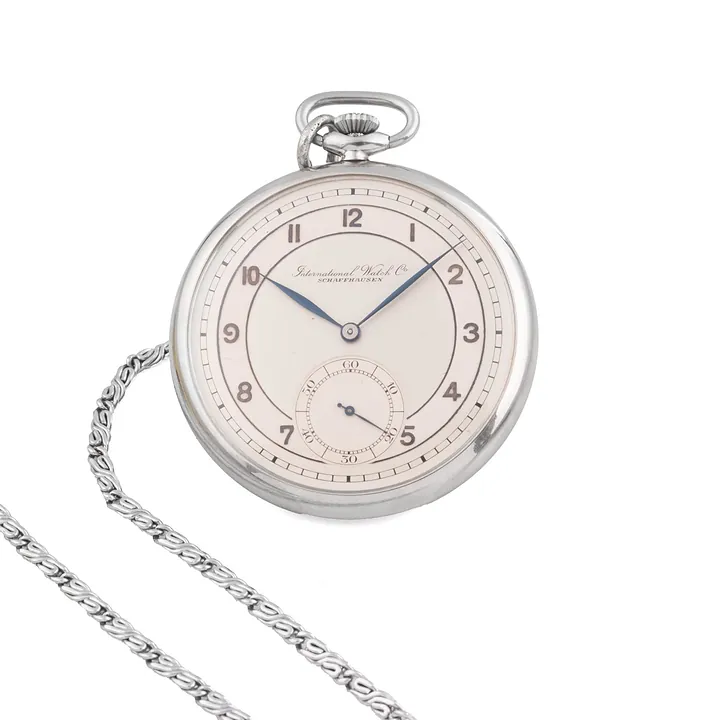
IWC Pocket Watch, c. 1950
Antiquorum auction archive, Geneva
Pocket Watches · c. 1980
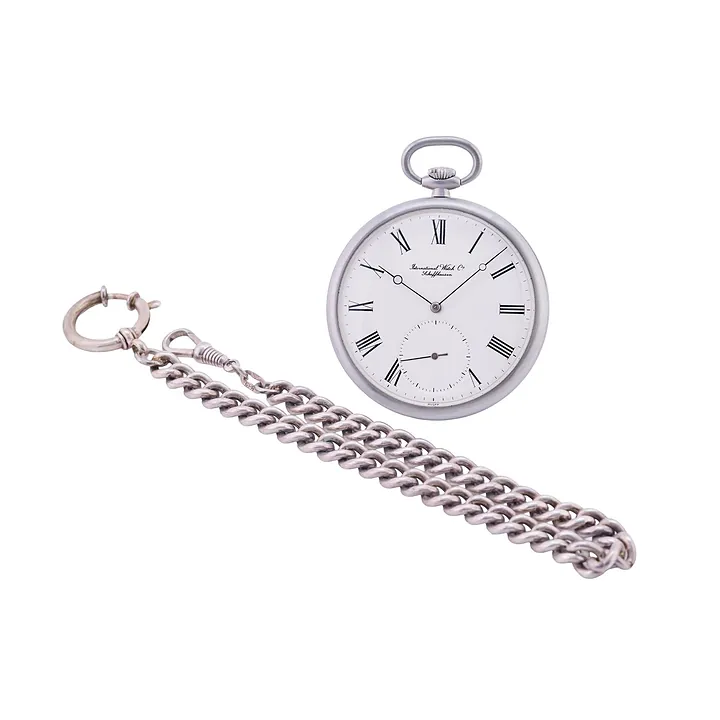
IWC pocket watch, ref. 5301, c. 1980
Antiquorum auction archive, Geneva
Wristwatches · originally sold in April 2016 (per the lot record)
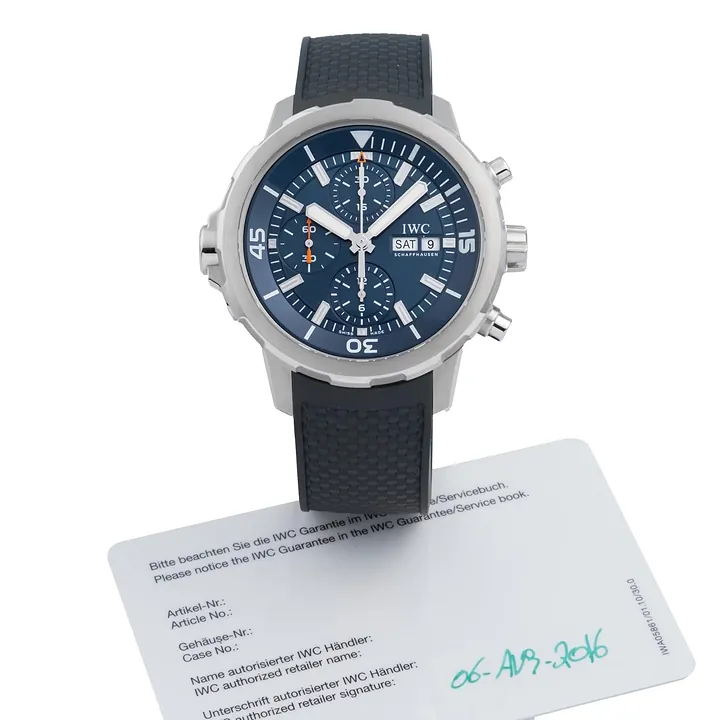
IWC Aquatimer Chronograph Cousteau, ref. IW3768, originally sold in April 2016
Antiquorum auction archive, Geneva
Wristwatches · c. 2010s
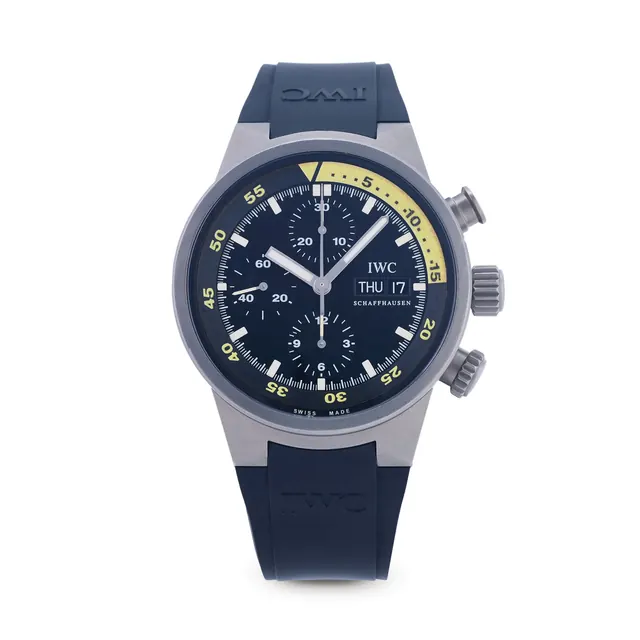
IWC wristwatch, ref. IW371918, Aquatimer, circa 2010s
Antiquorum auction archive, Geneva

Wristwatches · 2008
Wristwatch by Breitling?, 2008
Museum Rotterdam

Wristwatches · c. 1990s
Audemars Piguet Bamboo, c. 1990s
Antiquorum auction archive, Geneva

Wristwatches · c. 1990
Audemars Piguet Huitieme Perpetual Calendar, ref. 25696PT, c. 1990
Antiquorum auction archive, Geneva

Wristwatches · c. 1990
Breitling Chronomat, ref. b13050.1, c. 1990
Antiquorum auction archive, Geneva