
Pocket Watches · Pocket watch
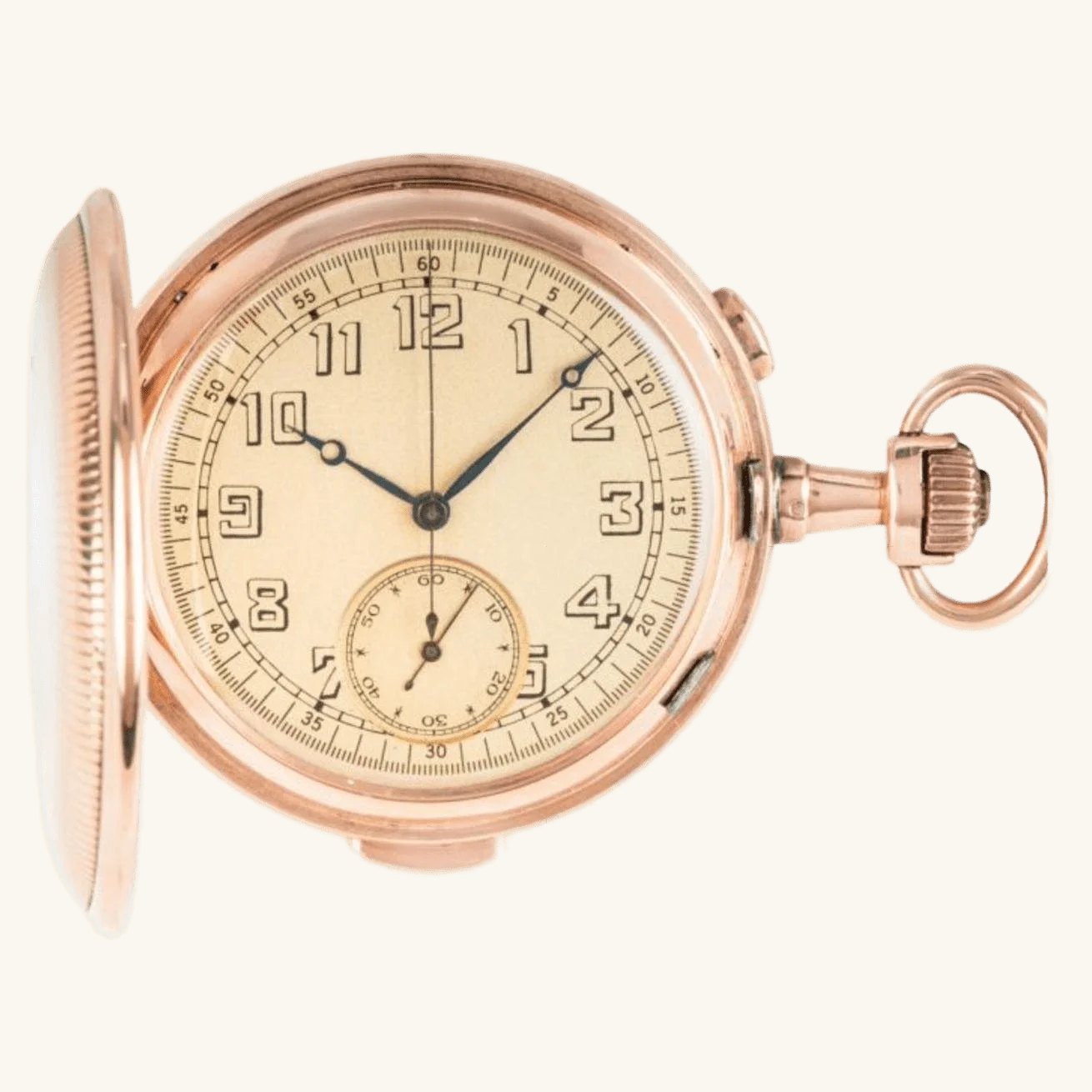
Invicta 14CT Rose Gold Minute Repeated Chronograph Pocket Watch, 1890
- Maker / attribution
- Unrecorded in source
- Date
- 1890
- Historical period
- Industrial Revolution (1850 – 1900)
- Country of origin
- Unrecorded in source
- Object type
- Pocket watch
- Materials / technique
- gold
- Dealer
- WatchMuseum.org shop
- Stock no.
- Product 3573
- Credit line
- Dealer listing, WatchMuseum.org shop (product 3573)
- Catalogue title (original)
- Invicta 14CT Rose Gold Minute Repeated Chronograph Pocket Watch (English)
View the source record (dealer listing) ↗ (opens another website in a new tab)Suggest a correction
Record summary
Catalogued by WatchMuseum.org shop (stock number Product 3573), this is a pocket watch, dated 1890. The Atlas places it in the Industrial Revolution period (1850 – 1900) of its Pocket Watches collection. Materials and techniques recorded by the source: gold. The record is illustrated with 6 photographs.
Assembled from the source record's structured fields. Dates and attributions are given as the source states them; where a field is missing the Atlas leaves it blank rather than estimating.
Catalogue description
Dealer description — WatchMuseum.org shop
The Invicta 14CT Rose Gold Minute Repeated Chronograph Pocket Watch, crafted in 1890, is a masterpiece of horological artistry and precision, embodying the elegance and sophistication of the late 19th century. This exquisite Swiss Full Hunter Pocket Watch features a substantial 55mm case made from luxurious 14ct Rose Gold, showcasing a unique design that captivates the eye. The dial, a mesmerizing Champagne hue, is adorned with skeleton style Arabic numerals and an outer minute track, complemented by a subsidiary seconds dial positioned gracefully at six o’clock. The Breguet moon style blued steel hands, along with the blued steel center second hand, enhance the watch’s refined aesthetic. The case itself is an artistic marvel, featuring an engine-turned sunburst effect on both the front and back covers, emanating from an oval vacant cartouche, while the push button repeat at six o’clock and the chrono button at two o’clock offer functional elegance. Inside, the inner cuvette is signed INVICTA, proudly displaying the Medals of Honour won and confirming its status as a minute repeater chronograph, with Swiss and Russian hallmarks affirming its authenticity and heritage. The fully jeweled movement is visible through the backplate, revealing a keyless lever escapement and a compensation balance with fast slow regulation, alongside the visible chronograph mechanism, all in excellent working condition and producing a beautiful chime. This remarkable timepiece is not only a testament to Invicta’s craftsmanship but also a captivating piece for any watch enthusiast, promising to be a cherished addition to any collection. This stunning Swiss Full Hunter Pocket Watch boasts a 55mm case made of 14ct Rose Gold and a unique design. The dial is a beautiful Champagne color, with skeleton style Arabic numerals, an outer minute track, and a subsidiary seconds dial at six o’clock. The Breguet moon style blued steel hands and the blued steel centre second hand add to the watch’s elegance. The case is also a work of art, with an engine turned sunburst effect on both the front and back cover, radiating out from an oval vacant cartouche. The watch features a push button repeat at six o’clock and a chrono button at two o’clock. The inner cuvette is signed INVICTA and decorated with all the Medals of Honour won, as well as a description of the watch, confirming that it is a minute repeater chronograph. The case is Swiss Hallmarked and Russian Hallmarked. The fully jewelled movement is visible through the backplate, with a keyless lever escapement and a compensation balance with fast slow regulation. The chronograph mechanism is also visible, adding to the watch’s beauty. The movement is in excellent working condition and chimes beautifully. Overall, this pocket watch is a remarkable example of a minute repeater and is sure to impress any watch enthusiast. It would make a wonderful addition to any collection. Creator: Invicta Case Material: 18k Gold,Rose Gold Case Shape: Oval Chronograph: Case Dimensions: Diameter: 55 mm (2.17 in) Place of Origin: Switzerland Period: Late 19th Century Date of Manufacture: 1890 Condition: Good
Historical context
Industrial Revolution (1850 – 1900)
American interchangeable-parts manufacture; railroad time standards; Swiss and German factory systems.
Machine production with interchangeable parts, pioneered by Waltham (1850s) and adopted by Elgin, Longines, Omega and others, made reliable lever watches widely affordable. Keyless winding became standard, railroad watch standards were introduced (1890s), and Swiss and American industries competed globally.
Read the period in the timelineMore pocket watches from this periodEarlier: Precision & Scientific Horology
Atlas type guide
Chronographs and split-seconds watches
A chronograph is a watch with an additional seconds hand that can be started, stopped and returned to zero independently of the timekeeping. Louis Moinet built an early example in 1816 and Nicolas Rieussec a recording 'chronographe' in 1821; Adolphe Nicole's heart-shaped reset cam (patented 1862) made the modern return-to-zero possible. Split-seconds (rattrapante) chronographs add a second hand that can be stopped for intermediate times; flyback chronographs restart instantly.
Chronographs were essential tools for doctors (pulsometer scales), artillery (telemeter), engineers and sport. In wristwatches, Valjoux, Venus, Lemania and later the automatic chronographs of 1969 (Zenith El Primero, the Chronomatic Calibre 11 group and Seiko 6139) are milestones.
What to look for
- Push-pieces on the case band or a single button in the crown (monopusher).
- Subsidiary registers for minutes and hours; tachymeter, telemeter or pulsometer scales.
- Column wheel versus cam control visible in the movement.
- Calibre markings of specialist makers (Valjoux, Lemania, Venus, Landeron).
Dating clues
- Pocket chronographs with heart cam reset: after 1862.
- Wrist chronographs: from c. 1910; two-button designs from the 1930s.
- Automatic chronographs: from 1969.
General guidance written by the Atlas editors about this kind of object. It is not a statement about this particular piece; for that, rely on the source record above and on physical examination.
Read next:Flyback chronographChronograph
Related records
Pocket Watches · 1880
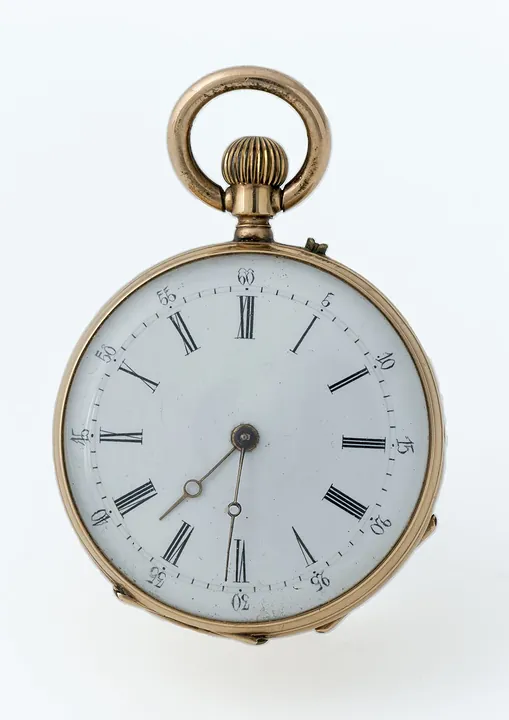
Pocket watch, 1880
Museum Rotterdam
Pocket Watches · mid 19th century
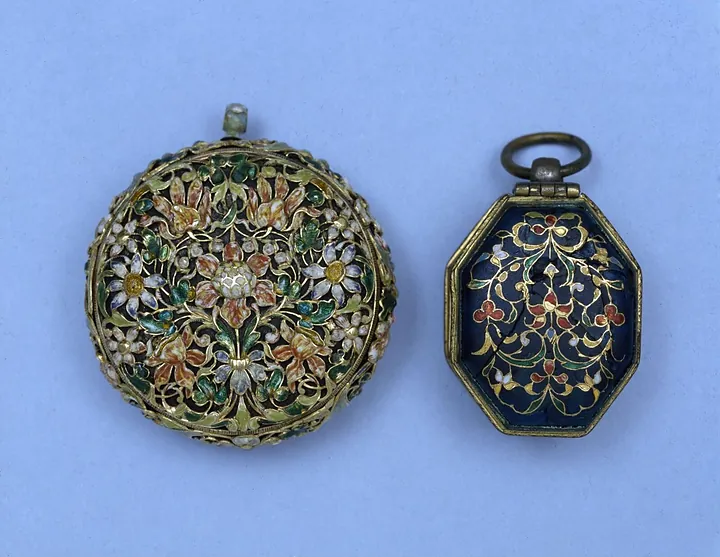
Watch, enamelled gilt brass of floral design, signed 'A Bloys.', France, in an early 17th century style but possibly mid 19th century
Victoria and Albert Museum, London
Pocket Watches · 1835–1875
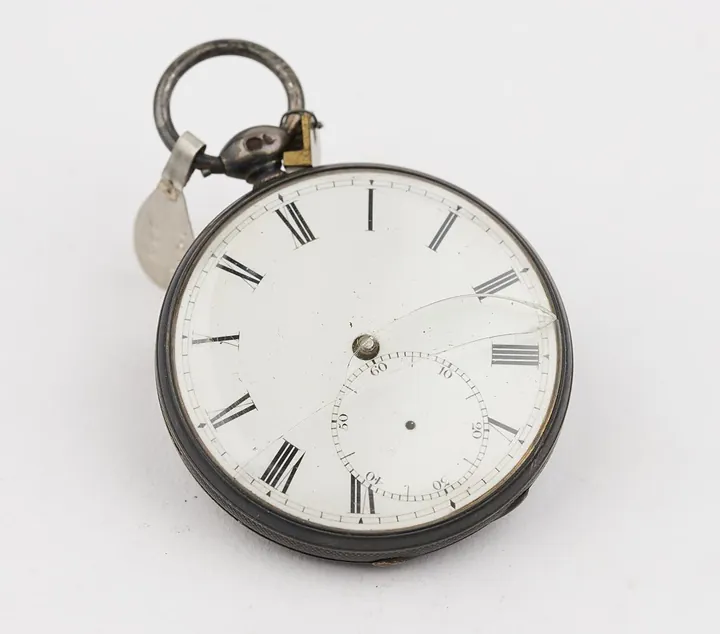
Pocket watch by Cornelius Brooks Holliday, England, 1835–1875
Science Museum Group, London
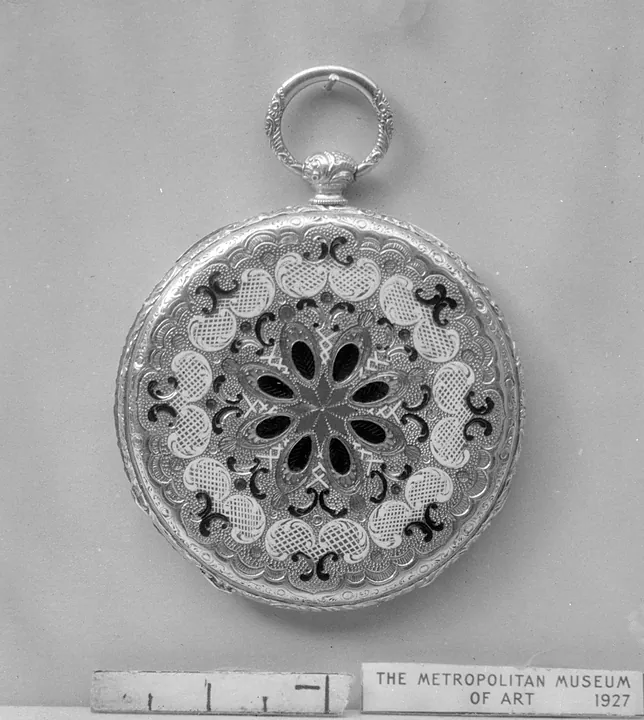
Pocket Watches · c. 1840–60
Watch by Callaud, c. 1840–60
The Metropolitan Museum of Art, New York
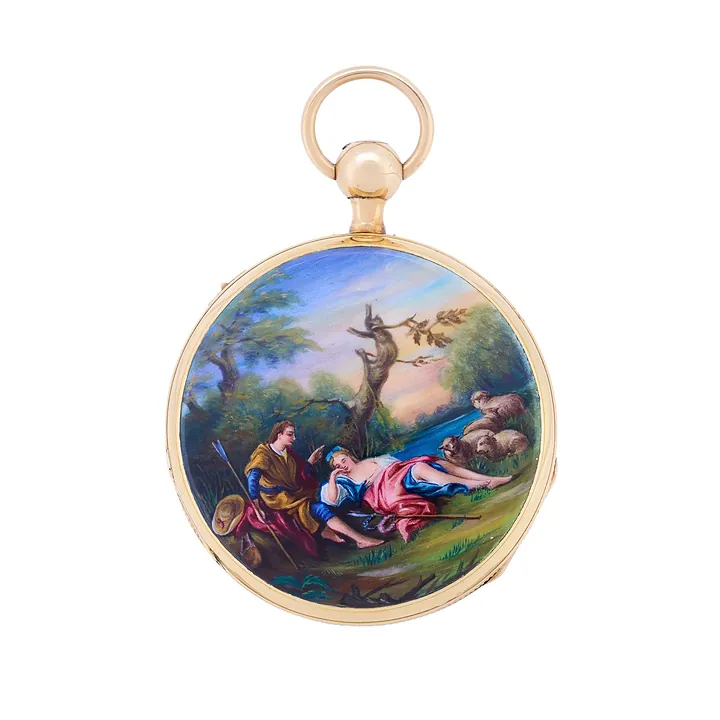
Pocket Watches · c. 1840-1860s
G.H. Berblinger pocket watch, c. 1840-1860s
Antiquorum auction archive, Geneva
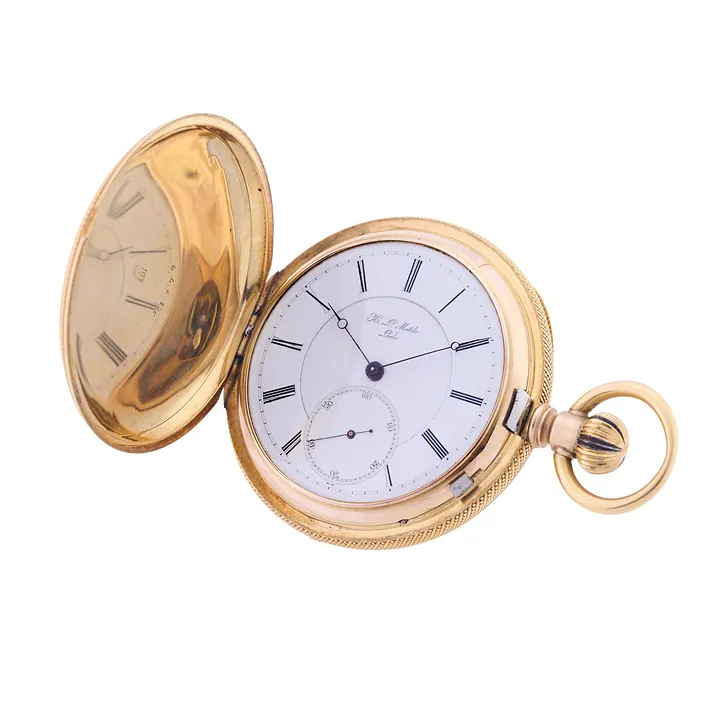
Pocket Watches · c. 1840-1860s
H.L Matile Locle pocket watch, c. 1840-1860s
Antiquorum auction archive, Geneva
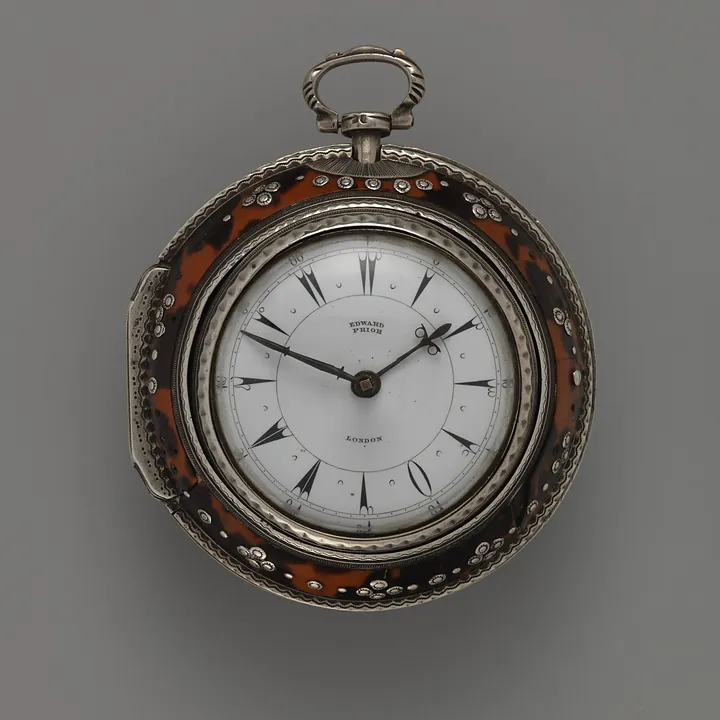
Pocket Watches · c. 1849–50
Watch by Edward Prior, England, c. 1849–50
The Metropolitan Museum of Art, New York
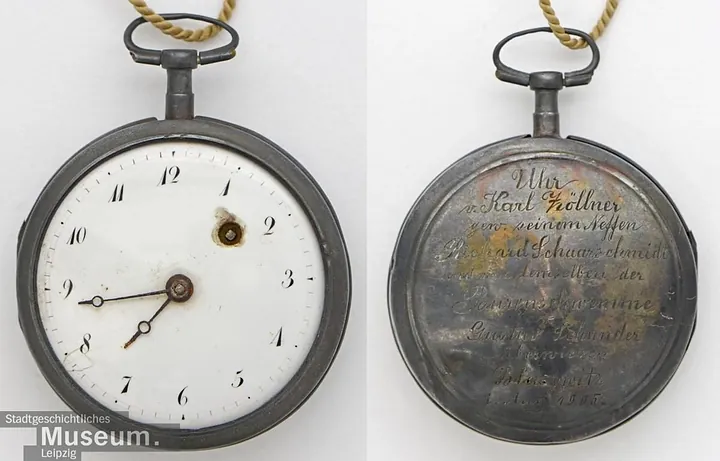
Pocket Watches · 1845–1855
Pocket watch, 1845–1855
Museum of City History Leipzig