
Instruments · Stopwatch
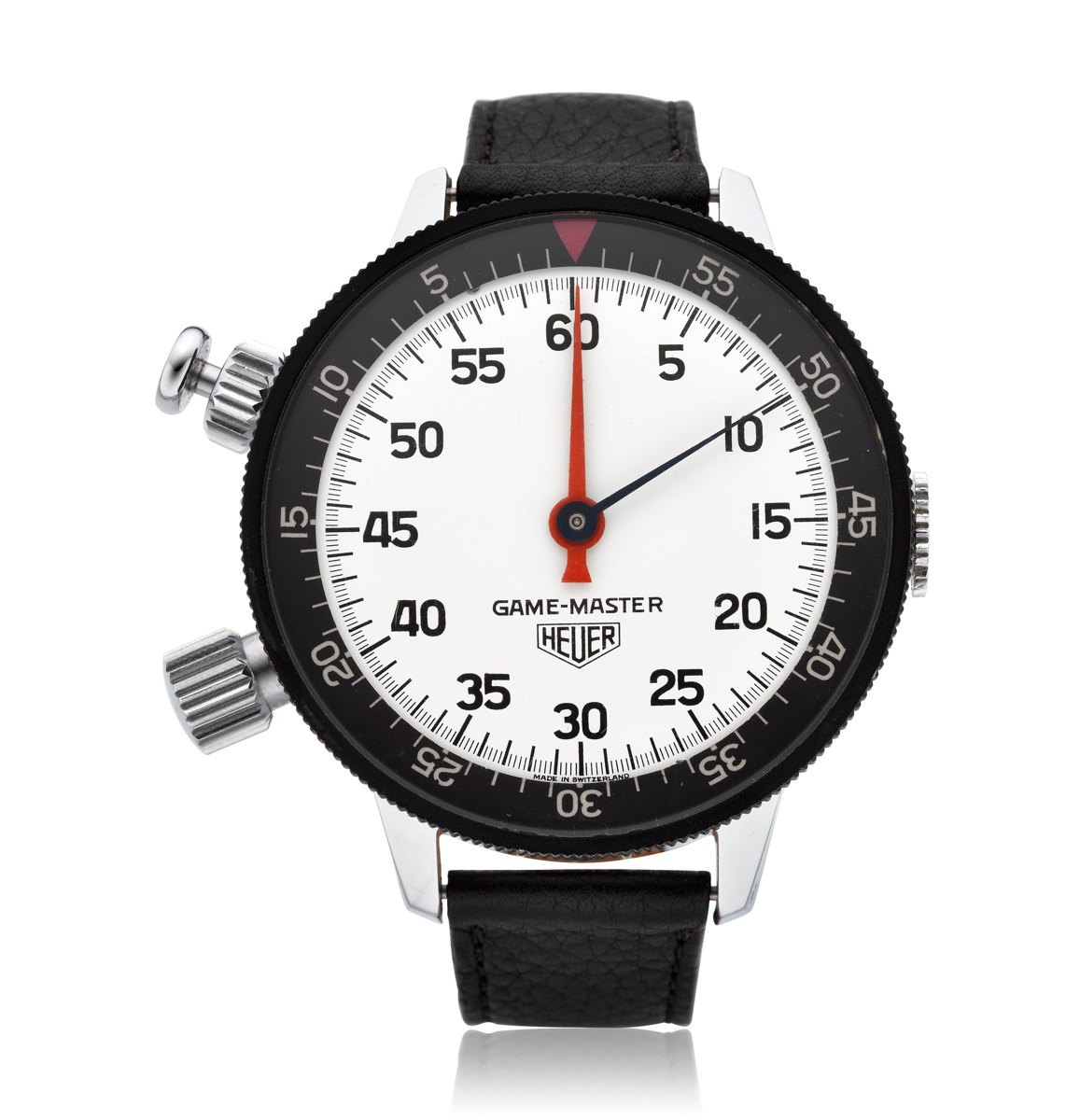
Heuer Game-Master Stopwatch, Ref. 502.050
- Maker / attribution
- Heuer (source attribution)
- Date
- c. 1960
- Historical period
- Modern Mechanical Horology (1945 – 1969)
- Country of origin
- Switzerland
- Object type
- Stopwatch
- Materials / technique
- Stainless steel
- Dimensions
- 54mm
- Auction house
- Christie's
- Lot
- 116
- Credit line
- Christie's
- Catalogue title (original)
- HEUER, GAME-MASTER STOPWATCH, REF. 502.050, | Christie’s (English)
View the source record (auction lot) ↗ (opens another website in a new tab)Suggest a correction
Record summary
Catalogued by Christie's (lot 116), this is a stopwatch attributed to Heuer, made in Switzerland, dated c. 1960. The Atlas places it in the Modern Mechanical Horology period (1945 – 1969) of its Instruments collection. Materials and techniques recorded by the source: Stainless steel. Recorded dimensions: 54mm. The record is illustrated with 1 photograph.
Assembled from the source record's structured fields. Dates and attributions are given as the source states them; where a field is missing the Atlas leaves it blank rather than estimating.
Catalogue description
Original object description
This Heuer Game-Master manual-wind stopwatch wristwatch, reference 502.050, is placed by auction records around 1960. Its 54 mm stainless steel case is fitted with straight lugs on a textured leather strap, bearing oversized knurled crowns and pushers on the left flank alongside an additional smaller crown on the right. Encircling the display is a black rotating bezel marked from 5 to 55 with an inverted red triangular marker. The white dial is printed with an exterior graduation scale, black Arabic numerals marking 5 through 60, the Heuer shield emblem, and the designation 'GAME-MASTER' situated above the 6 o'clock position, with 'MADE IN SWITZERLAND' appearing along the lower perimeter. Indications are read via a slender black hand and a prominent red hand. Auction documentation lists the internal hand-wound mechanism as caliber 7710, noting that this caliber reference was not verified through independent inspection. While the chronograph mechanism was reported to be operational during evaluation, timekeeping accuracy was left untested.
Historical context
Modern Mechanical Horology (1945 – 1969)
Tool watches for divers, pilots and astronauts; electric watches anticipate the electronic age.
Electronic instruments, quartz frequency standards and the first atomic clocks transformed precision timing in laboratories and broadcasting.
Read the period in the timelineMore instruments from this periodEarlier: Golden Age of Mechanical Watchmaking
Atlas type guide
Timers, stopwatches, chronoscopes and time recorders
Instruments for measuring short intervals or recording when something happened form a large and practical branch of horology. Sports stopwatches and split-seconds timers, laboratory chronoscopes (such as Hipp's, which measured thousandths of a second for psychology and ballistics experiments), metronomes for music, watchmen's clocks that recorded patrol rounds, and the time recorders that clocked factory workers in and out all derive from clock and watch technology.
These objects matter historically because they show timekeeping leaving the observatory and the drawing room and entering industry, science and sport. Many were mass-produced, and their dials, scales and patents chart the rise of electrification and industrial management.
What to look for
- Scales graduated in fifths, tenths or hundredths of a second, or decimal minutes for industrial use.
- Start, stop and reset push-pieces; a second hand that can be stopped independently (split seconds).
- Recording devices: paper discs or tapes, printing mechanisms, keys or punches.
- Patent numbers and dates on the dial or case, which give a terminus post quem.
Dating clues
- Hipp chronoscopes were made from the 1840s into the twentieth century.
- Employee time recorders spread from the 1890s (Bundy, IBM, International Time Recording Co.).
- Quartz and electronic timers replaced mechanical stopwatches in sport from the 1970s.
General guidance written by the Atlas editors about this kind of object. It is not a statement about this particular piece; for that, rely on the source record above and on physical examination.
Read next:Flyback chronograph
Related records
Pocket Watches · c. 1960
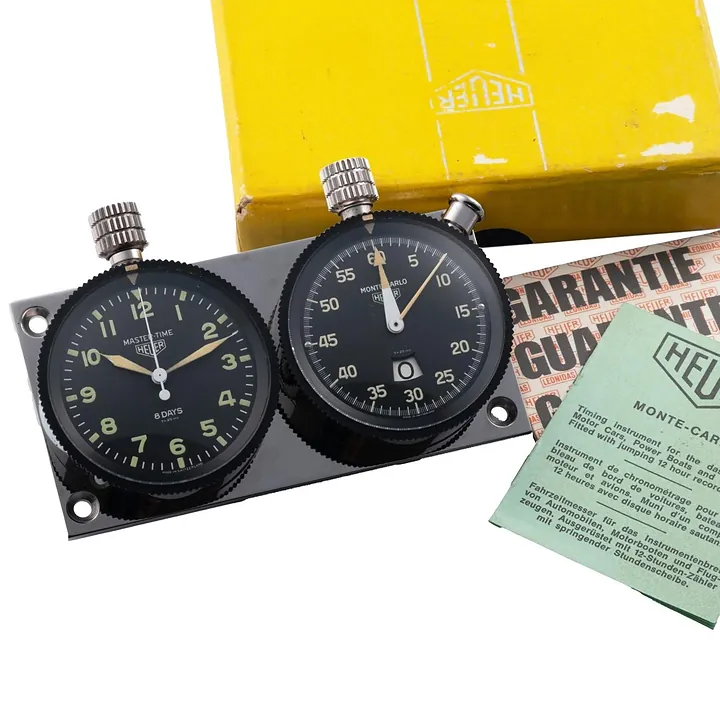
Heuer Racing SET, c. 1960
Antiquorum auction archive, Geneva
Wristwatches · c. 1980
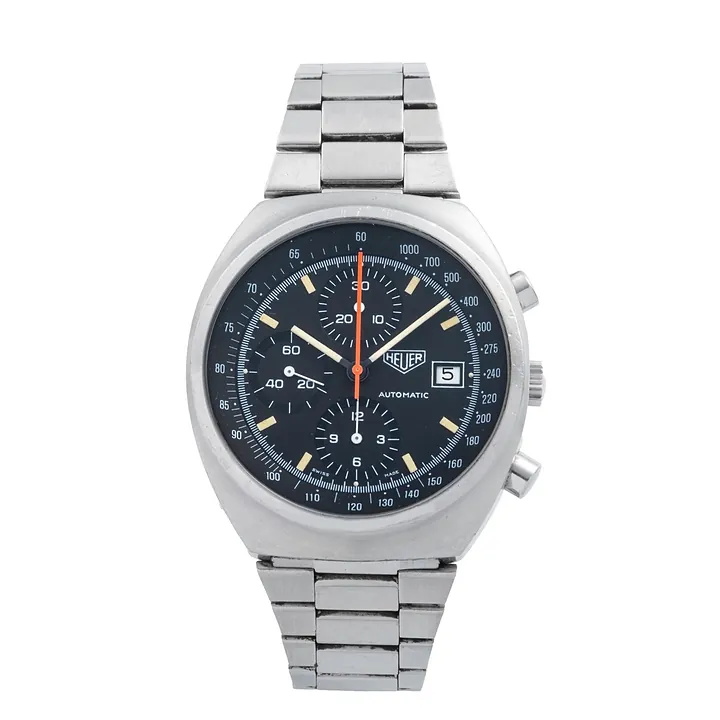
Heuer Pasadena, ref. 750.501-3, c. 1980
Antiquorum auction archive, Geneva
Wristwatches · c. 1970s
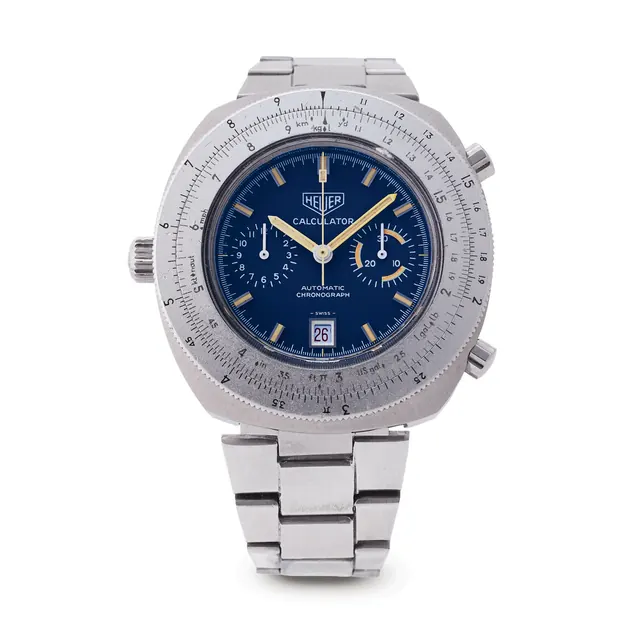
Heuer wristwatch, ref. 110.633, Calculator, circa 1970s
Antiquorum auction archive, Geneva
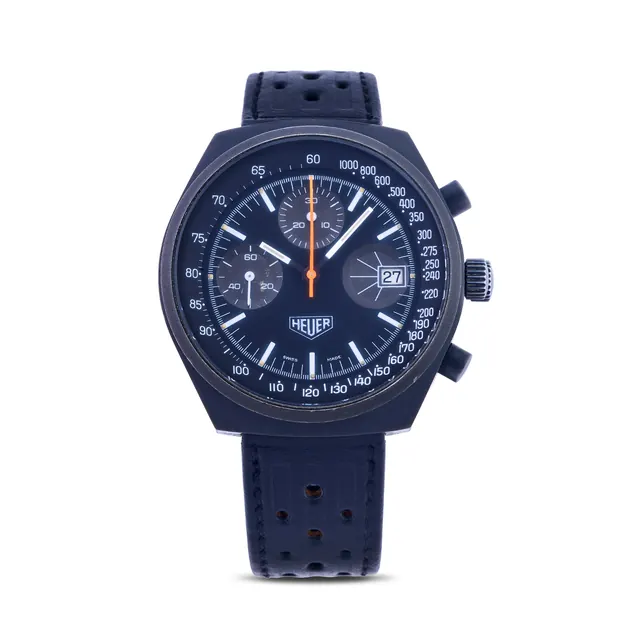
Wristwatches · c. 1975
Heuer wristwatch, ref. 13/1, circa 1975
Antiquorum auction archive, Geneva

Instruments · 1950–1976
Omega Megaquartz 2400 marine chronometer, 1950–1976
Science Museum Group, London
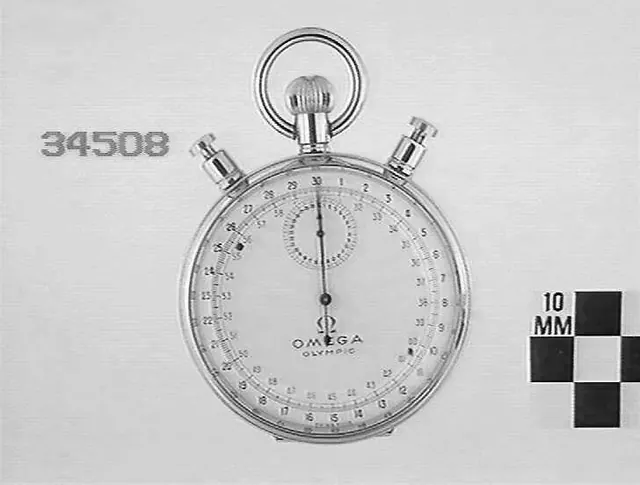
Instruments · c. 1955
Stop Watch - Omega, Switzerland, c. 1955
Museums Victoria, Melbourne
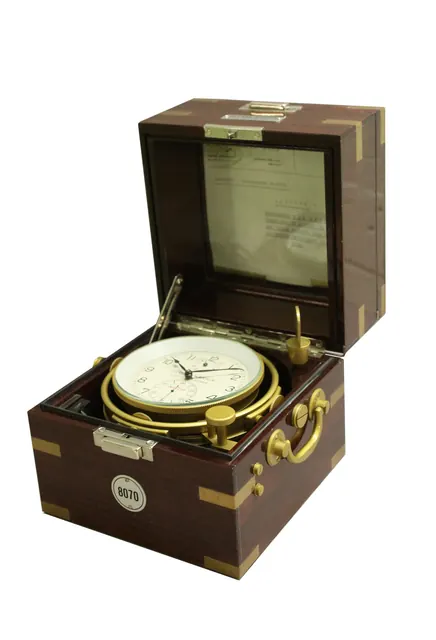
Instruments · 1954–1957
Marine chronometer by Ulysse Nardin, Switzerland, 1954–1957
Tiedemuseo Liekki
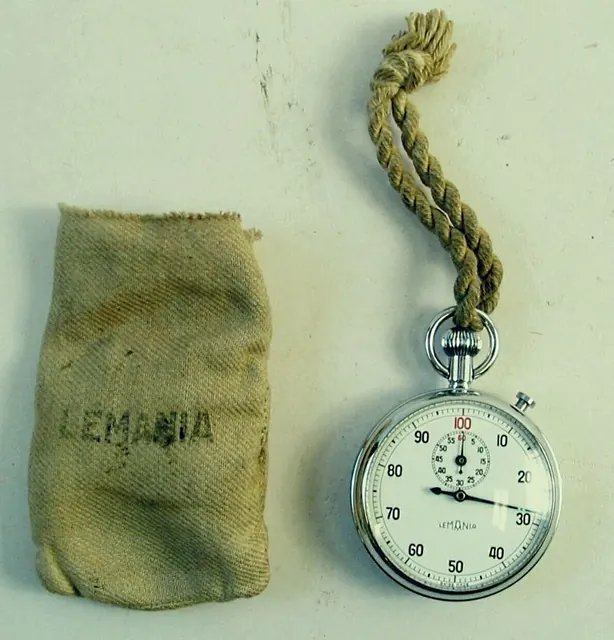
Instruments · 1950–1970
Stopwatch by Lemania, Switzerland, 1950–1970
Museokeskus Vapriikki