
Pocket Watches · Pocket watch
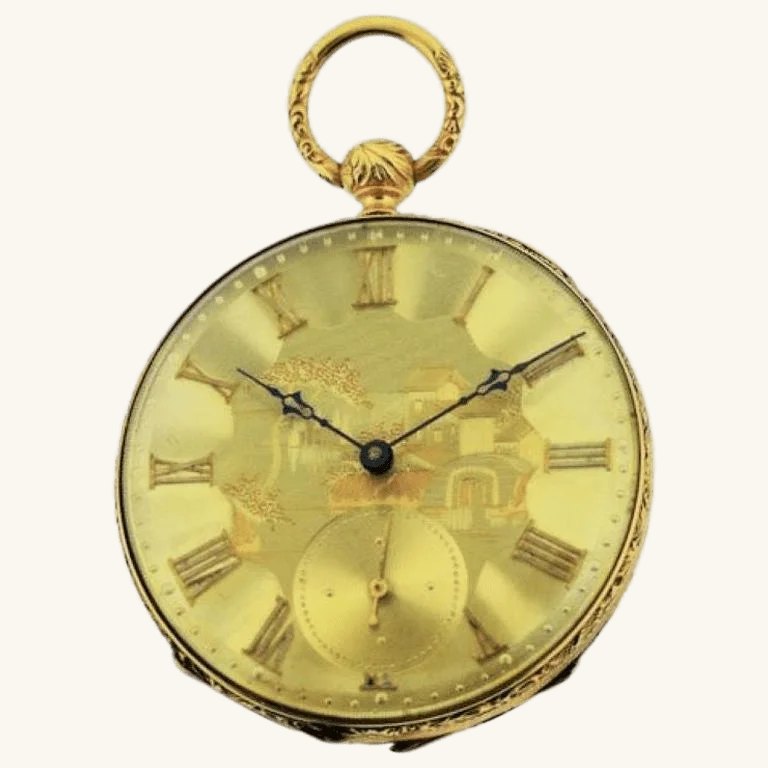
Henri Beguelin 18Kt. Solid Gold High Grade Swiss Pocket Watch, c. 1840
- Maker / attribution
- Unrecorded in source
- Date
- c. 1840
- Historical period
- Precision & Scientific Horology (1750 – 1850)
- Country of origin
- Switzerland
- Object type
- Pocket watch
- Materials / technique
- gold
- Dealer
- WatchMuseum.org shop
- Stock no.
- Product 5064
- Credit line
- Dealer listing, WatchMuseum.org shop (product 5064)
- Catalogue title (original)
- Henri Beguelin 18Kt. Solid Gold High Grade Swiss Pocket Watch (English)
View the source record (dealer listing) ↗ (opens another website in a new tab)Suggest a correction
Record summary
Catalogued by WatchMuseum.org shop (stock number Product 5064), this is a pocket watch, made in Switzerland, dated c. 1840. The Atlas places it in the Precision & Scientific Horology period (1750 – 1850) of its Pocket Watches collection. Materials and techniques recorded by the source: gold. The record is illustrated with 6 photographs.
Assembled from the source record's structured fields. Dates and attributions are given as the source states them; where a field is missing the Atlas leaves it blank rather than estimating.
Catalogue description
Dealer description — WatchMuseum.org shop
The Henri Beguelin 18Kt. Solid Gold High Grade Swiss Pocket Watch, dating back to circa 1840, stands as a testament to the timeless elegance and masterful craftsmanship of the 19th century. This extraordinary piece is not merely a watch; it is a historical artifact that encapsulates the artistry and precision of Swiss watchmaking during a period renowned for its innovation and luxury. Encased in 18-karat solid gold, this pocket watch exudes opulence and sophistication, making it a coveted item for collectors and connoisseurs of fine horology. Its survival in pristine condition for nearly two centuries is a remarkable feat, underscoring the durability and superior quality of its construction. The intricate detailing and high-grade mechanics reflect the meticulous attention to detail and dedication to excellence that Henri Beguelin, a name synonymous with luxury and precision, is celebrated for. Owning this watch is not just about possessing a timekeeping instrument; it is about holding a piece of history, a symbol of an era where craftsmanship was revered and every component was crafted with the utmost care and skill. Whether admired for its aesthetic beauty or its historical significance, the Henri Beguelin pocket watch is a timeless treasure that continues to captivate and inspire. It is truly remarkable that this exquisite timepiece, crafted nearly 200 years ago, has managed to survive in its original form without succumbing to the temptation of being melted down for its valuable gold. The handmade 18K solid yellow gold case showcases the renowned Breguet engine turning technique, adding a touch of elegance and sophistication to the overall design. Despite its age, the watch remains in impeccable condition, appearing as though it has never been used before. What sets this timepiece apart is its usability in the modern world. While technology dominates our daily lives, there is something enchanting about relying on a keywinding watch to tell time. It symbolizes a connection to the past and adds a unique touch to everyday tasks. Imagine navigating through your busy schedule with all the conveniences of your smartphone, but relying on the timeless charm of this pocket watch to keep track of time. The contrast between old and new creates a captivating juxtaposition. The dial of the watch features solid gold with delicate applied Roman numerals, further enhancing its luxurious appeal. The blued steel hands bring a subtle touch of color and elegance to the overall design. Alongside its aesthetic beauty, this timepiece also boasts a reliable movement, with its keywinding mechanism and lever escapement. With 13 jewels incorporated into its design, the watch ensures accurate and precise timekeeping. Owning this piece of history is not just about cherishing its beauty, but also about embracing the heritage and tradition it represents. It serves as a reminder of the craftsmanship and attention to detail that went into watchmaking in the 1840s. This open-faced pocket watch by Henri Beguelin is a true testament to the lasting allure of timeless pieces and their enduring significance in our modern world. Creator: Henri Beguelin Style: Edwardian Place of Origin: Switzerland Period: 1840-1849 Date of Manufacture: 1840”s Condition: Excellent
Historical context
Precision & Scientific Horology (1750 – 1850)
Harrison solves longitude; Mudge invents the lever; Breguet's Paris workshop defines the modern watch.
From 1750 to 1850 the watch became a precision instrument. Mudge's lever escapement, the cylinder escapement, Lépine's thin bar calibre, Breguet's innovations (overcoil, tourbillon, perpétuelle) and the pocket chronometer of Arnold and Earnshaw all date from this period, while verge watches remained common in cheaper production.
Read the period in the timelineMore pocket watches from this periodEarlier: Early Modern Horology
Atlas type guide
Pocket watches
The pocket watch was the dominant personal timekeeper from the late seventeenth century until the First World War. Its development tracks the history of the escapement: verge watches with fusees until the late eighteenth century; Thomas Mudge's lever escapement (c. 1755) and the cylinder escapement popularised by George Graham and later by Swiss makers; and the Swiss and English lever watches of the nineteenth century. Lépine's bar-bridge calibre and keyless winding made watches thinner and easier to use.
Industrialisation transformed the trade: American factories such as Waltham (from 1850) and Elgin produced interchangeable parts by machine, and Swiss makers responded with their own mechanisation after the 1876 Philadelphia Exhibition. By 1900 a reliable watch was affordable to millions; the finest makers continued to produce complications and precision watches.
What to look for
- The escapement: verge (crown wheel), cylinder, duplex, English or Swiss lever.
- Key winding (a square arbor in dial or back) or keyless crown winding.
- Signatures and serial numbers on the movement, dial and inside case back.
- Hallmarks, case maker's marks and gold or silver standards stamped in the case.
- Dial material: enamel, silver, gold, later printed metal.
Dating clues
- Verge watches dominate before c. 1800; cylinder watches c. 1770–1900; lever watches after c. 1820.
- Keyless winding: increasingly common after c. 1860.
- Manufacturer serial number lists exist for Waltham, Elgin, Longines, Omega, Patek Philippe and others.
General guidance written by the Atlas editors about this kind of object. It is not a statement about this particular piece; for that, rely on the source record above and on physical examination.
Related records
Pocket Watches · 1750-60
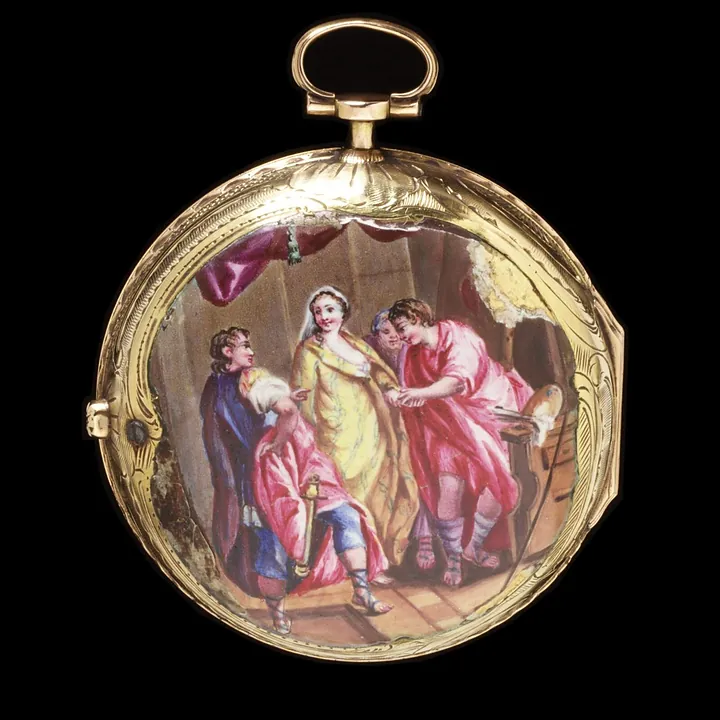
Watch by Noël Balthazard, Switzerland, 1750-60
Victoria and Albert Museum, London
Pocket Watches · 1754
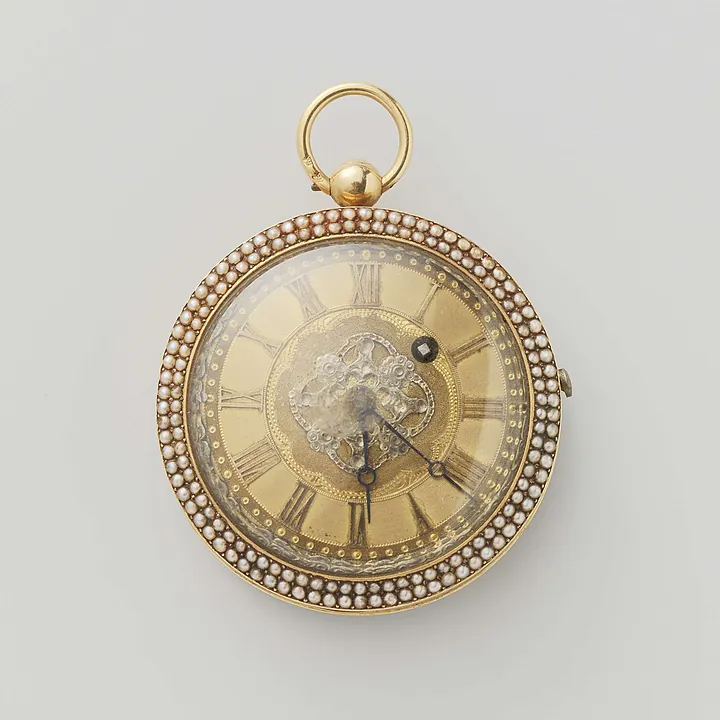
Pocket watch, Switzerland, 1754
Rijksmuseum
Pocket Watches · 1765-70
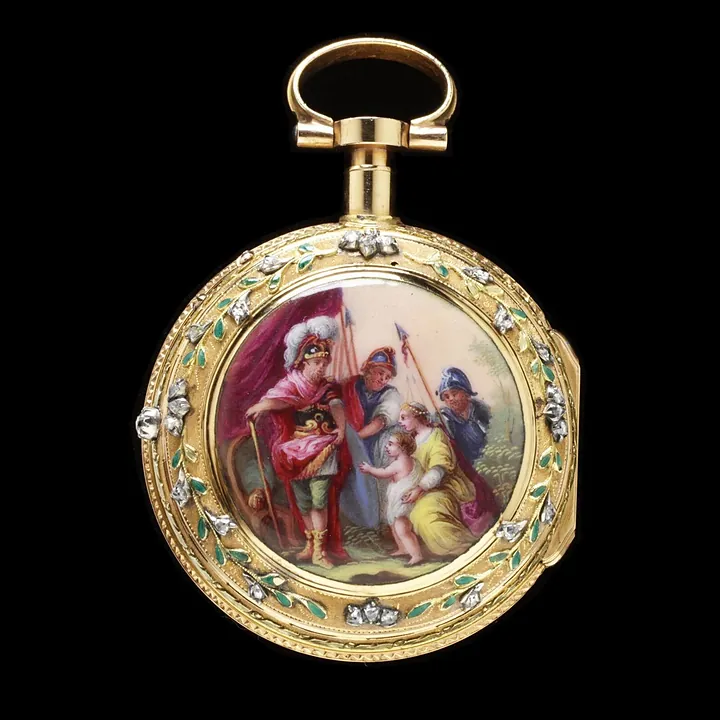
Watch and case by Jean Fazy, Switzerland, 1765-70
Victoria and Albert Museum, London
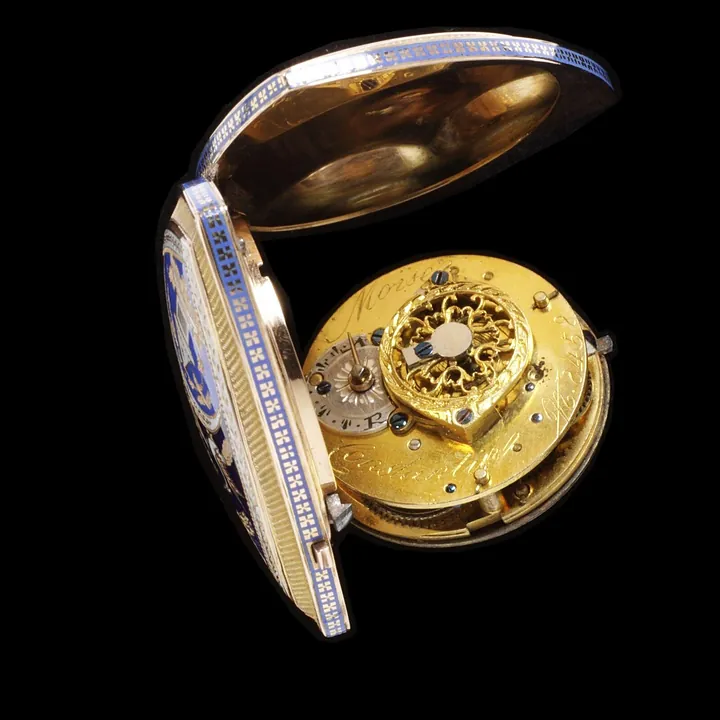
Pocket Watches · c.1790
Enamelled gold watch signed 'Moise Constantin', Geneva, c.1790
Victoria and Albert Museum, London
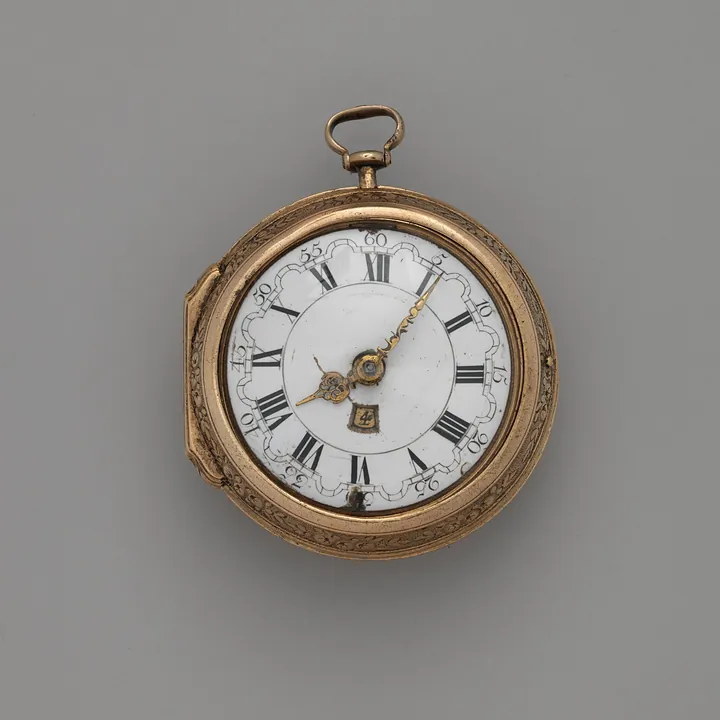
Pocket Watches · late 18th century
Watch by John Wilter, Switzerland, late 18th century
The Metropolitan Museum of Art, New York
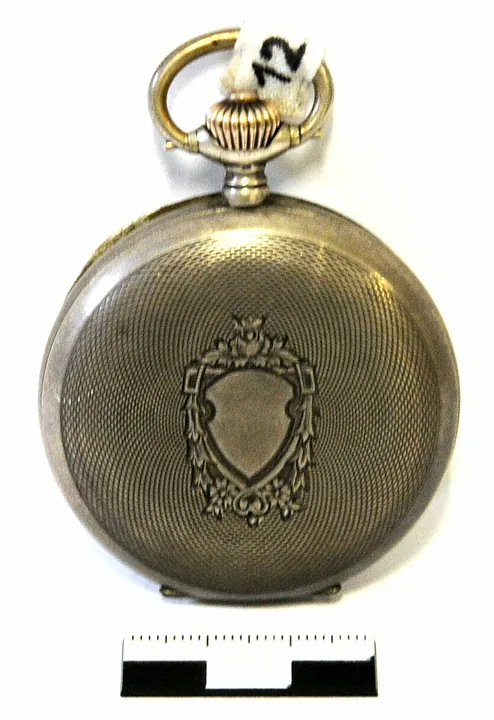
Pocket Watches · 1800–1899
Pocket watch, Switzerland, 1800–1899
Montanhistorisches Dokumentationszentrum
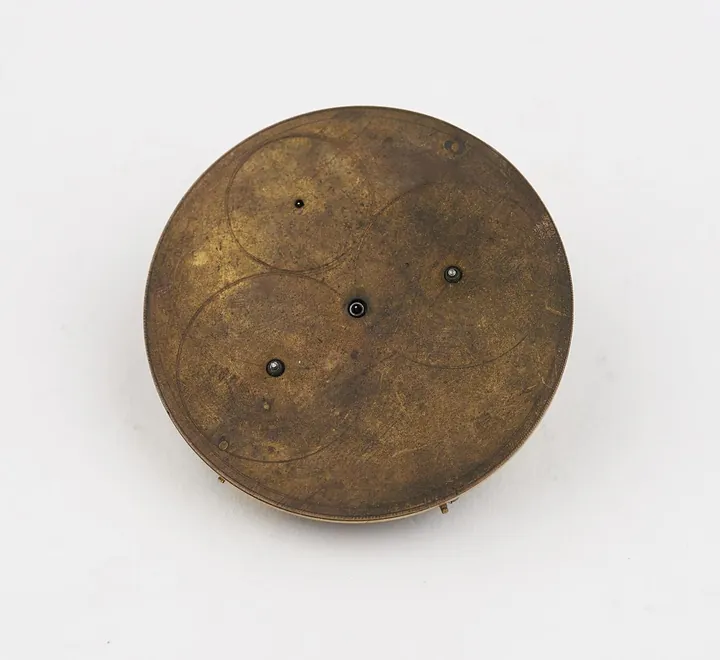
Pocket Watches · 1801–1900
Pocket watch, Switzerland, 1801–1900
Science Museum Group, London
Pocket Watches · 1801–1900
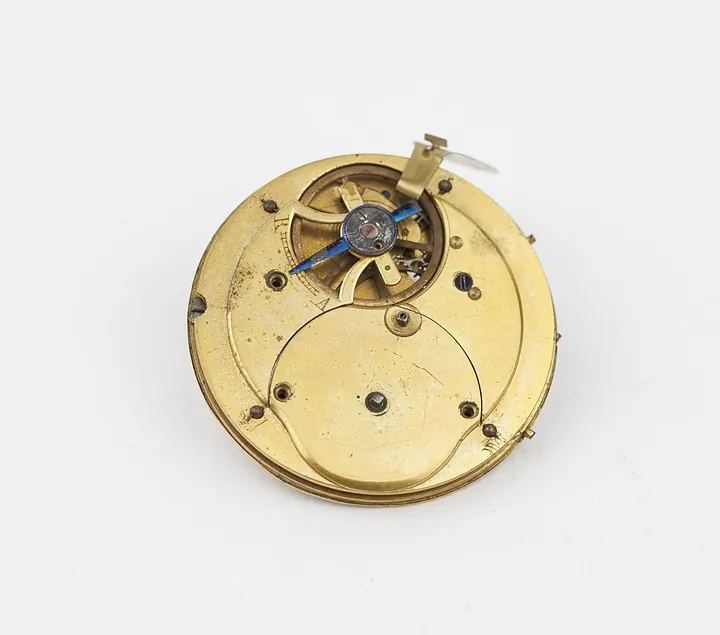
Swiss or French movement with horizontal escapement including "Jumper" mechanism, damaged (cylinder broken), incomplete (dial etc. missing) no.390, 1801–1900
Science Museum Group, London