
Wristwatches · Tourbillon world time wristwatch
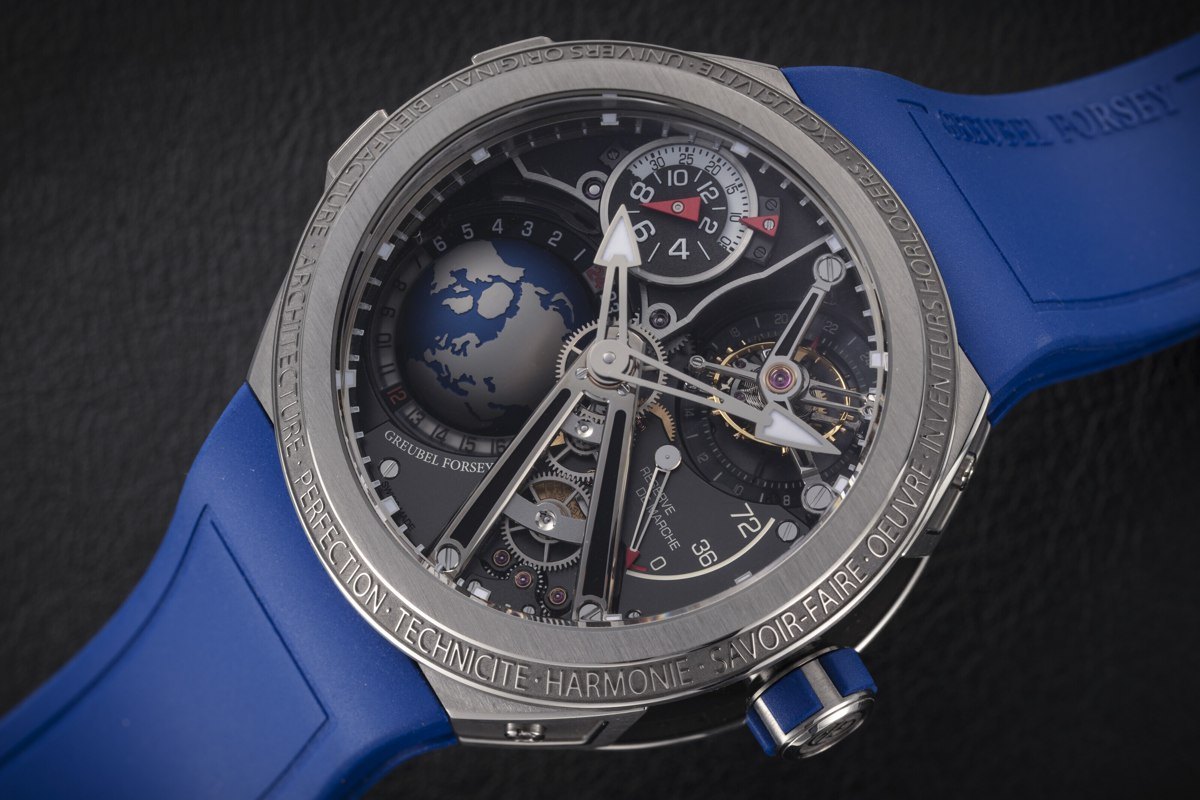
Greubel Forsey GMT Sport Earth ‘Blue’ titanium world time tourbillon wristwatch
- Maker / attribution
- Greubel Forsey (source attribution)
- Date
- c. 2019
- Historical period
- Contemporary Horology (2010 – Present)
- Country of origin
- Switzerland
- Object type
- Tourbillon world time wristwatch
- Materials / technique
- Titanium
- Auction house
- Christie's
- Lot
- 18
- Credit line
- Christie's
- Catalogue title (original)
- GREUBEL FORSEY, GMT SPORT EARTH ‘BLUE’, A RARE TITANIUM WORLD TIME TOURBILLON WRISTWATCH, CASE NUMBER: 04 881 | Christie’s (English)
View the source record (auction lot) ↗ (opens another website in a new tab)Suggest a correction
Record summary
Catalogued by Christie's (lot 18), this is a tourbillon world time wristwatch attributed to Greubel Forsey, made in Switzerland, dated c. 2019. The Atlas places it in the Contemporary Horology period (2010 – Present) of its Wristwatches collection. Materials and techniques recorded by the source: Titanium. The record is illustrated with 1 photograph.
Assembled from the source record's structured fields. Dates and attributions are given as the source states them; where a field is missing the Atlas leaves it blank rather than estimating.
Catalogue description
Original object description
Housed within an oval-profile titanium case of 45 mm, this hand-wound world-time timepiece is paired with an integrated blue rubber strap secured by an identical-metal double folding clasp. Engravings encircling the titanium bezel display the manufacturer's core concepts: 'BIENFACTURE', 'ARCHITECTURE', 'PERFECTION', 'TECHNICITE', 'HARMONIE', and 'SAVOIR-FAIRE'. Prominent arched bridges anchor the gear train over an openworked three-dimensional dial layout, which incorporates skeleton hands with luminescent arrow tips, a 24-second inclined tourbillon positioned at 1 o'clock (reported to comprise 88 individual parts with an aggregate mass of 0.38 grams), and a power-reserve dial at 4 o'clock. A rotating three-dimensional northern hemisphere globe indicating real time sits at 7 o'clock within a 24-hour day-and-night sapphire ring, whereas a combined display positioned at 10–11 o'clock pairs a disc-based running seconds counter with a red second-time-zone pointer. Source documentation notes that the caseback incorporates a sapphire disc showing daylight saving and standard time across 24 world cities, though this detail lacks photographic corroboration. Contradictory statements appear in the reference material regarding its rarity, with the certificate designating it as '1/1 status' while accompanying auction notes state it is a 'unique piece 1/11'.
Inscriptions & marks
04 881
Historical context
Contemporary Horology (2010 – Present)
Silicon components, connected watches, optical-lattice research clocks and a thriving independent scene.
Smartwatches became the world's best-selling watches, while mechanical watchmaking focuses on craft, innovation (silicon components, new escapements) and independent makers.
Read the period in the timelineMore wristwatches from this periodEarlier: Mechanical Renaissance
Atlas type guide
Military, pilot and travel watches
The wristwatch owes much of its adoption by men to warfare and aviation. Wristlets — small pocket watches soldered with lugs and worn on a strap — were used in colonial campaigns and became standard equipment in the First World War, with protective grilles over the crystal ('shrapnel guards'). Louis Cartier's Santos (1904), designed for the aviator Alberto Santos-Dumont, is often cited as an early purpose-made pilot's watch.
In the Second World War governments specified watches in detail: the German B-Uhr observation watches, the American A-11, and the British 'W.W.W.' (the 'Dirty Dozen' set of 1945). After the war, jet travel brought GMT and world-time watches, which show two or more time zones at once — Louis Cottier's world-time mechanism and the Rolex GMT-Master (1955) are examples.
What to look for
- Military markings on the case back: broad arrow, issue numbers, 'W.W.W.', 'A.T.P.'
- High-legibility black dials with luminous Arabic numerals; oversized crowns for gloved hands.
- 24-hour hands and rotating 24-hour bezels or city rings on GMT/world-time watches.
- Wire lugs on early wristlets converted from pocket watches.
Dating clues
- Wire-lug wristlets: c. 1900–1925.
- Military specifications of the Second World War: 1939–1945.
- GMT and world-time wristwatches: mainly after 1950.
General guidance written by the Atlas editors about this kind of object. It is not a statement about this particular piece; for that, rely on the source record above and on physical examination.
Related records
Wristwatches · c. 2009
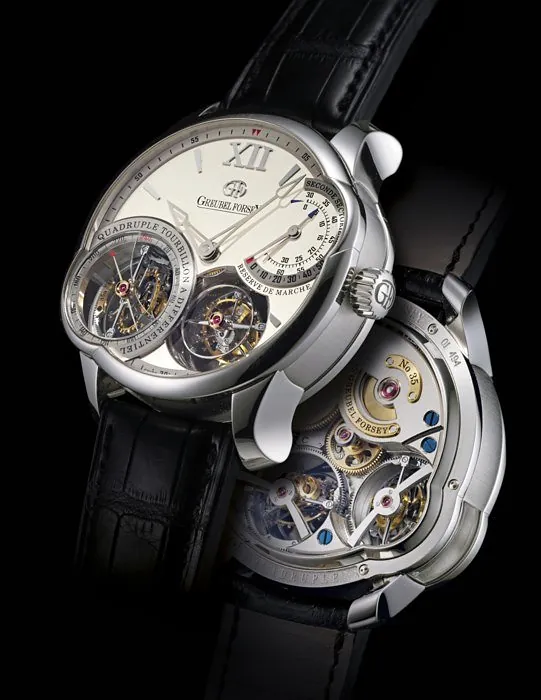
Greubel Forsey Quadruple Tourbillon in platinum, No. 35
Christie's

Wristwatches · c. 2010s
Breguet Type XXI, ref. 3810, c. 2010s (Antiquorum Lot 381-24)
Antiquorum auction archive, Geneva

Wristwatches · c. 2010s
Breguet Type XXI, ref. 3810, c. 2010s (Antiquorum Lot 386-229)
Antiquorum auction archive, Geneva

Wristwatches · Sold in September 2010
Breitling Cosmonaute, ref. A 22322, Sold in September 2010
Antiquorum auction archive, Geneva

Wristwatches · c. 2010
Corum Bubble Chrono, ref. 396.150.20, c. 2010
Antiquorum auction archive, Geneva
Wristwatches · c. 2010-2020
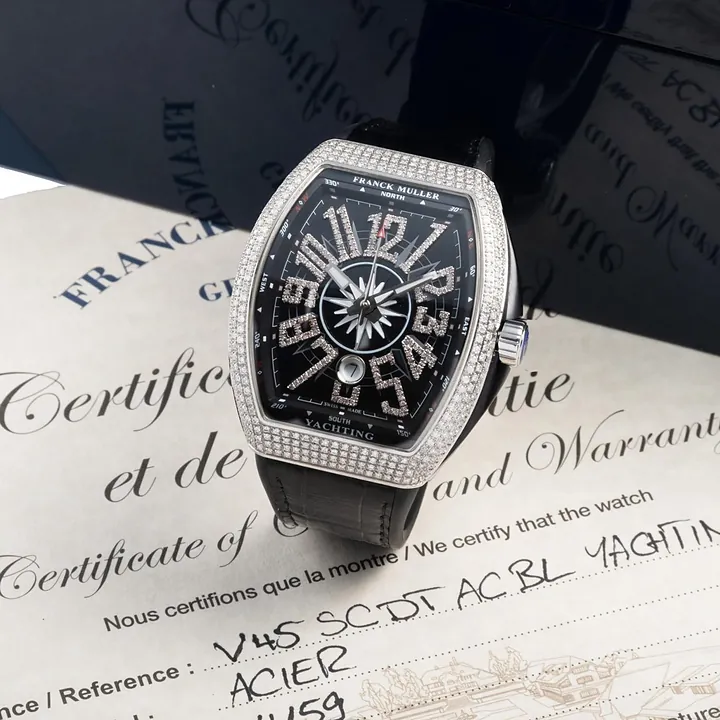
Franck Muller Vanguard Yachting, ref. V45SCDT, c. 2010-2020
Antiquorum auction archive, Geneva
Wristwatches · c. 2010s
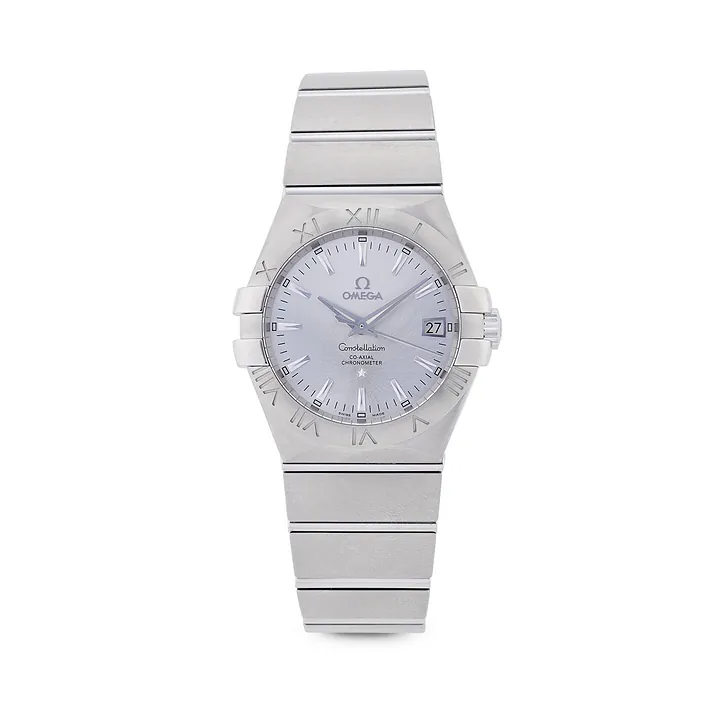
Omega Constellation, ref. 123.10.35.20.02.001, c. 2010s
Antiquorum auction archive, Geneva
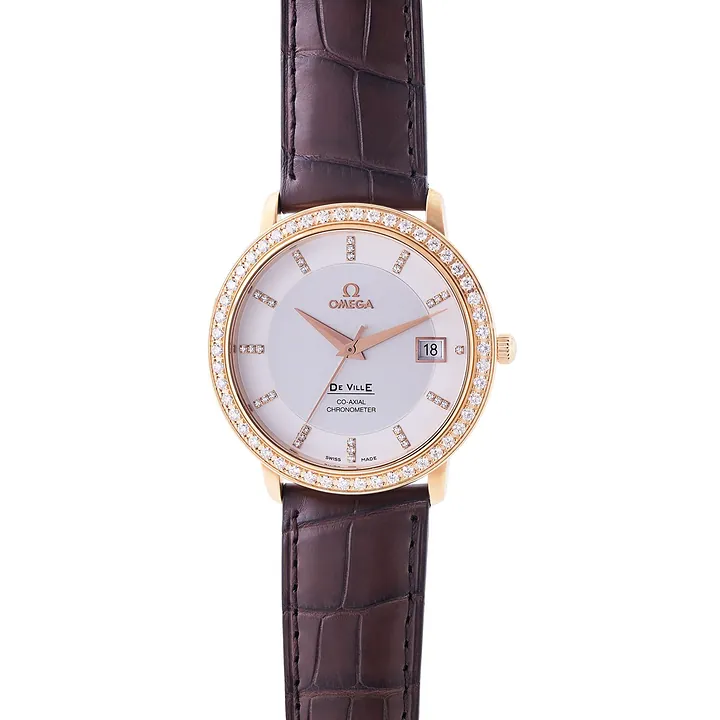
Wristwatches · c. 2010s
Omega De Ville, ref. 413.58.37.20.52.001, c. 2010s
Antiquorum auction archive, Geneva