
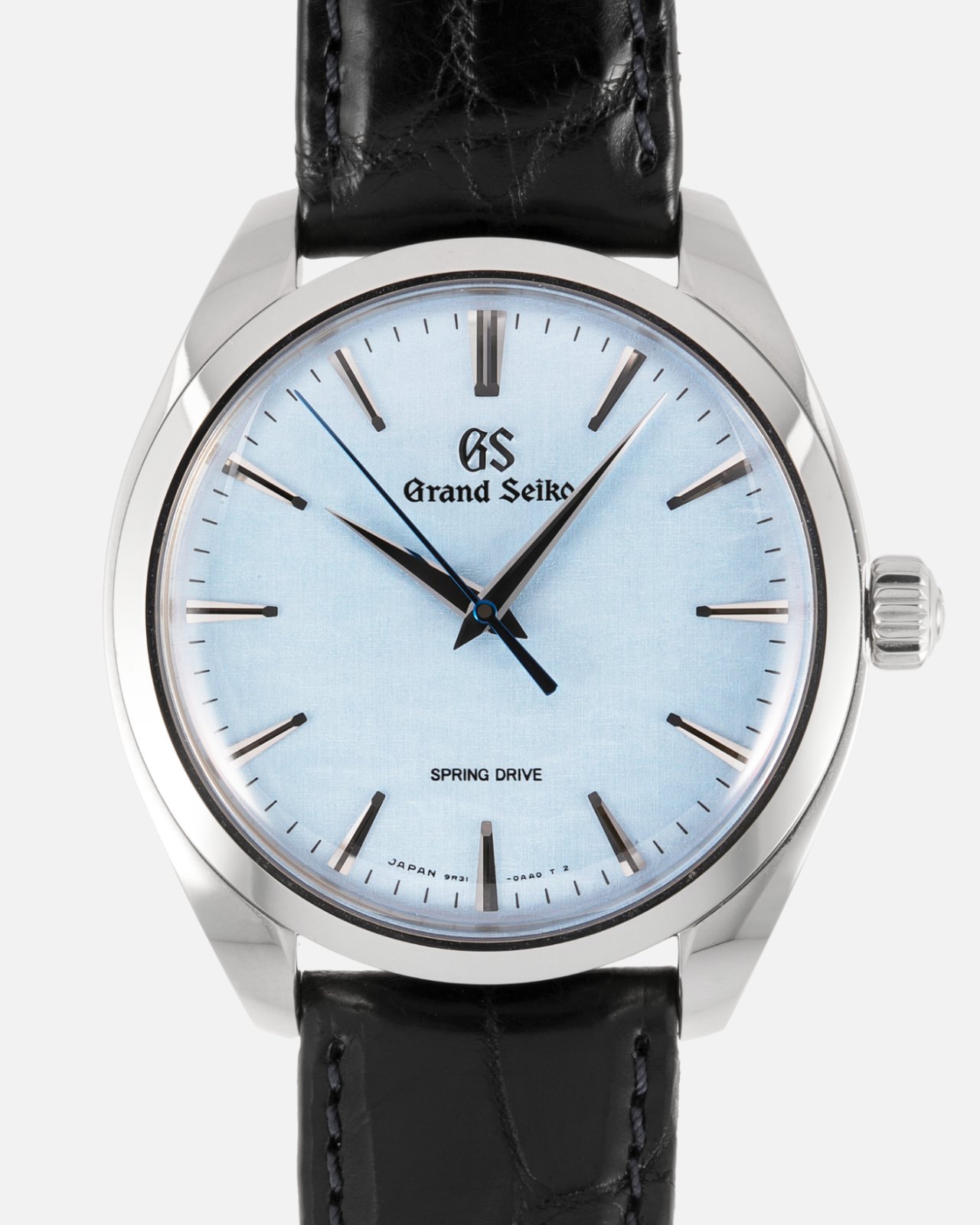
Wristwatches · Wristwatch
Grand Seiko SBGY007 Spring Drive, 2021
- Maker / attribution
- Grand Seiko (maker)
- Date
- 2021
- Historical period
- Contemporary Horology (2010 – Present)
- Country of origin
- Japan
- Object type
- Wristwatch
- Dimensions
- Case 38.5 mm
- Stock no.
- Product 6737296883799
- Credit line
- Dealer listing, S.Song Watches (product 6737296883799)
- Catalogue title (original)
- Grand Seiko SBGY007 Spring Drive (English)
View the source record (dealer listing) ↗ (opens another website in a new tab)Suggest a correction
Record summary
Catalogued by S.Song Watches (dealer), Seattle (stock number Product 6737296883799), this is a wristwatch by Grand Seiko, made in Japan, dated 2021. The Atlas places it in the Contemporary Horology period (2010 – Present) of its Wristwatches collection. Recorded dimensions: Case 38.5 mm. The record is illustrated with 6 photographs.
Assembled from the source record's structured fields. Dates and attributions are given as the source states them; where a field is missing the Atlas leaves it blank rather than estimating.
Catalogue description
Dealer description — S.Song Watches
Famed by watchmaking aficionados across the globe for their incredible level of detail, stunning craftsmanship, and heritage-rich designs, Grand Seiko has emerged as one of the fastest-growing watchmakers on the market in recent years. Founded with the express purpose of elevating Japanese watchmaking and challenging the Swiss' dominance within the industry, it is no surprise that Grand Seiko's timepieces have indeed adhered to strict levels of quality control that ensure their watches are a joy to wear. Released in 2021, the Grand Seiko Heritage "Omiwatari" SBGY007 is one of the latest hand-wound time-only Spring Drive timepieces to come from the iconic Japanese watchmaker, and it is a joy in just about every way possible. Inspired by the frozen surface of Lake Suwa in Central Japan, its light blue dial features a subtly texturized surface that reflects the ripples made in the ice sheet that forms when the gentle waves of Lake Suwa freeze over in the depths of the Japanese winter. These frozen ridges are thought to be the tracks left behind by the Shinto deity, Takeminakata-no-kami - the patron deity of the ancient Suwa Taisha Shrine. In turn, these ridges create tracks named the Omiwatari, the pathway of the god. Of course, on the other side of the SBGY007's stainless steel case is the sapphire crystal exhibition caseback that provides a view of the impeccably finished manual-wind Spring Drive cal. 9R31 that powers the SBGY007. A relative rarity within Grand Seiko's offerings as the brand typically focuses on automatic Spring Drive movements, the cal. 9R31 provides the SBGY007 with a power reserve indicator on its immaculately finished baseplate next to its exposed mainspring barrel, which provides 72-hours of power reserve. With its stunning blue textured dial and immaculately finished movement, it is no surprise that the SBGY007's case is another triumph in watchmaking. Measuring 38.5mm in diameter, the SBGY007's stainless steel case is simplistic and understated. Just 10.2mm tall, the case is traditional and easy on the wrist. Decorated with Grand Seiko's signature finishing technique, Zaratsu polishing, across the entirety of its surface, this 38.5mm beauty is an elegant piece on the wrist, with it balancing a gentle understated elegance with an intriguing design language wrapped in Japanese lore and mystique.
Historical context
Contemporary Horology (2010 – Present)
Silicon components, connected watches, optical-lattice research clocks and a thriving independent scene.
Smartwatches became the world's best-selling watches, while mechanical watchmaking focuses on craft, innovation (silicon components, new escapements) and independent makers.
Read the period in the timelineMore wristwatches from this periodEarlier: Mechanical Renaissance
Atlas type guide
Quartz, digital and electronic watches
Electronic watches arrived in three steps. The Hamilton Electric 500 (1957) was the first battery-powered wristwatch, still with a balance; Bulova's Accutron (1960) used a tuning fork. On 25 December 1969 Seiko released the Astron 35SQ, the first quartz wristwatch, closely followed by the Swiss Beta 21 group. In 1972 Hamilton's Pulsar introduced the LED digital watch, and LCD displays soon made digital watches cheap.
The 'Quartz Crisis' that followed devastated the Swiss mechanical industry, which lost two-thirds of its workforce between 1970 and 1984 before recovering with the Swatch (1983) and the luxury mechanical revival. Solar, radio-controlled, kinetic and connected smartwatches continue the electronic line.
What to look for
- Battery hatch in the case back and calibre markings with 'Quartz' or a crystal frequency.
- Display technology: LED (red, push-button) versus LCD (always-on).
- Tuning-fork hum and a smoothly sweeping seconds hand on Accutrons.
- Model and reference numbers, often printed on the back.
Dating clues
- Electric balance watches: from 1957.
- Tuning-fork watches: 1960–c. 1977.
- Quartz analogue: from December 1969; LED digital: 1972–c. 1978; LCD from 1973.
General guidance written by the Atlas editors about this kind of object. It is not a statement about this particular piece; for that, rely on the source record above and on physical examination.
Read next:Seiko calibre 35A (Astron)
Related records
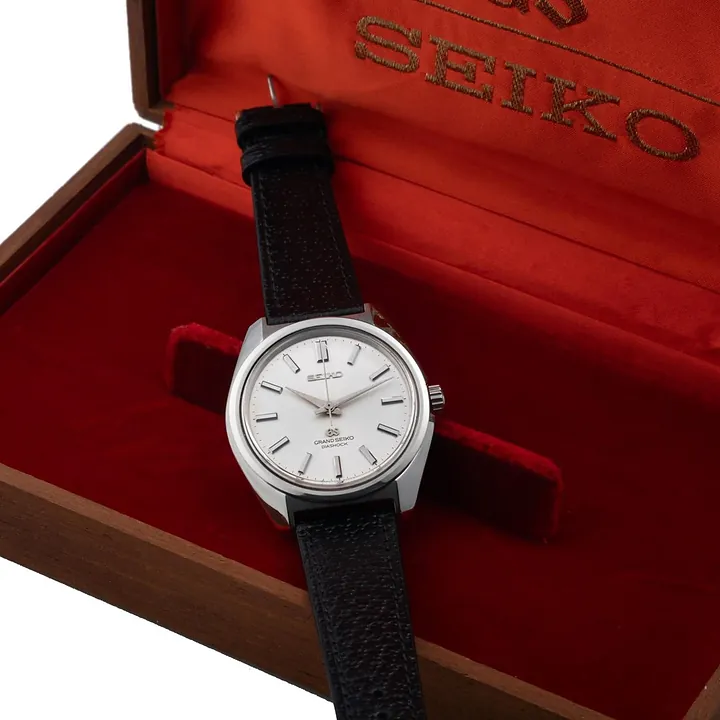
Wristwatches · 1967
Grand Seiko 44 GS, ref. 4420-9000, 1967
Antiquorum auction archive, Geneva
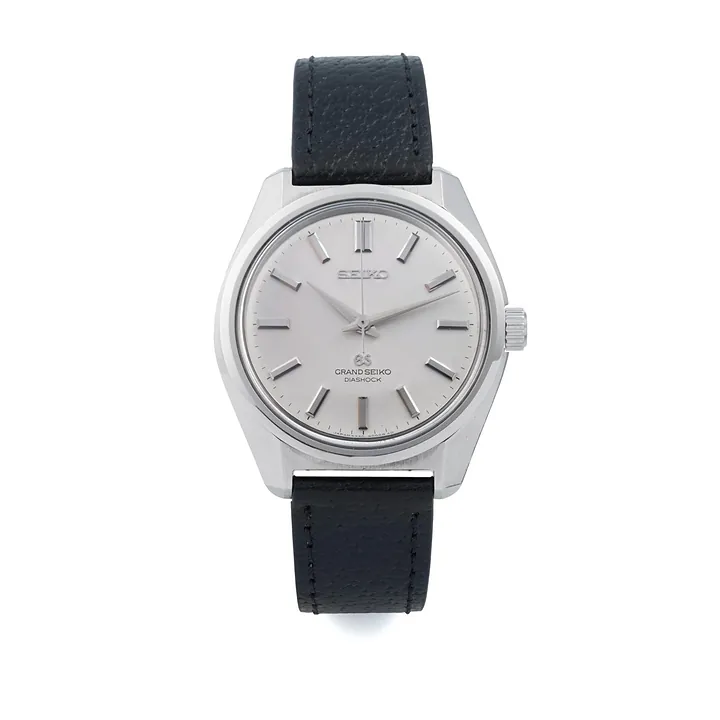
Wristwatches · c. 1967
Grand Seiko 44 GS, ref. 4420-9000, c. 1967
Antiquorum auction archive, Geneva
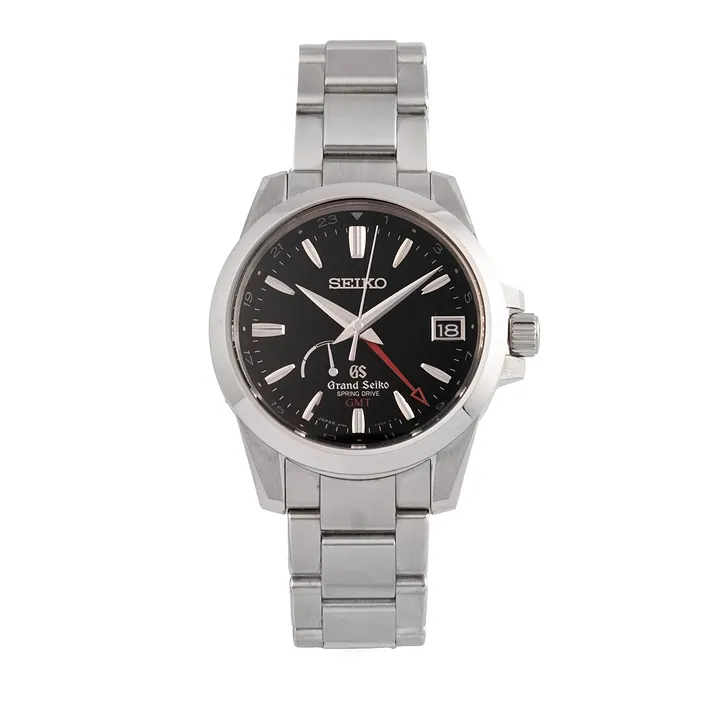
Wristwatches · c. 2020s
Grand Seiko Spring Drive GMT, ref. 9R66-0AE0, c. 2020s
Antiquorum auction archive, Geneva
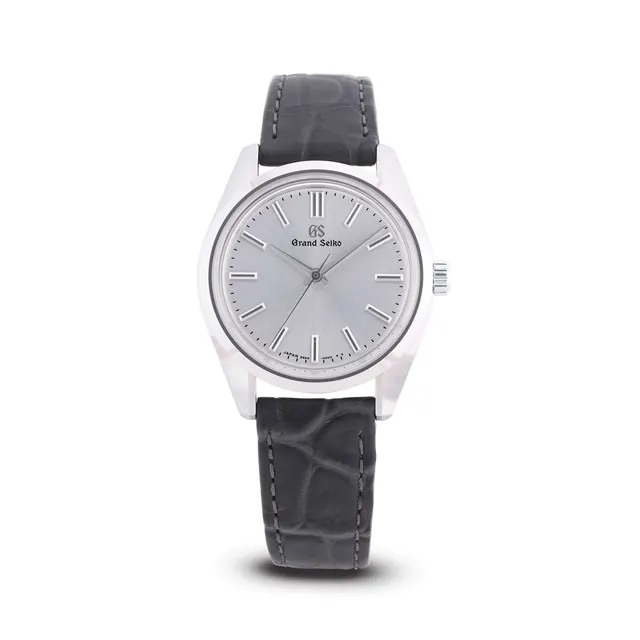
Wristwatches · originally sold in September 2022 (per the lot record)
Grand Seiko wristwatch, ref. SBGW291, Heritage Collection, originally sold in September 2022
Antiquorum auction archive, Geneva
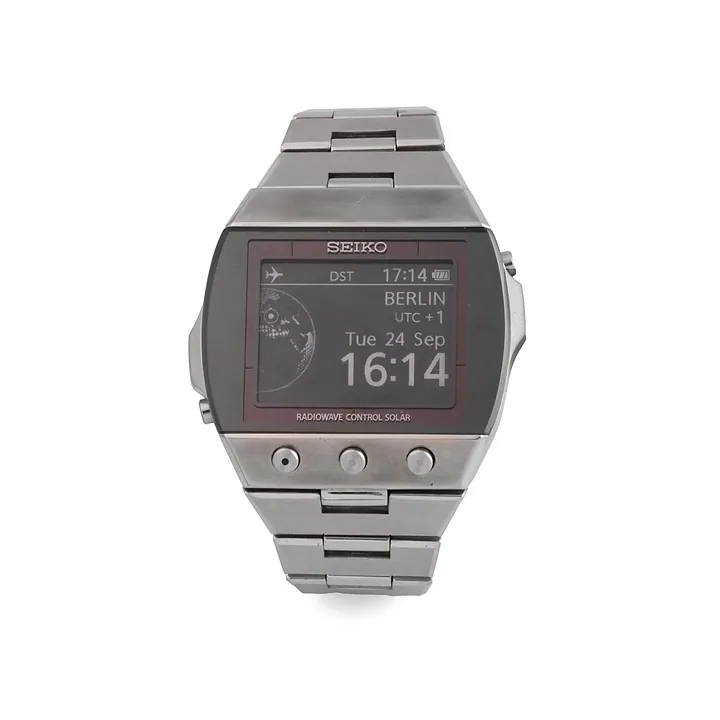
Wristwatches · Sold in 2011
Seiko Brights Spirit, ref. S770, Sold in 2011
Antiquorum auction archive, Geneva
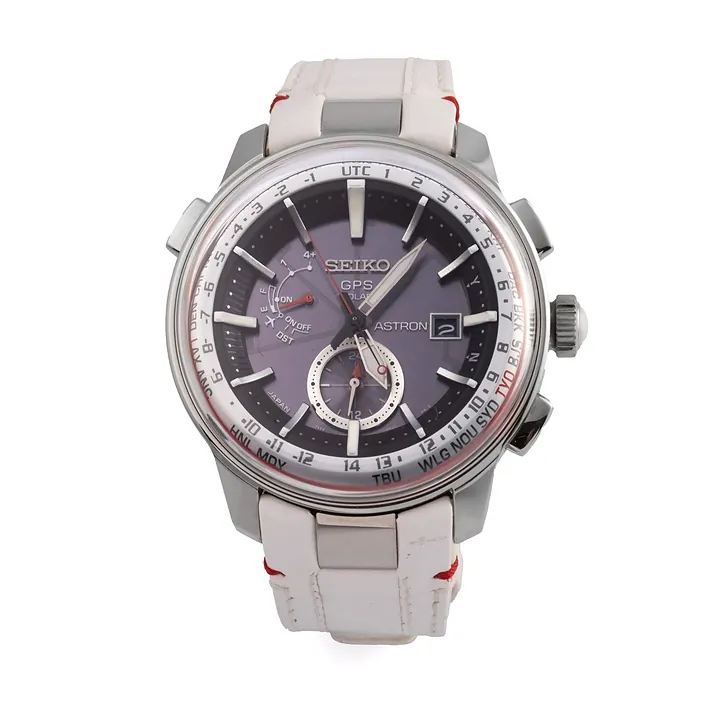
Wristwatches · originally sold in 2014 (per the lot record)
Seiko Astron GPS Solar, ref. SBXA045, originally sold in 2014
Antiquorum auction archive, Geneva
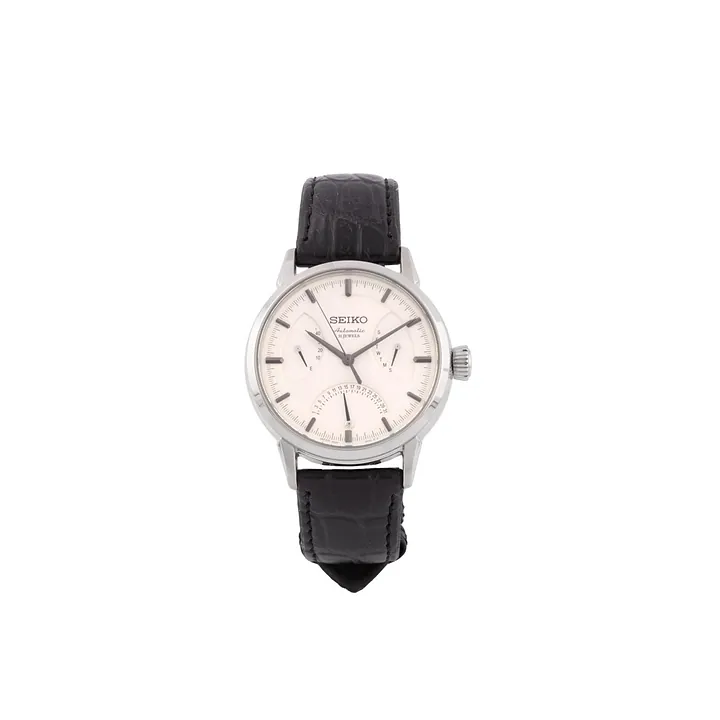
Wristwatches · c. 2015
Seiko Presage, c. 2015
Antiquorum auction archive, Geneva
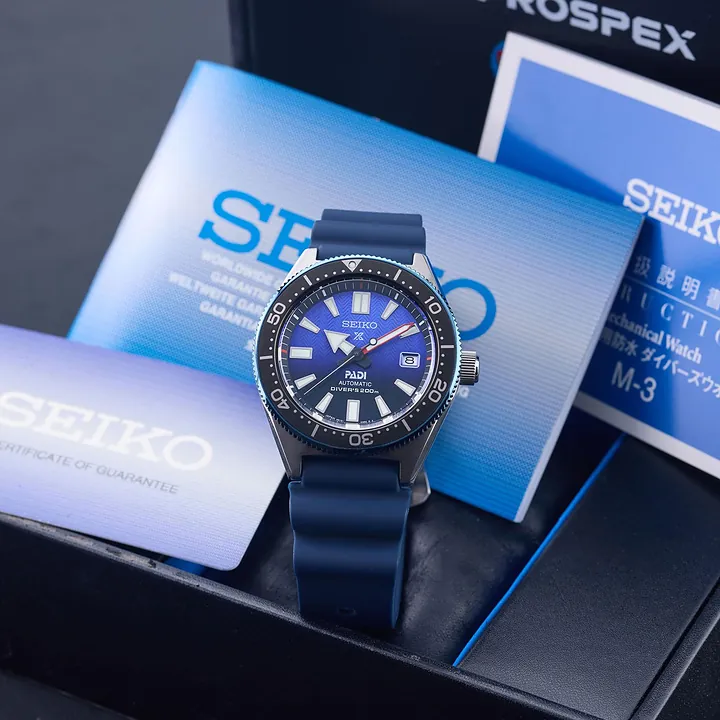
Wristwatches · originally sold in 2018 (per the lot record)
Seiko Prospex Padi Special Edition, ref. SBDC055, originally sold in 2018
Antiquorum auction archive, Geneva