
Wristwatches · Wristwatch
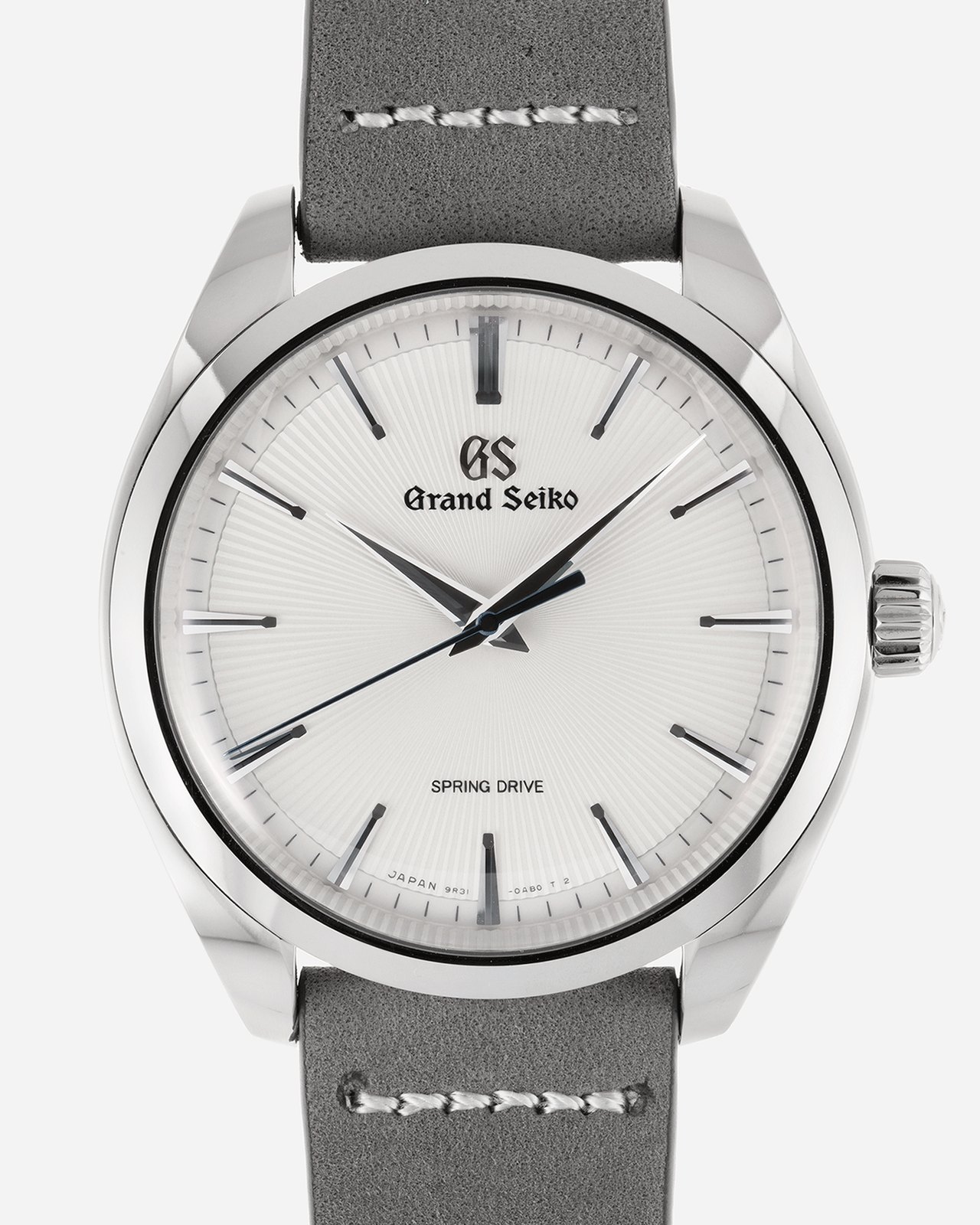
Grand Seiko SBGY003 Spring Drive, 2020
- Maker / attribution
- Grand Seiko (maker)
- Date
- 2020
- Historical period
- Contemporary Horology (2010 – Present)
- Country of origin
- Japan
- Object type
- Wristwatch
- Dimensions
- Case 38.5 mm
- Stock no.
- Product 4680826716247
- Credit line
- Dealer listing, S.Song Watches (product 4680826716247)
- Catalogue title (original)
- Grand Seiko SBGY003 Spring Drive (English)
View the source record (dealer listing) ↗ (opens another website in a new tab)Suggest a correction
Record summary
Catalogued by S.Song Watches (dealer), Seattle (stock number Product 4680826716247), this is a wristwatch by Grand Seiko, made in Japan, dated 2020. The Atlas places it in the Contemporary Horology period (2010 – Present) of its Wristwatches collection. Recorded dimensions: Case 38.5 mm. The record is illustrated with 6 photographs.
Assembled from the source record's structured fields. Dates and attributions are given as the source states them; where a field is missing the Atlas leaves it blank rather than estimating.
Catalogue description
Dealer description — S.Song Watches
Beginning its life as the brand set up solely to prove just how good Japanese engineering could be, Grand Seiko has successfully challenged the status quo within Swiss watchmaking to become one of the most highly regarded brands around. Ever since their 1960 founding, they have pumped out genuinely innovative creations and aesthetically astounding timepieces, both of which the SBGY003 that I have here is a testament of. While some brands gain reputations for their iconic bracelets like the Nautilus, or bezel like the Royal Oak, Grand Seiko, as a brand, has established itself as one of the best dial makers in the business, and the SBGY003 is a testament to that. Fitted with a gorgeous silver radiant sunray pattern dial, itself decorated with mirror-finish hand-polished hour markers and a razor-sharp handset, the SBGY003 is a feast for the eyes. Perfectly symmetrical with no off-center details, the SBGY003 has relegated its power reserve to the back of its movement. Upon examining the power reserve, we uncover what is perhaps the most special aspect of the SBGY003, even more so than its dial – its movement. The SBGY003 doesn’t just get a normal Grand Seiko movement, it gets one of the very best Seiko has to offer, the Spring Drive cal. 9R31. Based on the Micro Artist Studio’s 9R02, the 9R31 is a self-winding movement with 72 hours of power reserve making for a more than functional timepiece. Combining elements of mechanical and quartz watchmaking, the Spring Drive movement is famous as a hybrid solution that delivers superior performance and accuracy when compared to both conventional movement types. On top of the incredible movement and dial, the SBGY003 is a timepiece that is executed to near perfection. As demonstrated by the Zaratsu polished surfaces and beautiful satin-brushed finishing throughout, the SBGY003’s 38.5mm x 10.2mm case is a notch above the competition. With just 700 examples released, the SBGY003 makes for an excellent avenue to experience the craftsmanship Grand Seiko put into their watches, and own a timepiece that few others will own too.
Historical context
Contemporary Horology (2010 – Present)
Silicon components, connected watches, optical-lattice research clocks and a thriving independent scene.
Smartwatches became the world's best-selling watches, while mechanical watchmaking focuses on craft, innovation (silicon components, new escapements) and independent makers.
Read the period in the timelineMore wristwatches from this periodEarlier: Mechanical Renaissance
Atlas type guide
Quartz, digital and electronic watches
Electronic watches arrived in three steps. The Hamilton Electric 500 (1957) was the first battery-powered wristwatch, still with a balance; Bulova's Accutron (1960) used a tuning fork. On 25 December 1969 Seiko released the Astron 35SQ, the first quartz wristwatch, closely followed by the Swiss Beta 21 group. In 1972 Hamilton's Pulsar introduced the LED digital watch, and LCD displays soon made digital watches cheap.
The 'Quartz Crisis' that followed devastated the Swiss mechanical industry, which lost two-thirds of its workforce between 1970 and 1984 before recovering with the Swatch (1983) and the luxury mechanical revival. Solar, radio-controlled, kinetic and connected smartwatches continue the electronic line.
What to look for
- Battery hatch in the case back and calibre markings with 'Quartz' or a crystal frequency.
- Display technology: LED (red, push-button) versus LCD (always-on).
- Tuning-fork hum and a smoothly sweeping seconds hand on Accutrons.
- Model and reference numbers, often printed on the back.
Dating clues
- Electric balance watches: from 1957.
- Tuning-fork watches: 1960–c. 1977.
- Quartz analogue: from December 1969; LED digital: 1972–c. 1978; LCD from 1973.
General guidance written by the Atlas editors about this kind of object. It is not a statement about this particular piece; for that, rely on the source record above and on physical examination.
Read next:Seiko calibre 35A (Astron)
Related records
Wristwatches · 1967
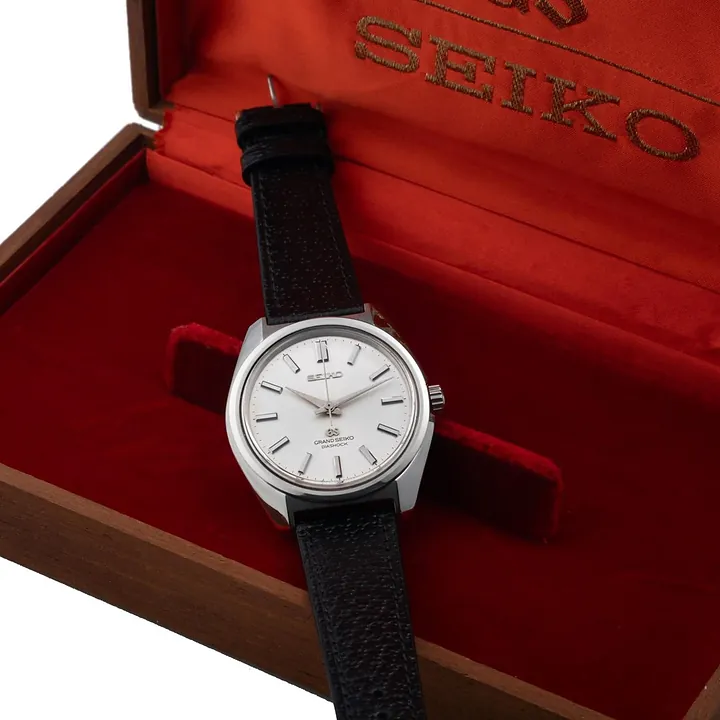
Grand Seiko 44 GS, ref. 4420-9000, 1967
Antiquorum auction archive, Geneva
Wristwatches · c. 1967
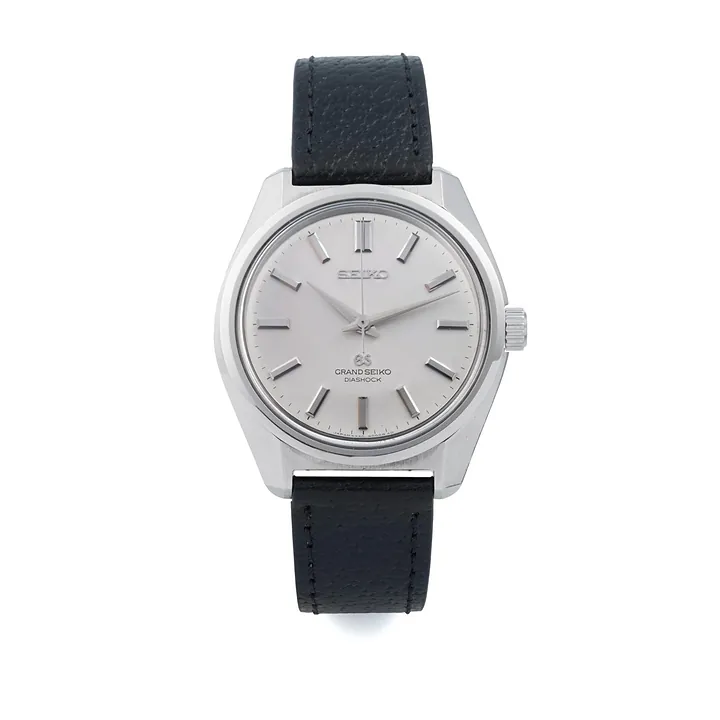
Grand Seiko 44 GS, ref. 4420-9000, c. 1967
Antiquorum auction archive, Geneva
Wristwatches · c. 2020s
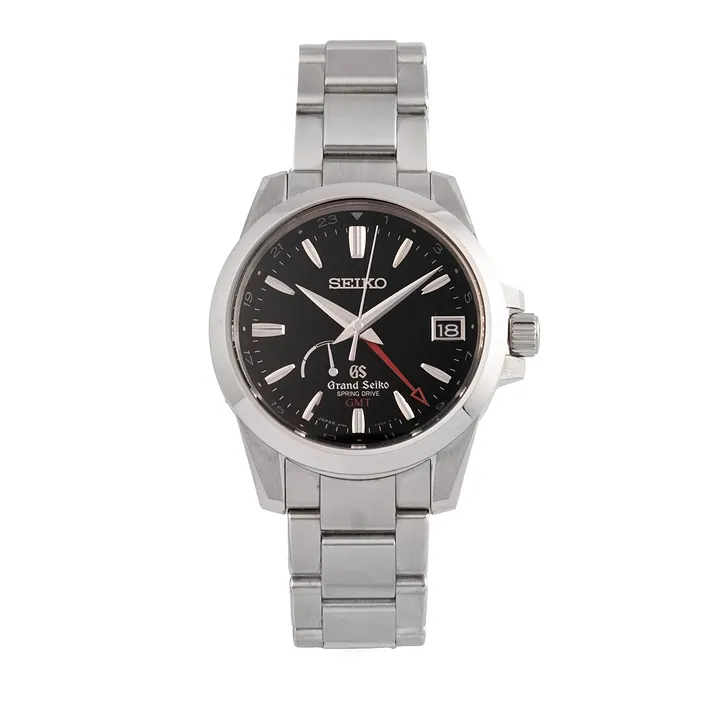
Grand Seiko Spring Drive GMT, ref. 9R66-0AE0, c. 2020s
Antiquorum auction archive, Geneva
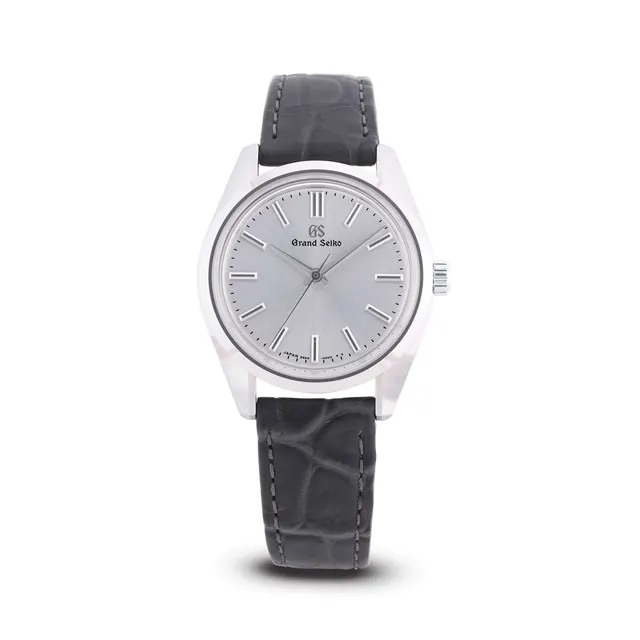
Wristwatches · originally sold in September 2022 (per the lot record)
Grand Seiko wristwatch, ref. SBGW291, Heritage Collection, originally sold in September 2022
Antiquorum auction archive, Geneva
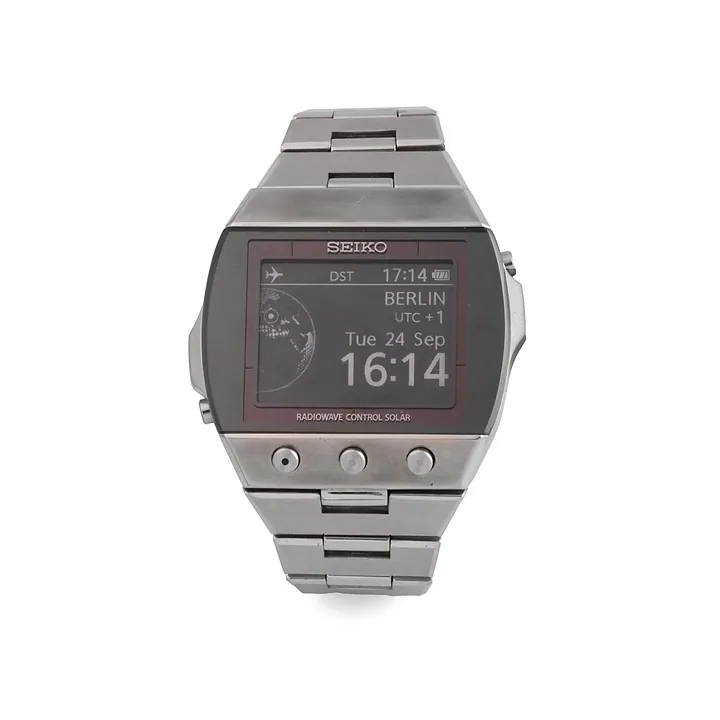
Wristwatches · Sold in 2011
Seiko Brights Spirit, ref. S770, Sold in 2011
Antiquorum auction archive, Geneva
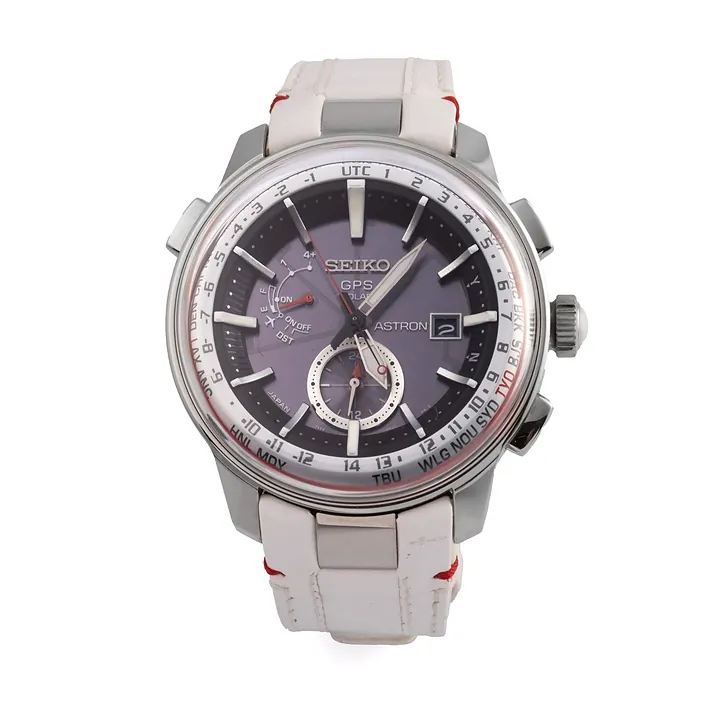
Wristwatches · originally sold in 2014 (per the lot record)
Seiko Astron GPS Solar, ref. SBXA045, originally sold in 2014
Antiquorum auction archive, Geneva
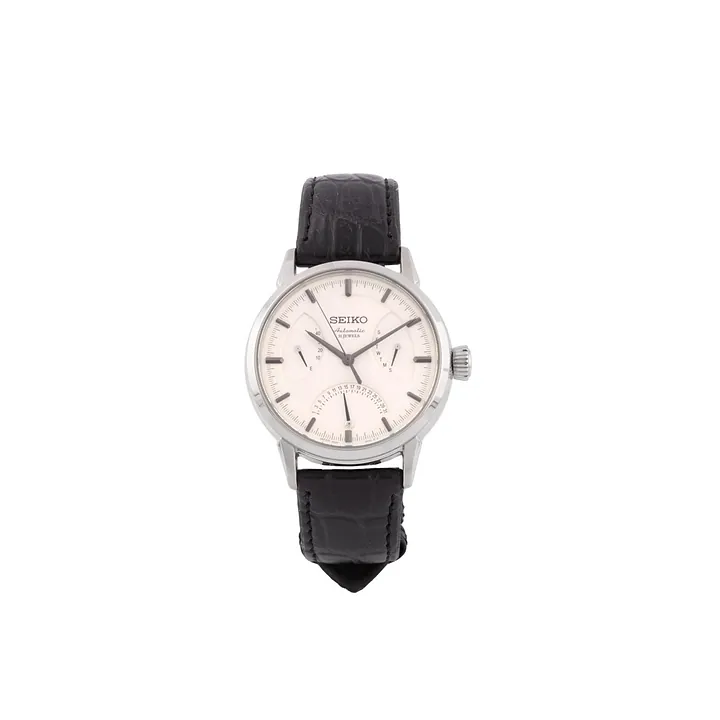
Wristwatches · c. 2015
Seiko Presage, c. 2015
Antiquorum auction archive, Geneva
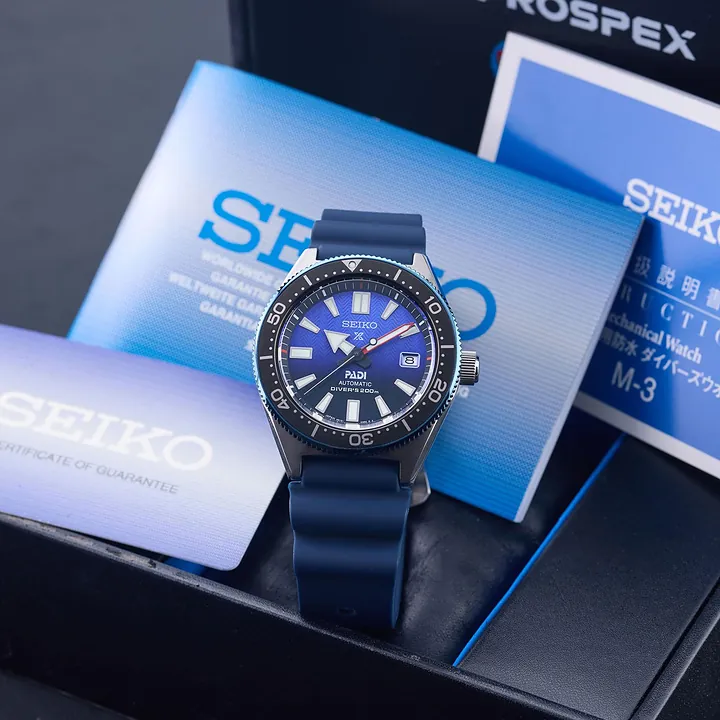
Wristwatches · originally sold in 2018 (per the lot record)
Seiko Prospex Padi Special Edition, ref. SBDC055, originally sold in 2018
Antiquorum auction archive, Geneva