
Wristwatches · Wristwatch
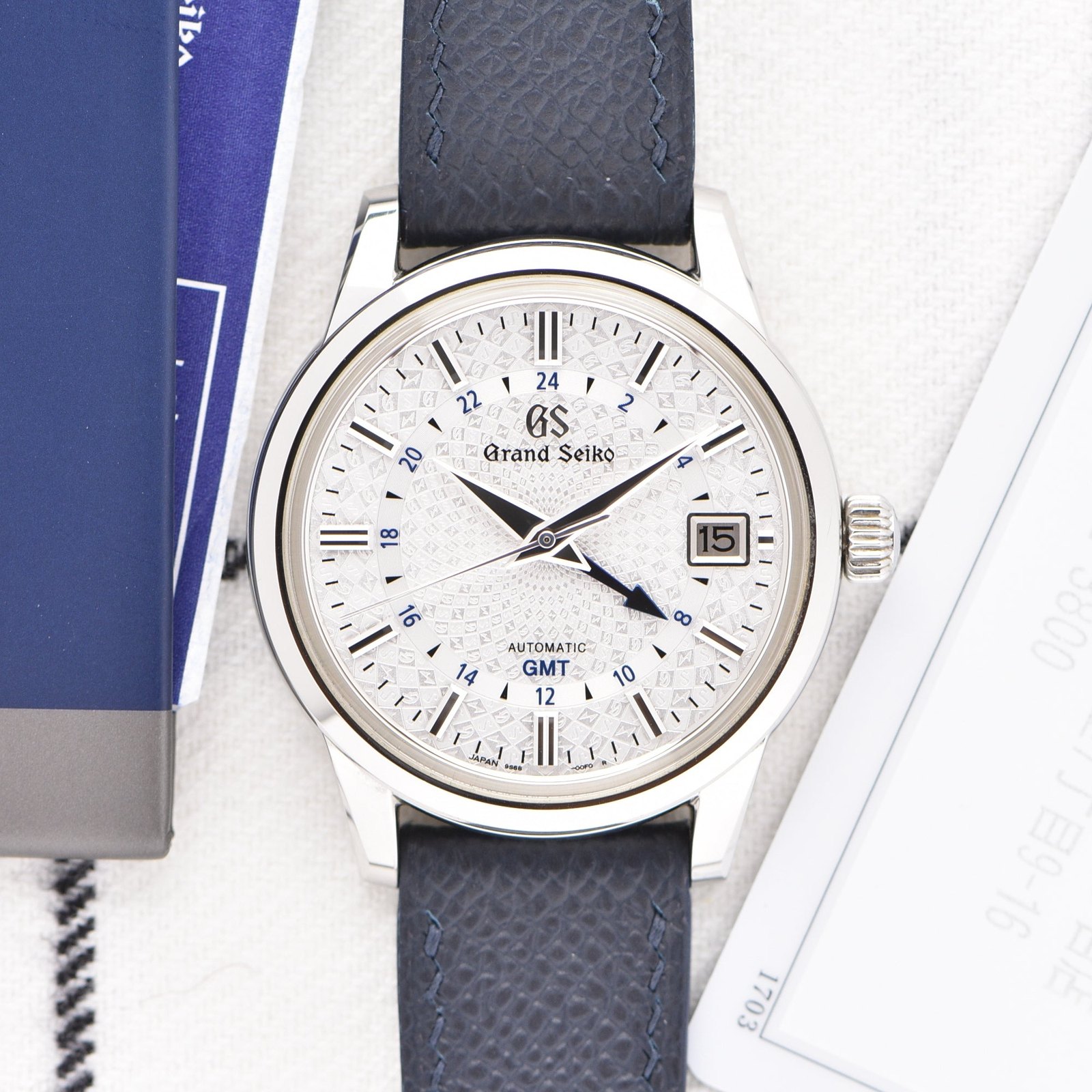
Grand Seiko GMT 9S 20th Anniversary 180/1000, 2018
- Maker / attribution
- Grand Seiko (maker)
- Date
- 2018
- Historical period
- Contemporary Horology (2010 – Present)
- Country of origin
- Japan
- Object type
- Wristwatch
- Dimensions
- Case 39 mm
- Stock no.
- Product 7437617135799
- Credit line
- Dealer listing, Huntington Company (product 7437617135799)
- Catalogue title (original)
- 2018 Grand Seiko GMT 9S 20th Anniversary 180/1000 - Box & Papers (English)
View the source record (dealer listing) ↗ (opens another website in a new tab)Suggest a correction
Record summary
Catalogued by Huntington Company (dealer) (stock number Product 7437617135799), this is a wristwatch by Grand Seiko, made in Japan, dated 2018. The Atlas places it in the Contemporary Horology period (2010 – Present) of its Wristwatches collection. Recorded dimensions: Case 39 mm. The record is illustrated with 6 photographs.
Assembled from the source record's structured fields. Dates and attributions are given as the source states them; where a field is missing the Atlas leaves it blank rather than estimating.
Catalogue description
Dealer description — Huntington Company
Ref. SBGM235 Boxes, Multiple Booklets, Certificate, Card, Buckle Specifications Year: 2018 Model: 9S GMT Case Diameter: 39mm Lug to Lug: 46.5mm Case: Stainless Steel Dial: Silver Movement: Automatic Condition The case has normal wear and is in good shape. The dial and hands are perfect and the movement is running perfectly with an open case back. The watch comes on one of our French straps. The Story The SBGM235 is a limited edition 2018 watch created to celebrate the 20th anniversary of the Caliber 9S. Originally available only through select Grand Seiko retailers, it features a textured dial motif in a spiral configuration, intertwined engraving featuring the Grand Seiko logo and Daini Seikosha mark, and sunburst silver color. The watch has contrasting smooth textures for its 24-hour scale and touches of blue for its GMT elements. Zaratsu polishing is used in the multi-faceted hour and minute hands, as well as delicate hour markers. The 39.5mm stainless steel case is balanced and suitable for a wide range of wrist sizes. Inside, the self-winding 9S66 caliber is manufactured in-house using industrial processes and manual techniques. The integrated GMT complication is easy to use, allowing for one-hour increments in the local hour hand. The SBGM235 is a highly wearable stainless steel timepiece with a rare and attractive dial, an easy-to-use GMT complication, and a versatile design that can easily span casual wear and more elegant attire. The Brand Grand Seiko, a Japanese watch brand, has been a symbol of excellence in the world of watchmaking since its inception in 1881. Founded by Kintarō Hattori, the brand embodies the harmony of age-old craftsmanship and groundbreaking technology. Each watch bearing the Grand Seiko logo is a testament to decades of dedication, history, and passion that the brand has poured into its creations. Grand Seiko's journey from being a local gem to a global icon remains an inspirational saga for many. The brand's humble beginnings in Tokyo, where it was founded by a young entrepreneur named Kintarō Hattori, led to its rise to global prominence. As the brand grew, a new vision began to take shape: creating a watch series that would not only epitomize Japanese craftsmanship but would set global benchmarks. In 1960, the brand's first model, equipped with the iconic Caliber 3180, was a pinnacle, a philosophy that would define its legacy for decades to come. The 1960s and 1970s saw Grand Seiko unveiled masterpieces that combined traditional craftsmanship with avant-garde technology. Timepieces like the Grand Seiko snowflake became desirable for their aesthetic appeal and groundbreaking mechanics. The introduction of the 44GS sculpted a design language that would become iconic, blending the timeless with the modern. As the Quartz Crisis approached, Grand Seiko embraced and perfected quartz technology, showcasing adaptability without compromising on its foundational commitment to excellence. This period marked a seismic shift in the watchmaking industry, presenting a formidable challenge to traditional mechanical watchmaking. Grand Seiko responded with elegance and ingenuity, viewing it as an opportunity to paint its legacy. Grand Seiko has been a pioneer in quartz technology, blending the brand's ethos of perfection with the newfound efficiencies of quartz. Their quartz models are not just about achieving precision but also embody the craftsmanship, design elegance, and attention to detail that Grand Seiko is synonymous with. The Spring Drive Movement, introduced at the turn of the millennium, is a masterful fusion of mechanical and quartz watchmaking. It operates on a traditional mainspring and uses a unique 'Tri-synchro Regulator' to control the unwinding of the mainspring, converting energy into electricity to power a quartz oscillator. The movement's glide motion second hand symbolizes the uninterrupted flow of time, encapsulating Grand Seiko's philosophy of harmonizing tradition with innovation. As the 21st century continues, Grand Seiko continues to break barriers with their watches, such as the Grand Seiko GMT models and the 9SA5 Caliber. However, what truly distinguishes Grand Seiko in this modern age is its ability to evoke emotions and tell stories through each timepiece, preserving moments, memories, and legacy.
Historical context
Contemporary Horology (2010 – Present)
Silicon components, connected watches, optical-lattice research clocks and a thriving independent scene.
Smartwatches became the world's best-selling watches, while mechanical watchmaking focuses on craft, innovation (silicon components, new escapements) and independent makers.
Read the period in the timelineMore wristwatches from this periodEarlier: Mechanical Renaissance
Atlas type guide
Military, pilot and travel watches
The wristwatch owes much of its adoption by men to warfare and aviation. Wristlets — small pocket watches soldered with lugs and worn on a strap — were used in colonial campaigns and became standard equipment in the First World War, with protective grilles over the crystal ('shrapnel guards'). Louis Cartier's Santos (1904), designed for the aviator Alberto Santos-Dumont, is often cited as an early purpose-made pilot's watch.
In the Second World War governments specified watches in detail: the German B-Uhr observation watches, the American A-11, and the British 'W.W.W.' (the 'Dirty Dozen' set of 1945). After the war, jet travel brought GMT and world-time watches, which show two or more time zones at once — Louis Cottier's world-time mechanism and the Rolex GMT-Master (1955) are examples.
What to look for
- Military markings on the case back: broad arrow, issue numbers, 'W.W.W.', 'A.T.P.'
- High-legibility black dials with luminous Arabic numerals; oversized crowns for gloved hands.
- 24-hour hands and rotating 24-hour bezels or city rings on GMT/world-time watches.
- Wire lugs on early wristlets converted from pocket watches.
Dating clues
- Wire-lug wristlets: c. 1900–1925.
- Military specifications of the Second World War: 1939–1945.
- GMT and world-time wristwatches: mainly after 1950.
General guidance written by the Atlas editors about this kind of object. It is not a statement about this particular piece; for that, rely on the source record above and on physical examination.
Related records
Wristwatches · 1967
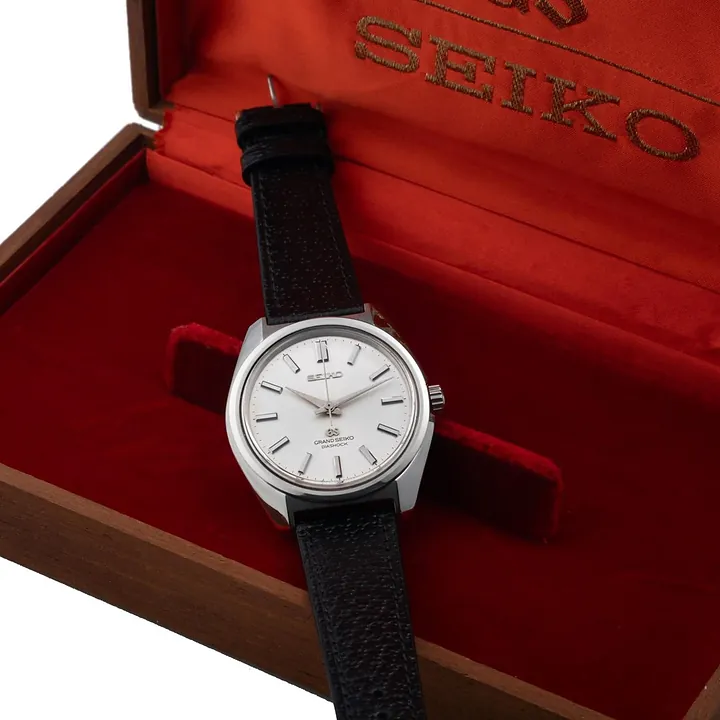
Grand Seiko 44 GS, ref. 4420-9000, 1967
Antiquorum auction archive, Geneva
Wristwatches · c. 1967
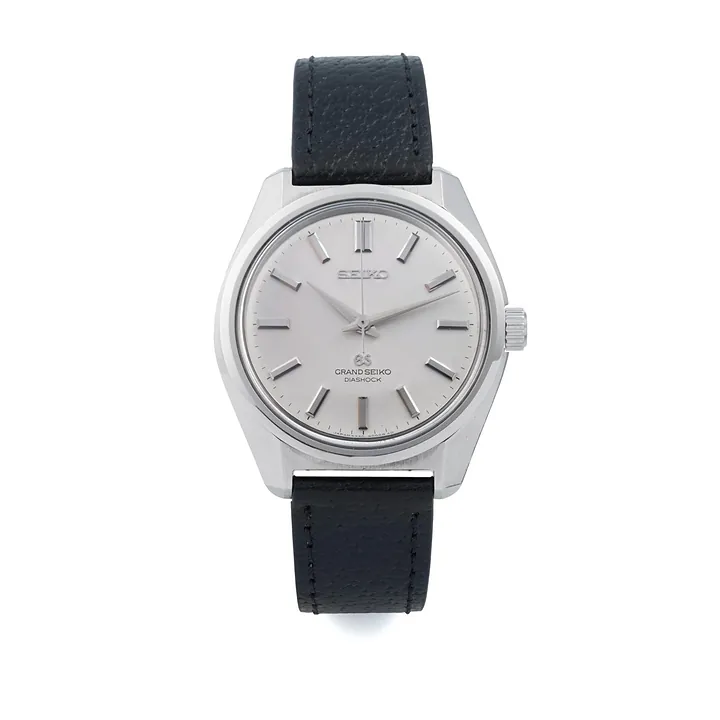
Grand Seiko 44 GS, ref. 4420-9000, c. 1967
Antiquorum auction archive, Geneva
Wristwatches · c. 2020s
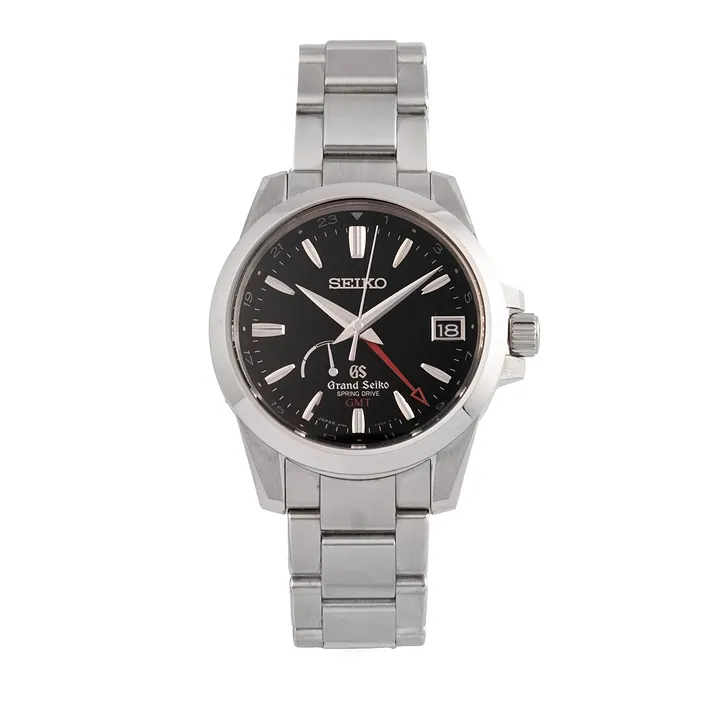
Grand Seiko Spring Drive GMT, ref. 9R66-0AE0, c. 2020s
Antiquorum auction archive, Geneva
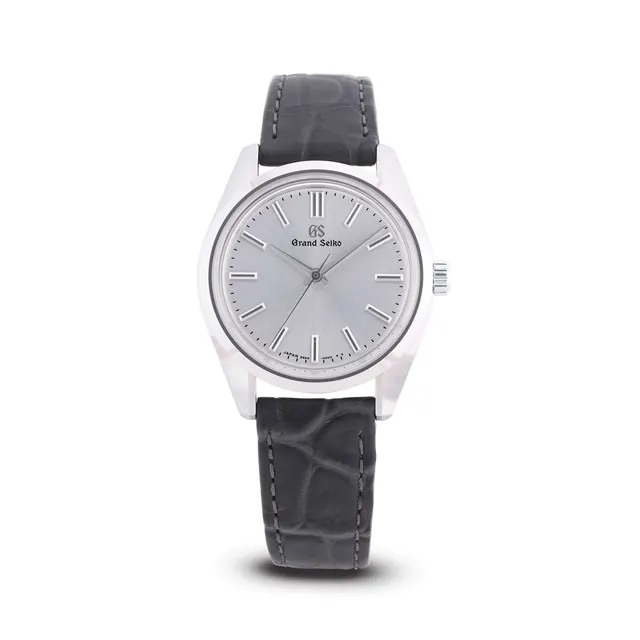
Wristwatches · originally sold in September 2022 (per the lot record)
Grand Seiko wristwatch, ref. SBGW291, Heritage Collection, originally sold in September 2022
Antiquorum auction archive, Geneva
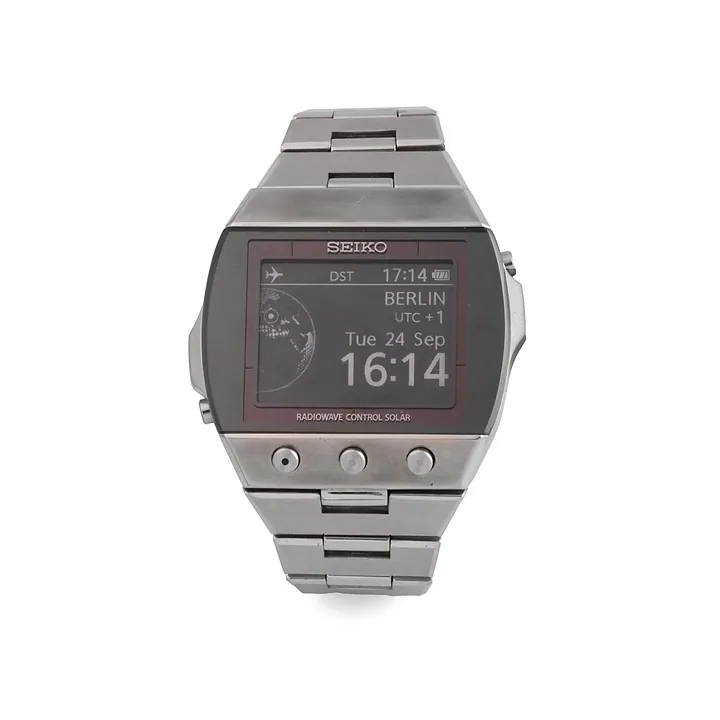
Wristwatches · Sold in 2011
Seiko Brights Spirit, ref. S770, Sold in 2011
Antiquorum auction archive, Geneva
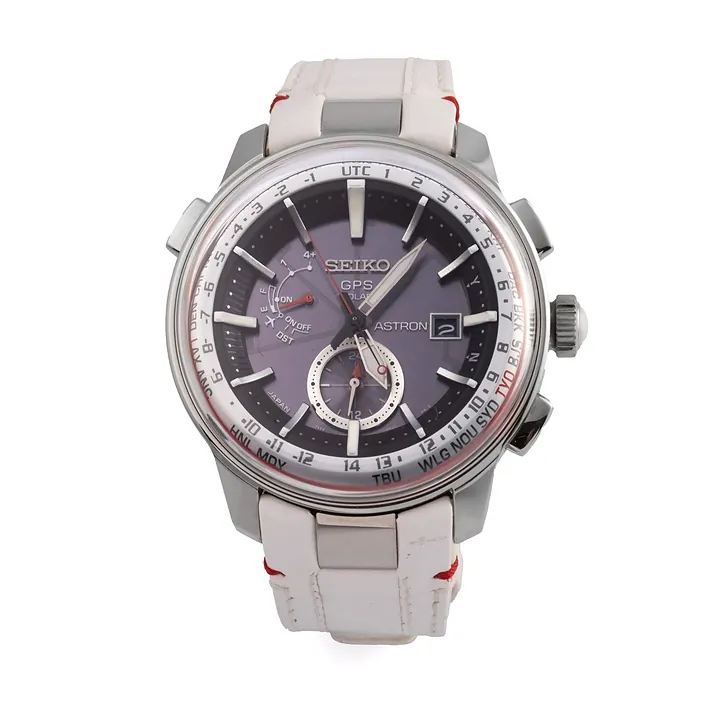
Wristwatches · originally sold in 2014 (per the lot record)
Seiko Astron GPS Solar, ref. SBXA045, originally sold in 2014
Antiquorum auction archive, Geneva
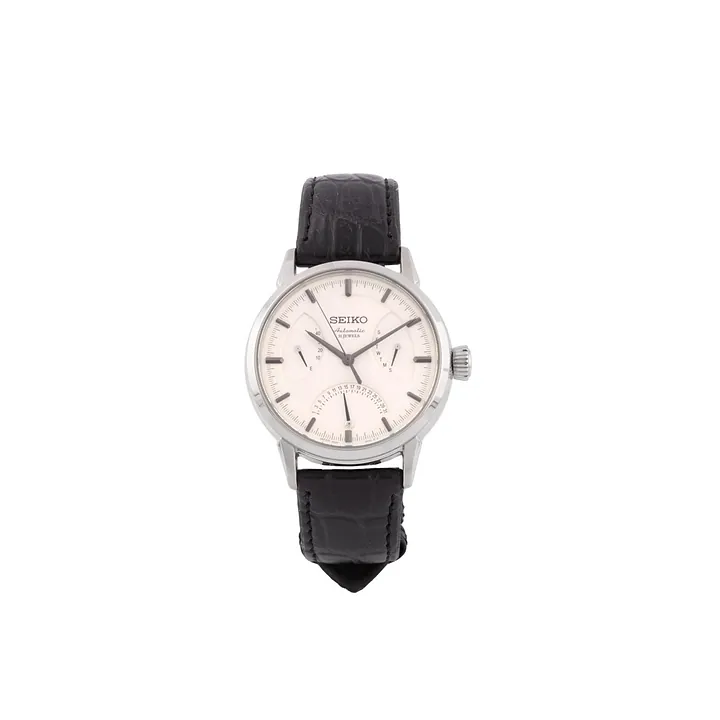
Wristwatches · c. 2015
Seiko Presage, c. 2015
Antiquorum auction archive, Geneva
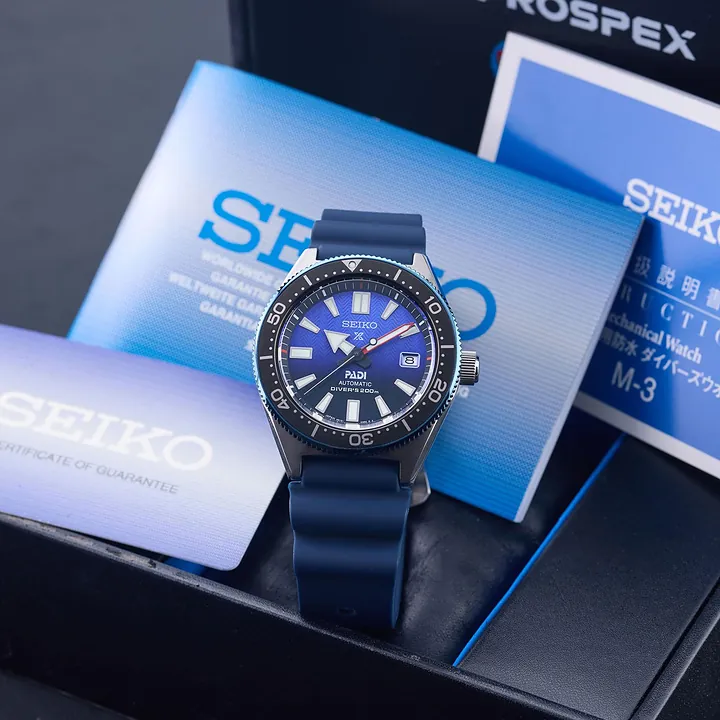
Wristwatches · originally sold in 2018 (per the lot record)
Seiko Prospex Padi Special Edition, ref. SBDC055, originally sold in 2018
Antiquorum auction archive, Geneva