
Pocket Watches · Pocket watch
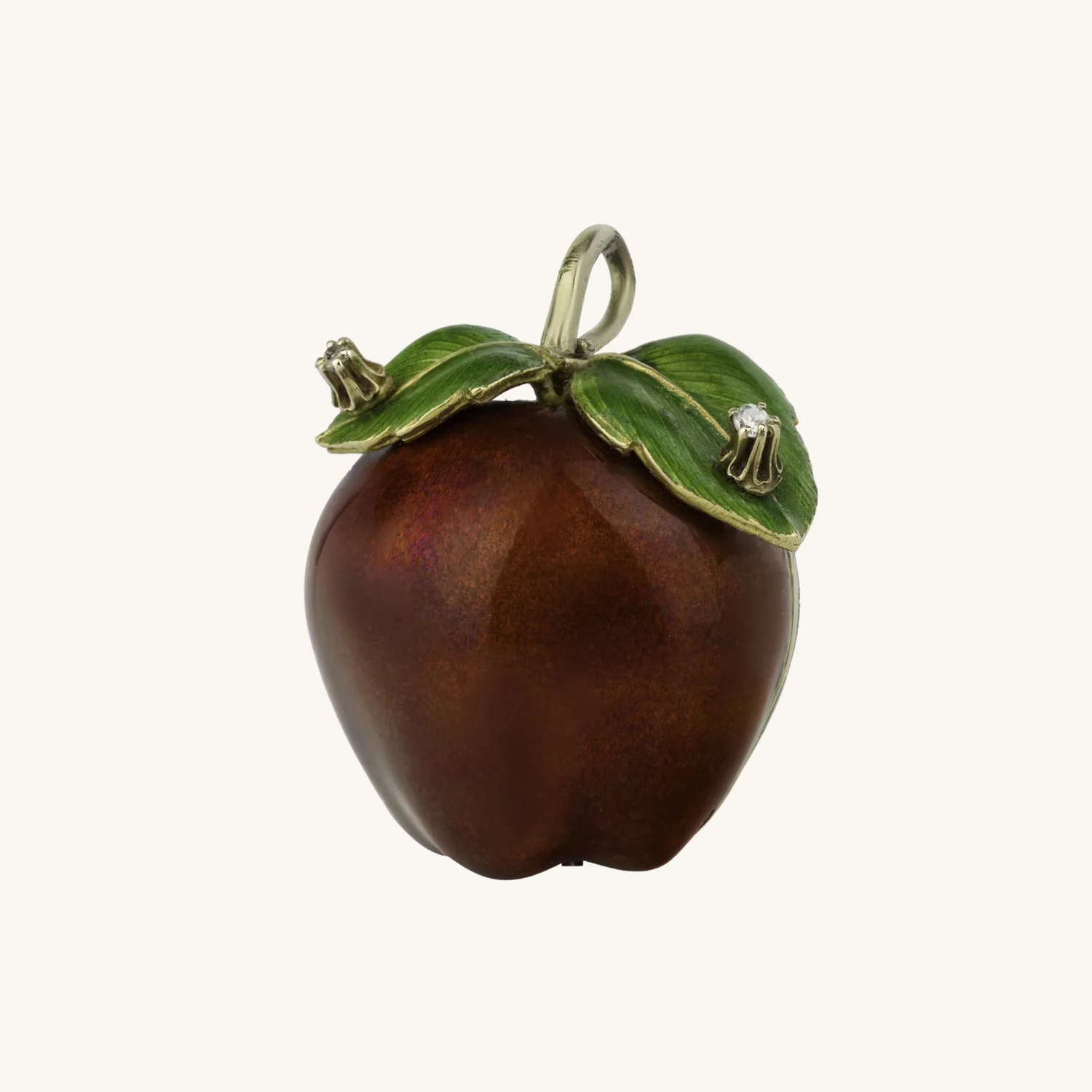
Gold & Enamel Pendant Watch, 1970
- Maker / attribution
- Unrecorded in source
- Date
- 1970
- Historical period
- Quartz Revolution (1969 – 1990)
- Country of origin
- Unrecorded in source
- Object type
- Pocket watch
- Materials / technique
- gold, enamel
- Dealer
- WatchMuseum.org shop
- Stock no.
- Product 1363
- Credit line
- Dealer listing, WatchMuseum.org shop (product 1363)
- Catalogue title (original)
- Gold & Enamel Pendant Watch (English)
View the source record (dealer listing) ↗ (opens another website in a new tab)Suggest a correction
Record summary
Catalogued by WatchMuseum.org shop (stock number Product 1363), this is a pocket watch, dated 1970. The Atlas places it in the Quartz Revolution period (1969 – 1990) of its Pocket Watches collection. Materials and techniques recorded by the source: gold, enamel. The record is illustrated with 3 photographs.
Assembled from the source record's structured fields. Dates and attributions are given as the source states them; where a field is missing the Atlas leaves it blank rather than estimating.
Catalogue description
Dealer description — WatchMuseum.org shop
Step back in time with the exquisite “Gold & Enamel Pendant Watch - 1970,” a captivating piece of horological artistry that doubles as a stunning piece of jewelry. This unique ladies’ pendant watch, designed in the charming shape of an apple, is a true testament to the elegant craftsmanship of the 1970s. Adorned with vibrant red and green enamel, the pendant is further embellished with two sparkling diamonds set on the green leaves, creating a mesmerizing visual appeal. The watch movement, marked ‘Duxot’ 17 rubis, ensures precision and reliability, while the pendant itself is crafted from luxurious 18K gold, proudly bearing an Austrian hallmark. Its modern style and excellent condition make it not only a functional timepiece but also a remarkable conversation starter and a cherished addition to any discerning collector’s ensemble. This is an interesting ladies’ pendant watch that takes the form of an apple. It features red and green enamel with two diamonds on the green leaves, making for an eye-catching piece. The watch movement is marked ‘Duxot’ 17 rubis and the pendant is made of 18K gold with an Austrian hallmark. Its style is modern, dating back to the 1970s, and the overall condition is very good. This unique apple-shaped pendant watch makes for a great conversation piece and a perfect addition to any collection. Period 1970s Style Modern Origin Austrian Condition Very good Materials Gold Carat for Gold 18 K Hallmark 18kAustrian hallmark
Historical context
Quartz Revolution (1969 – 1990)
Seiko's Astron begins mass quartz timekeeping; traditional industries contract sharply.
Quartz pocket watches and inexpensive novelty watches appeared, while traditional mechanical pocket watches survived mainly as collectibles and gifts.
Read the period in the timelineMore pocket watches from this periodEarlier: Modern Mechanical Horology
Atlas type guide
Early spring-driven watches
Portable spring-driven timepieces appeared in southern Germany, France and Italy in the early sixteenth century; Peter Henlein of Nuremberg is traditionally credited, although the historical record is complex. These early watches were worn as pendants or carried, had iron or brass movements with a verge escapement and a foliot or small balance, and used a stackfreed or fusee to equalise spring force. They indicated hours only and were notoriously inaccurate.
From the later sixteenth century watches were made in Blois, Paris, Geneva, London and Augsburg in oval, octagonal, cruciform, skull and other 'form' cases of rock crystal, gilt brass, silver and enamel. They were jewellery and status objects as much as timekeepers.
What to look for
- A single hour hand and often a touch-pin hour ring for feeling the time.
- Stackfreed (a cam and spring) instead of a fusee on German watches.
- Pierced and engraved cocks over the balance, fine gut fusee lines.
- Rock-crystal, enamelled or engraved form cases.
Dating clues
- Drum-shaped German watches: c. 1530–1580.
- Oval and form watches: c. 1580–1650.
- Before c. 1675 there is no balance spring; watches can vary by many minutes a day.
General guidance written by the Atlas editors about this kind of object. It is not a statement about this particular piece; for that, rely on the source record above and on physical examination.
Related records
Pocket Watches · 1957–1990
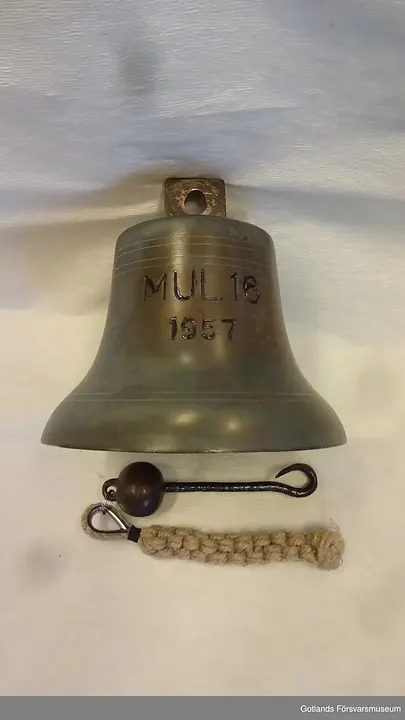
Pocket watch, Sweden, 1957–1990
Gotland Defense Museum
Pocket Watches · c. 1970s
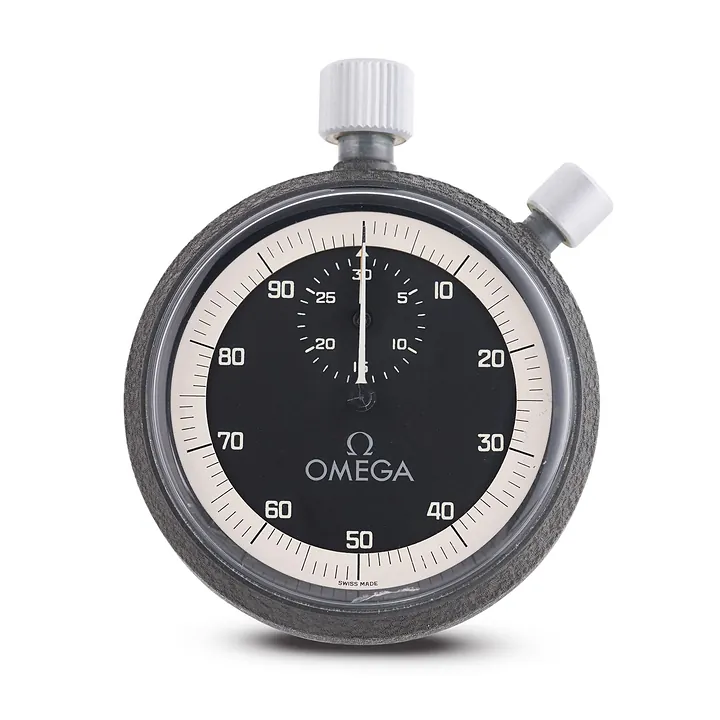
Omega Stop Watch, c. 1970s
Antiquorum auction archive, Geneva
Pocket Watches · 1970
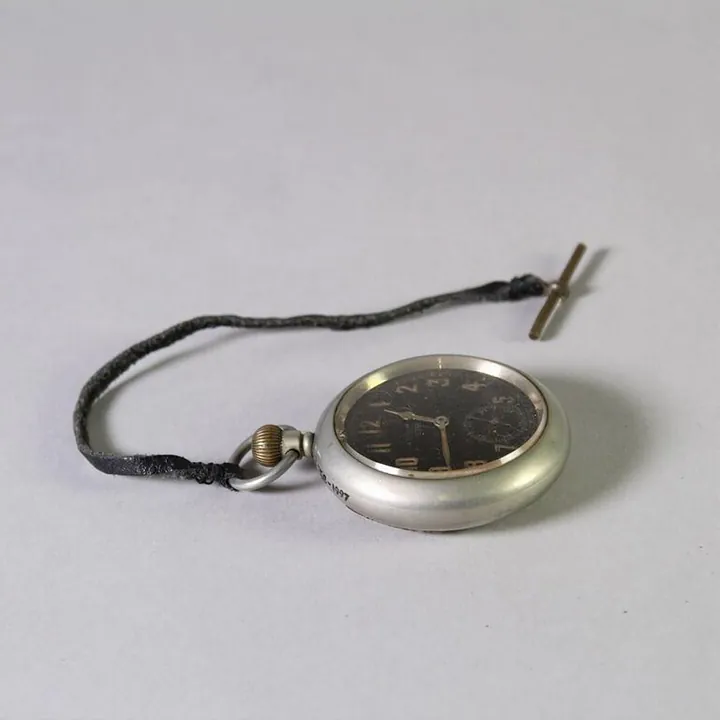
Watch, Williamson, British, 1970
Victoria and Albert Museum, London
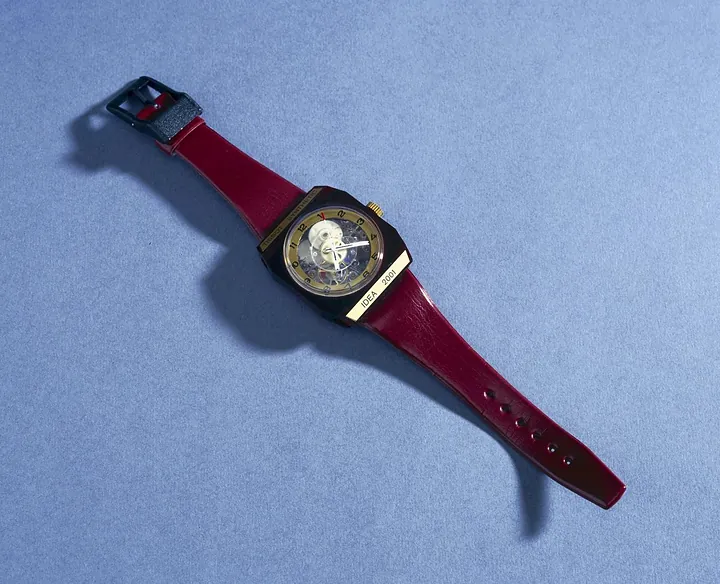
Pocket Watches · 1971–2001
"Tissot synthetic idea 2001" the first plastic watch, introduced in 1971
Science Museum Group, London
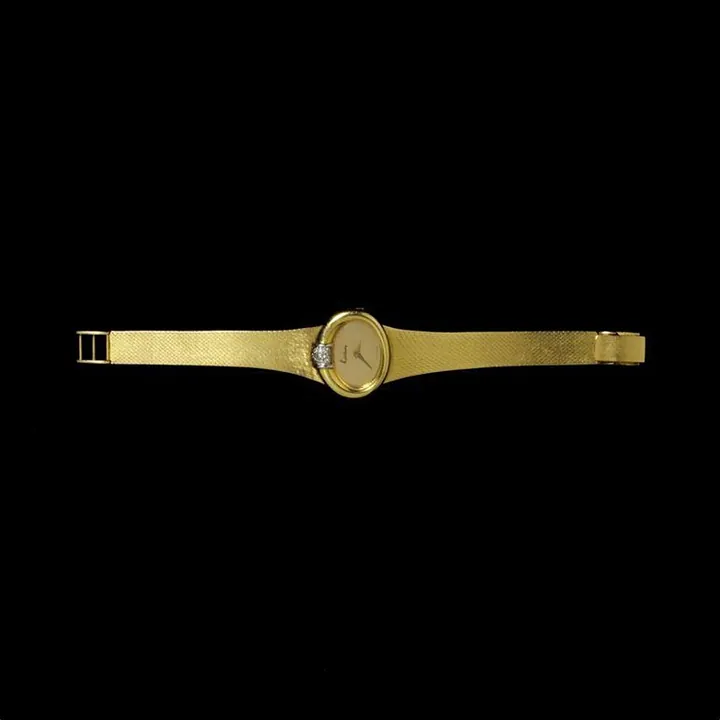
Pocket Watches · 1973
Woman's watch, gold with diamonds set in platinum. Made for Kutchinsky, London by Chopard et Cie. Switzerland, 1973
Victoria and Albert Museum, London
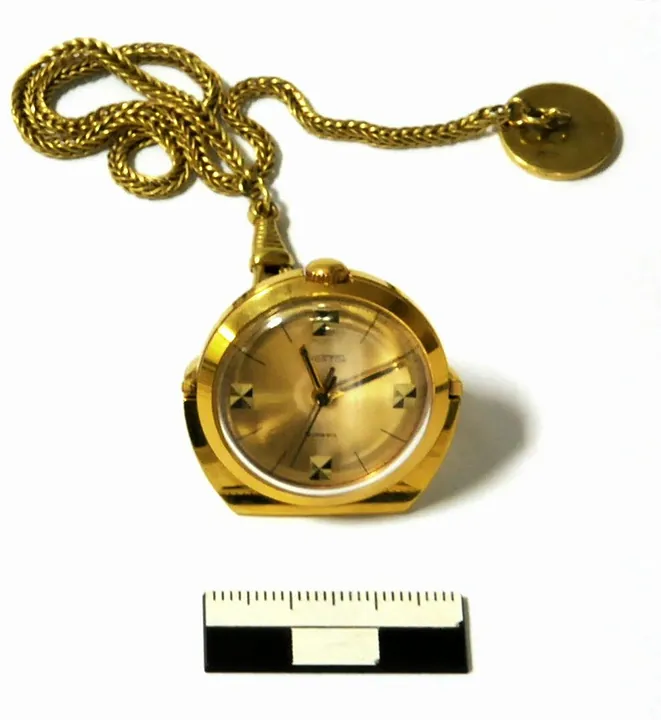
Pocket Watches · 1974
Pocket watch, Germany, 1974
Montanhistorisches Dokumentationszentrum
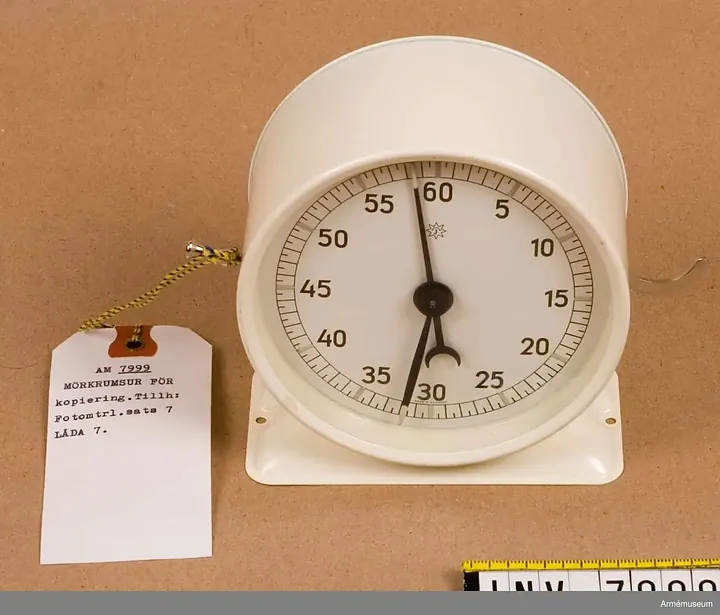
Pocket Watches · 1975
Pocket watch, 1975
Army Museum
Pocket Watches · c. 1980
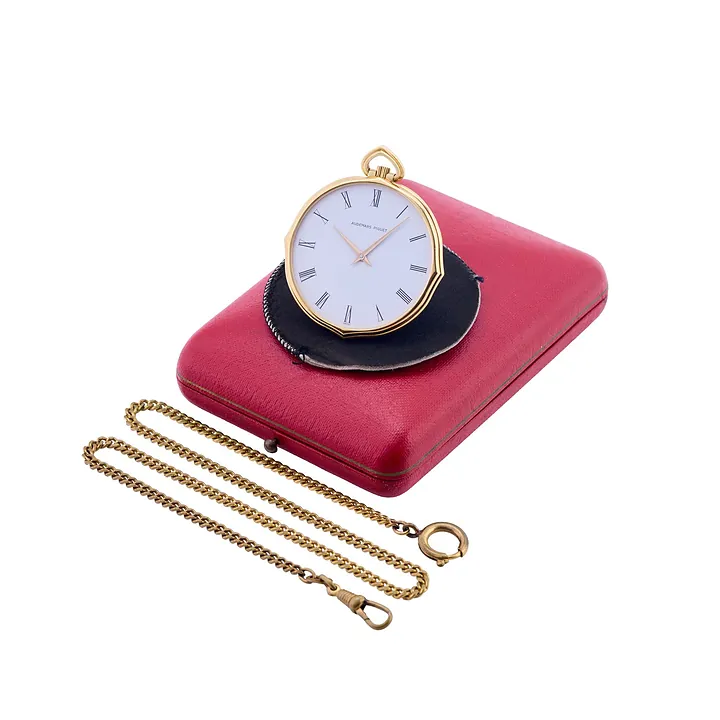
Audemars Piguet pocket watch, c. 1980
Antiquorum auction archive, Geneva