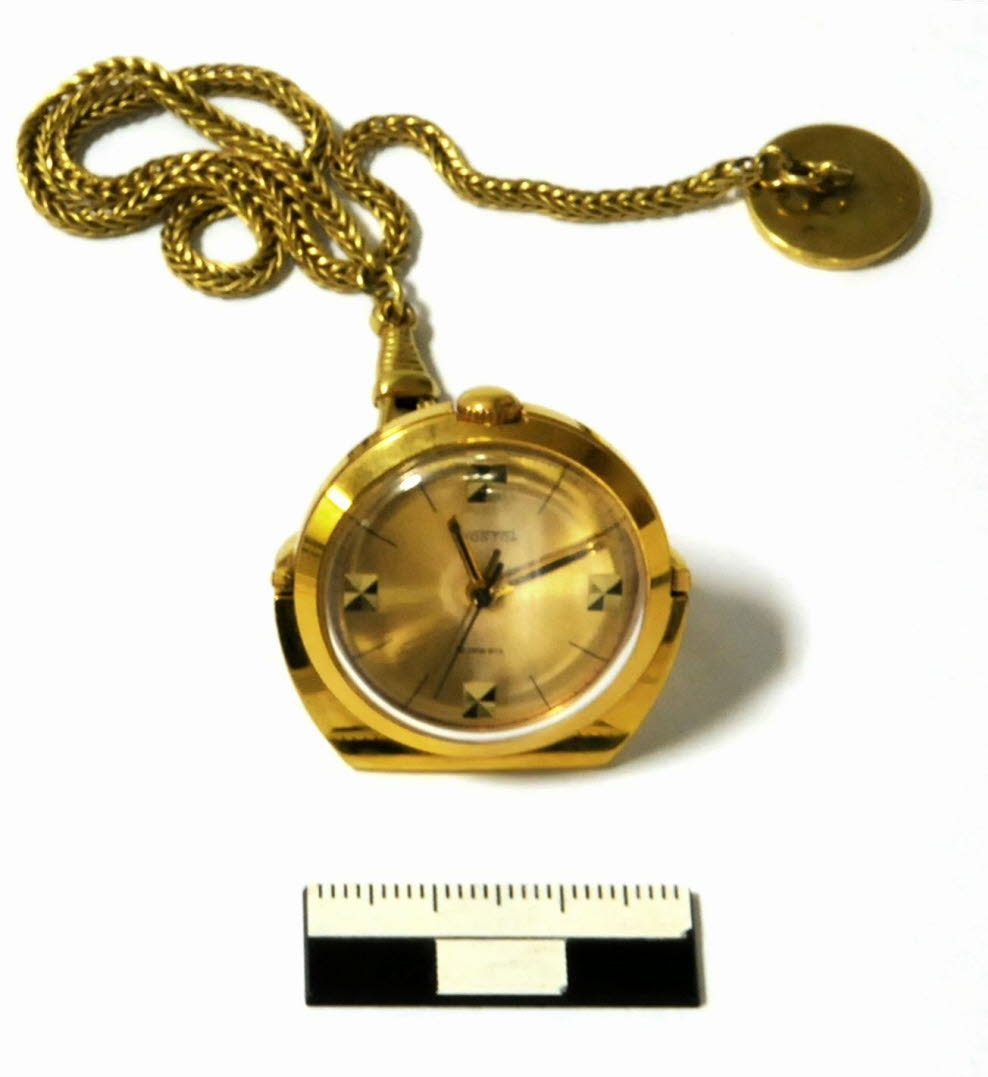
Pocket Watches · Pocket watch
Pocket watch, Germany, 1974
- Maker / attribution
- Unrecorded in source
- Date
- 1974
- Historical period
- Quartz Revolution (1969 – 1990)
- Country of origin
- Germany
- Place
- Germany
- Object type
- Pocket watch
- Holding institution
- Montanhistorisches Dokumentationszentrum
- Accession / object no.
- item_CRPMID7TZ3RXWBBMBTY3IMZCORDJHIRW
- Catalogue title (original)
- Taschenuhr aus dem Besitz des Generaldirektors der VVB Braunkohle Hans Waldmann (German)
Record summary
Held and catalogued by Montanhistorisches Dokumentationszentrum (object number item_CRPMID7TZ3RXWBBMBTY3IMZCORDJHIRW), this is a pocket watch, made in Germany, dated 1974. The Atlas places it in the Quartz Revolution period (1969 – 1990) of its Pocket Watches collection. The record is illustrated with 1 photograph.
Assembled from the source record's structured fields. Dates and attributions are given as the source states them; where a field is missing the Atlas leaves it blank rather than estimating.
Catalogue description
Catalogue description from Montanhistorisches Dokumentationszentrum (def)
Halboffene Taschenuhr mit goldenem Gehäuse, geriffelter und herausziehbarer Krone auf Position 12. Das Gehäuse ist zusätzlich von einem Rahmen umgeben, der zur Hälfte durch ein Scharnier nach hinten gelegt werden kann. Der Rahmen dient dann als Standfläche und die Uhr kann aufgestellt werden. Das Uhrenglas ist in einem Deckel mit Lünette eingelassen. Unter dem Uhrenglas liegt ein goldenes Zifferblatt mit Strichen als Zeitskala. Auf den Positionen 12, 3, 6 und 9 befinden sich jeweils quadratische, facettierte Felder. Die goldenen Stunden- und Minutenzeiger sind zusätzlich mit einer schwarzen Linie verziert, während der Sekundenzeiger komplett schwarz ausgestaltet ist. Das Zifferblatt trägt auf den Positionen 12 und 6 Schriftzüge. Der Rückdeckel ist mit einer Gravur versehen. Zur Uhr gehört eine Uhrkette mit einem goldenem Knopf als Endstück zur Befestigung an der Kleidung. Die Taschenuhr dient durch die Gravur "7.10.1974 VVB Brk" als Andenken.
Historical context
Quartz Revolution (1969 – 1990)
Seiko's Astron begins mass quartz timekeeping; traditional industries contract sharply.
Quartz pocket watches and inexpensive novelty watches appeared, while traditional mechanical pocket watches survived mainly as collectibles and gifts.
Read the period in the timelineMore pocket watches from this periodEarlier: Modern Mechanical Horology
Atlas type guide
Pocket watches
The pocket watch was the dominant personal timekeeper from the late seventeenth century until the First World War. Its development tracks the history of the escapement: verge watches with fusees until the late eighteenth century; Thomas Mudge's lever escapement (c. 1755) and the cylinder escapement popularised by George Graham and later by Swiss makers; and the Swiss and English lever watches of the nineteenth century. Lépine's bar-bridge calibre and keyless winding made watches thinner and easier to use.
Industrialisation transformed the trade: American factories such as Waltham (from 1850) and Elgin produced interchangeable parts by machine, and Swiss makers responded with their own mechanisation after the 1876 Philadelphia Exhibition. By 1900 a reliable watch was affordable to millions; the finest makers continued to produce complications and precision watches.
What to look for
- The escapement: verge (crown wheel), cylinder, duplex, English or Swiss lever.
- Key winding (a square arbor in dial or back) or keyless crown winding.
- Signatures and serial numbers on the movement, dial and inside case back.
- Hallmarks, case maker's marks and gold or silver standards stamped in the case.
- Dial material: enamel, silver, gold, later printed metal.
Dating clues
- Verge watches dominate before c. 1800; cylinder watches c. 1770–1900; lever watches after c. 1820.
- Keyless winding: increasingly common after c. 1860.
- Manufacturer serial number lists exist for Waltham, Elgin, Longines, Omega, Patek Philippe and others.
General guidance written by the Atlas editors about this kind of object. It is not a statement about this particular piece; for that, rely on the source record above and on physical examination.
Read next:Verge escapementDetached lever escapementFuseeIdentification Centre
Related records
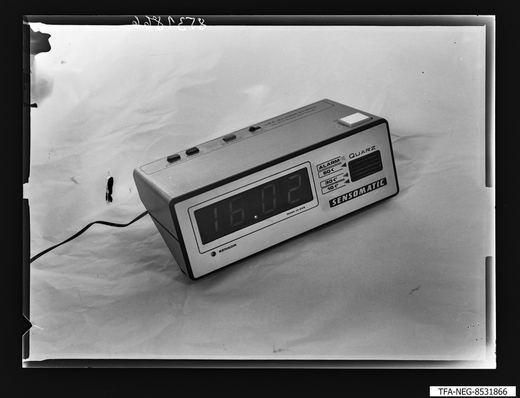
Pocket Watches · 1985
Pocket watch, Germany, 1985
Schöneweide Industrial Museum
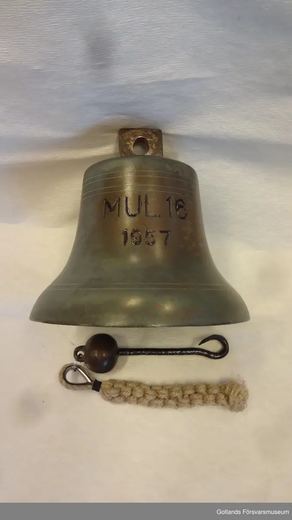
Pocket Watches · 1957–1990
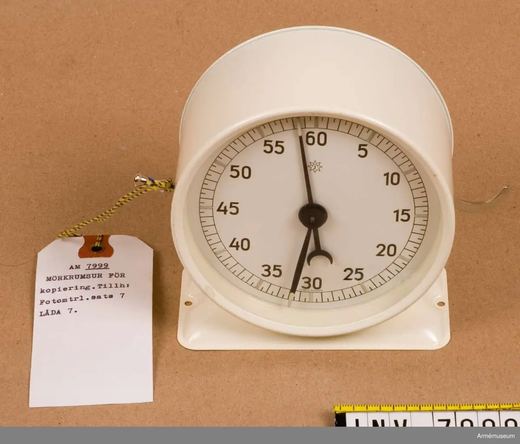
Pocket watch, Sweden, 1957–1990
Gotland Defense Museum
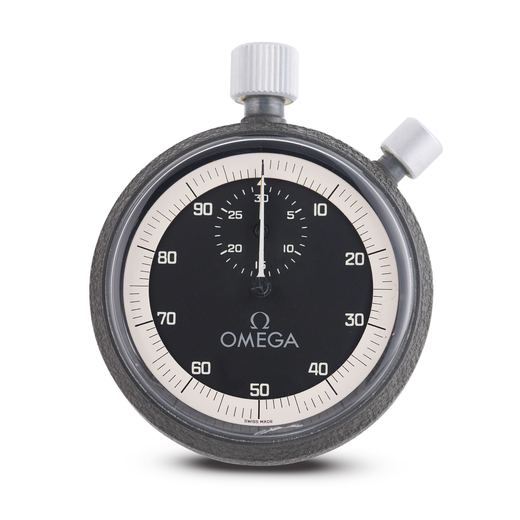
Pocket Watches · circa 1970s
Omega Stop Watch, circa 1970s
Antiquorum auction archive, Geneva
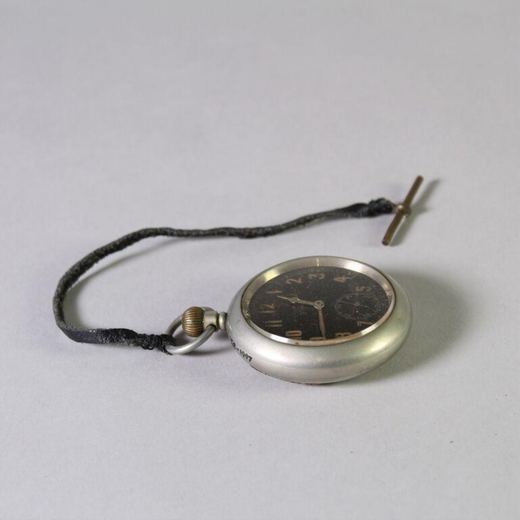
Pocket Watches · 1970
Watch, Williamson, British, 1970
Victoria and Albert Museum, London
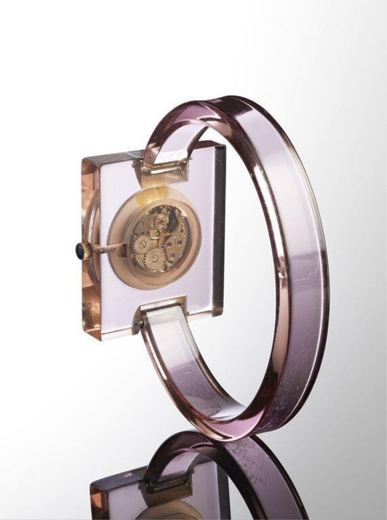
Pocket Watches · 1970s
Wristwatch, plastic, by Gucci; Italy, 1970s.
Victoria and Albert Museum, London
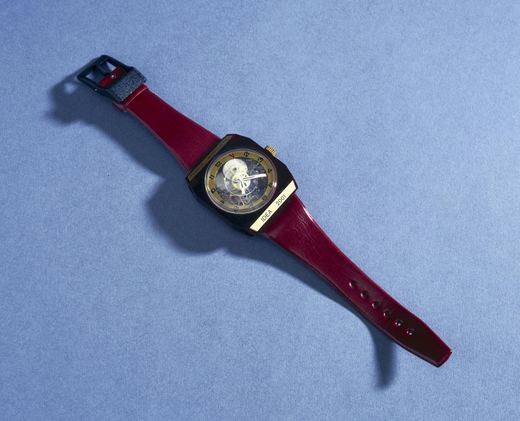
Pocket Watches · 1971–2001
"Tissot synthetic idea 2001" the first plastic watch, introduced in 1971
Science Museum Group, London
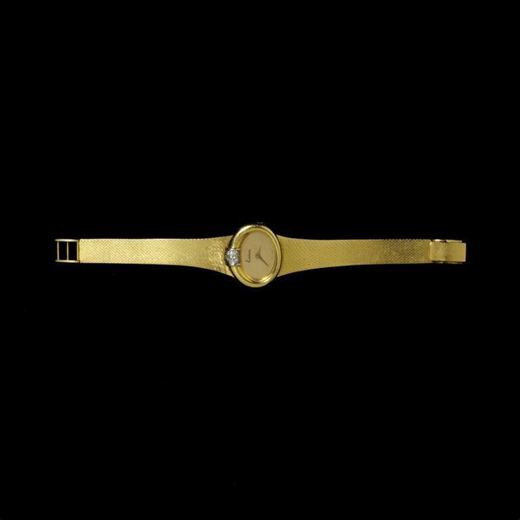
Pocket Watches · 1973
Woman's watch, gold with diamonds set in platinum. Made for Kutchinsky, London by Chopard et Cie. Switzerland, 1973
Victoria and Albert Museum, London
Pocket Watches · 1975
Pocket watch, 1975
Army Museum