
Pocket Watches · Musical automaton pocket watch
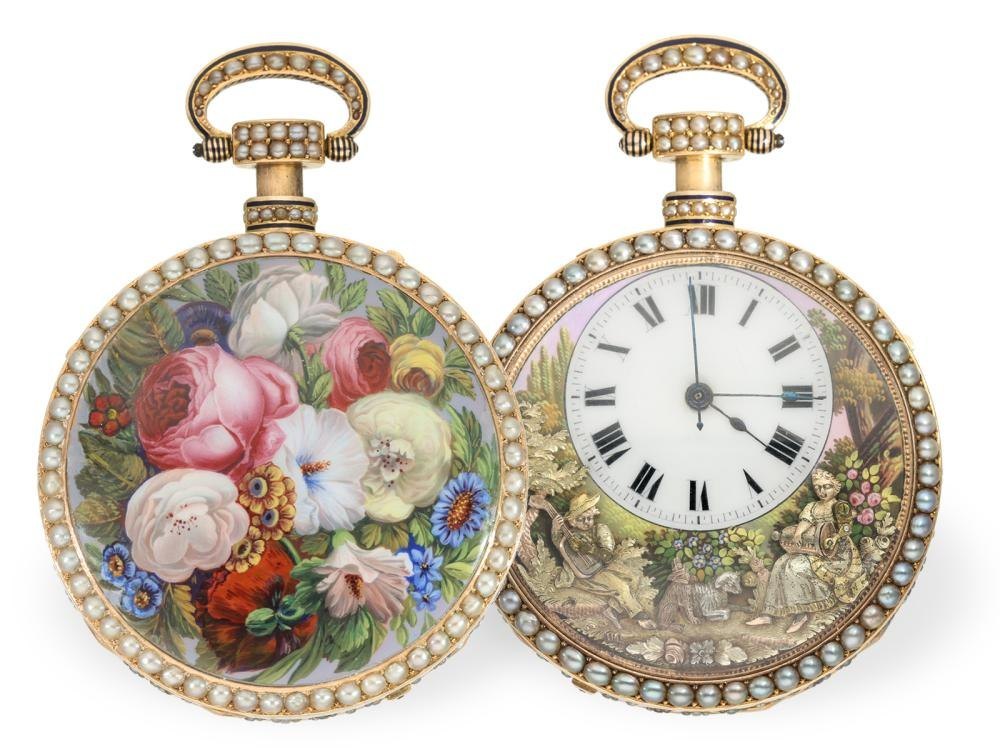
Gold and enamel musical automaton pocket watch attributed to Piguet & Meylan
- Maker / attribution
- Piguet & Meylan (source attribution (attributed))
- Date
- c. 1820
- Historical period
- Precision & Scientific Horology (1750 – 1850)
- Country of origin
- Switzerland
- Object type
- Musical automaton pocket watch
- Auction house
- Cortrie Spezial Auktionen / Invaluable
- Lot
- 4266
- Credit line
- Cortrie Spezial Auktionen / Invaluable
- Catalogue title (original)
- Sold at Auction: Pocket watch: important gold/enamel musical automaton for the Chinese market, attributed to Piguet & Meylan ca. 1820 (English)
View the source record (auction lot) ↗ (opens another website in a new tab)Suggest a correction
Record summary
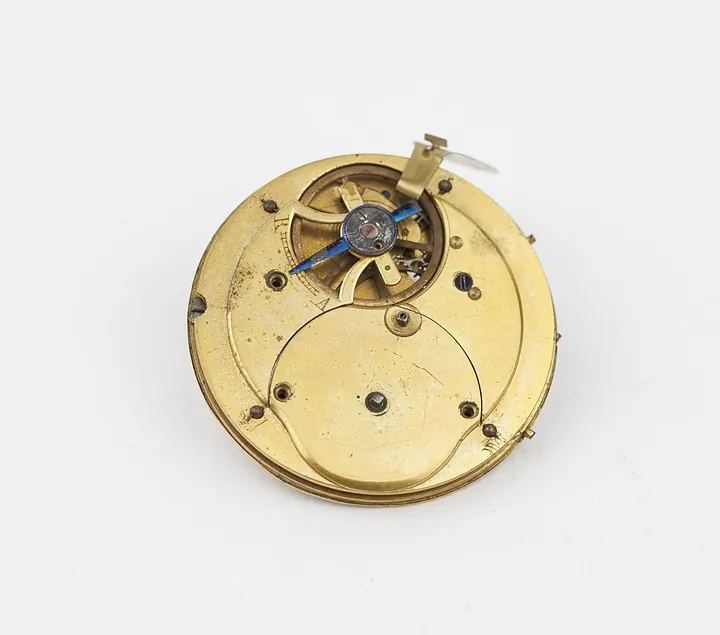
Catalogued by Cortrie Spezial Auktionen / Invaluable (lot 4266), this is a musical automaton pocket watch attributed to Piguet & Meylan, made in Switzerland, dated c. 1820. The Atlas places it in the Precision & Scientific Horology period (1750 – 1850) of its Pocket Watches collection. The record is illustrated with 1 photograph.
Assembled from the source record's structured fields. Dates and attributions are given as the source states them; where a field is missing the Atlas leaves it blank rather than estimating.
Catalogue description
Original object description
Stylistically attributed to the Geneva makers Piguet & Meylan for export to China, this 18K pink gold musical pocket watch dates to approximately 1820. It has a diameter of roughly 53 mm, a weight of about 127 g, and bears serial number 4836 without any maker signature. A perimeter band of turquoise and dark blue enamel decorates the case, while split Oriental pearls line the case sides, border, bow, and pendant. Pressing a button on the pendant releases the spring-loaded back cover, which is ornamented with a Genevan-style enamel floral bouquet showing professional restoration at its edges. The dial side features an enameled landscape containing automaton figures alongside an eccentric white enamel dial displaying Roman numerals and a center seconds hand. Driven by a cylinder escapement, the movement provides hour and quarter-striking repeat functions as well as an hourly musical sequence. The musical mechanism and the automaton hurdy-gurdy player operate, whereas the lute-playing figure is non-functional; an interior plaque within the case and automaton mechanism exhibits restoration.
Inscriptions & marks
4836
Historical context
Precision & Scientific Horology (1750 – 1850)
Harrison solves longitude; Mudge invents the lever; Breguet's Paris workshop defines the modern watch.
From 1750 to 1850 the watch became a precision instrument. Mudge's lever escapement, the cylinder escapement, Lépine's thin bar calibre, Breguet's innovations (overcoil, tourbillon, perpétuelle) and the pocket chronometer of Arnold and Earnshaw all date from this period, while verge watches remained common in cheaper production.
Read the period in the timelineMore pocket watches from this periodEarlier: Early Modern Horology
Atlas type guide
Watches for the Chinese and Ottoman markets
From the late eighteenth century English and Swiss makers produced watches specifically for export to China and the Ottoman Empire. For China, Fleurier houses such as Bovet, Juvet and Vrard made matching pairs of watches with richly engraved and decorated movements, often with the duplex escapement whose centre seconds hand jumps in full seconds. For Ottoman buyers, London makers such as George Prior and Markwick Markham supplied verge watches with Turkish numerals in triple or quadruple cases of tortoiseshell and silver.
These watches reflect global trade networks and the tastes of distant markets, and are important evidence for cross-cultural exchange in horology.
What to look for
- Engraved, fully decorated movements visible under a glass back.
- Duplex escapement with a jumping centre seconds hand.
- Chinese characters on the movement (e.g. the maker's name in transliteration).
- Turkish (Ottoman) numerals on the dial and multiple protective outer cases.
Dating clues
- Chinese-market Fleurier watches: c. 1820–1900.
- English Ottoman-market watches: c. 1770–1850.
General guidance written by the Atlas editors about this kind of object. It is not a statement about this particular piece; for that, rely on the source record above and on physical examination.
Read next:Verge escapement
Related records
Pocket Watches · 1750-60
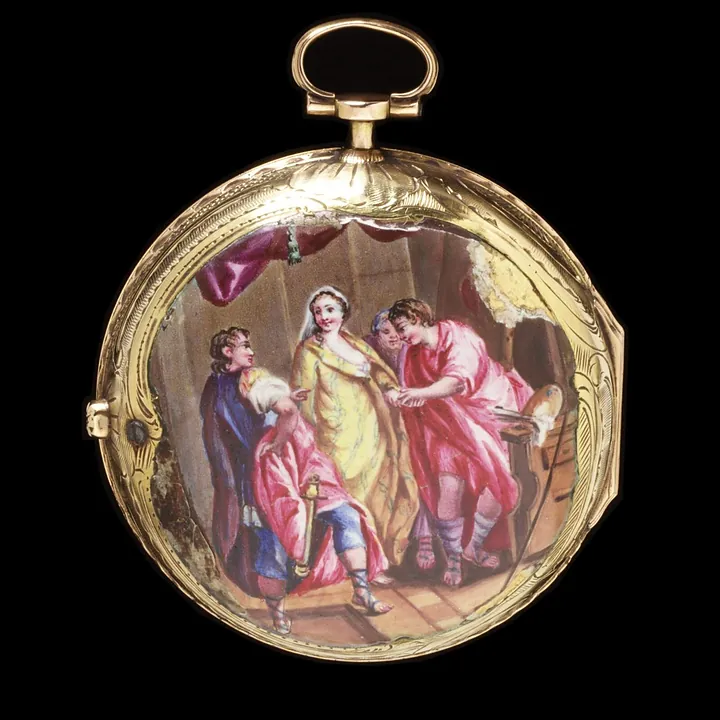
Watch by Noël Balthazard, Switzerland, 1750-60
Victoria and Albert Museum, London
Pocket Watches · 1754
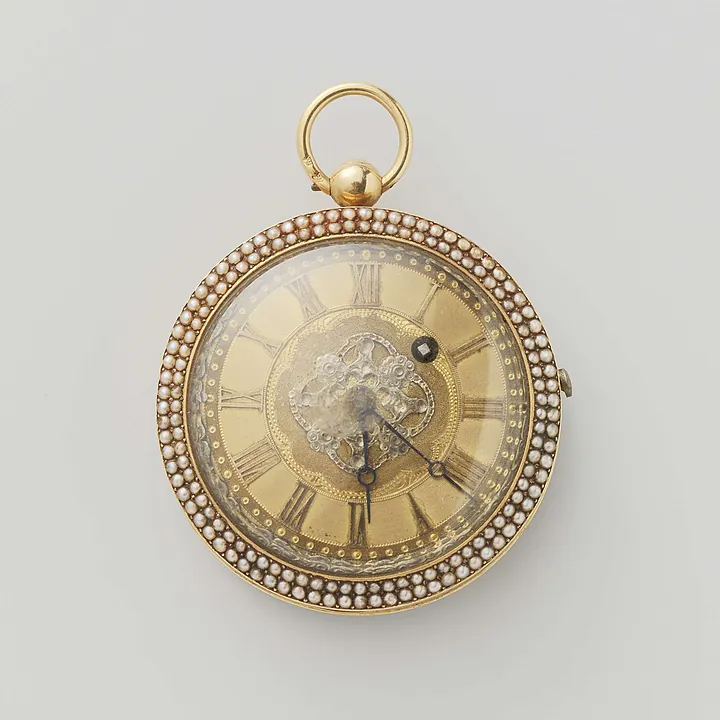
Pocket watch, Switzerland, 1754
Rijksmuseum
Pocket Watches · 1765-70
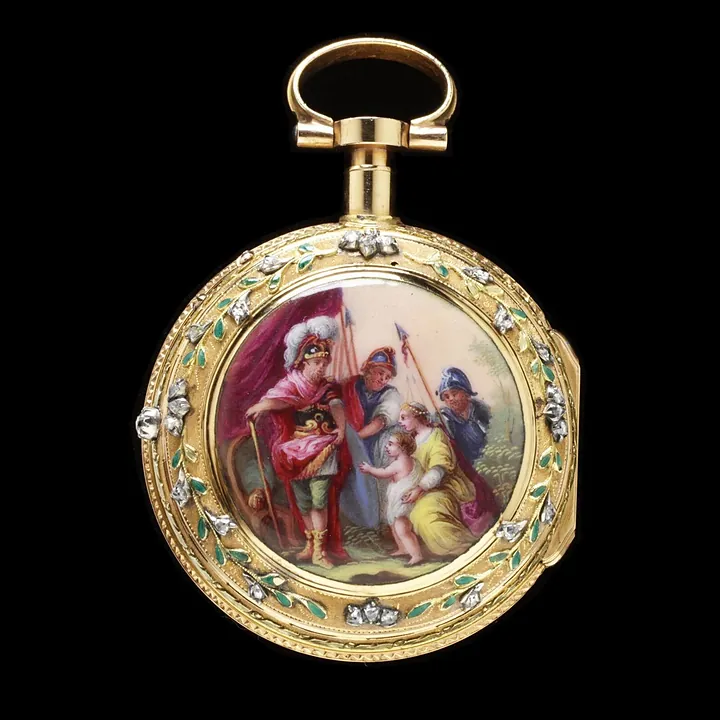
Watch and case by Jean Fazy, Switzerland, 1765-70
Victoria and Albert Museum, London
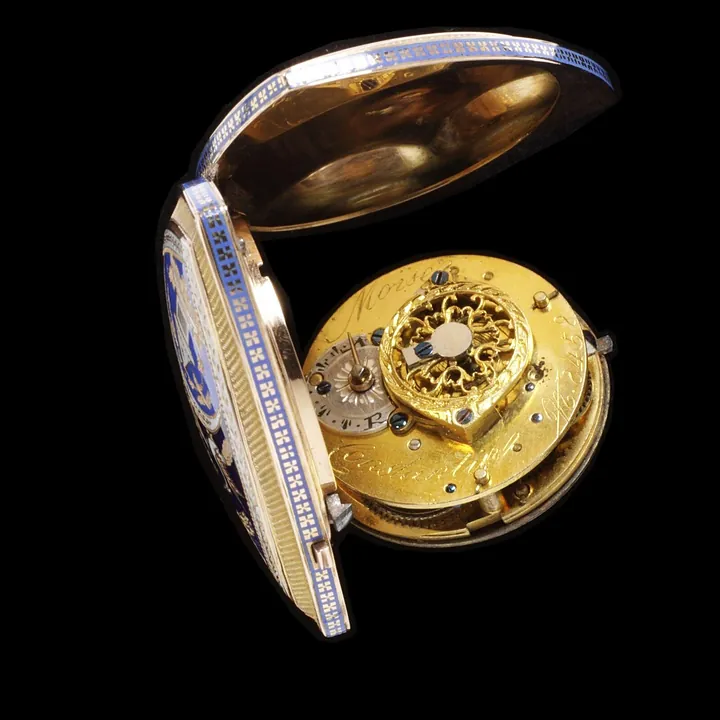
Pocket Watches · c.1790
Enamelled gold watch signed 'Moise Constantin', Geneva, c.1790
Victoria and Albert Museum, London
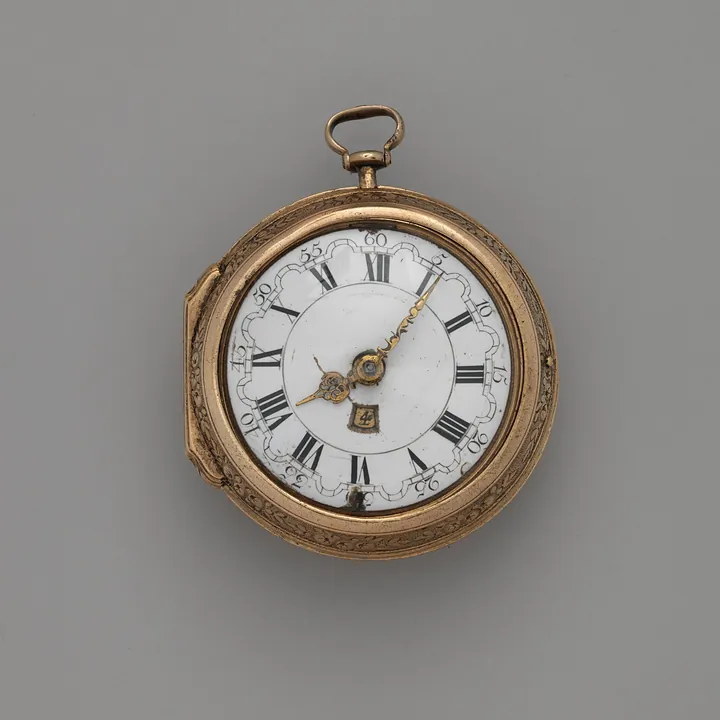
Pocket Watches · late 18th century
Watch by John Wilter, Switzerland, late 18th century
The Metropolitan Museum of Art, New York
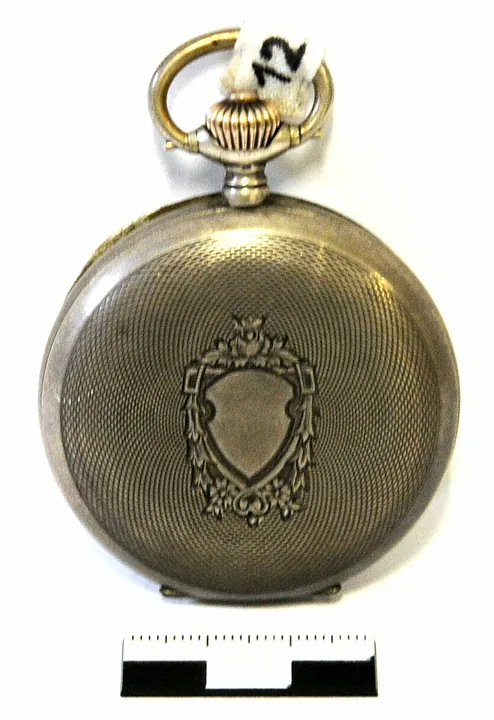
Pocket Watches · 1800–1899
Pocket watch, Switzerland, 1800–1899
Montanhistorisches Dokumentationszentrum
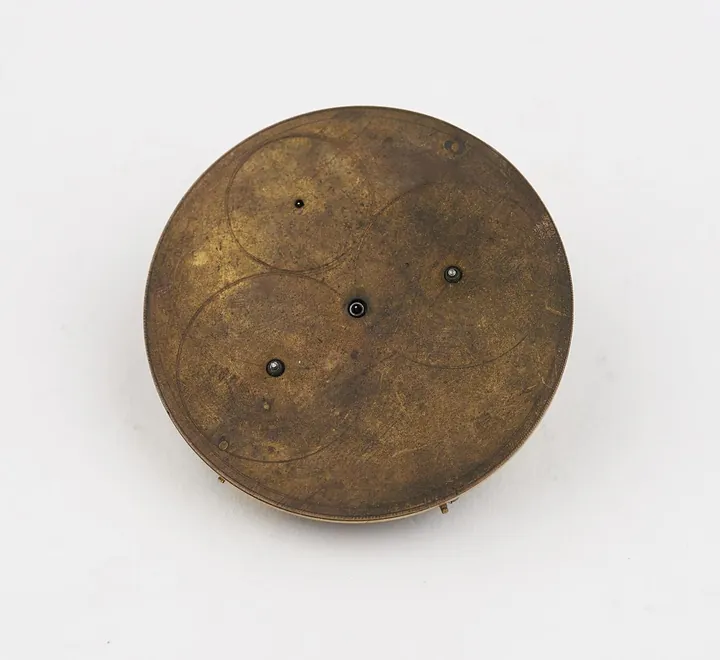
Pocket Watches · 1801–1900
Pocket watch, Switzerland, 1801–1900
Science Museum Group, London
Pocket Watches · 1801–1900
Swiss or French movement with horizontal escapement including "Jumper" mechanism, damaged (cylinder broken), incomplete (dial etc. missing) no.390, 1801–1900
Science Museum Group, London