
Wristwatches · Wristwatch
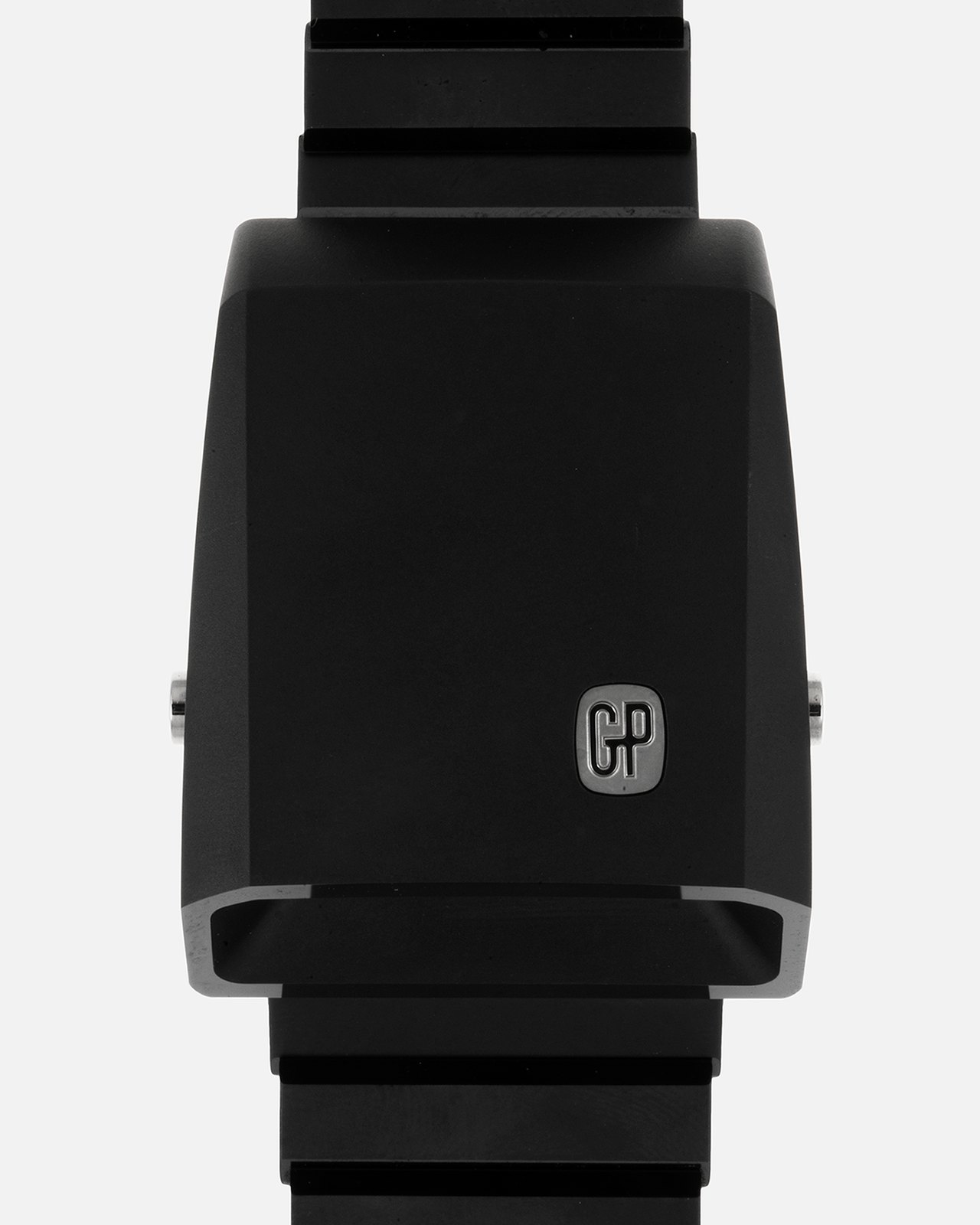
Girard Perregaux Casquette 2.0, 2022
- Maker / attribution
- Girard-Perregaux (maker)
- Date
- 2022
- Historical period
- Contemporary Horology (2010 – Present)
- Country of origin
- Switzerland
- Object type
- Wristwatch
- Dimensions
- Case 42.4 mm
- Stock no.
- Product 6880081739863
- Credit line
- Dealer listing, S.Song Watches (product 6880081739863)
- Catalogue title (original)
- Girard Perregaux Casquette 2.0 (English)
View the source record (dealer listing) ↗ (opens another website in a new tab)Suggest a correction
Record summary
Catalogued by S.Song Watches (dealer), Seattle (stock number Product 6880081739863), this is a wristwatch by Girard-Perregaux, made in Switzerland, dated 2022. The Atlas places it in the Contemporary Horology period (2010 – Present) of its Wristwatches collection. Recorded dimensions: Case 42.4 mm. The record is illustrated with 6 photographs.
Assembled from the source record's structured fields. Dates and attributions are given as the source states them; where a field is missing the Atlas leaves it blank rather than estimating.
Catalogue description
Dealer description — S.Song Watches
The 1970s were an interesting decade for the world of watchmaking. The world saw many reputable and historic brands placing their focus on developing and introducing more quartz models, but none of them did it quite like Girard Perregaux, who introduced the “Casquette” in 1976. The watch originally went by an uninspiring reference number of “9931”, but was subsequently bestowed its endearing moniker as we know it today by collectors due to its one-of-a-kind design which only saw two whole production years. As a result, only 8,200 pieces were produced, which made it an incredibly sought-after timepiece by collectors and enthusiasts around the world in the subsequent decades that followed. Fast forward to 2022, Girard Perregaux decided to revisit and bring back the Casquette. Following its original moniker, it has now taken on “Casquette 2.0” as its renewed identity. Now what makes the Casquette 2.0 interesting is that it has been retooled with some functional upgrades: now encased in a scratch-resistant ceramic and grade 5 titanium shell, making it extremely lightweight (107g, in fact) and hypoallergenic. It also features a new quartz movement – Cal. GP03980-1474, which first made its debut last year with the brand’s “Only Watch” charity auction piece unique in collaboration with Bamford Watch Department. The movement operates at a frequency of 32,768 Hertz, which Girard Perragaux claims to have used first before it became the universal standard for most quartz movements. What’s really compelling about this new quartz movement is that it comes equipped with additional functionalities specially geared for the modern user. In common with its predecessor, the tubular LED display on the Casquette 2.0 can show more than just the hours, minutes, seconds, day, and date, but also additional information such as the month, year, chronograph, second-time zone and a secret date which allows the user to save a memorable date of the user’s choice. As far as size and wearability go, the Casquette 2.0 measures 42.4mm x 33.6mm and has a thickness of 14.64mm. For me, wearing the Casquette 2.0 is quite a unique experience due to its unconventional “driver watch’ design. In some ways, the watch is also quite reminiscent of the much later MB&F HM5. The watch also comes on a ceramic bracelet with a thoughtful flexible rubber interior which is great news for those with hairy wrists. In addition to that, the bracelet also comes paired with a matching folding titanium buckle. The Casquette 2.0 is undoubtedly, a remake done very well by Girard Perregaux. I am actually quite impressed with Girard Perregaux’s thoughtful approach in updating the case material and its overall function whilst retaining the aesthetic and appeal of the vintage original. In terms of production numbers of this updated variant, Girard Perregaux was inspired by the initial production numbers in 1976 and decided to limit the production of the Casquette 2.0 to just 820 pieces. This watch is a real conversation starter if you ask me. If you have an interest in unconventional-looking watches with a history and retro-futuristic vibe, you may want to take a closer look at this rare Casquette 2.0.
Historical context
Contemporary Horology (2010 – Present)
Silicon components, connected watches, optical-lattice research clocks and a thriving independent scene.
Smartwatches became the world's best-selling watches, while mechanical watchmaking focuses on craft, innovation (silicon components, new escapements) and independent makers.
Read the period in the timelineMore wristwatches from this periodEarlier: Mechanical Renaissance
Atlas type guide
Wristwatches
Bracelet watches were worn by women from the early nineteenth century — Breguet made one for Caroline Murat, Queen of Naples, in 1810–12 — but the wristwatch only became a man's instrument with military use and aviation in the early twentieth century. Between the World Wars it overtook the pocket watch; the 1920s and 1930s brought rectangular Art Deco cases, water-resistant cases and the first automatic winding systems.
After 1945 the wristwatch became a carrier of identity — dress watches, sports and dive watches, chronographs, calendars — produced by Swiss, American, Japanese, German, Soviet and Chinese industries. The quartz revolution after 1969 and the mechanical renaissance since the 1990s, including the rise of independent watchmakers, complete the story.
What to look for
- The reference number (between the lugs or inside the case back) and serial number, the starting point for dating.
- The calibre: its maker and number are often stamped under the dial or on the bridge.
- Originality of dial, hands and crown — refinished ('redial') dials are common.
- Case material marks: 18K/750, 14K/585, stainless steel, gold-filled, plated.
Dating clues
- Wire-lug cases: before c. 1925.
- Water-resistant screw-down cases: from 1926.
- Quartz movements: from 1969; sapphire crystals widespread after c. 1980.
General guidance written by the Atlas editors about this kind of object. It is not a statement about this particular piece; for that, rely on the source record above and on physical examination.
Related records
Wristwatches · 1970s
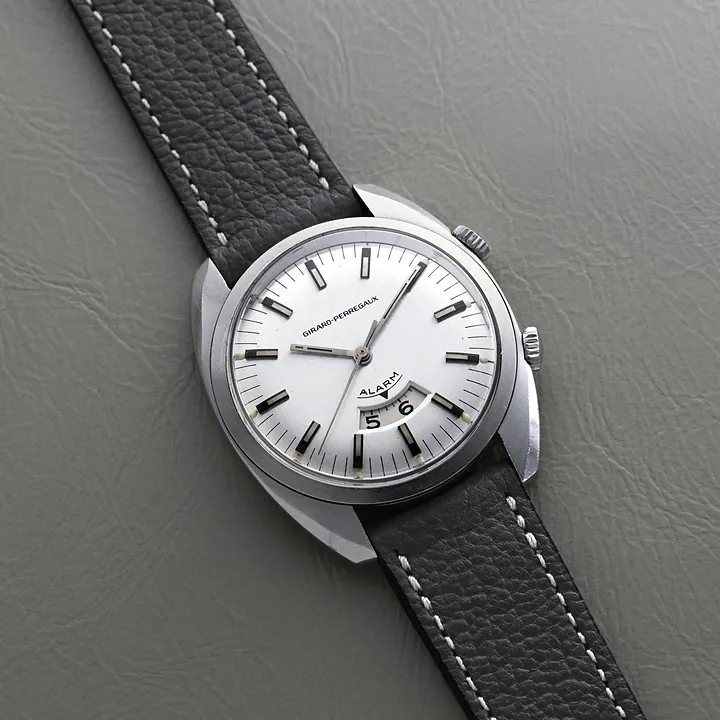
Girard Perregaux Alarm, 1970s
Analog/Shift (dealer), New York
Wristwatches · 1960s
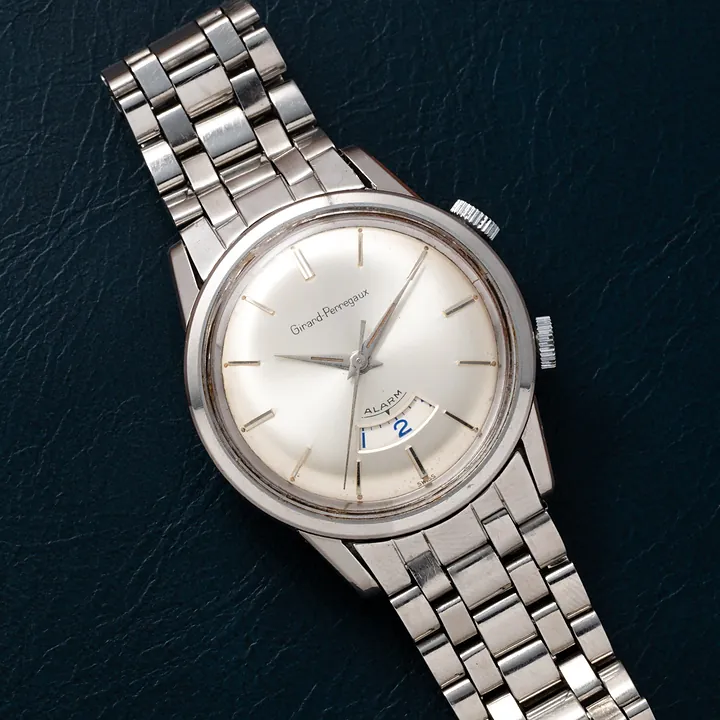
Girard Perregaux Alarm, 1960s
Analog/Shift (dealer), New York
Wristwatches · c. 1940s
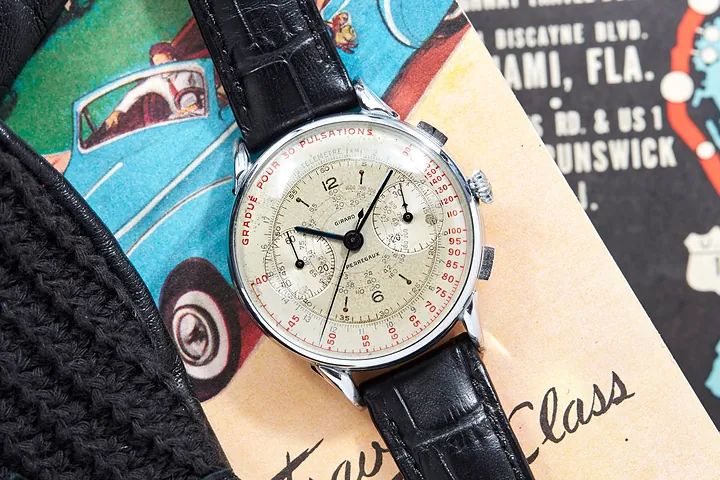
Girard-Perregaux Pulsations Chronograph, c. 1940s
Analog/Shift (dealer), New York
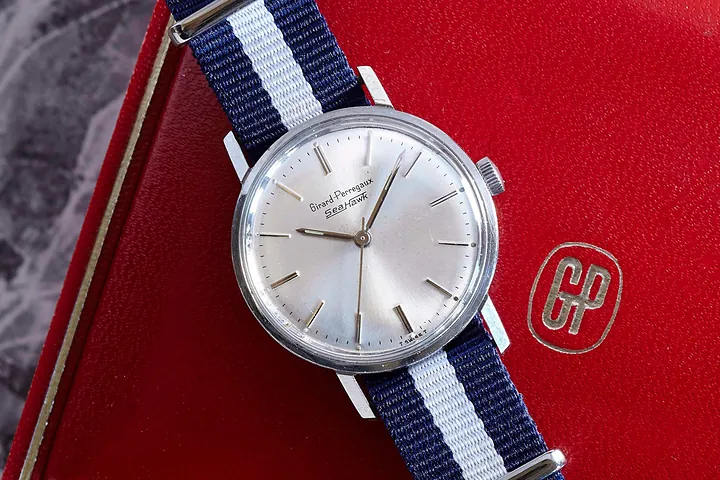
Wristwatches · 1960
Girard-Perregaux Seahawk, 1960
Analog/Shift (dealer), New York

Wristwatches · c. 2010s
Breguet Type XXI, ref. 3810, c. 2010s (Antiquorum Lot 381-24)
Antiquorum auction archive, Geneva

Wristwatches · c. 2010s
Breguet Type XXI, ref. 3810, c. 2010s (Antiquorum Lot 386-229)
Antiquorum auction archive, Geneva

Wristwatches · Sold in September 2010
Breitling Cosmonaute, ref. A 22322, Sold in September 2010
Antiquorum auction archive, Geneva

Wristwatches · c. 2010
Corum Bubble Chrono, ref. 396.150.20, c. 2010
Antiquorum auction archive, Geneva