
Clocks · Clock
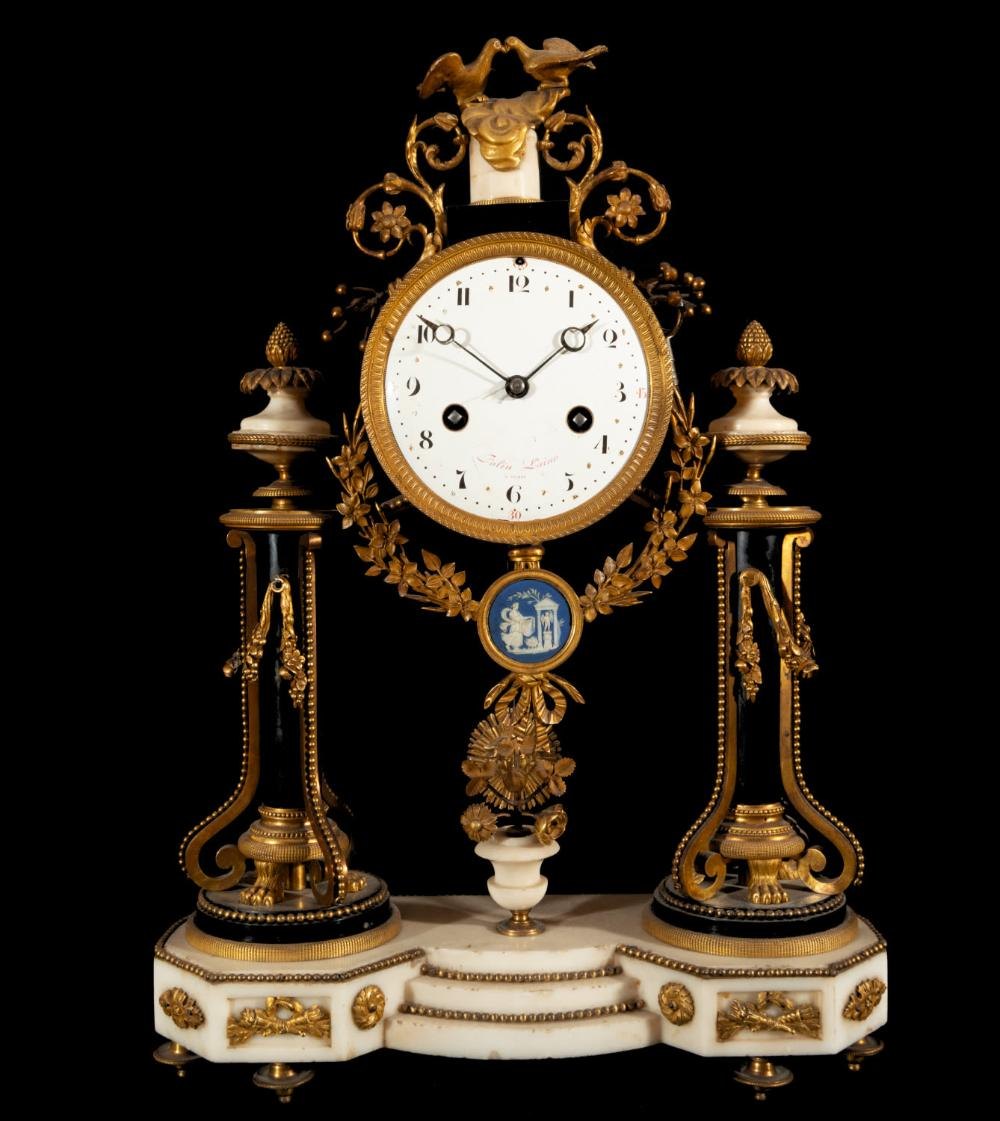
Louis XVI table clock by Nicolas-Alexandre Folin, France, 18th century
- Maker / attribution
- Unrecorded in source
- Date
- 18th century
- Historical period
- Early Modern Horology (1600 – 1750)
- Country of origin
- France
- Object type
- Clock
- Materials / technique
- marble, enamel, silver
- Auction house
- Invaluable auction listings
- Lot
- Lot E80C4BB4B6
- Credit line
- Auction lot record: lot 435, 2nd Grand November Auction · Old Masters & Decorative Arts, Templum Fine Art Auctions (2026), via Invaluable
- Catalogue title (original)
- French 18th century Louis XVI table clock H.1780 Nicolas-Alexandre Folin (English)
Editor's note
Title rewritten in English from the auction house's own lot title (Dutch, German or run into the description); facts unchanged.View the source record (auction lot) ↗ (opens another website in a new tab)Suggest a correction
Record summary
Catalogued by Invaluable auction listings (lot Lot E80C4BB4B6), this is a clock, made in France, dated 18th century. The Atlas places it in the Early Modern Horology period (1600 – 1750) of its Clocks collection. Materials and techniques recorded by the source: marble, enamel, silver. The record is illustrated with 4 photographs.
Assembled from the source record's structured fields. Dates and attributions are given as the source states them; where a field is missing the Atlas leaves it blank rather than estimating.
Catalogue description
Lot description — Templum Fine Art Auctions
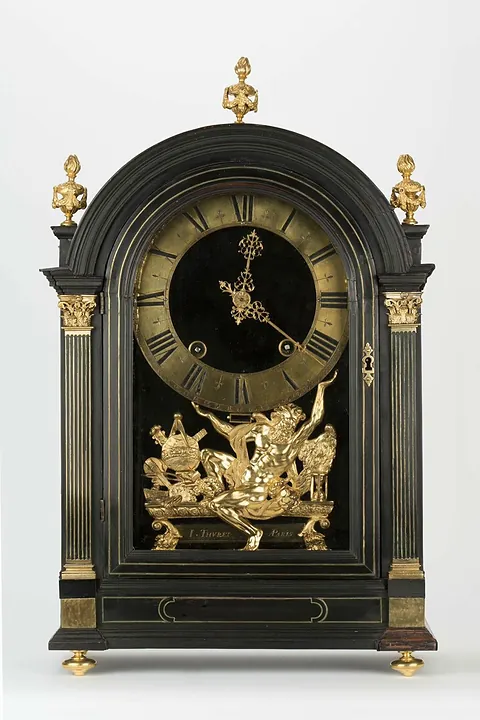
Table clock France 18th century Louis XVI H.1780 Nicolas-Alexandre Folin Clocks - Tabletop Manual Winding Black and white marble table clock 'pendule portique', late 18th century, vintage Louis XVI; enamel dial with Arabic numerals, signed 'Folin l'Ainé à Paris', the mechanism with an anchor escapement and a pendulum suspended from rope, the sound mechanism with counting wheel, ringing once on the half hour and the whole hour on a silver amalgamated bell. 53x37x15 cm. Unlike many artisans, Nicolas-Alexandre Folin was the rare individual who managed to prosper during the turbulent French Revolution. Although he was only accepted into the guild as a master in 1789, the year the revolution began, Folin had been active as a watchmaker for many years before. Provenance: The Antoon Gaemers Collection: Four Generations of ChronometryAntoon Gaemers was a connoisseur of chronometry and the last of four generations of watchmakers. He was well known among colleagues and collectors and was a passionate defender of everything that had to do with the phenomenon of time. Demonstrable in the last two photographs, the same watch that occupies our place appears.
Provenance
The Antoon Gaemers Collection: Four Generations of ChronometryAntoon Gaemers was a connoisseur of chronometry and the last of four generations of watchmakers
Historical context
Early Modern Horology (1600 – 1750)
Huygens' pendulum and balance spring transform accuracy; English makers develop the anchor and deadbeat escapements.
Huygens's pendulum (1656–57) improved clock accuracy from about a quarter of an hour to under a minute a day. The anchor escapement (c. 1670) and the long seconds pendulum created the longcase clock; London makers such as Fromanteel, Knibb, Tompion and Quare led European clockmaking, and French makers created the Boulle pendule.
Read the period in the timelineMore clocks from this periodEarlier: Renaissance Horology
Atlas type guide
Bracket, table and spring-driven clocks
Spring-driven clocks freed timekeeping from the hanging weight. The coiled mainspring, documented from the fifteenth century, made portable table clocks possible; to even out its declining force, makers used the fusee, a conical pulley connected to the barrel by a gut line or chain. Renaissance table clocks from Augsburg and Nuremberg — drum-shaped, square or tower-shaped in gilt brass — were luxury scientific objects, often with astronomical dials and alarms.
After the pendulum, English makers developed the bracket clock: a wooden case with a carrying handle, a short pendulum with a verge escapement, and often repeating work to sound the hours on demand at night. Later examples use the anchor escapement. In the nineteenth century, 'table clock' became a broad term for spring clocks of every nationality.
What to look for
- A fusee in the movement (cone-shaped pulley) and the type of line — gut or chain.
- Verge escapement with a short bob pendulum, often with a decoratively engraved backplate.
- Repeat cords or buttons that make the clock strike again on demand.
- Gilt-brass engraved cases and horizontal dials on Renaissance pieces.
- Case shapes: inverted bell, bell top, break-arch, lancet or balloon.
Dating clues
- Drum and tower table clocks: c. 1520–1650.
- Ebony veneered English bracket clocks with verge escapements: c. 1670–1800.
- Engraved backplates were usual on English clocks until c. 1800, then generally plain.
General guidance written by the Atlas editors about this kind of object. It is not a statement about this particular piece; for that, rely on the source record above and on physical examination.
Read next:FuseeVerge escapement
Related records
Clocks · 1590–1610
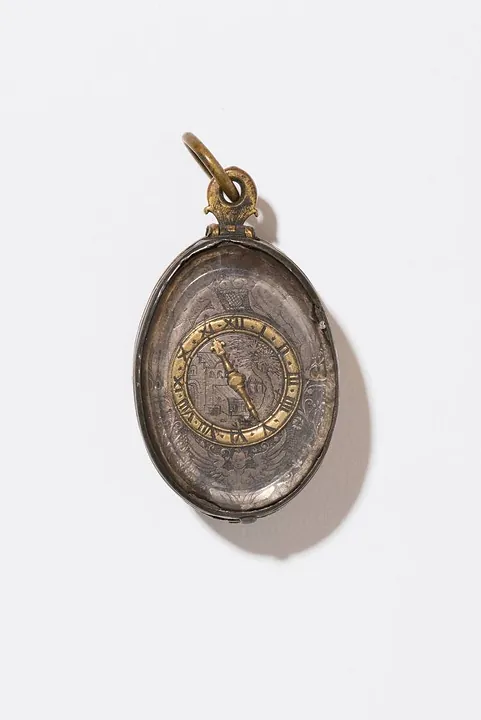
Clock, France, 1590–1610
MAK – Museum of Applied Arts
Clocks · c. 1600
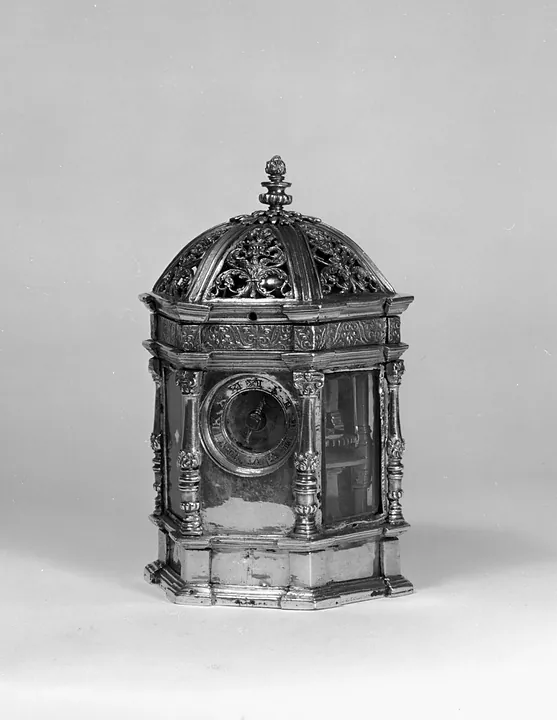
Table Clock, sheet brass, engraved, pierced and gilt, Paris, ca.1600, signed 'B(?) Pichard, à Paris'
Victoria and Albert Museum, London
Clocks · 1600–1699
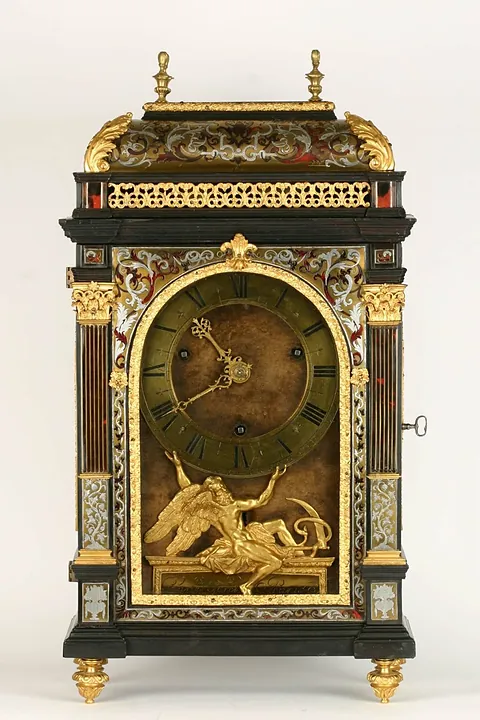
Table clock by Charles Goret, France, 1600–1699
German Clock Museum
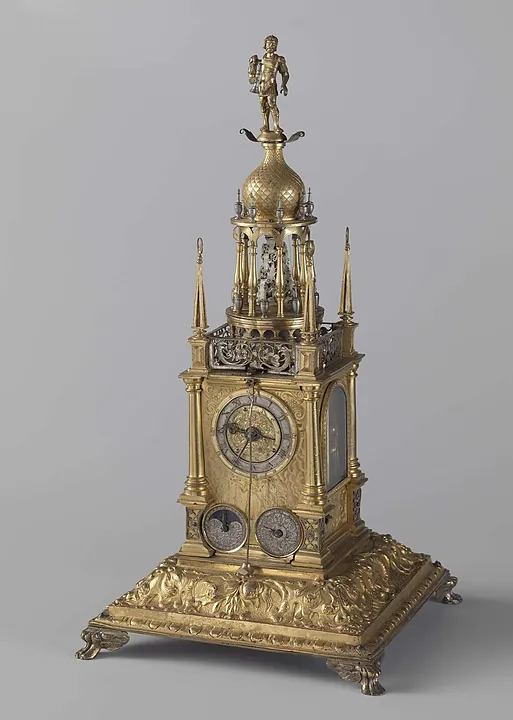
Clocks · 1640
Table clock, France, 1640
Rijksmuseum
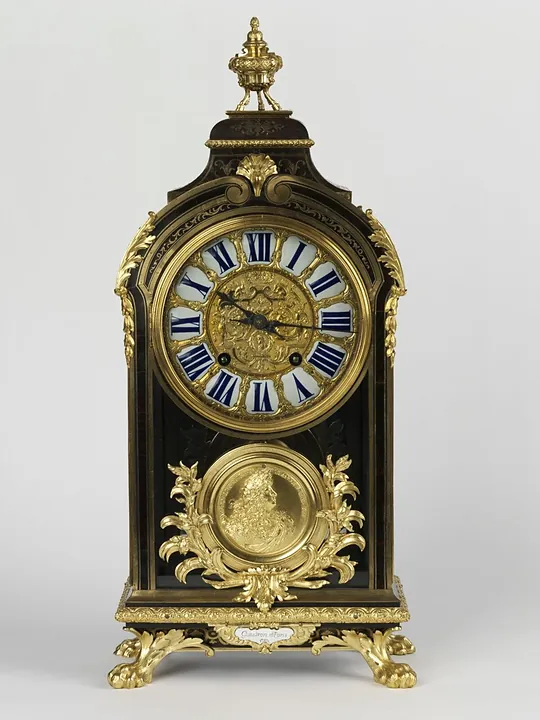
Clocks · late 17th century
Clock with case of tortoiseshell inlaid with brass, Paris, late 17th century
Victoria and Albert Museum, London
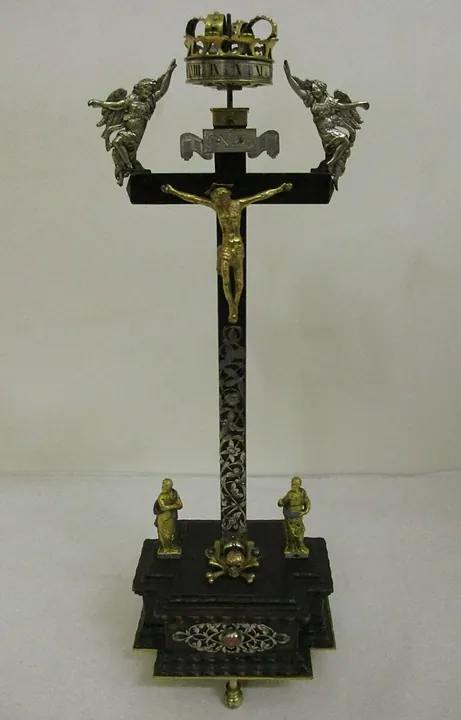
Clocks · 1650
Crucifix Clock, signed W. H. Arnstad, mid- 17th century.
Victoria and Albert Museum, London
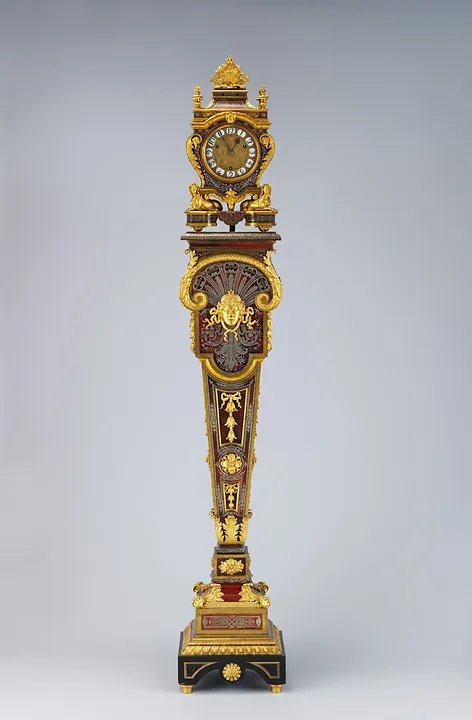
Clocks · c. 1690
Clock with pedestal, case attributed to André Charles Boulle, France, c. 1690
The Metropolitan Museum of Art, New York
Clocks · c. 1690
Table clock by Marc Boucher, France, c. 1690
German Clock Museum