
Instruments · Stopwatch
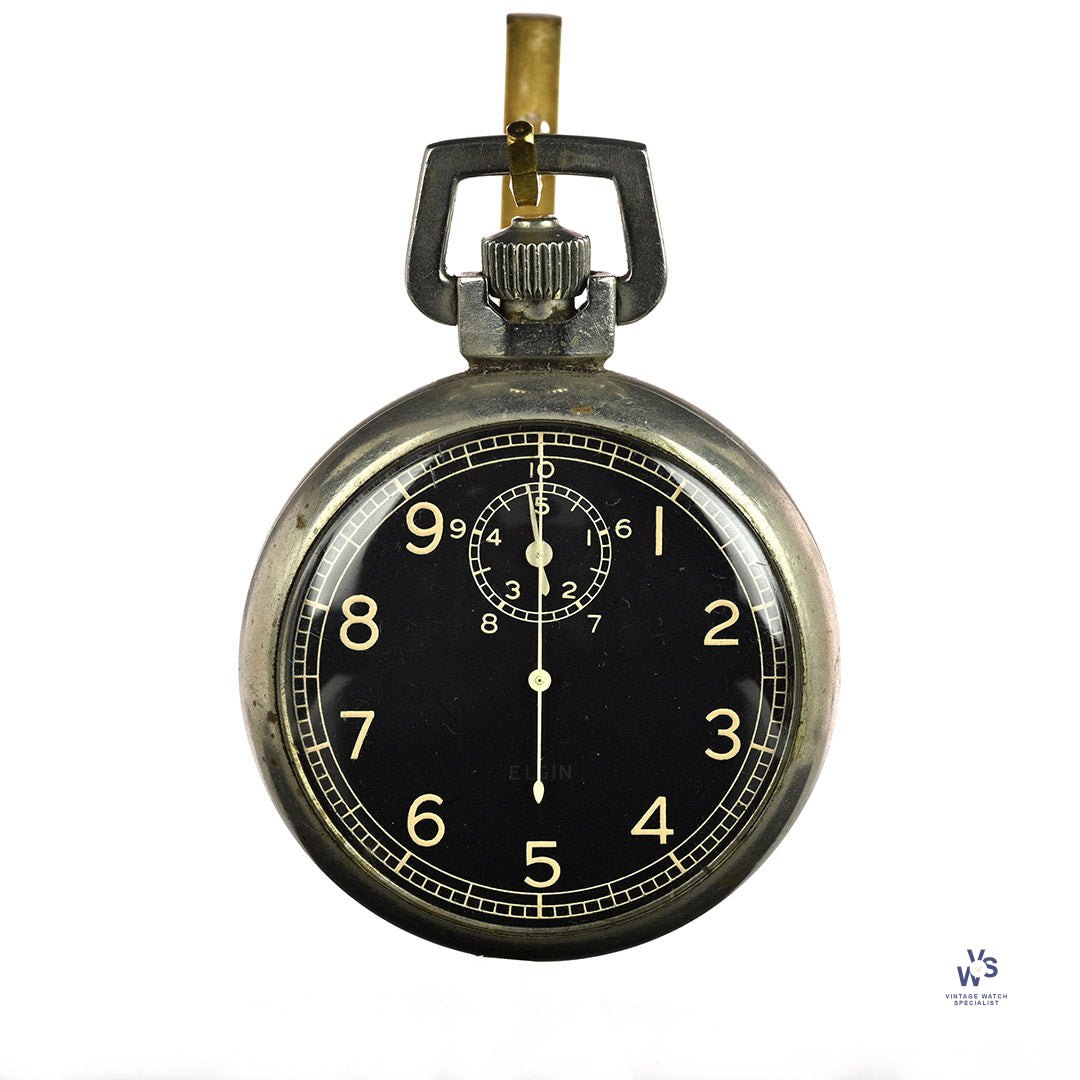
Elgin WWII Bombardier Stopwatch, circa 1940s
- Maker / attribution
- Elgin (maker)
- Date
- c. 1940s
- Historical period
- Golden Age of Mechanical Watchmaking (1900 – 1945)
- Country of origin
- United States
- Object type
- Stopwatch
- Stock no.
- vws3739
- Credit line
- Dealer listing, Vintage Watch Specialist (vws3739)
- Catalogue title (original)
- Elgin WWII Bombardier Stopwatch - c.1940s (English)
View the source record (dealer listing) ↗ (opens another website in a new tab)Suggest a correction
Record summary
Catalogued by Vintage Watch Specialist (dealer), United Kingdom (stock number vws3739), this is a stopwatch by Elgin, made in United States, dated c. 1940s. The Atlas places it in the Golden Age of Mechanical Watchmaking period (1900 – 1945) of its Instruments collection. The record is illustrated with 6 photographs.
Assembled from the source record's structured fields. Dates and attributions are given as the source states them; where a field is missing the Atlas leaves it blank rather than estimating.
Catalogue description
Dealer description — Vintage Watch Specialist
A Very Well-Preserved Elgin WWII Bombardier Stopwatch in Original Condition with a Beautiful Rich Black Dial c.1944 Elgin, founded in 1864 in Elgin, Illinois, was one of America's most prolific watchmakers, producing reliable timepieces for both civilian and military use. Known for precision and affordability, Elgin supplied watches to the U.S. military during both World Wars. The brand pioneered mass-production techniques and created over 60 million watches during its operation. Though the original factory closed in the 1960s, vintage Elgin watches remain appreciated today for their craftsmanship, historical significance, and classic American design. What's on Offer This is a remarkable example of a WWII-era Elgin Bombardier Stopwatch, designed specifically for military use in timing critical aviation and bombing operations. Featuring Movement No. 42749676, this watch houses a 15-jewel manual movement, prized for its durability and accuracy under demanding conditions. The clean black dial with bold Arabic numerals ensures optimal legibility, complemented by a central sweep seconds hand and a prominent 60-second sub-register at 12 o’clock for precise time measurement. The inside caseback is marked 5704842, while the outer bears the military issue number 19358, confirming its wartime provenance. These stopwatches were typically issued to U.S. Army Air Forces personnel, especially bombardiers, to synchronize bombing runs with extreme accuracy. The rugged case construction and large, knurled crown allowed for ease of use—even with gloved hands in flight. A highly collectible and historically significant piece, this Elgin stopwatch offers a direct link to WWII aviation history.
Historical context
Golden Age of Mechanical Watchmaking (1900 – 1945)
The wristwatch displaces the pocket watch; waterproof cases, self-winding and grand complications.
Timing instruments became electrical and specialised: industrial time recorders, sports timers and aviation instruments.
Read the period in the timelineMore instruments from this periodEarlier: Industrial Revolution
Atlas type guide
Timers, stopwatches, chronoscopes and time recorders
Instruments for measuring short intervals or recording when something happened form a large and practical branch of horology. Sports stopwatches and split-seconds timers, laboratory chronoscopes (such as Hipp's, which measured thousandths of a second for psychology and ballistics experiments), metronomes for music, watchmen's clocks that recorded patrol rounds, and the time recorders that clocked factory workers in and out all derive from clock and watch technology.
These objects matter historically because they show timekeeping leaving the observatory and the drawing room and entering industry, science and sport. Many were mass-produced, and their dials, scales and patents chart the rise of electrification and industrial management.
What to look for
- Scales graduated in fifths, tenths or hundredths of a second, or decimal minutes for industrial use.
- Start, stop and reset push-pieces; a second hand that can be stopped independently (split seconds).
- Recording devices: paper discs or tapes, printing mechanisms, keys or punches.
- Patent numbers and dates on the dial or case, which give a terminus post quem.
Dating clues
- Hipp chronoscopes were made from the 1840s into the twentieth century.
- Employee time recorders spread from the 1890s (Bundy, IBM, International Time Recording Co.).
- Quartz and electronic timers replaced mechanical stopwatches in sport from the 1970s.
General guidance written by the Atlas editors about this kind of object. It is not a statement about this particular piece; for that, rely on the source record above and on physical examination.
Read next:Flyback chronograph
Related records
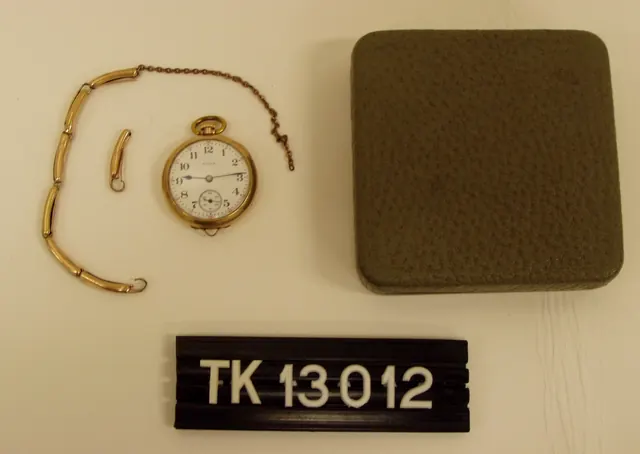
Wristwatches · 1920-1926?
Wristwatch by Elgin, United States, 1920-1926?
Työväenmuseo Werstas
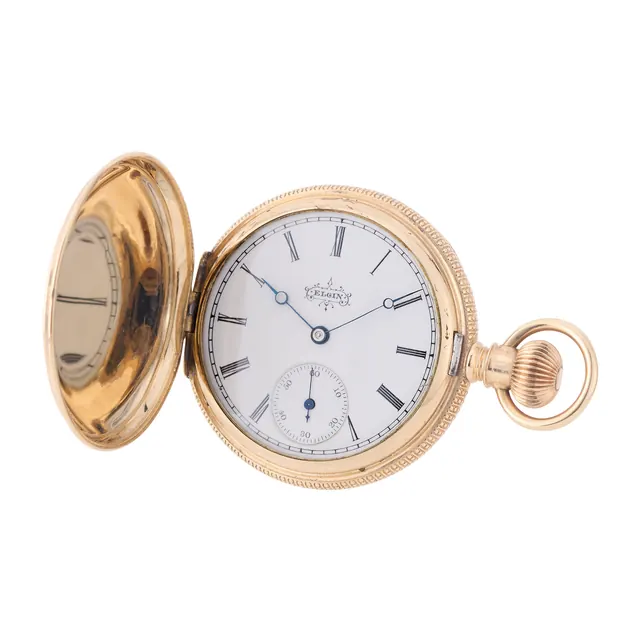
Pocket Watches · c. 1871
Elgin pocket watch, Hunting Case Pocket Watch, circa 1871
Antiquorum auction archive, Geneva
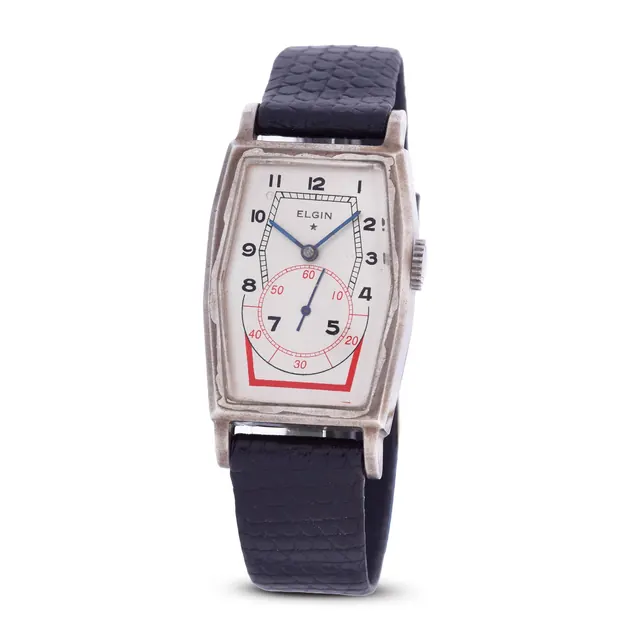
Wristwatches · 1930s
Elgin wristwatch, National Watch, 1930s
Antiquorum auction archive, Geneva
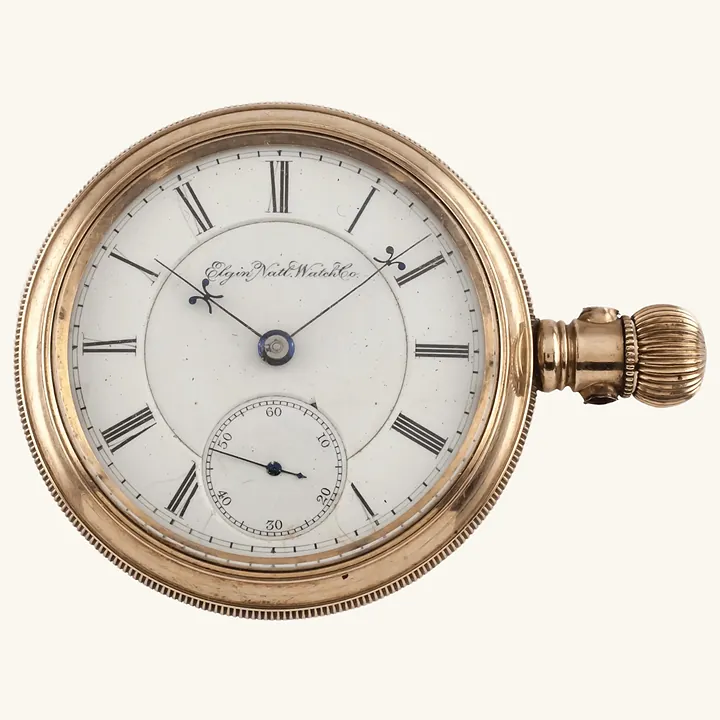
Pocket Watches · 1887
Elgin Antique Gold Filled Pocket Watch Gr 27 15 Jewel, 1887
WatchMuseum.org shop
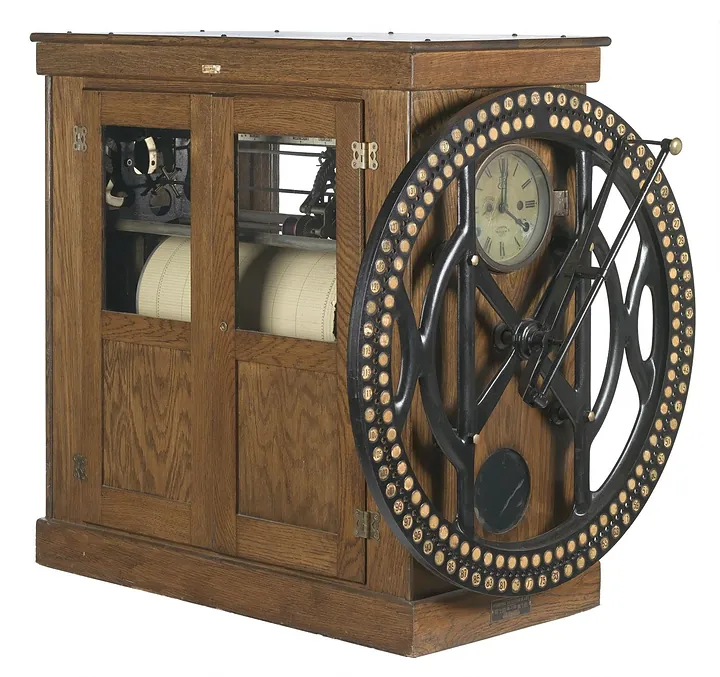
Instruments · c. 1912
Worker's time clock by the International Time Recording Company, Endicott, New York, c. 1912
National Museum of African American History and Culture, Smithsonian Institution, Washington DC
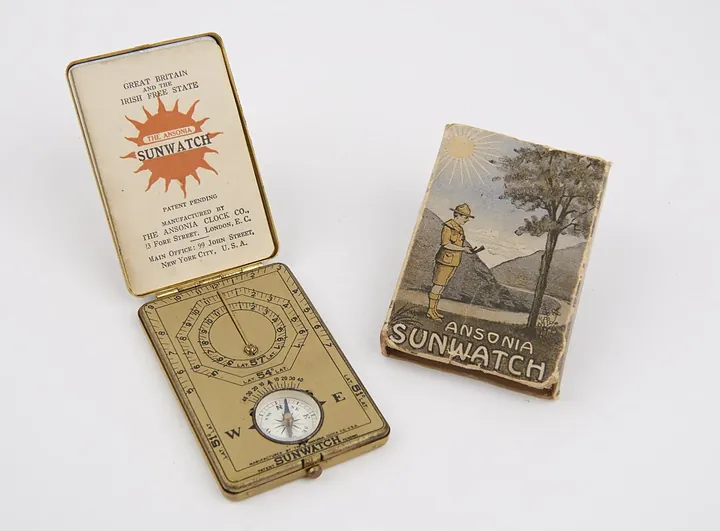
Instruments · 1922–1939
Ansonia Sun-watch in original card case, with instruction leaflet, c.1922
Science Museum Group, London
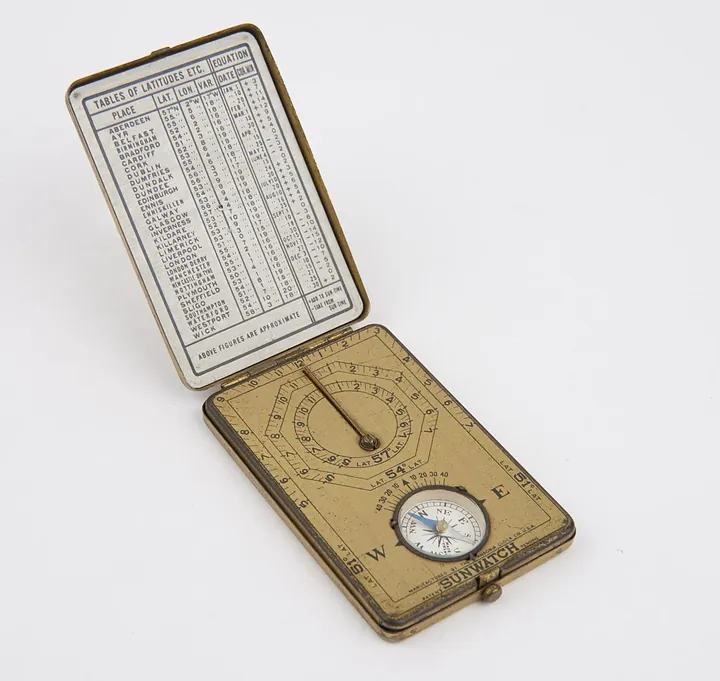
Instruments · 1922–1939
Ansonia Sunwatch (pocket compass dial)
Science Museum Group, London
Instruments · c. 1923
Sundial - Sunwatch, Ansonia Clock Co, New York, c. 1923
Museums Victoria, Melbourne