
Wristwatches · Wristwatch
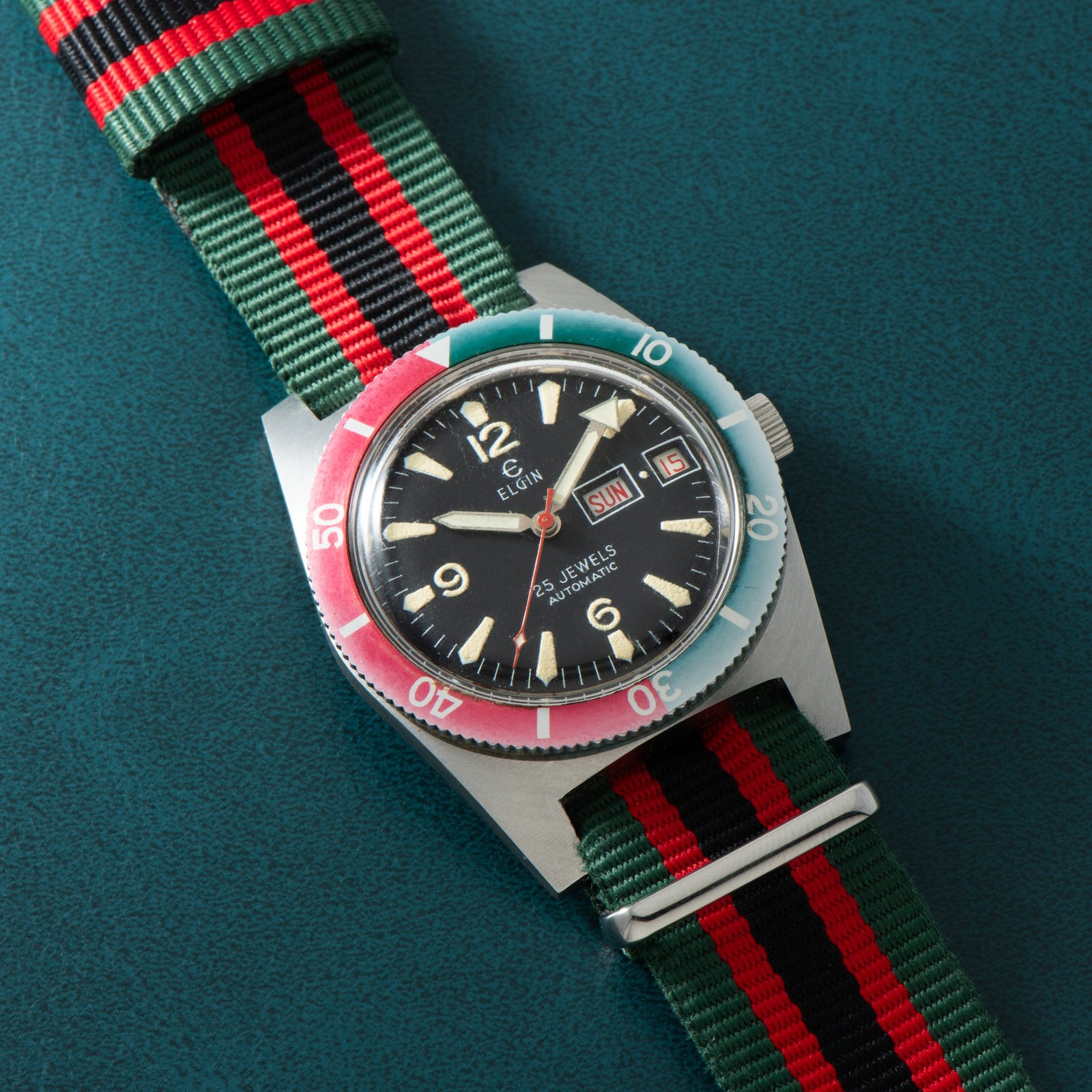
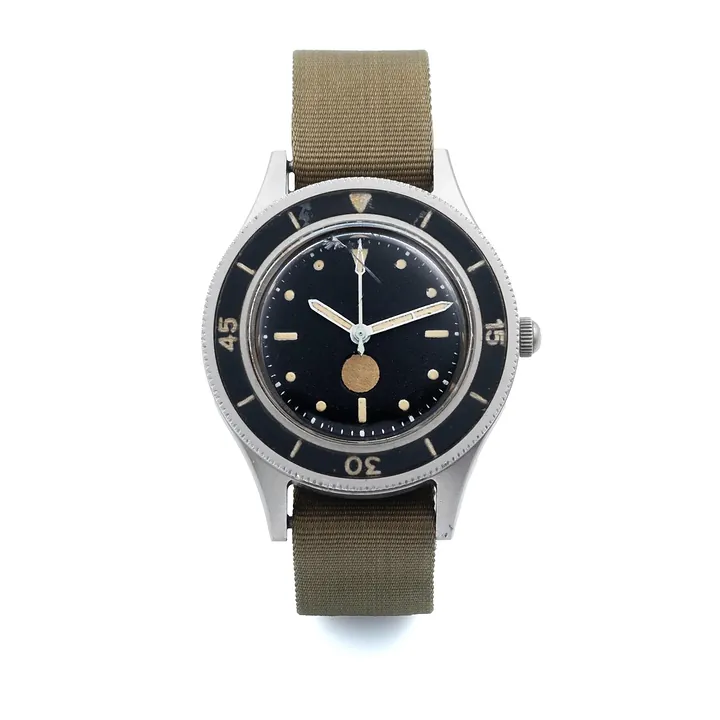
Elgin Skindiver 'Pepsi', 1960s
- Maker / attribution
- Elgin (maker)
- Date
- 1960s
- Historical period
- Modern Mechanical Horology (1945 – 1969)
- Country of origin
- United States
- Object type
- Wristwatch
- Dimensions
- Case 35 mm
- Stock no.
- 40993391
- Credit line
- Dealer listing, Analog/Shift (40993391)
- Catalogue title (original)
- Elgin Skindiver 'Pepsi' (English)
View the source record (dealer listing) ↗ (opens another website in a new tab)Suggest a correction
Record summary
Catalogued by Analog/Shift (dealer), New York (stock number 40993391), this is a wristwatch by Elgin, made in United States, dated 1960s. The Atlas places it in the Modern Mechanical Horology period (1945 – 1969) of its Wristwatches collection. Recorded dimensions: Case 35 mm. The record is illustrated with 6 photographs.
Assembled from the source record's structured fields. Dates and attributions are given as the source states them; where a field is missing the Atlas leaves it blank rather than estimating.
Catalogue description
Dealer description — Analog/Shift
There's no doubt that dive watches hold a special place in the hearts of many collectors, ourselves included. In fact, Analog:Shift was founded in 2012 with its eyes set squarely on vintage divers. With their simple designs and robust movements, the tool watches of the 1960s and 1970s were built to accompany the adventurer across the globe and to keep time at its great heights as well as its darkest depths. Yet for every Rolex Submariner, Blancpain Fifty Fathoms, or Omega Seamaster, there were scores of other lesser-known names that ooze charm and merit consideration from the vintage watch enthusiast. This watch, a Elgin automatic diver, dates to the 1960s. Housed in a lovely 35mm case with short, integrated skin diver lugs, an acrylic crystal, a screw-down crown and caseback, and a bidirectional dive bezel with a fully hashed bakelite faded timing insert, it features a handsome sunray charcoal dial with an outer open minute track in white; luminous 'Arabic' and 'dash' indices; a 3 o'clock day and date display; and a luminous 'broad arrow' handset. Powered by an automatic, 25-jewel Swiss movement, this handsome and colorful Elgin is ready for another 50+ years of faithful service. If you dig it as much as we do, drop us a line!
Historical context
Modern Mechanical Horology (1945 – 1969)
Tool watches for divers, pilots and astronauts; electric watches anticipate the electronic age.
The classic era of the mechanical wristwatch: dive watches, chronographs for motor racing and space flight, GMT watches for jet travel, slim dress watches, automatic calendars, and the rise of Japanese manufacturers alongside Swiss, American, German and Soviet industries.
Read the period in the timelineMore wristwatches from this periodEarlier: Golden Age of Mechanical Watchmaking
Atlas type guide
Dive and water-resistant watches
Keeping water and dust out of a wristwatch was a long-standing challenge. Rolex's screw-down Oyster case (1926) and Omega's Marine (1932) were landmarks; in the early 1950s Blancpain's Fifty Fathoms and Rolex's Submariner defined the professional dive watch with rotating bezels for timing dives, luminous dials and high water resistance. The ISO 6425 standard (1982) later codified what a 'diver's watch' must do.
Dive watches became icons of post-war design and exploration, and their evolution — helium escape valves, ceramic bezels, saturation-diving depth ratings — records the history of underwater work.
What to look for
- Unidirectional or bidirectional rotating bezel with minute markings.
- Screw-down crown and case back; depth rating printed on the dial.
- Luminous hands and markers (radium before c. 1960, tritium c. 1960–1998, then Super-LumiNova).
- Reference numbers on the case between the lugs or inside the back.
Dating clues
- Screw-down Oyster cases: from 1926.
- Professional dive watches: from 1953.
- Tritium 'T' marks on dials: c. 1960–1998.
General guidance written by the Atlas editors about this kind of object. It is not a statement about this particular piece; for that, rely on the source record above and on physical examination.
Related records
Wristwatches · 1920-1926?
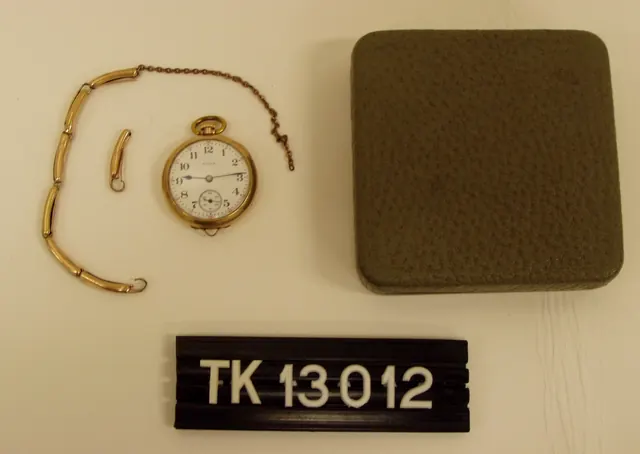
Wristwatch by Elgin, United States, 1920-1926?
Työväenmuseo Werstas
Pocket Watches · c. 1871
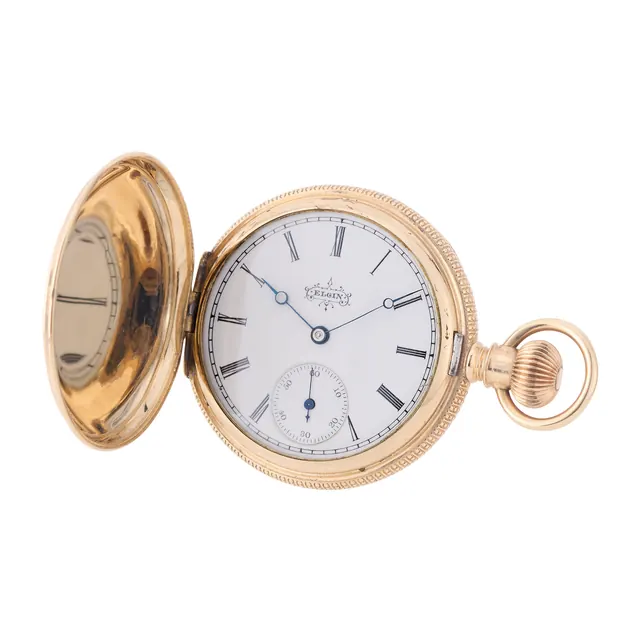
Elgin pocket watch, Hunting Case Pocket Watch, circa 1871
Antiquorum auction archive, Geneva
Wristwatches · 1930s
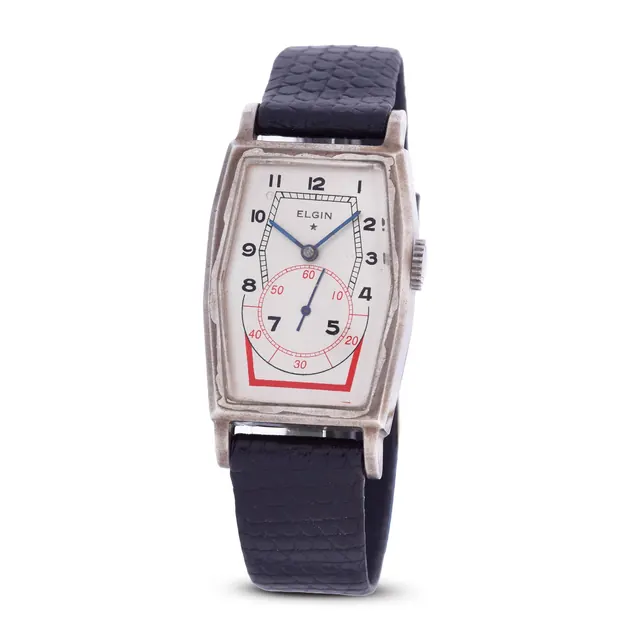
Elgin wristwatch, National Watch, 1930s
Antiquorum auction archive, Geneva
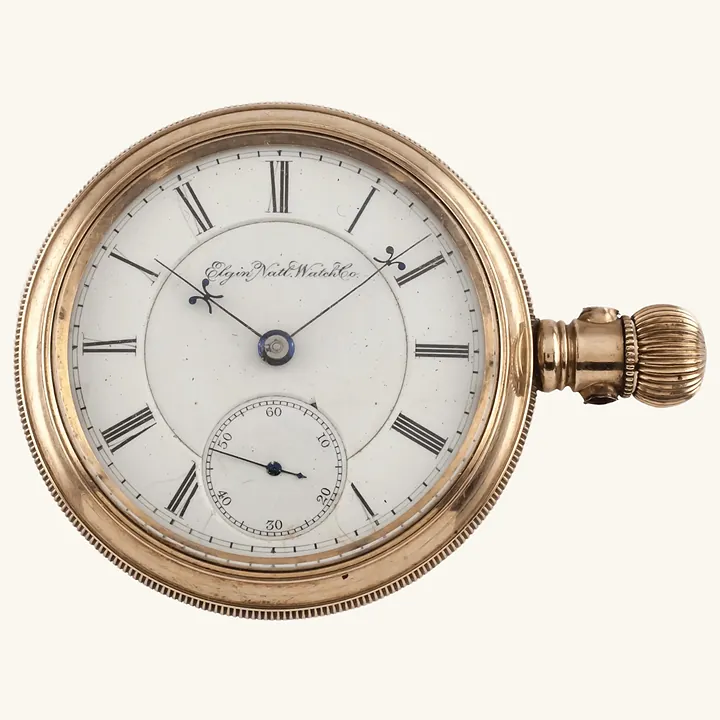
Pocket Watches · 1887
Elgin Antique Gold Filled Pocket Watch Gr 27 15 Jewel, 1887
WatchMuseum.org shop
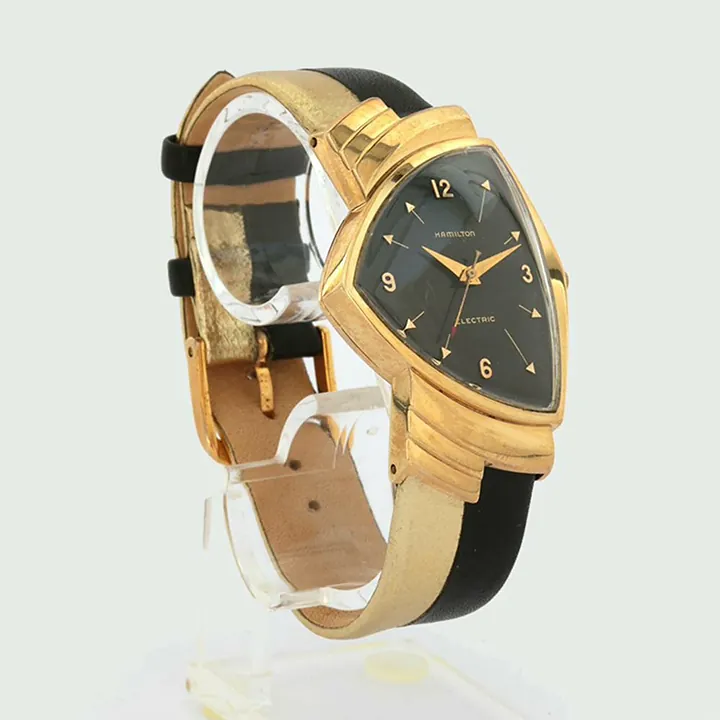
Wristwatches · c. 1957
Wristwatch by Richard H. Arbib, United States, c. 1957
German Clock Museum
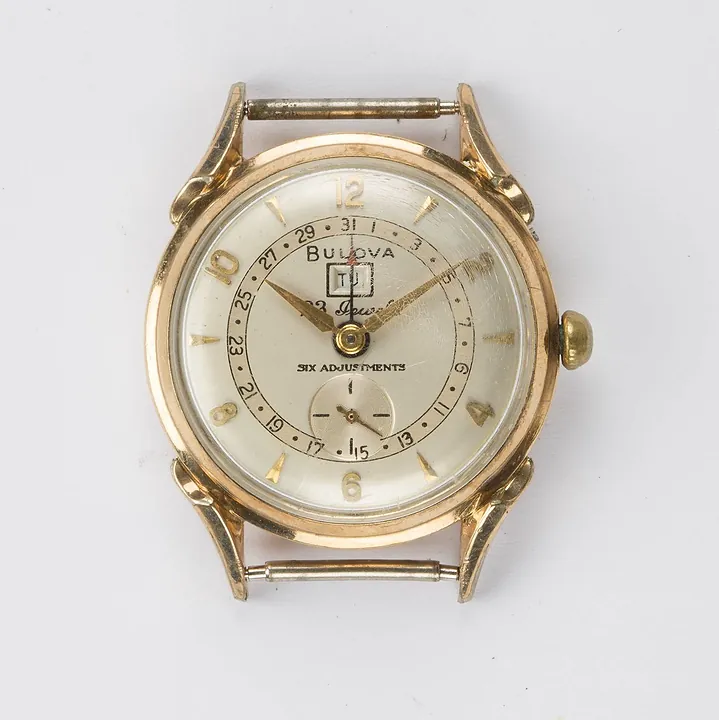
Wristwatches · 1959
Wristwatch by Josef Bulova, United States, 1959
German Clock Museum
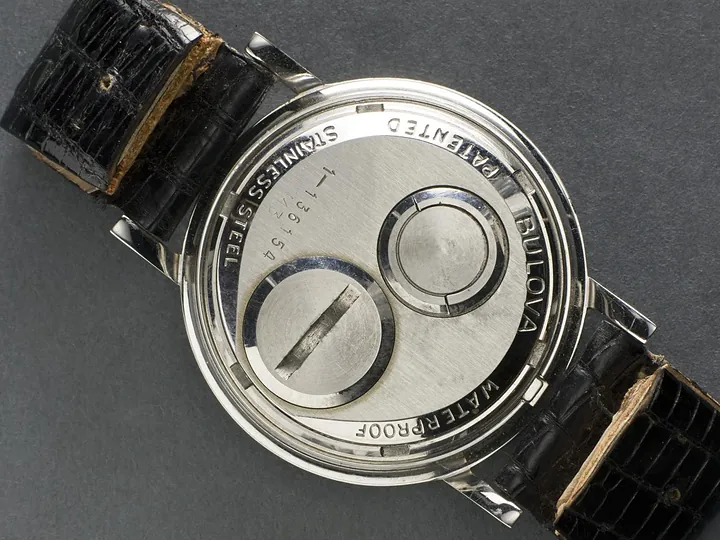
Wristwatches · 1960–1963
Bulova Accutron tuning-fork wristwatch on a demonstration stand, designed by Max Hetzel, United States, 1960–1963
Science Museum Group, London
Wristwatches · 1964
Tornek-Rayville wristwatch, ref. TR 900, 1964
Antiquorum auction archive, Geneva