
Wristwatches · Wristwatch
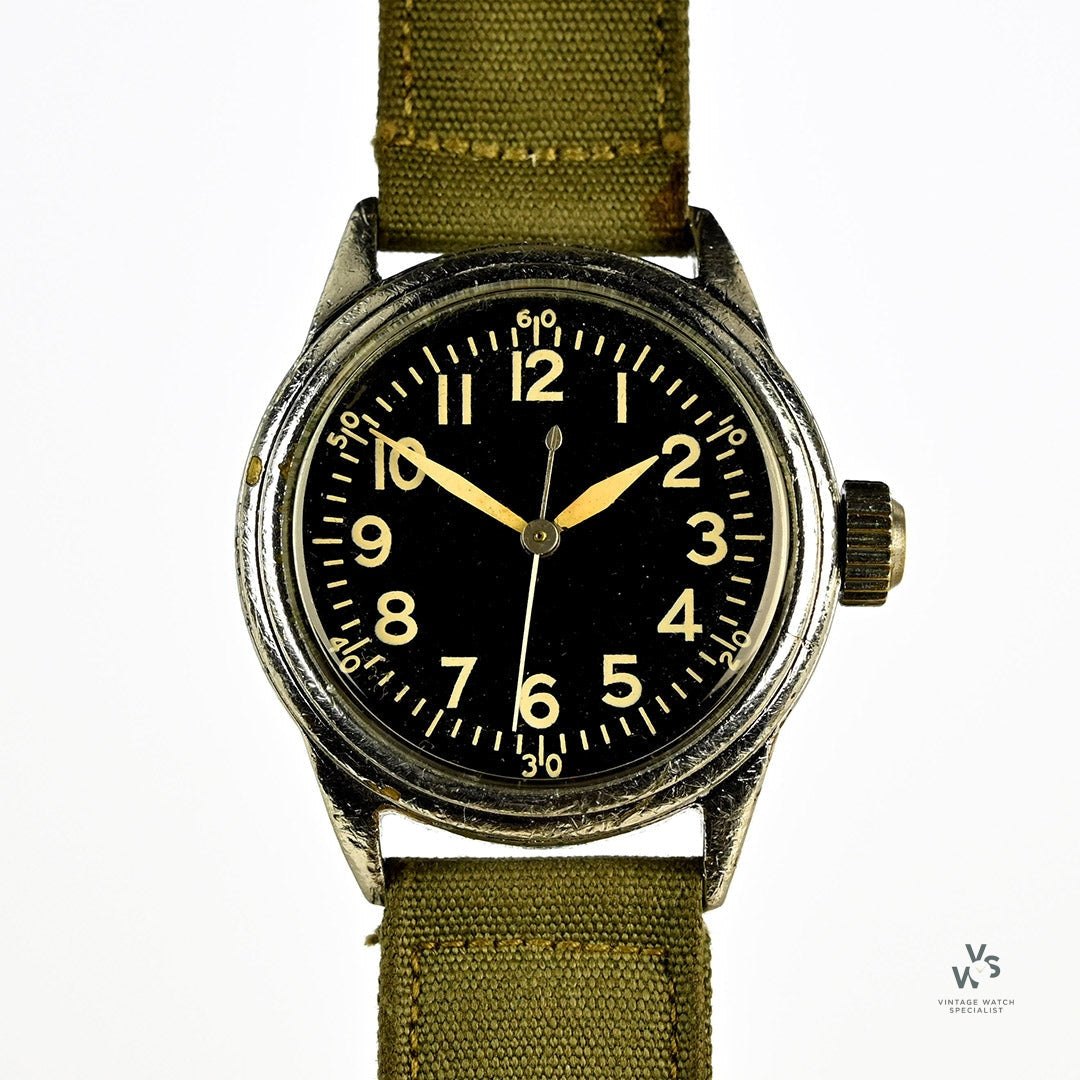
Elgin National Watches, A-11 American Air Force Military Navigation Watch, circa 1942s
- Maker / attribution
- Elgin (maker)
- Date
- c. 1942s
- Historical period
- Modern Mechanical Horology (1945 – 1969)
- Country of origin
- United States
- Object type
- Wristwatch
- Stock no.
- vws2078
- Credit line
- Dealer listing, Vintage Watch Specialist (vws2078)
- Catalogue title (original)
- Elgin National Watches - A-11 American Air Force Military Navigation Watch - c.1942s (English)
View the source record (dealer listing) ↗ (opens another website in a new tab)Suggest a correction
Record summary
Catalogued by Vintage Watch Specialist (dealer), United Kingdom (stock number vws2078), this is a wristwatch by Elgin, made in United States, dated c. 1942s. The Atlas places it in the Modern Mechanical Horology period (1945 – 1969) of its Wristwatches collection. The record is illustrated with 6 photographs.
Assembled from the source record's structured fields. Dates and attributions are given as the source states them; where a field is missing the Atlas leaves it blank rather than estimating.
Catalogue description
Dealer description — Vintage Watch Specialist
A Well Preserved Elgin A-11 American Air Force Watch, Issued c.1942 With Military Caseback Engravings. Various watches were produced for the American military, however, the A-11 is perhaps the most iconic. It was established fairly quickly after combat began, that allied troops needed a reliable, sturdy and easily legible watch. Three American watch manufacturers (Elgin, Waltham, and Bulova) were contracted to make the watches and interestingly, the A-11 also saw service with the RAF (Royal Air Force) under the 6B/234 designation, the RCAF (Royal Canadian Air Force), and the Soviet Air Force. The watch manufacturers seem to have begun with a 15-jewel sub-second movement and simply added a second-hand pinion and extra jewel, bringing the total jewel count on these movements up to 16. The watches were also required to feature hacking (second-hand stops completely upon pulling out the crown) for precise timing and synchronisation, and therefore movements were of high quality, such as is illustrated here with this Elgin 539. What’s On Offer A well preserved American Air Force A-11 on offer in fantastic shape. The stark black dial looks well with sharp Arabic numerals which have transformed over the years to a beautiful buttery colour. A h and-wound, hacking movement with center seconds, an outer minute track with 10-minute demarcations, and minute and hour hands complete the dial which is encapsulated under the military stipulated 'unbreakable' plastic and showcased in a chromium-plated brass case. The brass is peeping through on some parts of the case, but at over 7 decades old, this is hardly a surprise and merely adds to the character of the watch which is in otherwise remarkable condition. A wonderful entry-level watch for any budding military or vintage enthusiast. Caseback engravings: TYPE A-11. SPEC NO. 94-27834-B. SERIAL NO. AF44-29762. MFR'S PART NO. 1788. ORD NO. W11-107 AC-267-73 Additional information Made from Case: C hromium-plated Brass Dial: Black Crystal: Plexiglas Bracelet: NATO Technical specifications Winding: Manual Movement Type: Mechanical Caliber: Elgin 539 Jewels: 16 Waterproof: n/a Power reserve: 40 hrs Purchase details Condition: Excellent Model Reference: A11 Date of issue: c.1942
Historical context
Modern Mechanical Horology (1945 – 1969)
Tool watches for divers, pilots and astronauts; electric watches anticipate the electronic age.
The classic era of the mechanical wristwatch: dive watches, chronographs for motor racing and space flight, GMT watches for jet travel, slim dress watches, automatic calendars, and the rise of Japanese manufacturers alongside Swiss, American, German and Soviet industries.
Read the period in the timelineMore wristwatches from this periodEarlier: Golden Age of Mechanical Watchmaking
Atlas type guide
Military, pilot and travel watches
The wristwatch owes much of its adoption by men to warfare and aviation. Wristlets — small pocket watches soldered with lugs and worn on a strap — were used in colonial campaigns and became standard equipment in the First World War, with protective grilles over the crystal ('shrapnel guards'). Louis Cartier's Santos (1904), designed for the aviator Alberto Santos-Dumont, is often cited as an early purpose-made pilot's watch.
In the Second World War governments specified watches in detail: the German B-Uhr observation watches, the American A-11, and the British 'W.W.W.' (the 'Dirty Dozen' set of 1945). After the war, jet travel brought GMT and world-time watches, which show two or more time zones at once — Louis Cottier's world-time mechanism and the Rolex GMT-Master (1955) are examples.
What to look for
- Military markings on the case back: broad arrow, issue numbers, 'W.W.W.', 'A.T.P.'
- High-legibility black dials with luminous Arabic numerals; oversized crowns for gloved hands.
- 24-hour hands and rotating 24-hour bezels or city rings on GMT/world-time watches.
- Wire lugs on early wristlets converted from pocket watches.
Dating clues
- Wire-lug wristlets: c. 1900–1925.
- Military specifications of the Second World War: 1939–1945.
- GMT and world-time wristwatches: mainly after 1950.
General guidance written by the Atlas editors about this kind of object. It is not a statement about this particular piece; for that, rely on the source record above and on physical examination.
Related records
Wristwatches · 1920-1926?
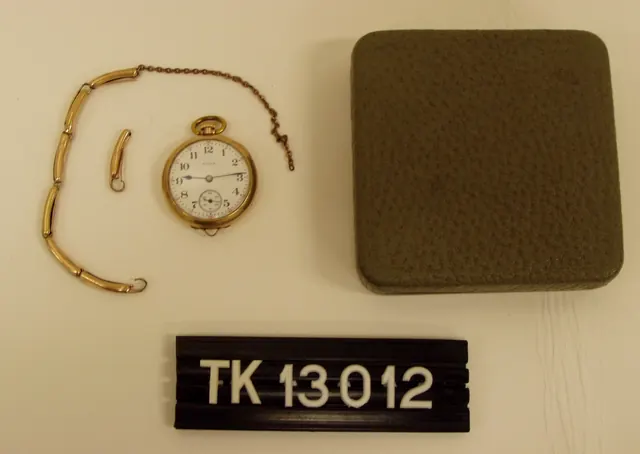
Wristwatch by Elgin, United States, 1920-1926?
Työväenmuseo Werstas
Pocket Watches · c. 1871
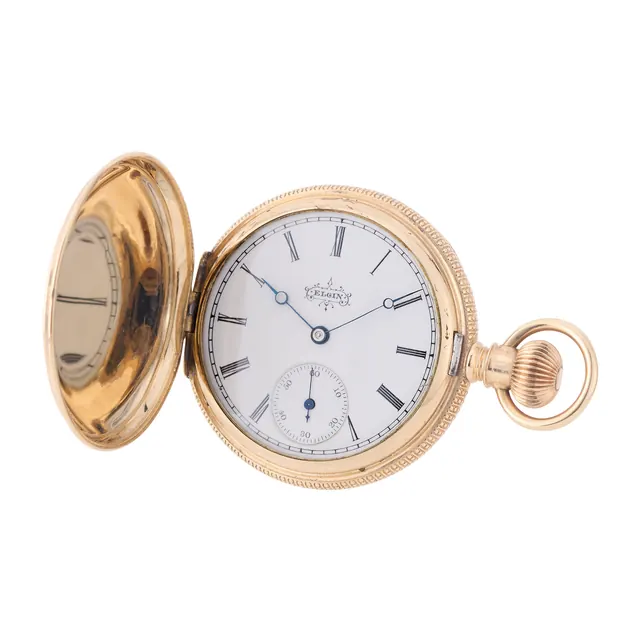
Elgin pocket watch, Hunting Case Pocket Watch, circa 1871
Antiquorum auction archive, Geneva
Wristwatches · 1930s
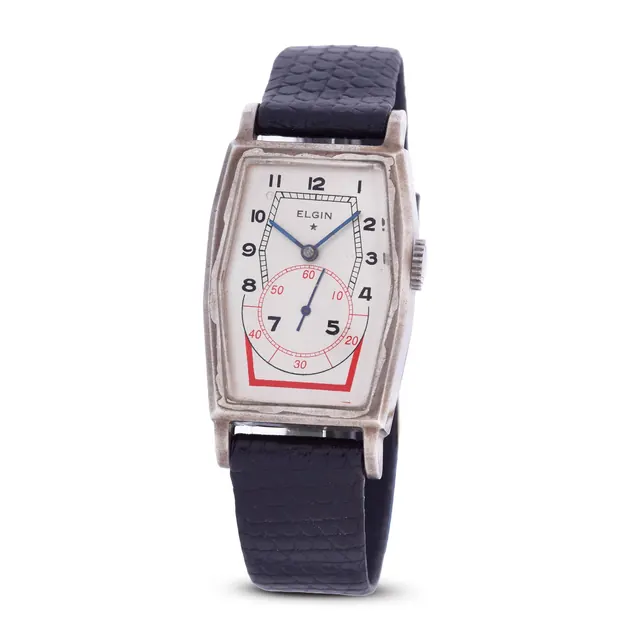
Elgin wristwatch, National Watch, 1930s
Antiquorum auction archive, Geneva
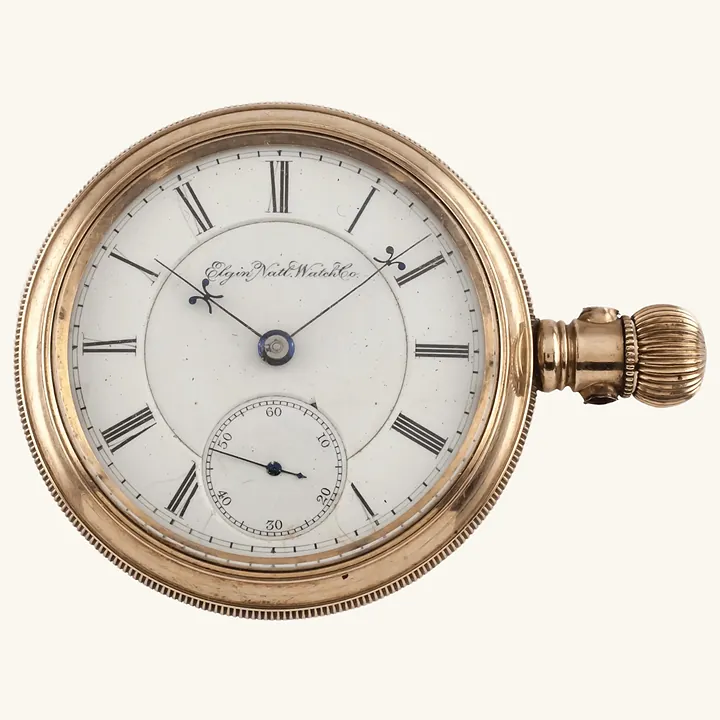
Pocket Watches · 1887
Elgin Antique Gold Filled Pocket Watch Gr 27 15 Jewel, 1887
WatchMuseum.org shop
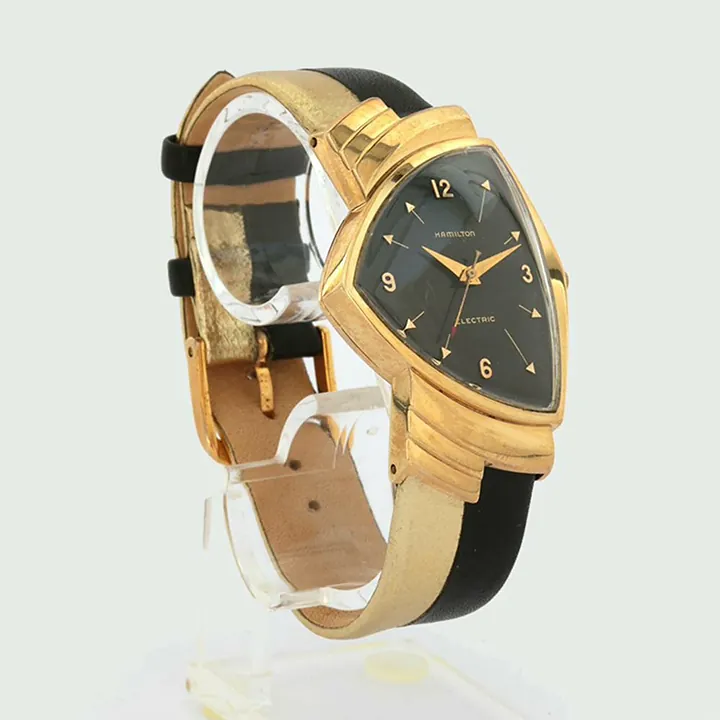
Wristwatches · c. 1957
Wristwatch by Richard H. Arbib, United States, c. 1957
German Clock Museum
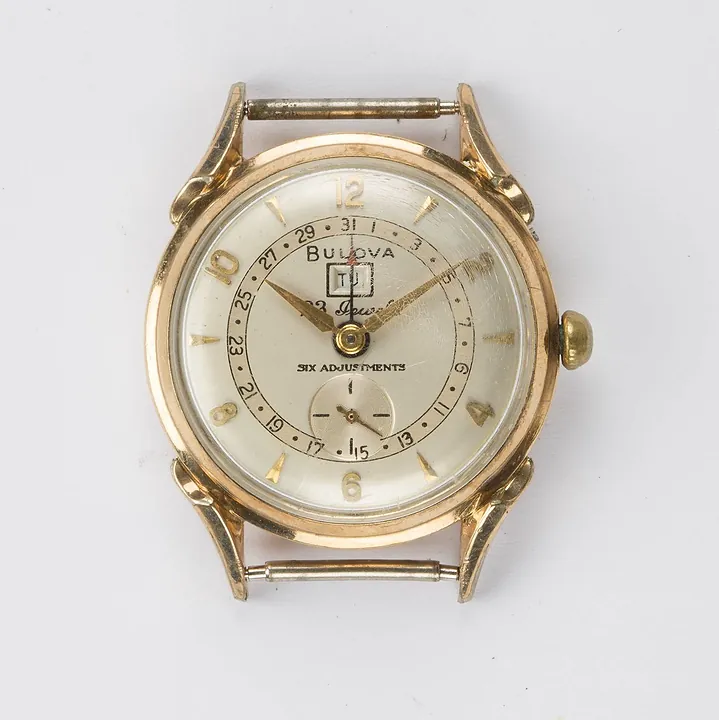
Wristwatches · 1959
Wristwatch by Josef Bulova, United States, 1959
German Clock Museum
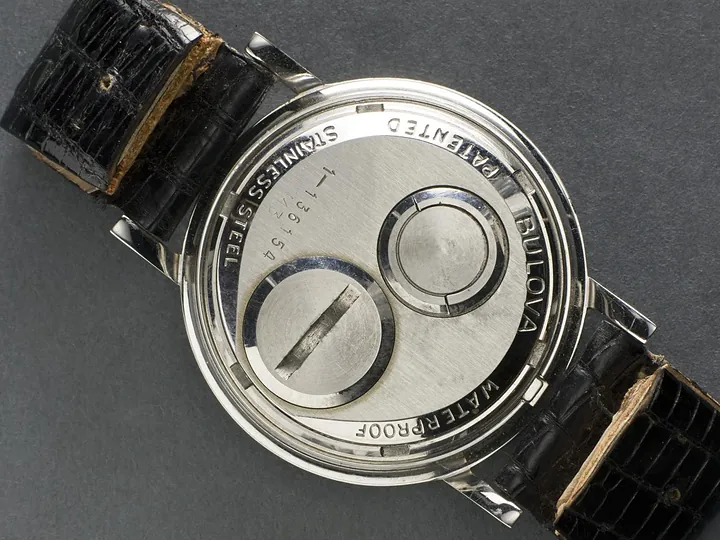
Wristwatches · 1960–1963
Bulova Accutron tuning-fork wristwatch on a demonstration stand, designed by Max Hetzel, United States, 1960–1963
Science Museum Group, London
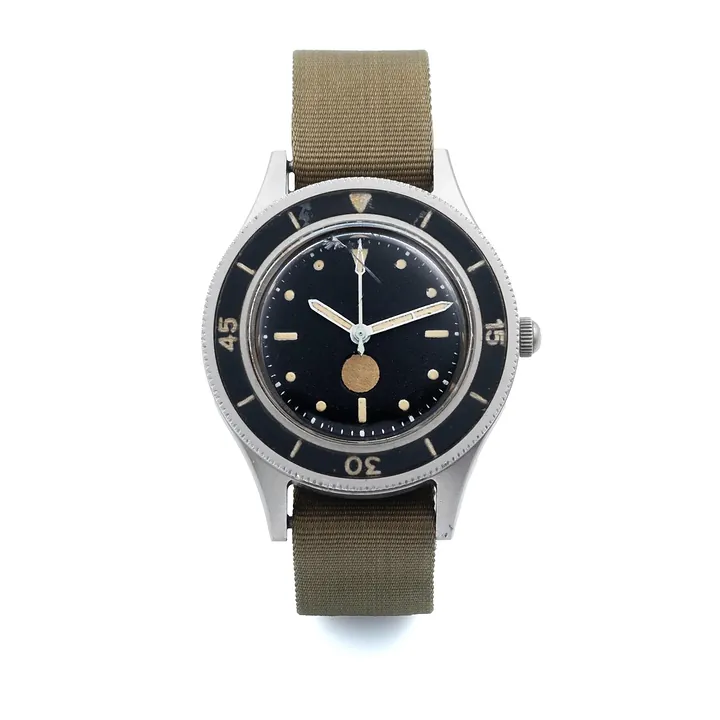
Wristwatches · 1964
Tornek-Rayville wristwatch, ref. TR 900, 1964
Antiquorum auction archive, Geneva