
Wristwatches · Wristwatch
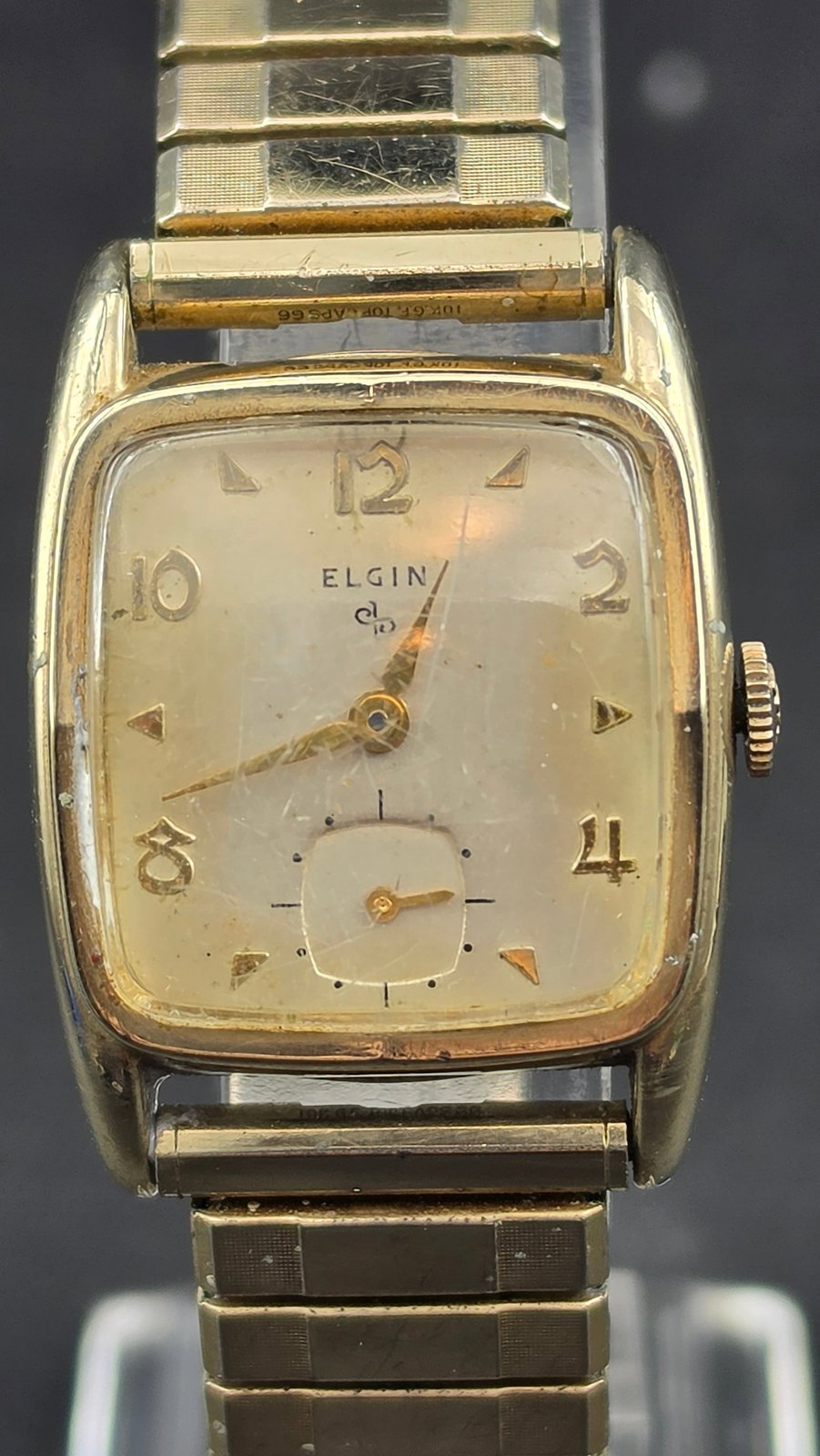
Elgin Durapower Grade 683 17 Jewel Men's Cushion Case Watch with Box circa 1953, 10K RGP Bezel Stain
- Maker / attribution
- Elgin (maker)
- Date
- c. 1953
- Historical period
- Modern Mechanical Horology (1945 – 1969)
- Country of origin
- United States
- Object type
- Wristwatch
- Auction house
- LiveAuctioneers auction archive
- Lot
- Item 231612319
- Credit line
- Auction lot record: lot 490, EXCLUSIVE WATCHES AND POCKET WATCHES 10, Sphere Auctions LLC (2026), via LiveAuctioneers
- Catalogue title (original)
- Elgin Durapower Grade 683 17 Jewel Men's Cushion Case Watch with Box circa 1953, 10K RGP Bezel Stain (English)
View the source record (auction lot) ↗ (opens another website in a new tab)Suggest a correction
Record summary
Catalogued by LiveAuctioneers auction archive (lot Item 231612319), this is a wristwatch by Elgin, made in United States, dated c. 1953. The Atlas places it in the Modern Mechanical Horology period (1945 – 1969) of its Wristwatches collection. The record is illustrated with 4 photographs.
Assembled from the source record's structured fields. Dates and attributions are given as the source states them; where a field is missing the Atlas leaves it blank rather than estimating.
Catalogue description
Lot description — Sphere Auctions LLC
Up for sale is a vintage Elgin Durapower men's manual-wind wristwatch dating to approximately 1953, presented in its original Elgin Durapower display box. The box is covered in cream textured fabric with a gold metal Elgin nameplate on the front and features a blue satin interior with the Elgin and Durapower logos printed on the lid interior in gold and blue. Watch was running at time of listing.The cushion-shaped case features a 10K RGP (rolled gold plate) bezel with a brushed stainless steel caseback. The caseback is stamped with a star, "10K RGP BEZEL," and "STAINLESS STEEL BACK." There is also a partial circular stamp reading "Elgin National Watch Company" along with case serial number 585970. The case shows surface scratches and light wear consistent with age, and some verdigris is visible along the inner case back edges. The Elgin-signed crown is gold-toned.The dial is cream/champagne colored and shows visible aging including scattered surface scratches and some spotting. It features gold-tone Arabic numerals at 12, 2, 4, 8, 10, and 6 o'clock positions, with applied gold-tone arrowhead/triangle hour markers at the remaining positions. The Elgin name appears in blue at the upper dial, and the Durapower "dp" logo is printed below it in a style consistent with mid-1950s American Elgin production. A recessed sub-seconds register is located at 6 o'clock. Gold-tone hands with a blue center cap are present on the main dial, and a gold-tone seconds hand sits in the subsidiary dial.The movement is the Elgin Grade 683, 17 jewels, adjusted, manual wind, made in the U.S.A., as marked on the movement plate: "ELGIN 683 U-S-A / ADJ'D 17 JEWELS." The balance wheel, escapement, and gilt gear train are all visible and appear intact. The fast/slow regulator is marked F and S.The watch is fitted to a Speidel expansion bracelet stamped "SPEIDEL PAT 2,689,450" on the underside of multiple links. The bracelet end caps are stamped "10K G.F. TOP CAPS 66," indicating 10 karat gold-filled top caps manufactured in 1966 — a period-correct accessory common on Elgin watches of this era. The bracelet shows significant scratching and worn gold plating revealing base metal on several links. Case lugs show light wear.That is a mechanical watch. Watch may run at time of listing. We do not guarantee extended runtime or accuracy.
Historical context
Modern Mechanical Horology (1945 – 1969)
Tool watches for divers, pilots and astronauts; electric watches anticipate the electronic age.
The classic era of the mechanical wristwatch: dive watches, chronographs for motor racing and space flight, GMT watches for jet travel, slim dress watches, automatic calendars, and the rise of Japanese manufacturers alongside Swiss, American, German and Soviet industries.
Read the period in the timelineMore wristwatches from this periodEarlier: Golden Age of Mechanical Watchmaking
Atlas type guide
Wristwatches
Bracelet watches were worn by women from the early nineteenth century — Breguet made one for Caroline Murat, Queen of Naples, in 1810–12 — but the wristwatch only became a man's instrument with military use and aviation in the early twentieth century. Between the World Wars it overtook the pocket watch; the 1920s and 1930s brought rectangular Art Deco cases, water-resistant cases and the first automatic winding systems.
After 1945 the wristwatch became a carrier of identity — dress watches, sports and dive watches, chronographs, calendars — produced by Swiss, American, Japanese, German, Soviet and Chinese industries. The quartz revolution after 1969 and the mechanical renaissance since the 1990s, including the rise of independent watchmakers, complete the story.
What to look for
- The reference number (between the lugs or inside the case back) and serial number, the starting point for dating.
- The calibre: its maker and number are often stamped under the dial or on the bridge.
- Originality of dial, hands and crown — refinished ('redial') dials are common.
- Case material marks: 18K/750, 14K/585, stainless steel, gold-filled, plated.
Dating clues
- Wire-lug cases: before c. 1925.
- Water-resistant screw-down cases: from 1926.
- Quartz movements: from 1969; sapphire crystals widespread after c. 1980.
General guidance written by the Atlas editors about this kind of object. It is not a statement about this particular piece; for that, rely on the source record above and on physical examination.
Related records
Wristwatches · 1920-1926?
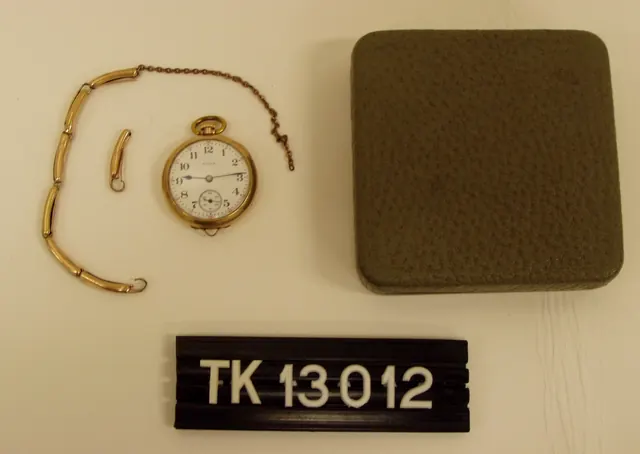
Wristwatch by Elgin, United States, 1920-1926?
Työväenmuseo Werstas
Pocket Watches · c. 1871
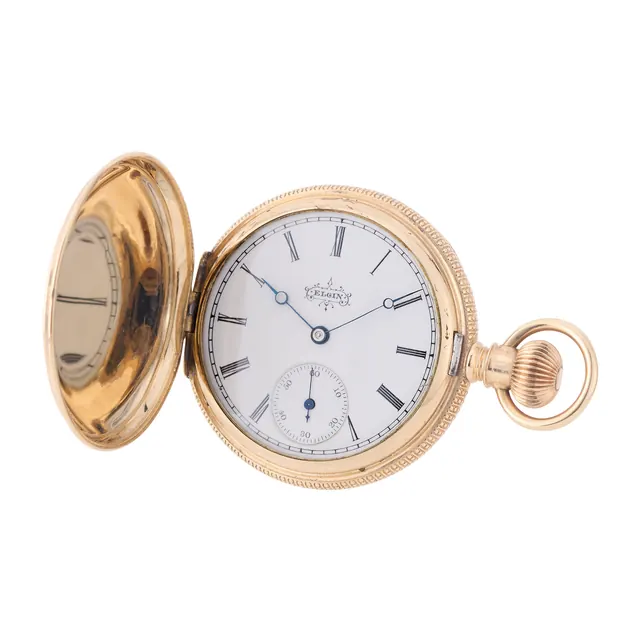
Elgin pocket watch, Hunting Case Pocket Watch, circa 1871
Antiquorum auction archive, Geneva
Wristwatches · 1930s
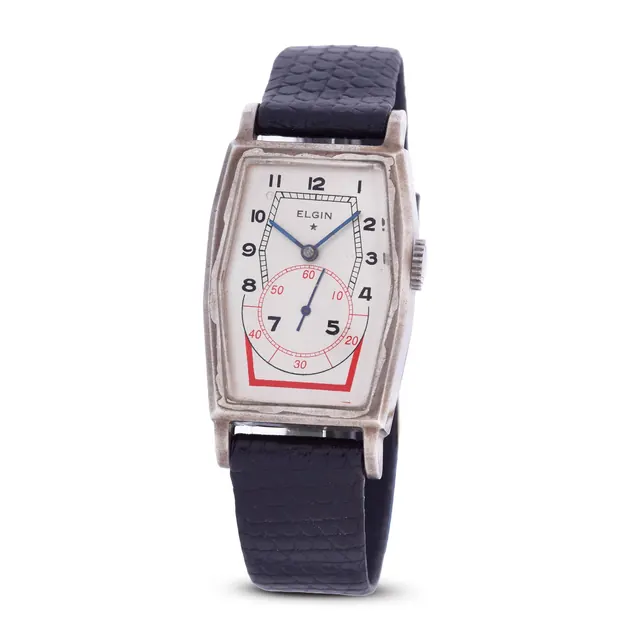
Elgin wristwatch, National Watch, 1930s
Antiquorum auction archive, Geneva
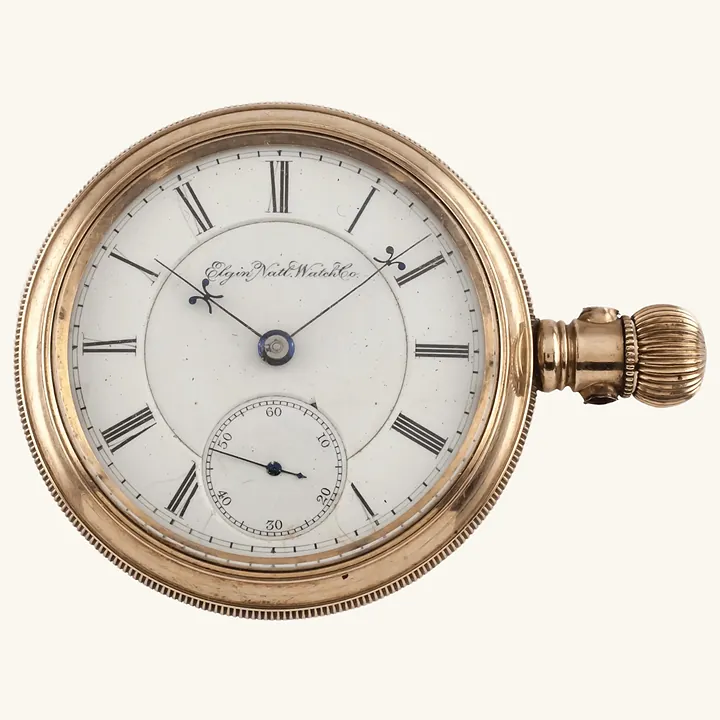
Pocket Watches · 1887
Elgin Antique Gold Filled Pocket Watch Gr 27 15 Jewel, 1887
WatchMuseum.org shop
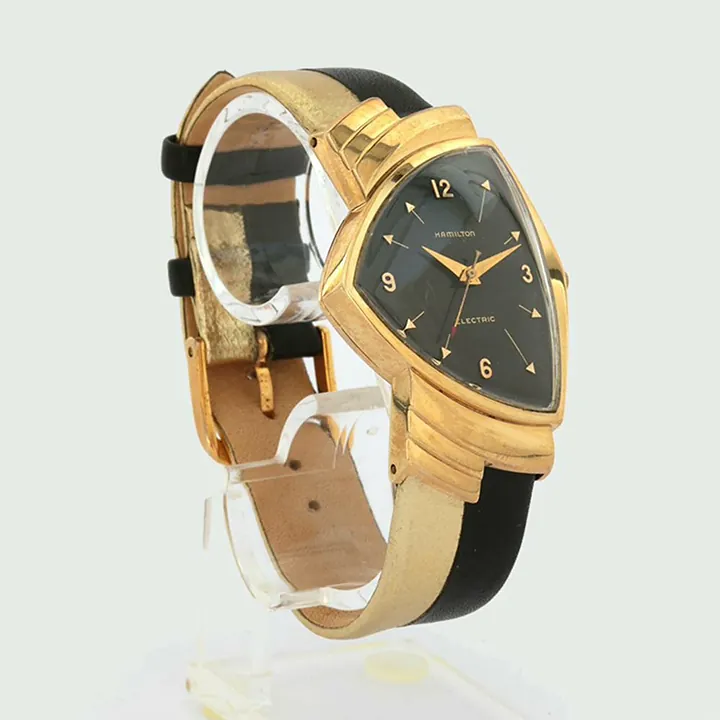
Wristwatches · c. 1957
Wristwatch by Richard H. Arbib, United States, c. 1957
German Clock Museum
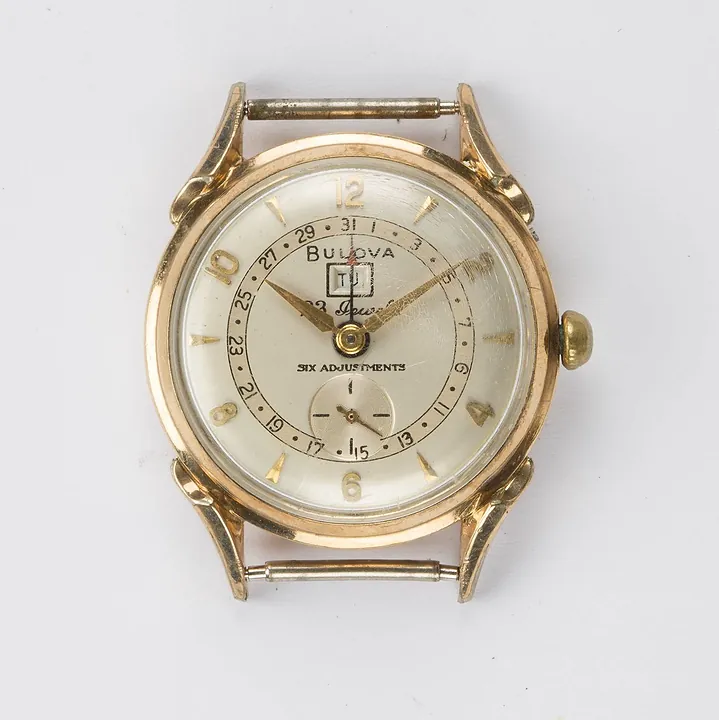
Wristwatches · 1959
Wristwatch by Josef Bulova, United States, 1959
German Clock Museum
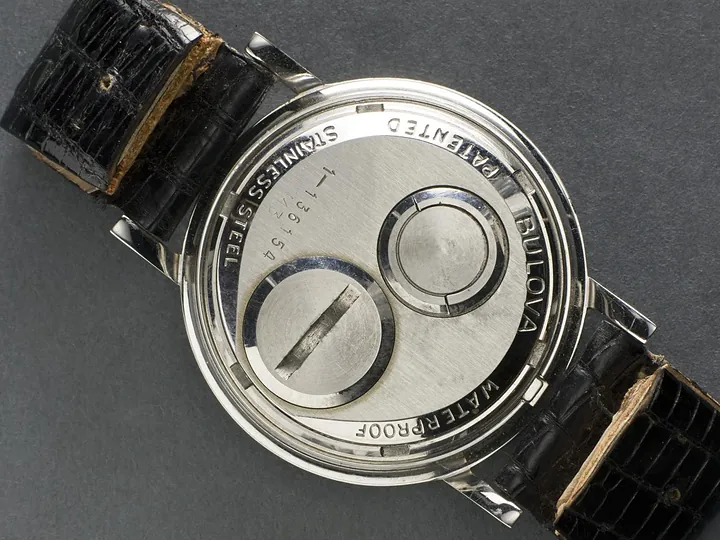
Wristwatches · 1960–1963
Bulova Accutron tuning-fork wristwatch on a demonstration stand, designed by Max Hetzel, United States, 1960–1963
Science Museum Group, London
Wristwatches · 1964
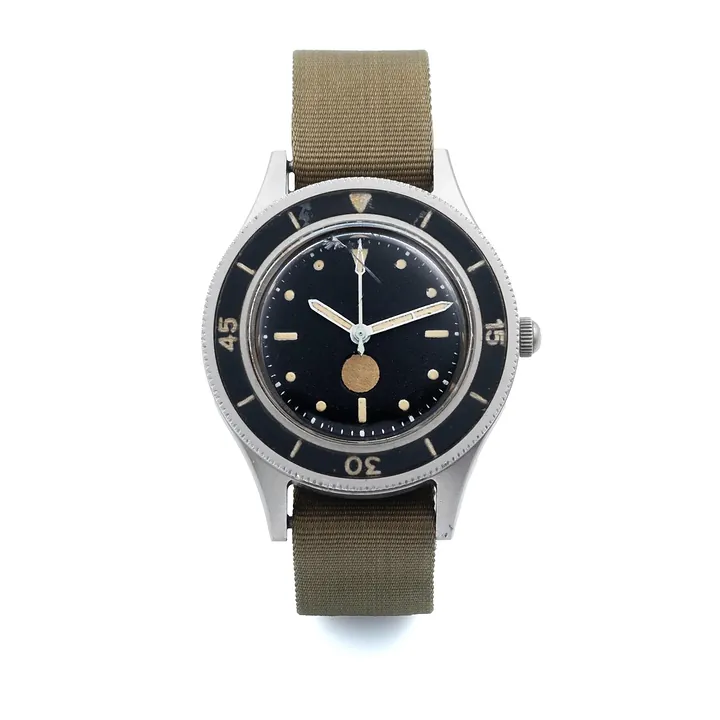
Tornek-Rayville wristwatch, ref. TR 900, 1964
Antiquorum auction archive, Geneva