
Clocks · Longcase clock
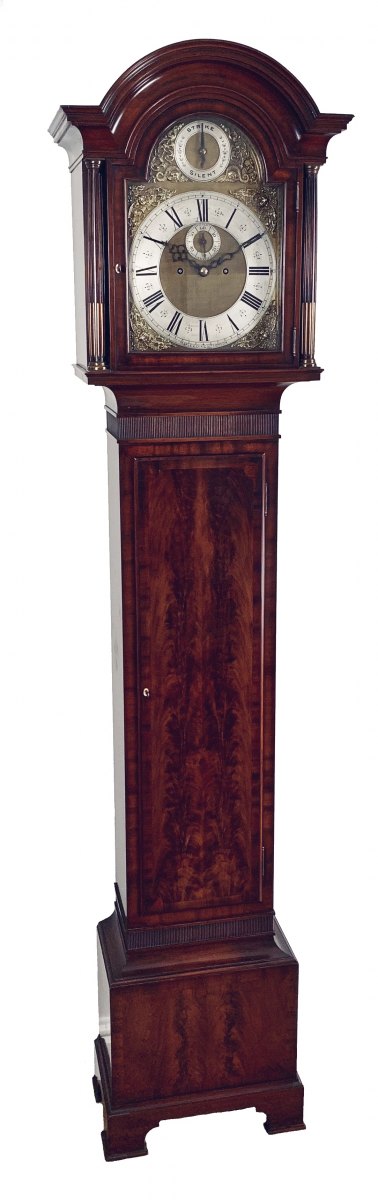
Edwardian longcase clock by Maple & Co, London, c. 1910
- Maker / attribution
- Maple & Co (maker)
- Date
- c. 1910
- Historical period
- Golden Age of Mechanical Watchmaking (1900 – 1945)
- Country of origin
- England
- Place
- London
- Object type
- Longcase clock
- Materials / technique
- mahogany
- Dimensions
- Height 7 ft 0 in (213 cm)
- Stock no.
- Product 505
- Credit line
- Dealer listing, P A Oxley (product 505)
- Catalogue title (original)
- Edwardian longcase clock by Maple & Co of London (English)
View the source record (dealer listing) ↗ (opens another website in a new tab)Suggest a correction
Record summary
Catalogued by P A Oxley (dealer), Wiltshire (stock number Product 505), this is a longcase clock by Maple & Co, made in London, England, dated c. 1910. The Atlas places it in the Golden Age of Mechanical Watchmaking period (1900 – 1945) of its Clocks collection. Materials and techniques recorded by the source: mahogany. Recorded dimensions: Height 7 ft 0 in (213 cm). The record is illustrated with 6 photographs.
Assembled from the source record's structured fields. Dates and attributions are given as the source states them; where a field is missing the Atlas leaves it blank rather than estimating.
Catalogue description
Dealer description — P A Oxley
An excellent and high quality Edwardian longcase clock retailed by the famous Furniture makers Maple & Co of London. The movement is of 8 day duration and of substantial size and quality. Unusually for this period the hourly strike is on a bell rather than a gong. The gong was very popular at this period. It also strikes the once every half hour, another unusual feature for a longcase clock. The full brass dial features a separate silvered brass chapter ring, matted centre, a silvered seconds ring and brass spandrels to the corners and arch. The silvered chapter ring is engraved with the makers name, Maple & Co Limited of London. Also with a strike/silent facility and blued steel hands. The movement also retains its original brass weights and pendulum. The very high quality and substantially made mahogany veneered case has a long trunk door enclosing two large brass weights and a pendulum. The entire case is not just crossbanded and veneered with book matched flame mahogany to the front elevation but also the side of the base, trunk and hood are similarly decorated with the same high quality veneers. The base terminates in a shaped plinth with mahogany pads to each foot. The hood features brass inlaid reeded pillars with brass Doric capitals and a plain broken arch top A stunning Edwardian longcase clock by these famous London retailers. Note: This clock may have originally been purchased as part of a set of furniture by the first owner. John Maple opened a small furnishing shop in the mid 19th century in Tottenham Court Road, London. By the 1880âs with the help of his son Sir John Blundell Maple the business became the largest furniture store in the world. This particular clock appears to be a reproduction of the London made longcase clocks from the late 18th century. Maker Maple & Co of London
Historical context
Golden Age of Mechanical Watchmaking (1900 – 1945)
The wristwatch displaces the pocket watch; waterproof cases, self-winding and grand complications.
Between 1900 and 1945 clocks were electrified: master-clock systems ran factories and offices, synchronous mains clocks entered homes, and the Shortt free-pendulum clock set new standards of accuracy before the first quartz clocks (1927). Art Deco design reshaped mantel and table clocks.
Read the period in the timelineMore clocks from this periodEarlier: Industrial Revolution
Atlas type guide
Longcase (tall-case or grandfather) clocks
The longcase clock was born from two seventeenth-century innovations: Christiaan Huygens's pendulum (1656–57) and the anchor escapement (c. 1670). A long seconds pendulum, nearly a metre long, swings with a small arc, and enclosing it together with the driving weights in a tall wooden case protected the mechanism and created a new piece of furniture. London makers such as Ahasuerus Fromanteel, Thomas Tompion and Joseph Knibb set the pattern.
By the eighteenth century longcase clocks were made throughout Britain, the Netherlands, Scandinavia (the Swedish Mora clock), France (the Comtoise from the Franche-Comté), Germany and colonial America. Eight-day movements with two weights became standard in better clocks; thirty-hour clocks with one weight and a rope or chain were cheaper alternatives.
What to look for
- Winding holes in the dial: two (eight-day, going and striking) or none (thirty-hour, pulled up by a chain).
- Brass dials with applied chapter rings (earlier) versus painted iron 'white' dials (after c. 1770 in Britain).
- Moon-phase arches, date apertures, seconds dials and maker's name on the dial.
- Case woods and style: ebonised, walnut marquetry, lacquer, oak or mahogany; regional styles from London, Lancashire, Scotland or America.
- Whether the movement and dial match the case — 'marriages' are common.
Dating clues
- Square brass dials suggest c. 1670–1720; arched brass dials c. 1715–1790.
- Painted (white) dials were made by Birmingham dial-makers from about 1772.
- Comtoise clocks with repoussé pendulums are mostly nineteenth century.
General guidance written by the Atlas editors about this kind of object. It is not a statement about this particular piece; for that, rely on the source record above and on physical examination.
Read next:Anchor (recoil) escapementDeadbeat escapementAnchor escapement
Related records
Clocks · c. 1900
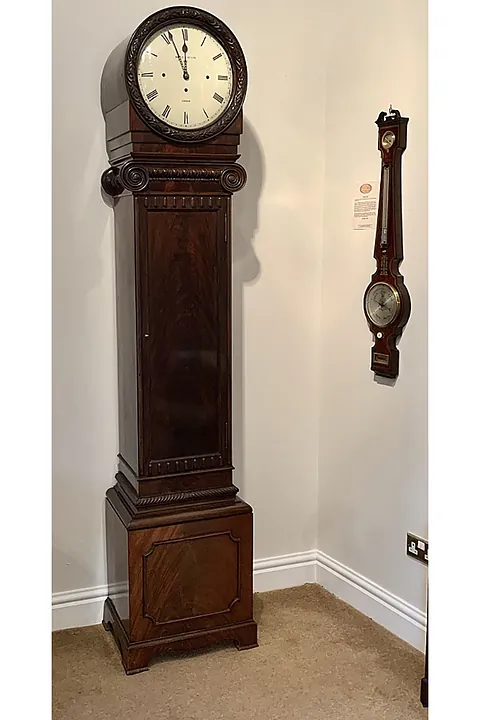
Edwardian longcase clock by Maple & Co, London, c. 1900
P A Oxley (dealer), Wiltshire
Clocks · 1890–1930
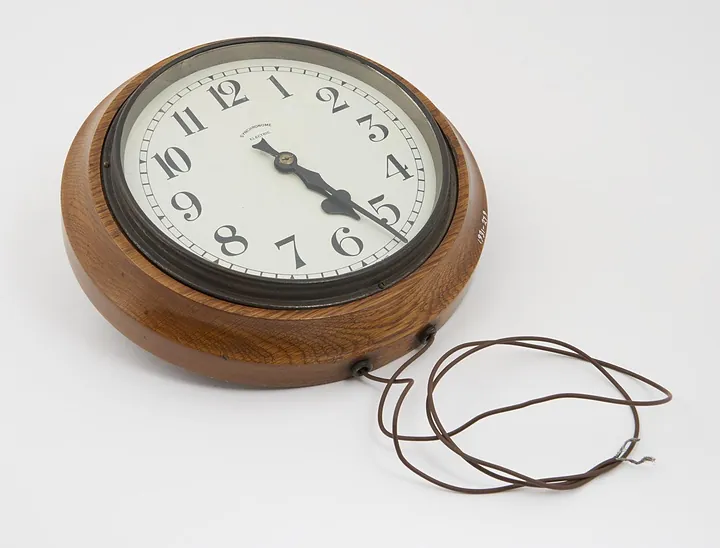
Clock with 8-inch impulse dial, by the Synchronome Company Limited, England, 1890–1930.
Science Museum Group, London
Clocks · c. 1900
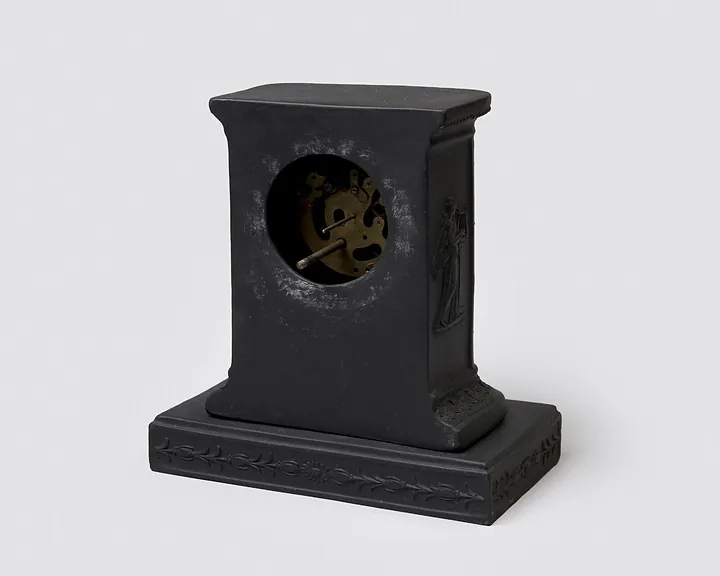
Clock, black basalt, brass, Josiah Wedgwood and Sons, Etruria, c. 1900
Victoria and Albert Museum, London
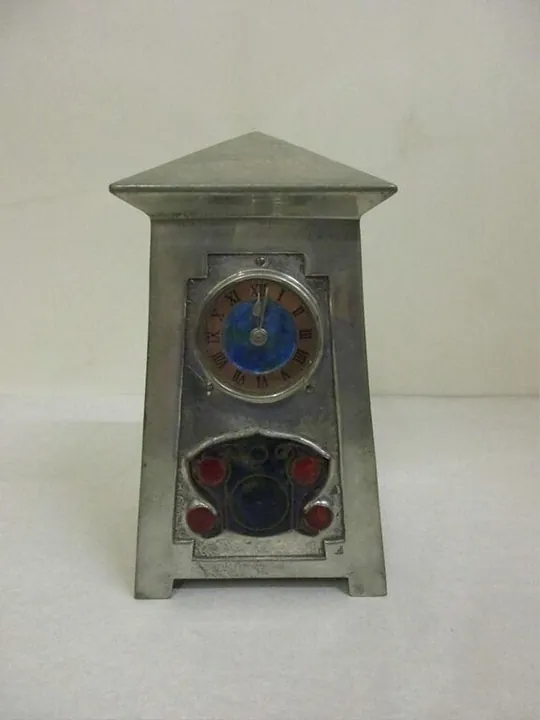
Clocks · c.1903-1904
Clock, pewter, made for Liberty& Co., England. 1903-4.
Victoria and Albert Museum, London
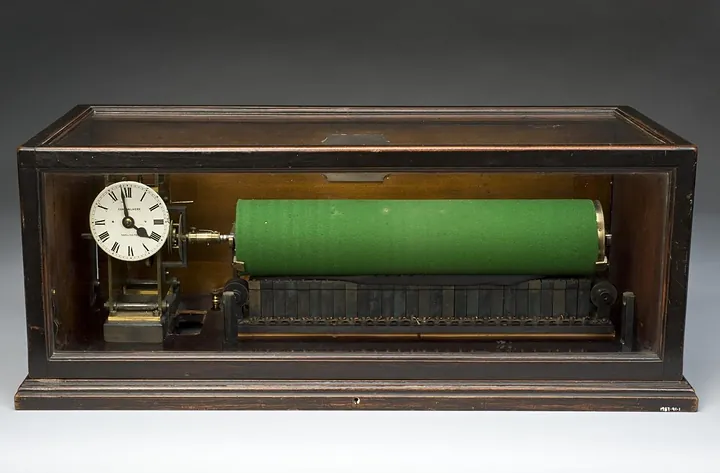
Clocks · 1900–1939
Clock by Cox-Walkers of Darlington, England, 1900–1939
Science Museum Group, London
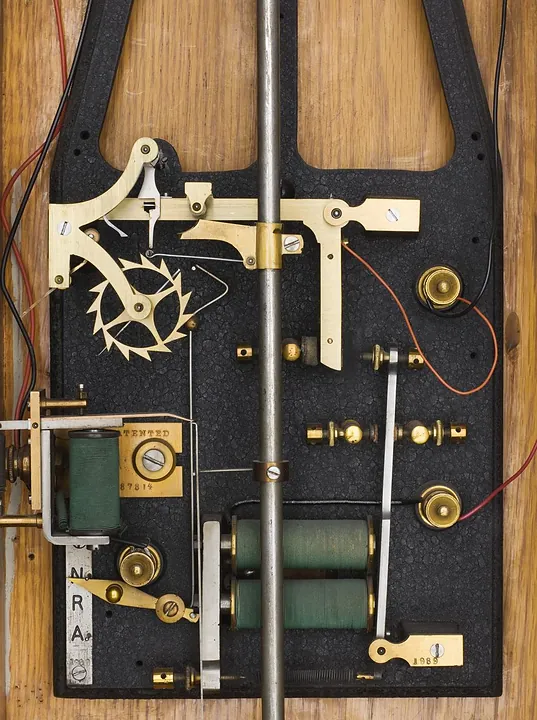
Clocks · 1900–1935
Clock by The Synchronome Company Limited, England, 1900–1935
Science Museum Group, London
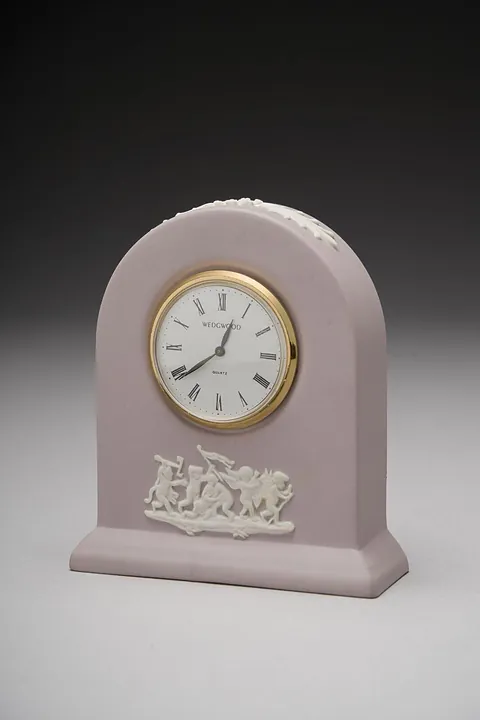
Clocks · 20th century
Clock, Jasperware with applied reliefs and metal and glass, Josiah Wedgwood and Sons, Stoke on Trent, 20th century (V&A WE.15628-2014)
Victoria and Albert Museum, London
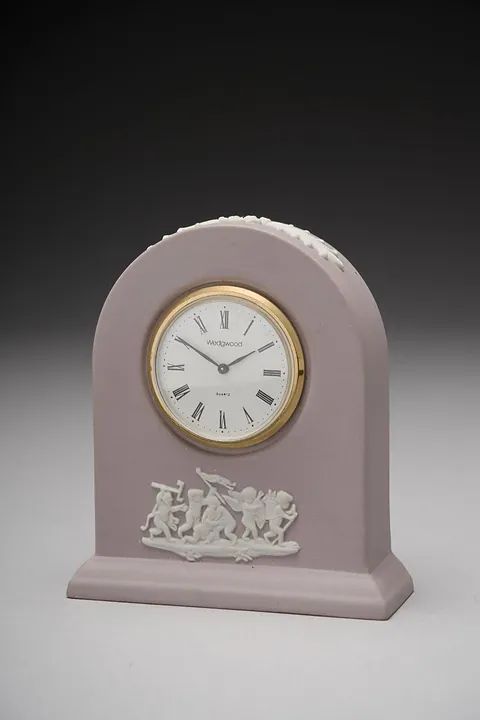
Clocks · 20th century
Clock, Jasperware with applied reliefs and metal and glass, Josiah Wedgwood and Sons, Stoke on Trent, 20th century (V&A WE.15629-2014)
Victoria and Albert Museum, London