
Wristwatches · Wristwatch
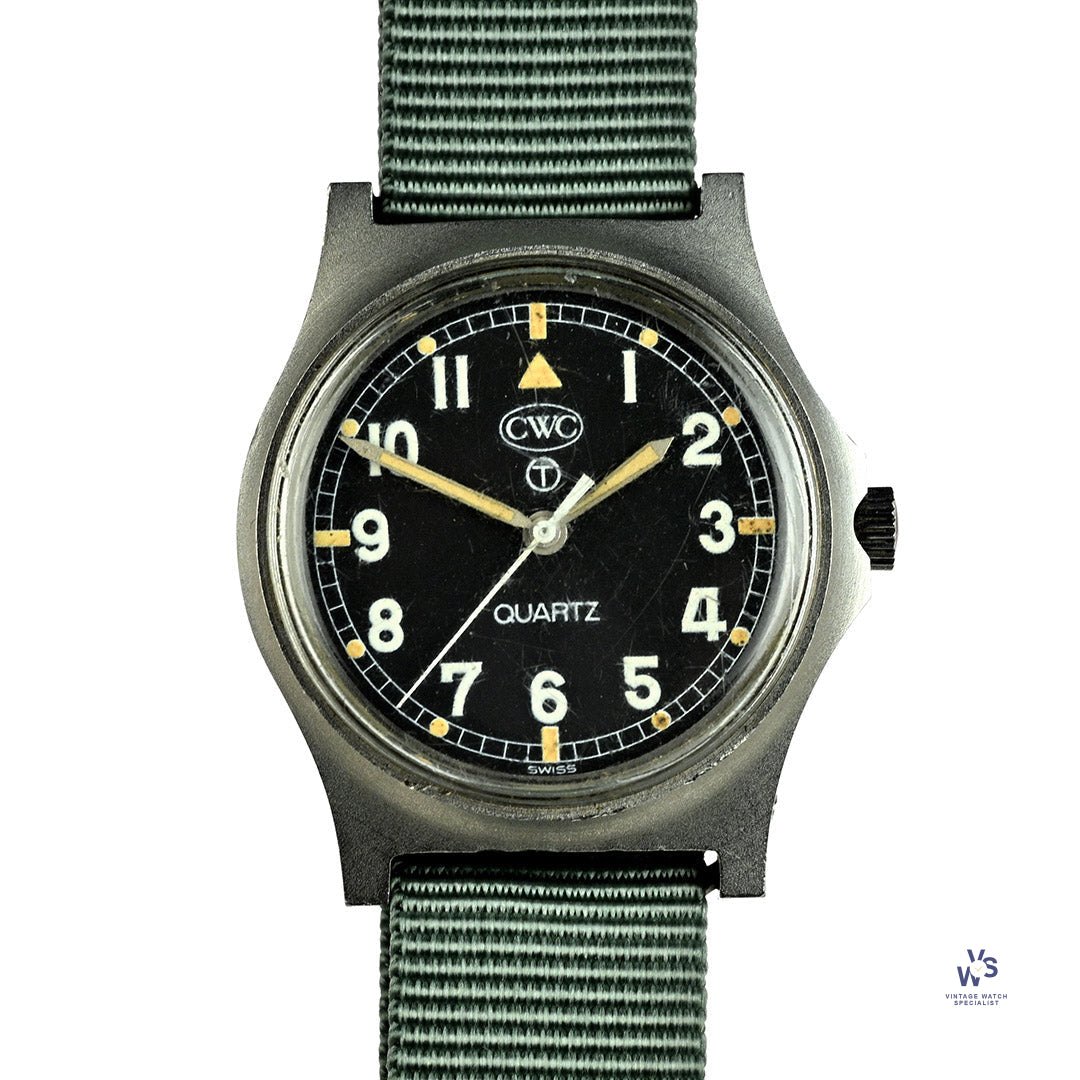
CWC Military Issued Quartz "Fatboy", Clean Case Back, 1982
- Maker / attribution
- CWC (maker)
- Date
- 1982
- Historical period
- Quartz Revolution (1969 – 1990)
- Country of origin
- Unrecorded in source
- Object type
- Wristwatch
- Stock no.
- vws3790
- Credit line
- Dealer listing, Vintage Watch Specialist (vws3790)
- Catalogue title (original)
- CWC - Military Issued Quartz "Fatboy" - Clean Case Back - 1982 (English)
View the source record (dealer listing) ↗ (opens another website in a new tab)Suggest a correction
Record summary
Catalogued by Vintage Watch Specialist (dealer), United Kingdom (stock number vws3790), this is a wristwatch by CWC, dated 1982. The Atlas places it in the Quartz Revolution period (1969 – 1990) of its Wristwatches collection. The record is illustrated with 6 photographs.
Assembled from the source record's structured fields. Dates and attributions are given as the source states them; where a field is missing the Atlas leaves it blank rather than estimating.
Catalogue description
Dealer description — Vintage Watch Specialist
A Striking 1982 CWC Military Issued Quartz "Fatboy" in Original Condition with Beautiful Pumpkin Lume Introduced in 1980, the CWC “Fatboy” is a distinctive military-issue watch made for the British Ministry of Defence. Its nickname comes from the thick stainless steel case required to house the early ESA 536.121 quartz movement. Produced between 1980 and 1983, the Fatboy was issued to all branches of the UK Armed Forces, including the Army, Royal Navy, and RAF. Known for its fixed strap bars, acrylic crystal, and tritium lume, it represents the rugged, functional design of Cold War-era military timepieces. Today, the Fatboy is prized by collectors as a rare and authentic piece of British military history What's on offer This original CWC “Fatboy” from circa 1982 is a superb example of British military watchmaking, prized for its rugged reliability and distinctive design. The black dial with crisp white numerals ensures excellent legibility—vital for military use—while the robust stainless steel case, with its thicker profile that inspired the “Fatboy” nickname, carries the expected dings and marks of service. The unmarked caseback and acrylic crystal also display honest wear, testament to decades of faithful duty. Fitted with a NATO-style strap and fixed bars, it retains its authentic military aesthetic while offering comfort and practicality. Despite its vintage scars, the watch is in very good condition overall, embodying the durability and no-nonsense spirit that made it a trusted companion for British forces during the Cold War. A true piece of military history and a worthy addition to any collection.
Historical context
Quartz Revolution (1969 – 1990)
Seiko's Astron begins mass quartz timekeeping; traditional industries contract sharply.
Quartz and digital watches transformed the market after 1969. Swiss employment collapsed, Japanese and Hong Kong production soared, and the Swatch (1983) helped the Swiss industry recover; mechanical watches survived as luxury goods.
Read the period in the timelineMore wristwatches from this periodEarlier: Modern Mechanical Horology
Atlas type guide
Military, pilot and travel watches
The wristwatch owes much of its adoption by men to warfare and aviation. Wristlets — small pocket watches soldered with lugs and worn on a strap — were used in colonial campaigns and became standard equipment in the First World War, with protective grilles over the crystal ('shrapnel guards'). Louis Cartier's Santos (1904), designed for the aviator Alberto Santos-Dumont, is often cited as an early purpose-made pilot's watch.
In the Second World War governments specified watches in detail: the German B-Uhr observation watches, the American A-11, and the British 'W.W.W.' (the 'Dirty Dozen' set of 1945). After the war, jet travel brought GMT and world-time watches, which show two or more time zones at once — Louis Cottier's world-time mechanism and the Rolex GMT-Master (1955) are examples.
What to look for
- Military markings on the case back: broad arrow, issue numbers, 'W.W.W.', 'A.T.P.'
- High-legibility black dials with luminous Arabic numerals; oversized crowns for gloved hands.
- 24-hour hands and rotating 24-hour bezels or city rings on GMT/world-time watches.
- Wire lugs on early wristlets converted from pocket watches.
Dating clues
- Wire-lug wristlets: c. 1900–1925.
- Military specifications of the Second World War: 1939–1945.
- GMT and world-time wristwatches: mainly after 1950.
General guidance written by the Atlas editors about this kind of object. It is not a statement about this particular piece; for that, rely on the source record above and on physical examination.
Related records
Wristwatches · c. 1985
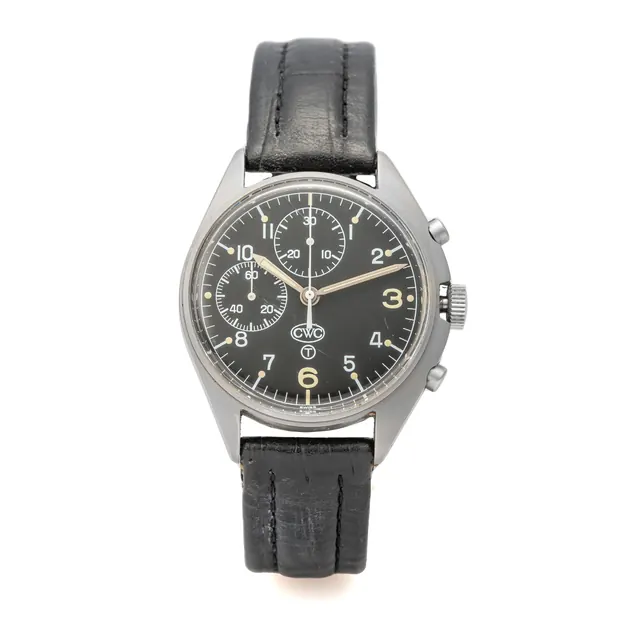
Cwc wristwatch, Military Chronograph, circa 1985
Antiquorum auction archive, Geneva
Wristwatches · 1986
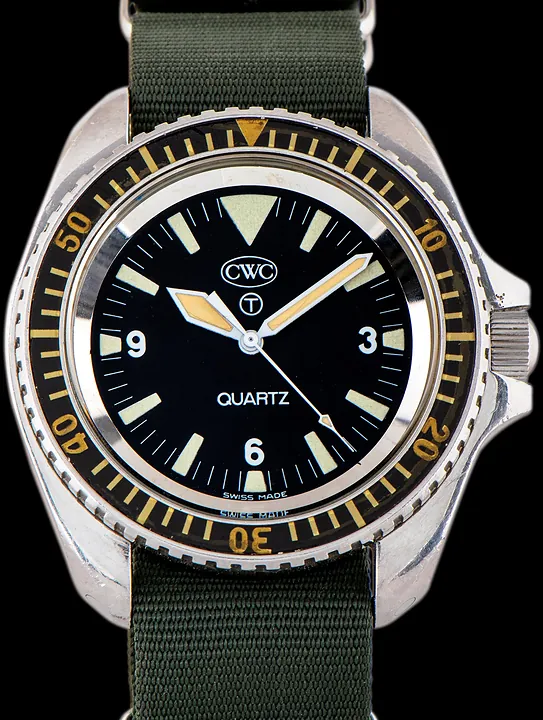
CWC Royal Navy Diver 0552/6645-99-7573314, 1986
Craft & Tailored (dealer), Los Angeles
Wristwatches · 2005
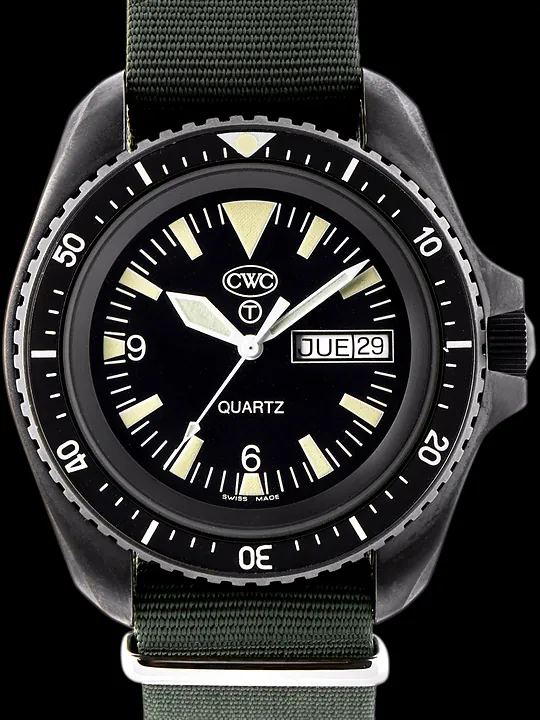
CWC Royal Navy SBS Diver W10/6645-99-7995443, 2005
Craft & Tailored (dealer), Los Angeles
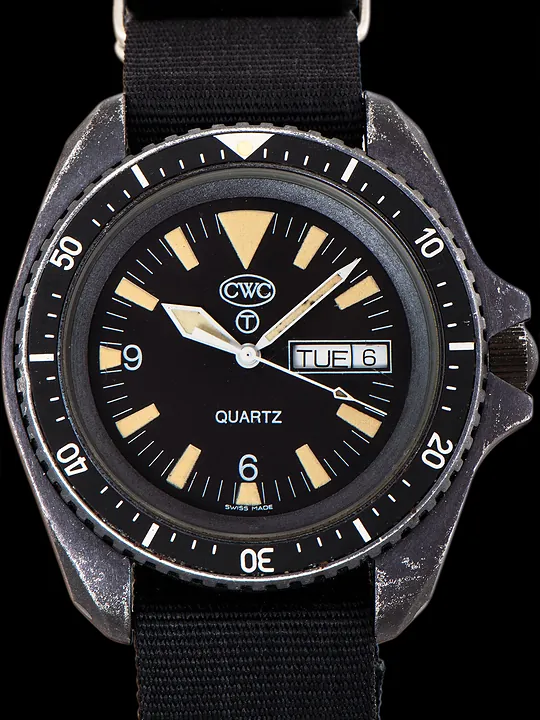
Wristwatches · 1993
CWC Royal Navy SBS Diver 0555/6645-99-7995443, 1993
Craft & Tailored (dealer), Los Angeles

Wristwatches · 1970
Wristwatch by Heno, Switzerland, 1970
Museum Rotterdam
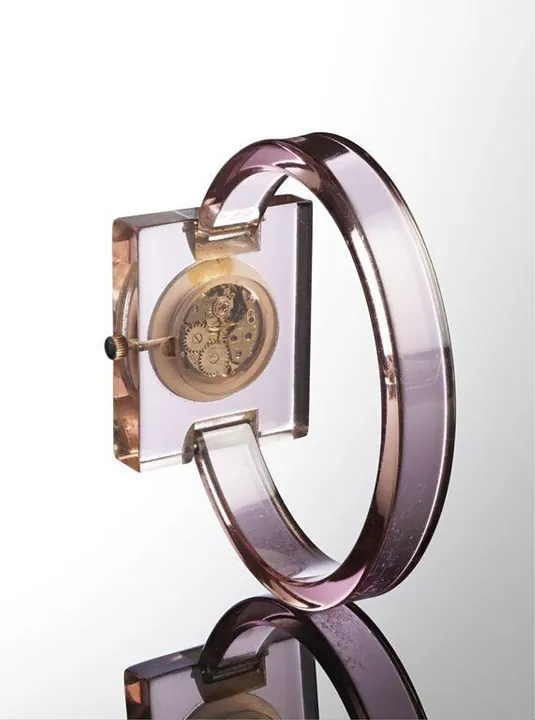
Wristwatches · 1970s
Wristwatch, plastic, by Gucci; Italy, 1970s.
Victoria and Albert Museum, London
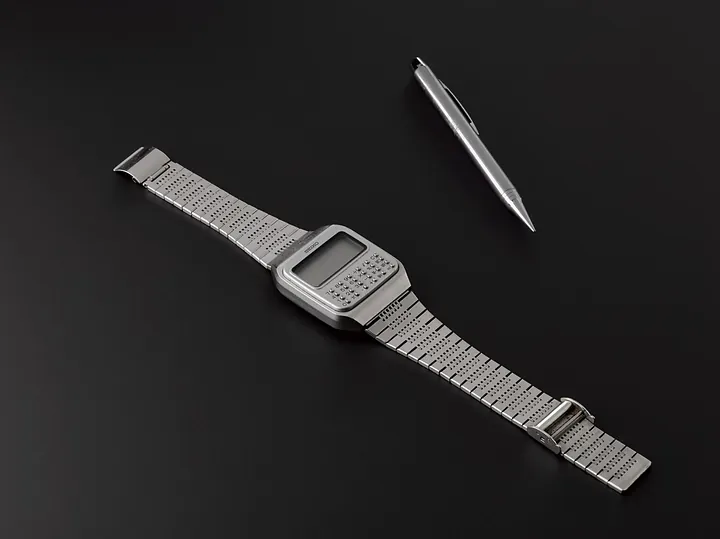
Wristwatches · 1978
Calculator wristwatch by Suwa Seikosha Co. Limited, Japan, 1978
Science Museum Group, London
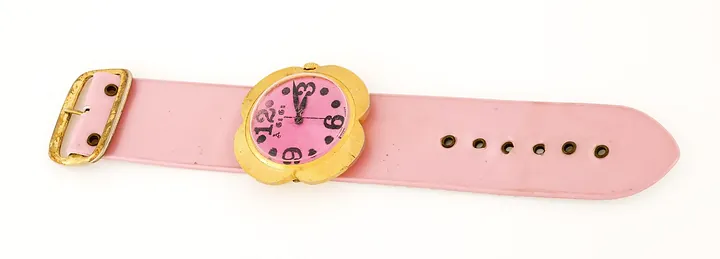
Wristwatches · 1980
Wristwatch, 1980 (no. 71413)
Museum Rotterdam