
Clocks · Clock
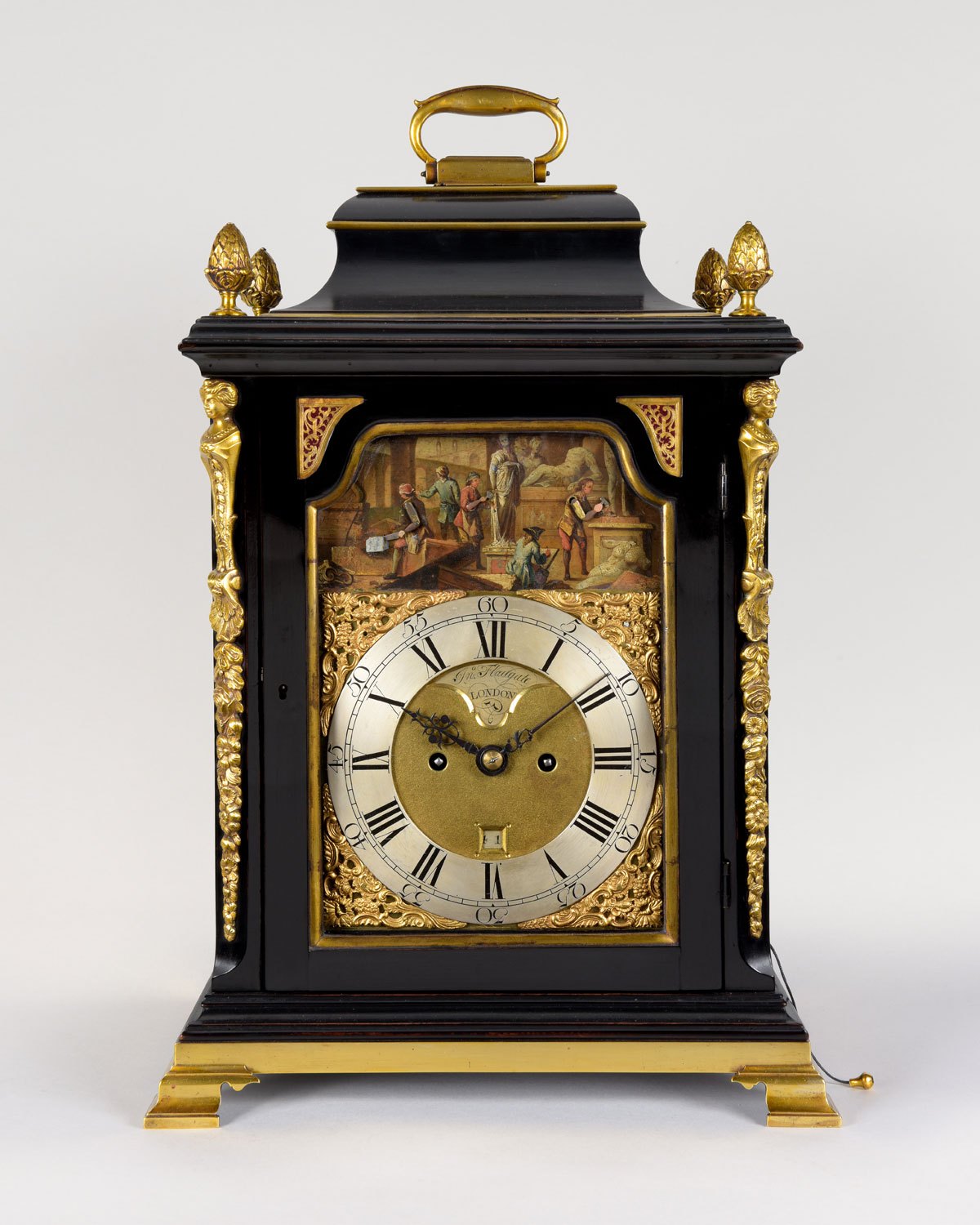
Clock by John Fladgate, London, c. 1760
- Maker / attribution
- John Fladgate (maker)
- Date
- c. 1760
- Historical period
- Precision & Scientific Horology (1750 – 1850)
- Country of origin
- England
- Place
- London
- Object type
- Clock
- Materials / technique
- brass
- Stock no.
- SKU 342
- Credit line
- Dealer listing, Howard Walwyn (SKU 342)
- Catalogue title (original)
- JOHN FLADGATE. A fine George III period brass dial automaton clock (English)
View the source record (dealer listing) ↗ (opens another website in a new tab)Suggest a correction
Record summary
Catalogued by Howard Walwyn Fine Antique Clocks (dealer), London (stock number SKU 342), this is a clock by John Fladgate, made in London, England, dated c. 1760. The Atlas places it in the Precision & Scientific Horology period (1750 – 1850) of its Clocks collection. Materials and techniques recorded by the source: brass. The record is illustrated with 4 photographs.
Assembled from the source record's structured fields. Dates and attributions are given as the source states them; where a field is missing the Atlas leaves it blank rather than estimating.
Catalogue description
Dealer description — Howard Walwyn
A fine George III period brass dial automaton clock, the 8-day hour striking movement with hour strike, pull repeats and figures of artisans working in a sculptor’s studio. The backplate of the movement has fine foliate engraving and the clock retains its original verge escapement. The elegant ebonised belltop case stand on four ogee brass feet and has a mix of brass and pearwood mouldings. There are four caryatids applied to each chamfered corner and four pineapple finials to the top of the case. Height : 18 ¼ in (46.25 cm) excluding handle Width : 13 ¼ in (33.75 cm) Depth : 8 ⅜ in (21.25 cm) * John Fladgate is listed on page 269 of Brian Loomes’ Clockmaker of the World: 21 st Century Edition as working in Conduit Street, London between 1743 and his death in 1781. He was succeeded by his widow until 1793. HW5916
Historical context
Precision & Scientific Horology (1750 – 1850)
Harrison solves longitude; Mudge invents the lever; Breguet's Paris workshop defines the modern watch.
The age of the deadbeat escapement, compensated pendulums and observatory regulators. Domestic clocks spread through the middle classes: English longcase and bracket clocks, French gilt-bronze mantel clocks, Viennese Biedermeier wall clocks, Black Forest painted-shield clocks, and the first American shelf clocks.
Read the period in the timelineMore clocks from this periodEarlier: Early Modern Horology
Atlas type guide
Astronomical, musical and automaton clocks
Astronomical clocks display more than the hour: the positions of the sun and moon in the zodiac, the phase of the moon, the calendar, sometimes the planets and eclipses. From Richard of Wallingford's and Giovanni de' Dondi's fourteenth-century clocks to the Prague Orloj and the Strasbourg cathedral clocks, they demonstrated the order of the cosmos. Renaissance makers in Augsburg and Nuremberg built celestial globe clocks and monstrance clocks as princely treasures.
Automaton and musical clocks entertained as well as informed: figures move, birds sing, organs and carillons play tunes from pinned cylinders. The eighteenth-century trade with China ('sing-songs') and Ottoman Turkey created a market for elaborate English, Swiss and French automata.
What to look for
- Subsidiary dials for moon phase, calendar, zodiac and planetary positions.
- Celestial globes or armillary spheres turned by the movement.
- Pinned cylinders, bellows and pipes or bells for music.
- Figures on cams and levers; separate trains for automaton work.
Dating clues
- Renaissance astronomical table and globe clocks: c. 1550–1650.
- English and Swiss automaton clocks for the Chinese market: c. 1760–1820.
- Picture clocks (clockwork pictures) are mostly nineteenth century.
General guidance written by the Atlas editors about this kind of object. It is not a statement about this particular piece; for that, rely on the source record above and on physical examination.
Read next:Fusee
Related records
Pocket Watches · 1675–1680 (case and dial); 1740–1760 (movement and lunette)
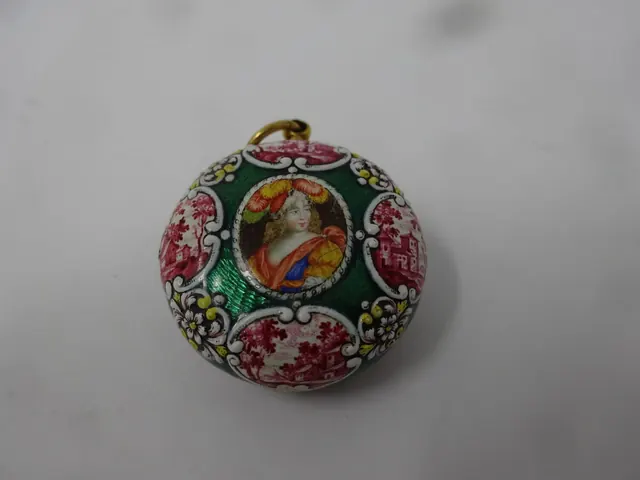
Watch by John Fladgate, England, 1675–1760
Musée du Louvre, Paris
Clocks · 1740–1760
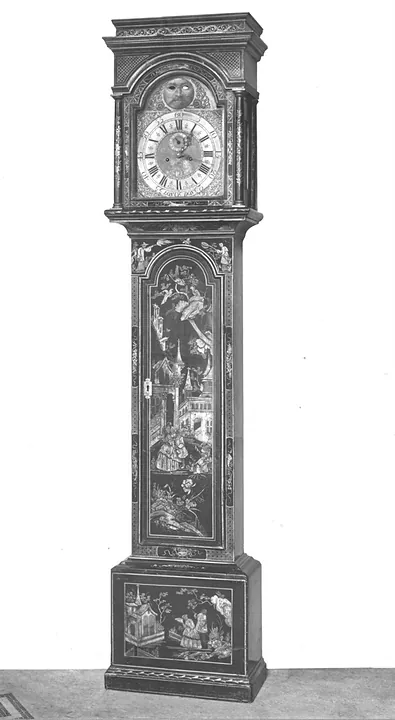
Longcase clock, English, 1740–1760, japanned wood, John Ellicott
Victoria and Albert Museum, London
Clocks · c.1750
Long-case clock, English, ca. 1750, by Richard Peyton of Gloucester
Victoria and Albert Museum, London
Clocks · 1751
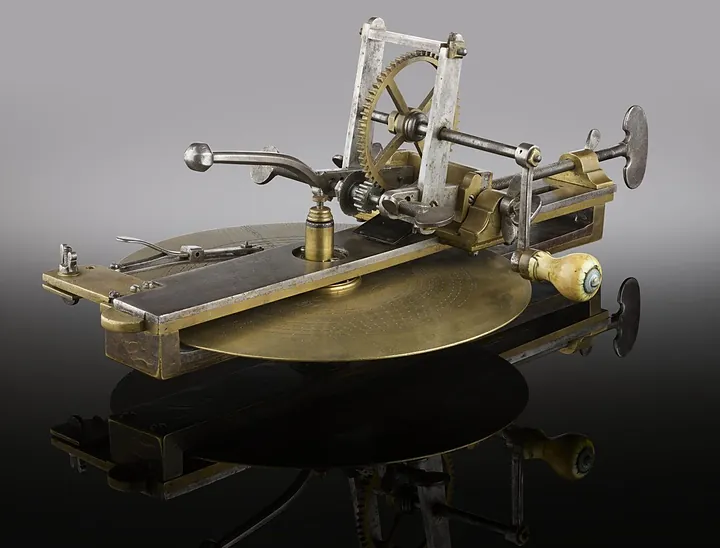
Large wheel engine, signed and dated "John Tipping, Whildon Green, 1751".
Science Museum Group, London
Clocks · 1755
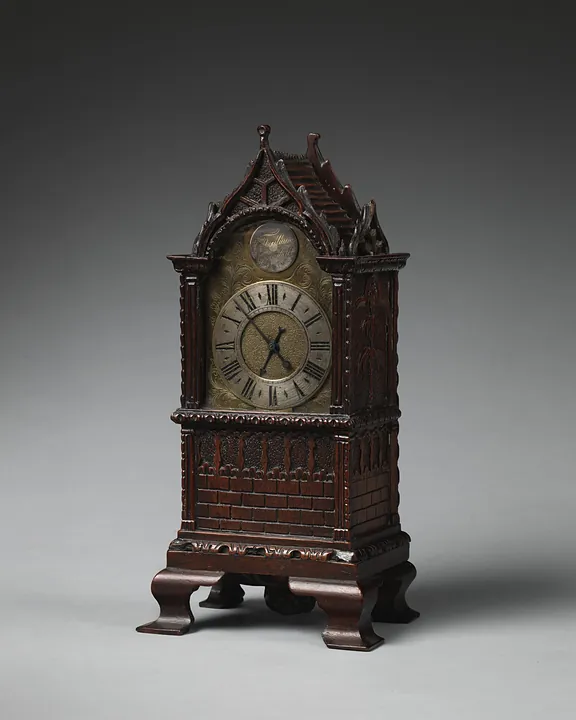
Bracket clock by John Fordham, England, 1755
The Metropolitan Museum of Art, New York
Clocks · c. 1760
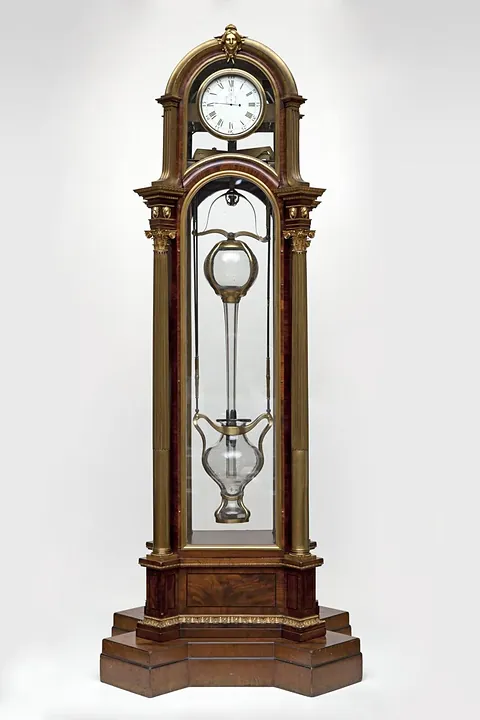
Longcase clock by James Cox, England, c. 1760
Victoria and Albert Museum, London
Clocks · 1766
Clock by Alexander Cumming, England, 1766
Science Museum Group, London
Clocks · 1768–1769
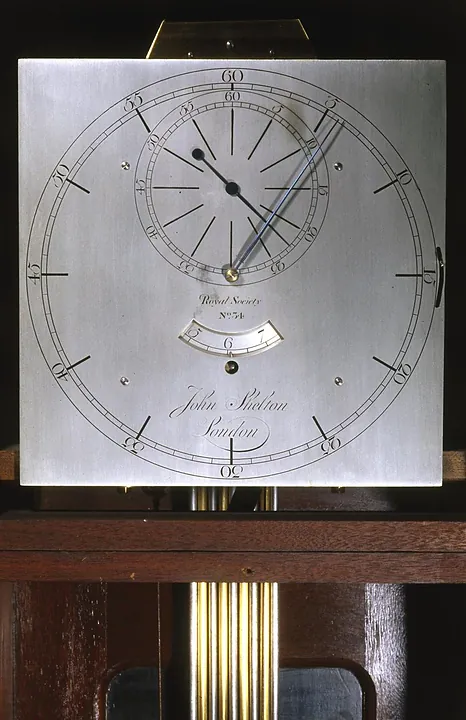
Regulator clock by John Shelton, England, 1768–1769
Science Museum Group, London