
Clocks · Clock
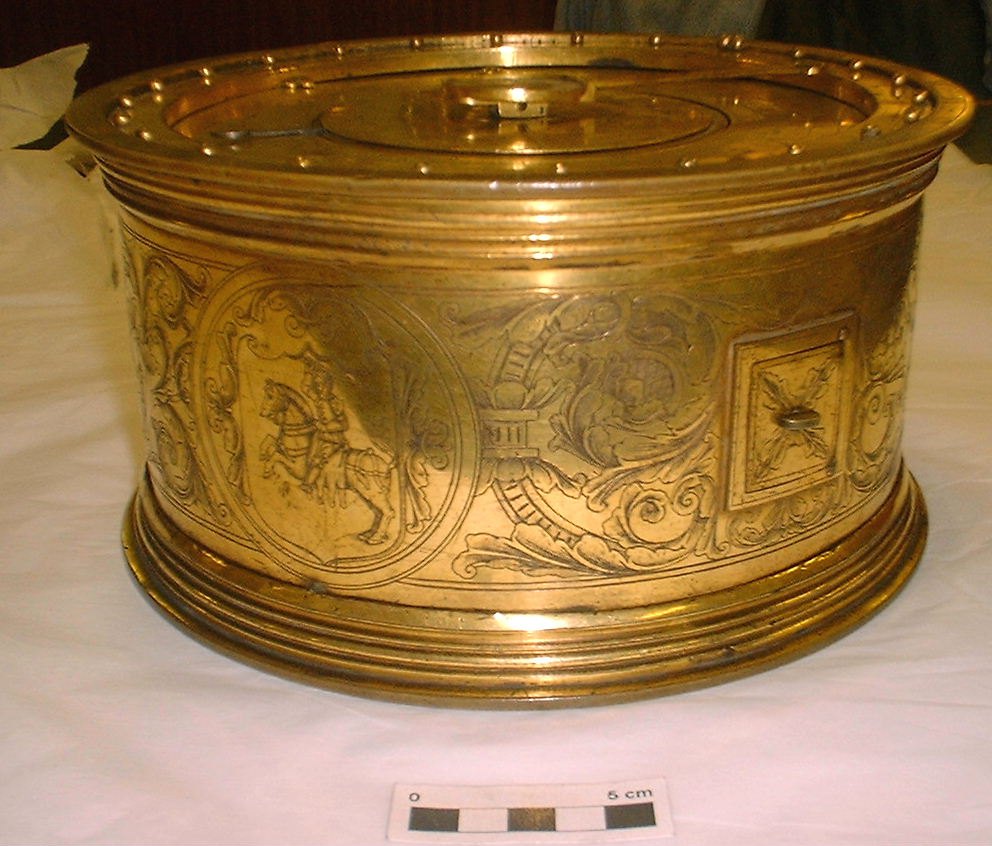
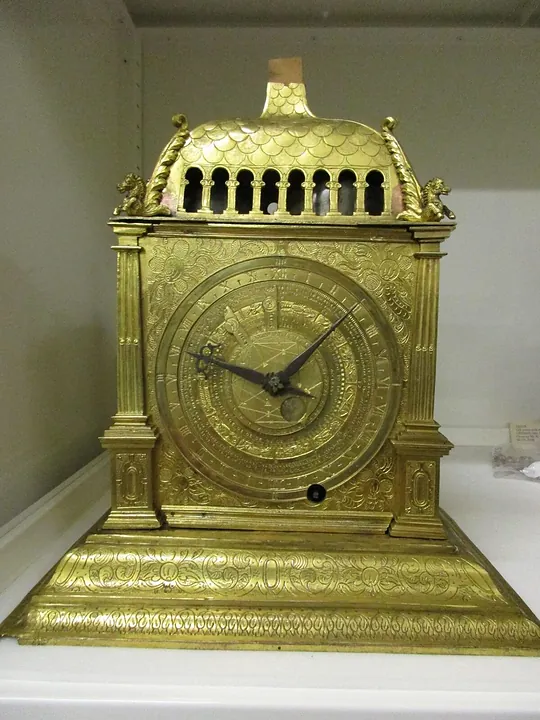
Clock by Daines Barrington, Czech Republic, 1525 16th century
- Maker / attribution
- Daines Barrington (Maker); James Ferguson (Maker); Giovanni Galeazzo (Maker); Henry Peckitt (Maker)
- Date
- 1525 16th century
- Historical period
- Renaissance Horology (1400 – 1600)
- Country of origin
- Czech Republic
- Place
- Bohemia Czech Republic Europe Lithuania Poland Prague Stredoceský
- Object type
- Clock
- Holding institution
- Archaeology Data Service
- Accession / object no.
- ldsal_131a
- Credit line
- Archaeology Data Service
- Catalogue title (original)
- Zech's clock (English)
View the source record ↗ (opens another website in a new tab)Suggest a correction
Record summary
Held and catalogued by Archaeology Data Service (object number ldsal_131a), this is a clock by Daines Barrington, made in Bohemia Czech Republic Europe Lithuania Poland Prague Stredoceský, dated 1525 16th century. The Atlas places it in the Renaissance Horology period (1400 – 1600) of its Clocks collection. The record is illustrated with 5 photographs.
Assembled from the source record's structured fields. Dates and attributions are given as the source states them; where a field is missing the Atlas leaves it blank rather than estimating.
Catalogue description
Catalogue description from Archaeology Data Service
An astronomical clock of gilt brass in the form of a circular flat box. The upper face is the dial graduated in twenty-four divisions, in the centre of which appear the arms of Poland and Visconti. The body of the clock is covered with engraved decoration. The last image shows the spirial working section, which is the oldest know type of this design in Britain.At the centre of the clock face forming the pivot of the hand are engraved the arms of Poland impaling Visconti under a crown. Around the body of the clock, three sets of arms are engraved in circles: those of Poland (a snake devouring a person) under a crown, Lithuania (a knight on horseback), and Visconti (a spread eagle) also under a crown. All are flanked by foliage decoration. On the underside are stamped four representations of the arms of Bona Sforza (Sfortia), daughter of Giov. Galeazzo Duke of Milan, great-granddaughter of Philip Visconti, the last Duke of his race.
Historical context
Renaissance Horology (1400 – 1600)
Spring power makes clocks portable; Nuremberg and Augsburg produce the first watches; the Prague Orloj is built.
Spring power made the domestic clock portable. Augsburg and Nuremberg produced gilt-brass table clocks, often with astronomical dials and alarms; weight-driven Gothic wall clocks and English lantern clocks served households. Clocks of this period have foliot or balance-wheel control and usually only an hour hand.
Read the period in the timelineMore clocks from this periodEarlier: Medieval Period
Atlas type guide
Domestic clocks
A clock combines four systems: a source of power (falling weight, coiled spring, or later electricity), a gear train that divides time, an escapement and oscillator that regulate it (foliot, pendulum or balance), and an indicating system of dial and hands or a bell. Its history runs from the large iron weight-driven clocks of the late thirteenth century to Renaissance spring-driven table clocks, the pendulum revolution of 1656, the factory clocks of the nineteenth century and electric and quartz clocks of the twentieth.
Domestic clocks also reflect regional furniture and decorative traditions — English longcase and bracket clocks, French pendules, Viennese regulators, Black Forest and American shelf clocks — and therefore record changing tastes as much as technical progress.
What to look for
- How the clock is powered: weights, spring barrel, fusee, electric coil.
- The oscillator: foliot, short pendulum, long seconds pendulum or balance.
- Whether it strikes: hour only (count wheel) or hours and quarters (rack striking).
- The maker or retailer's name on dial and movement, and any factory trademarks.
- Signs of alteration — replaced dials, converted escapements, 'married' cases.
Dating clues
- Before 1656 clocks used foliots or balances; after, most domestic clocks have pendulums.
- Anchor escapements spread after c. 1670; minute hands became common at the same time.
- Factory production in America and Germany transformed prices after c. 1840.
General guidance written by the Atlas editors about this kind of object. It is not a statement about this particular piece; for that, rely on the source record above and on physical examination.
Related records
Clocks · 1572
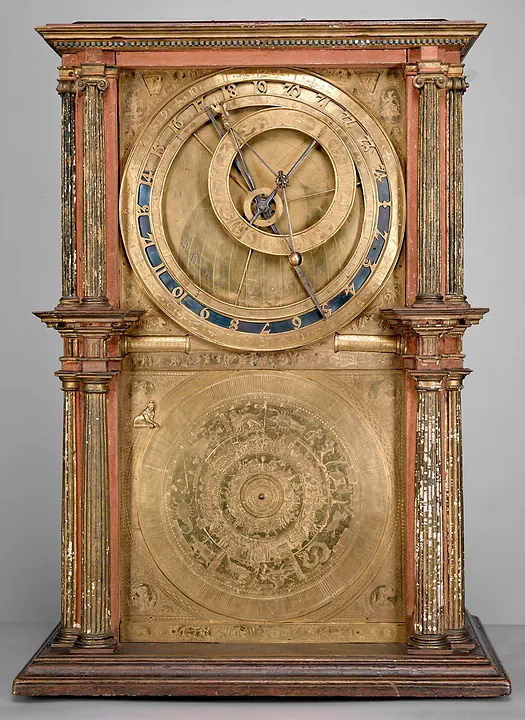
Clock attributed to Jan Taborsky, Czech Republic, 1572
Fine Arts Museum Vienna
Clocks · 1596
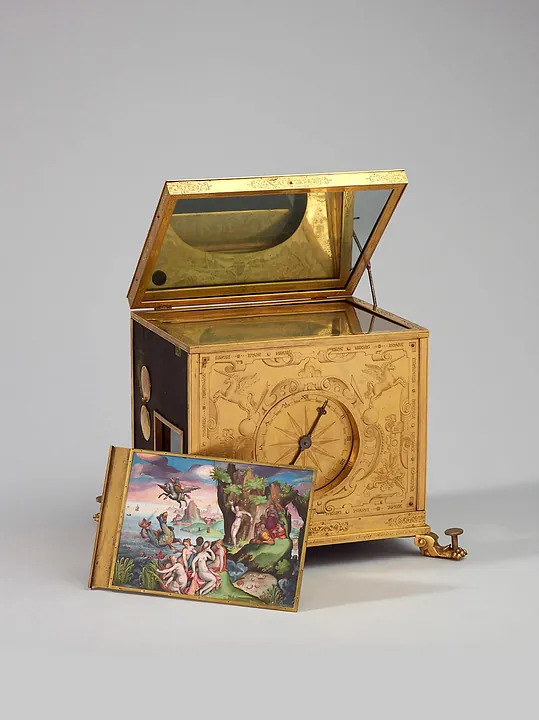
Clock by Christoph Margraf, Czech Republic, 1596
Fine Arts Museum Vienna
Clocks · 1527
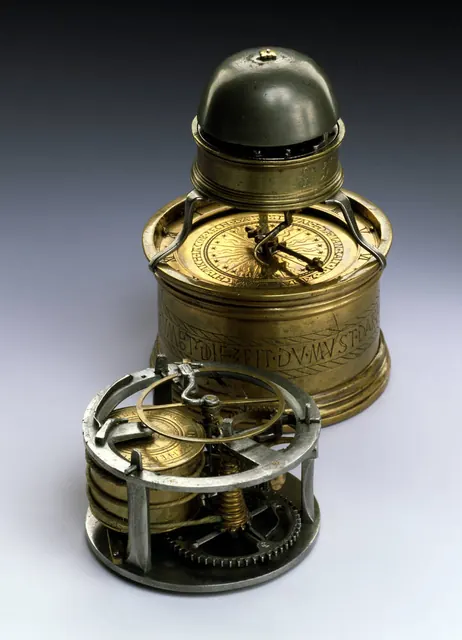
Table clock by Jacob Zech, Czech Republic, Prag, 1527
Dresden State Art Collections. Royal Cabinet of Mathematical and Physical Instruments
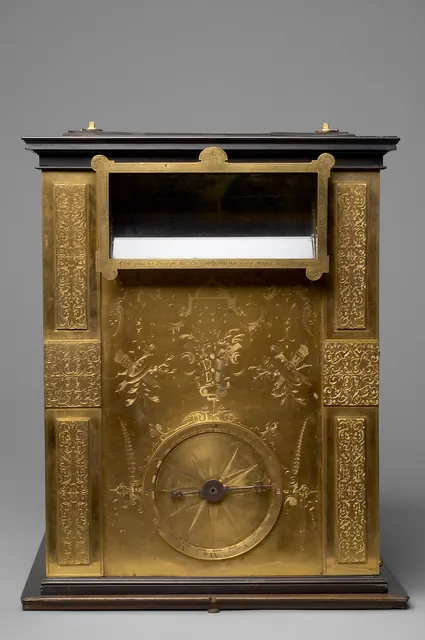
Clocks · 1599
Clock by Christoph Margraf, Czech Republic, 1599
Fine Arts Museum Vienna
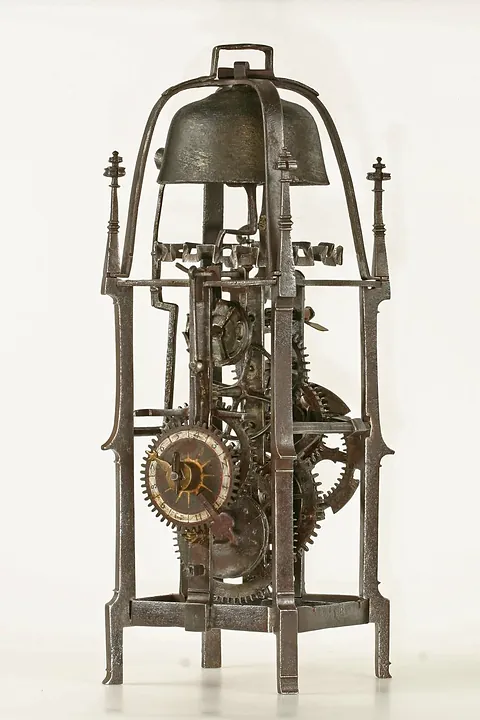
Clocks · 16th century
Iron alarm clock, Central Europe, 16th century
German Clock Museum
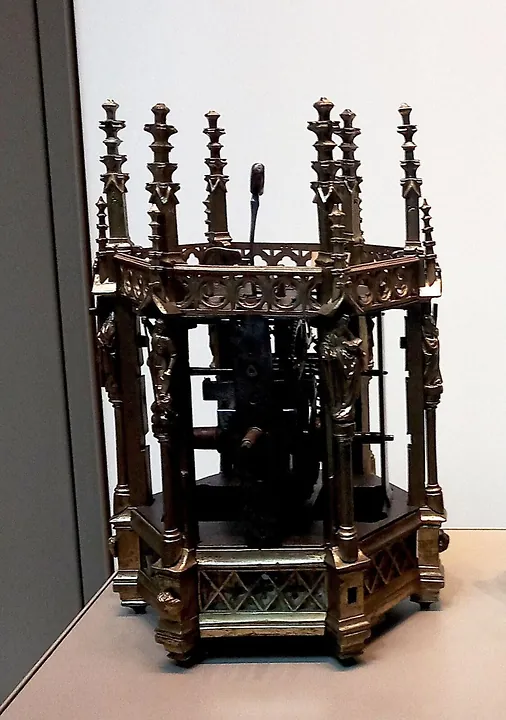
Clocks · Mid-15th century
Clock with iron movement in gilt brass case. Burgundian; mid-15th-century (with later restorations).
Victoria and Albert Museum, London
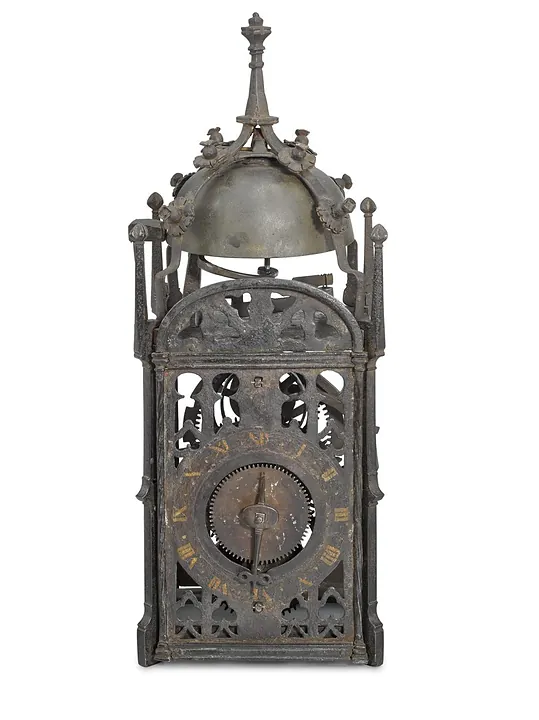
Clocks · 1400–1499
Lantern clock, Germany, 1400–1499
Science Museum Group, London
Clocks · 1500–1600
An astronomical clock in a gilt-bronze case, Venetian, sixteenth century.
Victoria and Albert Museum, London