
Clocks · Clock
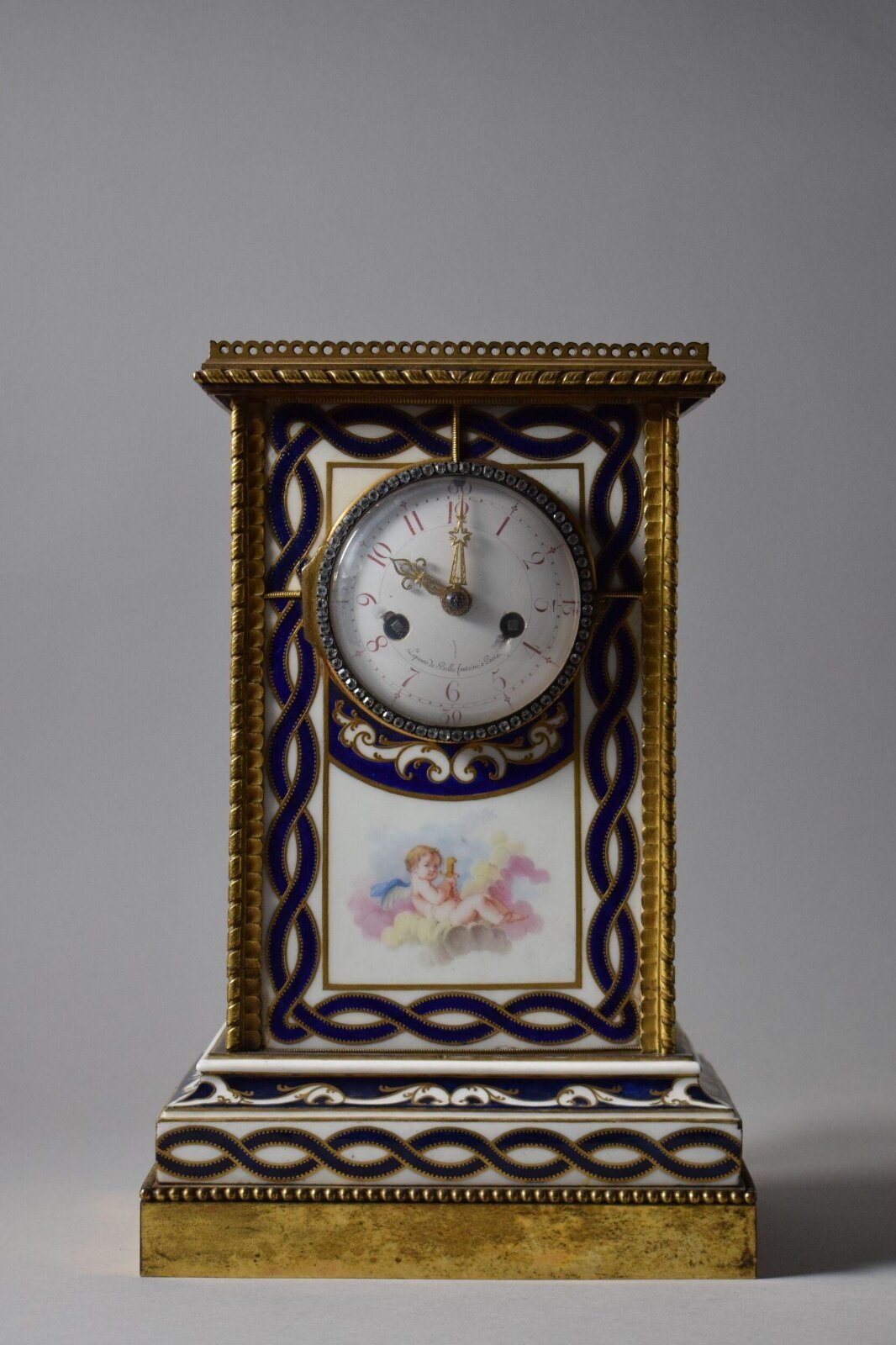
Clock, 18th century
- Maker / attribution
- Unrecorded in source
- Date
- 18th century
- Historical period
- Early Modern Horology (1600 – 1750)
- Country of origin
- Unrecorded in source
- Object type
- Clock
- Holding institution
- Victoria and Albert Museum, London
- Accession / object no.
- 999-1882
- Credit line
- Bequeathed by John Jones
View the source record ↗ (opens another website in a new tab)Suggest a correction
Record summary
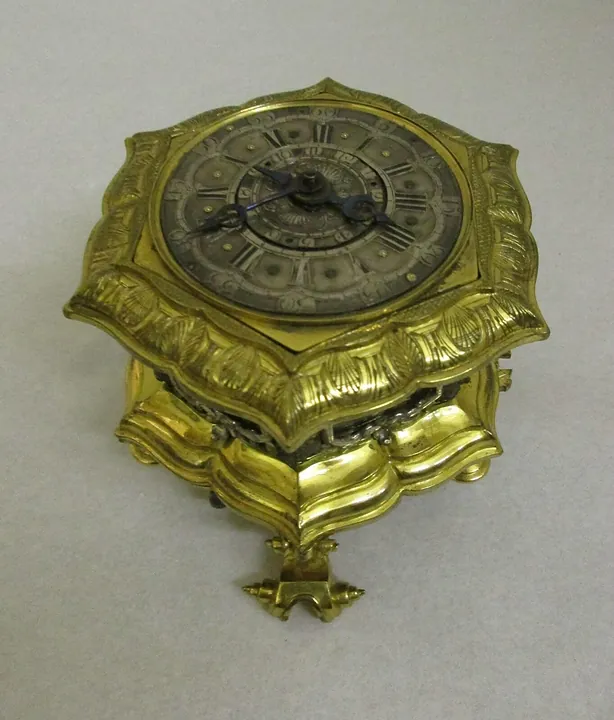
Held and catalogued by Victoria and Albert Museum, London (object number 999-1882), this is a clock, dated 18th century. The Atlas places it in the Early Modern Horology period (1600 – 1750) of its Clocks collection. The record is illustrated with 1 photograph.
Assembled from the source record's structured fields. Dates and attributions are given as the source states them; where a field is missing the Atlas leaves it blank rather than estimating.
Catalogue description
Summary — Victoria and Albert Museum
A vase-shaped Sèvres porcelain table clock with ormolu stand and foliate, female and floral mounts in the classical revival style, French, circa 1870 bequeathed by John Jones who bought the clock believing that it had been made in the late 18th century for Queen Marie Antoinette.
Brief description — Victoria and Albert Museum
Clock with Vincennes porcelain, mounted in ormolu, possibly late 18th century
Provenance
This clock was among a large collection of furniture, porcelain, metalwork, paintings and books owned by the tailor and businessman John Jones, and kept in cramped conditions at his house at 95, Piccadilly. In his will of 4 December 1879 and in a codicil of 22 January 1880, Jones bequeathed the objects to the South Kensington Museum, and they were transferred there after his death in 1882. The Handbook to the Jones bequest, published in 1883, marvels at the value of the gift, which seems still not to have been displayed to best advantage: 'Probably a large majority of those who visit the Jones collection will be indisposed to believe ... that so limited a space as three not large galleries in the Museum can contain furniture and decorative arts worth no less than a quarter of a million of money'. Jones' principal collecting interests lay in French eighteenth-century furniture and decorative arts, of which this clock is an example, as well as reflecting the late-Victorian love of rich, gilded surfaces and historical artistic styles. Possibly listed in the Drawing Room, 95 Piccadilly, on the Bonheur du Jour during John Jones's lifetime. Acquired by John Jones before 1882; it is one of sixteen clocks he bequeathed to this museum. It was said to have been made for Queen Marie Antoinette and dated about 1780 when acquired. It is now thought to date from 1870.
Historical context
Early Modern Horology (1600 – 1750)
Huygens' pendulum and balance spring transform accuracy; English makers develop the anchor and deadbeat escapements.
Huygens's pendulum (1656–57) improved clock accuracy from about a quarter of an hour to under a minute a day. The anchor escapement (c. 1670) and the long seconds pendulum created the longcase clock; London makers such as Fromanteel, Knibb, Tompion and Quare led European clockmaking, and French makers created the Boulle pendule.
Read the period in the timelineMore clocks from this periodEarlier: Renaissance Horology
Atlas type guide
Domestic clocks
A clock combines four systems: a source of power (falling weight, coiled spring, or later electricity), a gear train that divides time, an escapement and oscillator that regulate it (foliot, pendulum or balance), and an indicating system of dial and hands or a bell. Its history runs from the large iron weight-driven clocks of the late thirteenth century to Renaissance spring-driven table clocks, the pendulum revolution of 1656, the factory clocks of the nineteenth century and electric and quartz clocks of the twentieth.
Domestic clocks also reflect regional furniture and decorative traditions — English longcase and bracket clocks, French pendules, Viennese regulators, Black Forest and American shelf clocks — and therefore record changing tastes as much as technical progress.
What to look for
- How the clock is powered: weights, spring barrel, fusee, electric coil.
- The oscillator: foliot, short pendulum, long seconds pendulum or balance.
- Whether it strikes: hour only (count wheel) or hours and quarters (rack striking).
- The maker or retailer's name on dial and movement, and any factory trademarks.
- Signs of alteration — replaced dials, converted escapements, 'married' cases.
Dating clues
- Before 1656 clocks used foliots or balances; after, most domestic clocks have pendulums.
- Anchor escapements spread after c. 1670; minute hands became common at the same time.
- Factory production in America and Germany transformed prices after c. 1840.
General guidance written by the Atlas editors about this kind of object. It is not a statement about this particular piece; for that, rely on the source record above and on physical examination.
Related records
Clocks · Early 17th century
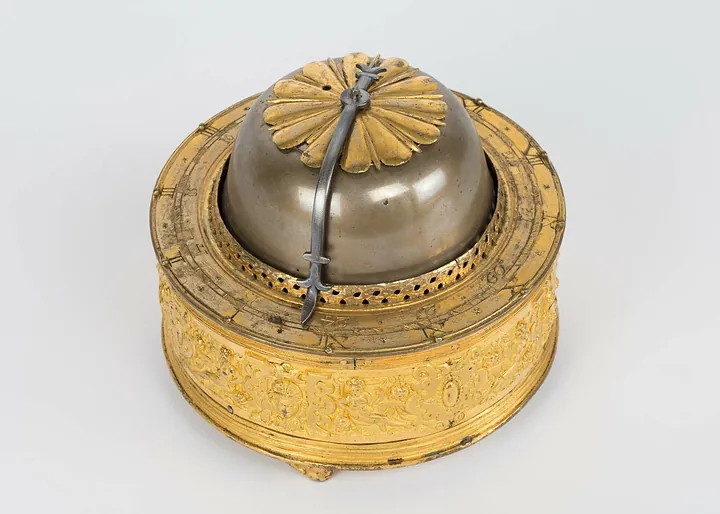
Table clock, probably Denmark, early 17th century
German Clock Museum
Clocks · 1590–1610
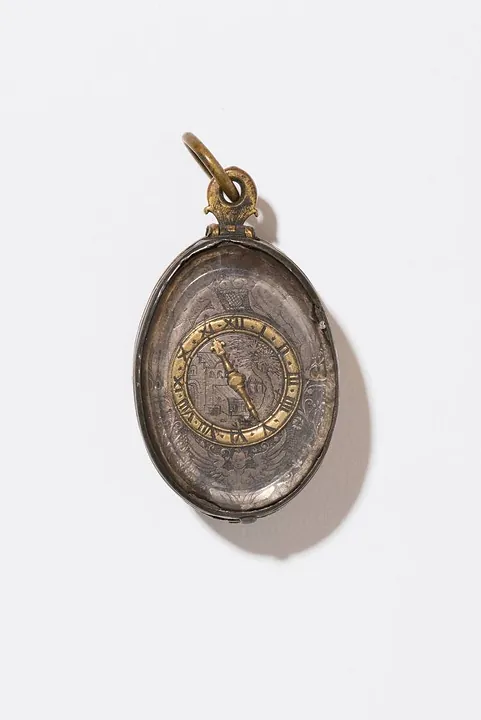
Clock, France, 1590–1610
MAK – Museum of Applied Arts
Clocks · c. 1600
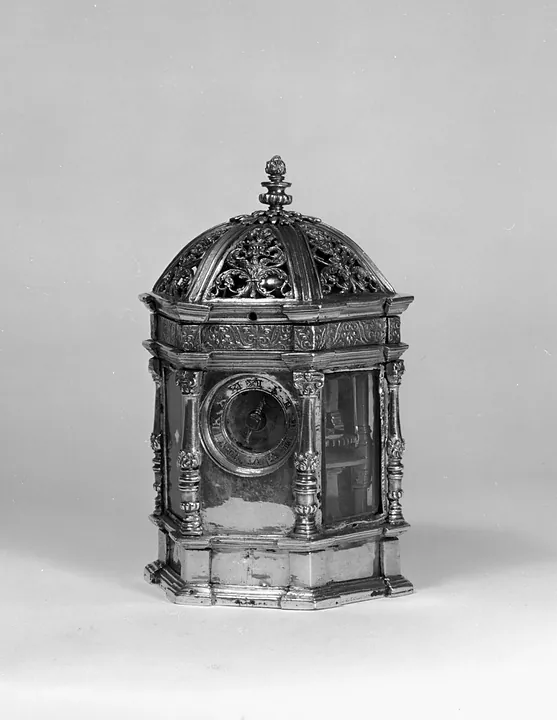
Table Clock, sheet brass, engraved, pierced and gilt, Paris, ca.1600, signed 'B(?) Pichard, à Paris'
Victoria and Albert Museum, London
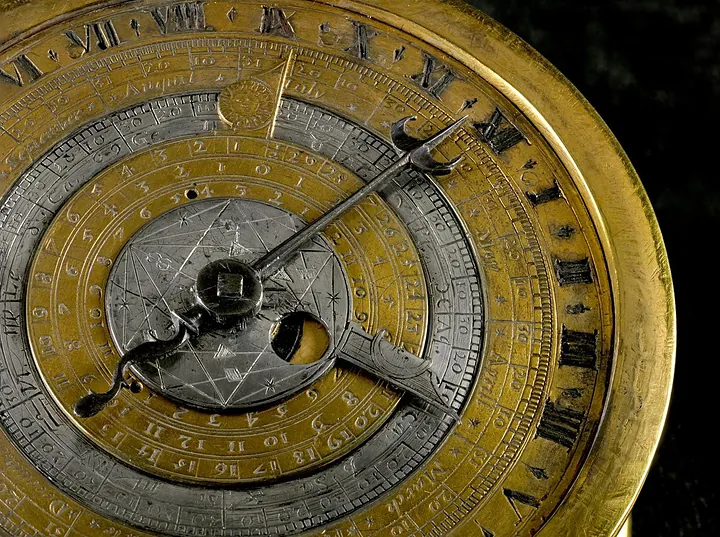
Clocks · 1598–1603
Circular table-clock with calendrical and lunar indications made by Nicholas Vallin in London between 1598 and 1603.
Science Museum Group, London
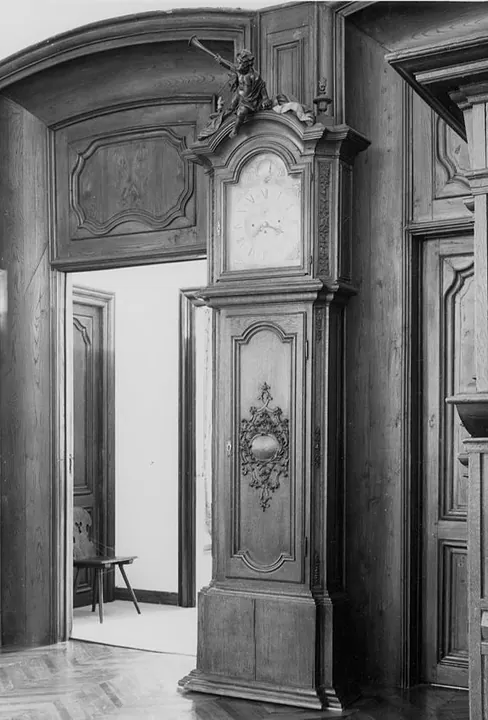
Clocks · 1600–1699
Clock by Joannes Volcker, Belgium, 1600–1699 (no. AP_10156031)
Royal Institute for Cultural Heritage
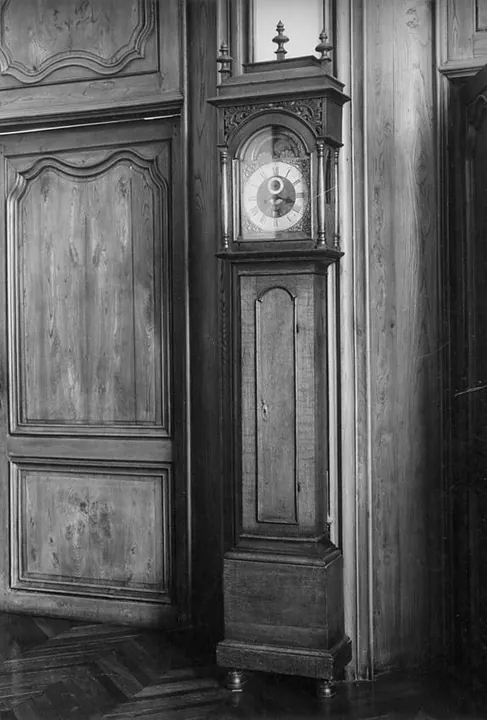
Clocks · 1600–1699
Clock by Joannes Volcker, Belgium, 1600–1699 (no. AP_10156032)
Royal Institute for Cultural Heritage
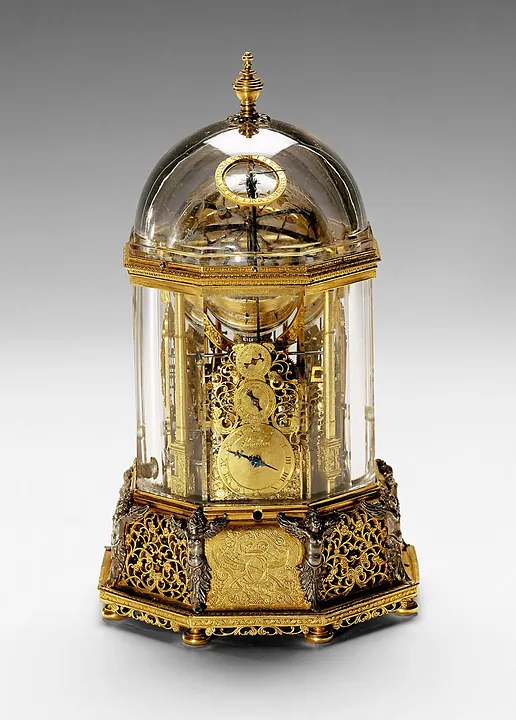
Clocks · 1600–1699
Clock attributed to Jobst Bürgi, Czech Republic, 1600–1699
Fine Arts Museum Vienna
Clocks · 1600–1700
Clock, Germany, 1600–1700
Victoria and Albert Museum, London